
The Mercury 500R isn’t a Boat Engine — it’s a statement. Strap 500 horsepower to the transom, and everyone within a quarter-mile knows what kind of day you’re having. But here’s what nobody talks about while drooling over spec sheets: what does owning one cost?
Not just the sticker price your dealer quotes over a handshake. The whole picture — the Propeller, the installation, the maintenance, and every line item that stacks up between “I want this” and “I own this.” Those costs add up fast, and they’re worth knowing before you shake any hands.
You’re serious about the Mercury Racing 500R. You need real numbers. This breakdown covers the Mercury 500R price from MSRP to total ownership cost. Walk into that dealer conversation prepared — know what you’re getting into before you get there.
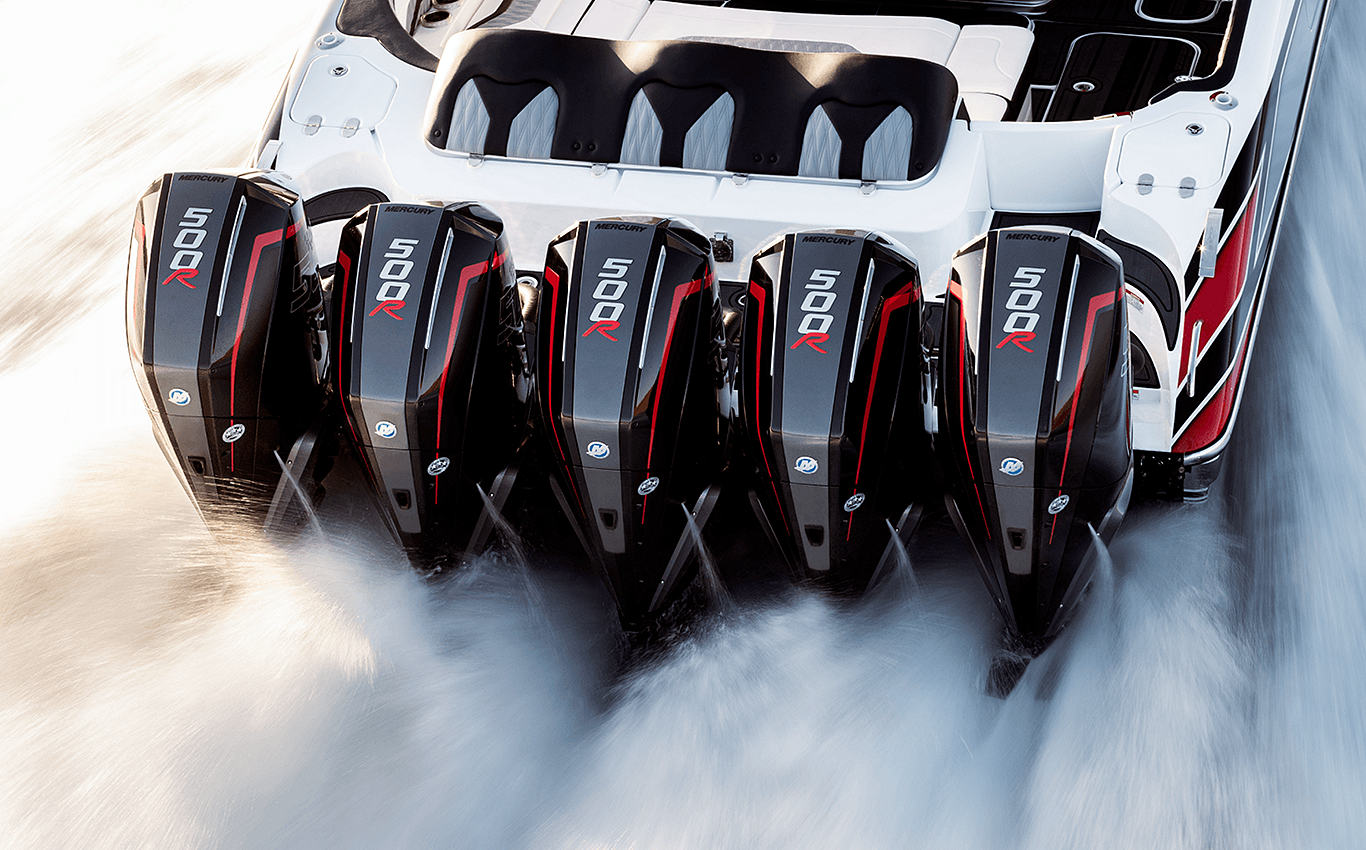
Mercury 500R Price: What You’ll Pay
Dealers start at $72,000. You’ll walk out closer to $80,000 — and knowing what fills that gap is what separates a smart buyer from an expensive mistake.
Here’s the realistic price landscape:
|
Configuration |
Price Range |
|---|---|
|
Base Entry Price |
~$72,000 |
|
Typical Buyer Configuration |
$78,000–$80,000 |
|
Premium Build (extended shaft + Sport drive) |
up to $84,500 |
|
MSRP (2024 R-Drive Sport XL) |
$80,025 |
Four variables move that number up or down. None of them are flexible once you commit:
-
Shaft length — available in 20″, 25″, 30″, and 35″; longer shafts cost more
-
Gear case configuration — R-Drive handles boats up to 85 mph; R-Drive Sport is built for 100+ mph applications, and it carries a higher price to match
-
Color — Phantom Black or Cold Fusion White; even paint choice adds to the final bill at this level
-
Application type — your specific boat platform shapes the final build specification
One more number to keep in mind: average retail value sits at $59,460 against an $80,025 MSRP. That’s 74 cents on the dollar in retained value. Not bad for a supercharged race engine. It also gives useful context if you’re buying this as a long-term asset, not just a splurge.
The 3-year standard warranty comes included. That matters. A belt-driven supercharged motor running hard on open water needs real coverage behind it.
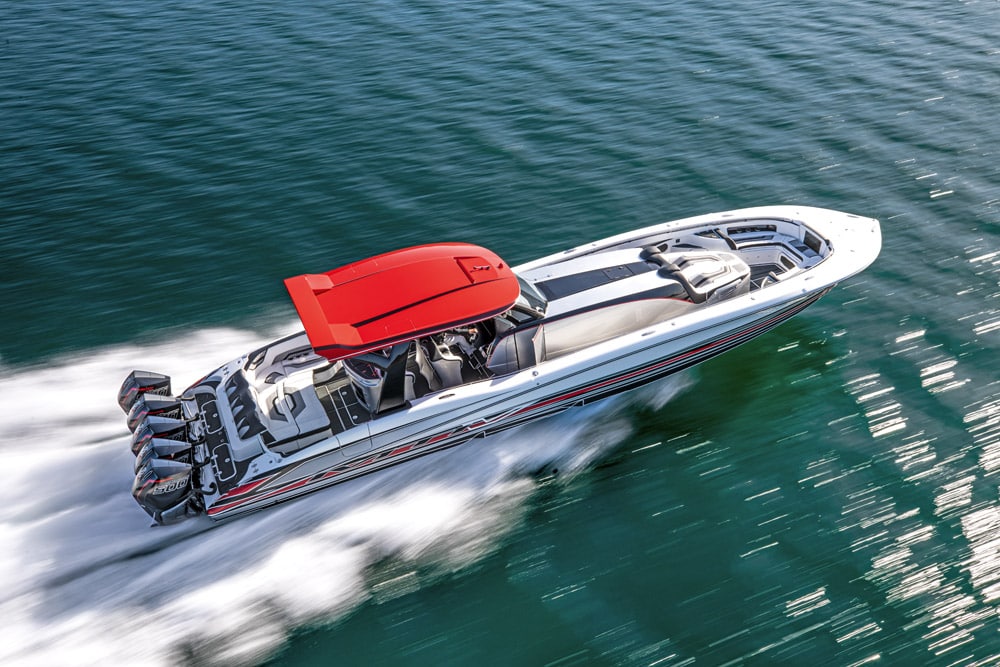
Mercury 500R MSRP & Current Market Price Range
The price of a Mercury 500R depends on how you ask the question — and who you’re asking.
MSRP runs from $72,000 to $84,500. That range isn’t arbitrary. Shaft length, gearcase type, and color choice each push the number in a different direction. A 2024 500R V8 5.9L R-Drive in Cold Fusion White lists at $76,040. Same year, same engine, in Phantom Black with a CXXXL shaft: same ballpark, different line on the invoice.
But here’s the number dealers don’t lead with — invoice pricing lands around $64,634 on select 2024 configurations. That’s 15% below MSRP. For a motor at this price point, that gap is real money. High-end outboards typically leave 10–20% negotiation room. The 500R is no different.
What Moves the Price
Three things drive your final number between that $62,595 base and an $84,500 premium build:
-
Shaft length — longer shafts add cost, no exceptions
-
Gearcase selection — R-Drive Sport (built for 100+ mph) commands a premium over standard R-Drive
-
Color — yes, even color adds to the final bill at this tier
Combine a longer shaft with a Sport gearcase. You’re looking at $8,000–$10,000 in configuration costs before you negotiate a single dollar.
US vs. Canada vs. International Pricing
|
Market |
Price |
USD Equivalent |
vs. US Baseline |
|---|---|---|---|
|
US MSRP |
$72k–$84.5k |
— |
Baseline |
|
US Invoice |
~$64,634 |
— |
−15% |
|
Canada |
C$124,240 |
~$90,600 |
+15–25% |
|
International |
Varies |
+10–30% |
Duties + VAT |
Canadian buyers carry the full cost of 13% GST/HST, import duties of 5–10%, and currency conversion. Those three factors stack up fast. The effective price hits $90,600 USD. European markets add yet another layer, often landing 20–35% above US MSRP.
On pricing trends: The 500R has no confirmed year-over-year MSRP increases so far. Still, industry benchmarks show outboard prices climbing 3–5% per year. Supercharged V8 demand stays strong. That kind of steady demand tends to push prices up 5% — often with no public announcement.
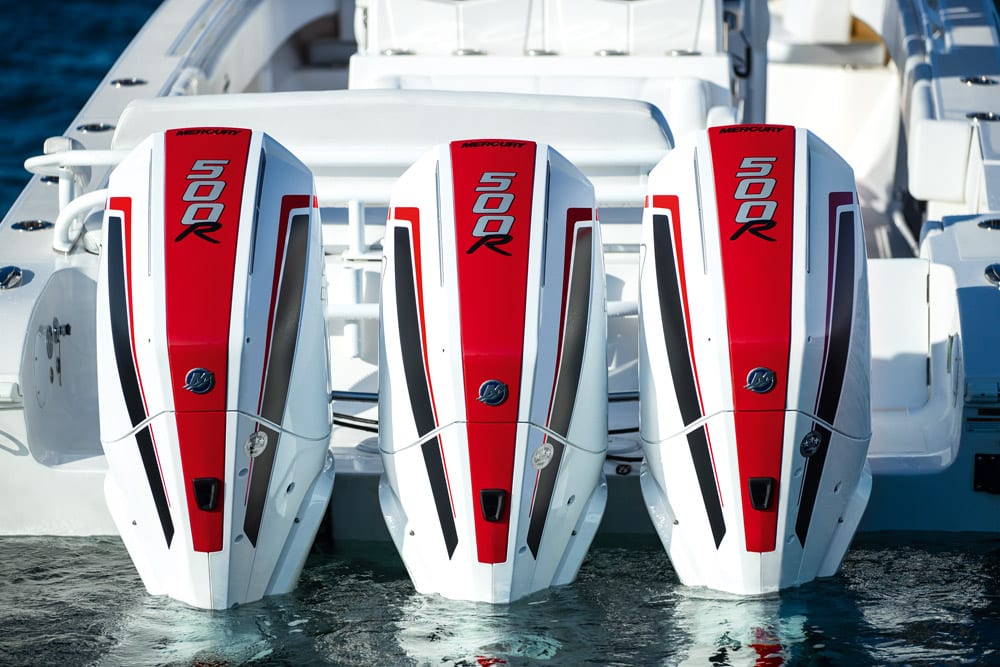
Where to Buy Mercury 500R & How to Get the Best Price
Buying a Mercury 500R is not like buying a truck or a refrigerator. There is no showroom on every corner. There is no weekend sale with balloons tied to the mailbox. This engine lives in a smaller, quieter world — and knowing where to find it will save you real money.
Authorized Dealers: Your Starting Point
Only a handful of authorized Mercury Racing dealers carry the 500R. Their inventory moves faster than most buyers expect.
-
Riverview Sports and Marine (Elk River, MN) — (763) 441-1799 — lead time of 1–2 weeks on new orders
-
Speedmaster Marine — keeps in-stock inventory on select configurations
-
USP Marine — offers a 30-day return policy, which is rare at this price point
-
Marine Unlimited (Toms River, NJ) — another authorized source worth calling
Lead time on a new unit runs 1–2 weeks from most authorized dealers. Not bad for a supercharged race engine built to order. Need it faster? Check demo stock or the used market.
New vs. Used vs. Demo: The Real Price Comparison
|
Channel |
Price Range |
Risk Level |
What You Get |
|---|---|---|---|
|
Authorized dealer (new) |
$72,000–$76,040 |
Low |
Full 36-month warranty, factory support |
|
Used / low-hour (private) |
$60,000–$68,000 |
Medium |
15–25% savings; verify service history |
|
Dealer demo / overstock |
$64,000–$70,000 |
Low-Medium |
8–12% discount, remaining warranty intact |
|
Rigged twin package |
$280,000–$300,000+ |
High capital |
Turnkey system, professional twin rigging |
Most buyers ignore the used market. That’s a mistake. Here’s a real example: a pair of twin 500Rs — 25″ shaft, 74 hours each, full service records, platinum warranties included — listed at $160,000 and sold for $120,000. That’s $60,000 per engine. New MSRP runs $72,000–$76,040. So you’re looking at a $12,000–$16,000 savings per unit — with paperwork you can verify and trust.
The best used deals show up 18–24 months after the original purchase. That’s the point where first owners move on to the next upgrade. That window is predictable. Plan around it.
Timing the Market
Timing a purchase at this level isn’t obsessive — it’s just math.
-
Q4 (October–December): Model-year clearance starts as 2027 inventory arrives. Expect 8–12% reductions.
-
Post-boat-show (February–March): Demo units with 50–200 hours sell at 15–20% below MSRP. The hours are low. The savings are not.
-
Summer overstock (July–August): Dealers trim stock. 5–10% reductions are common — but quiet. You have to ask.
-
Spring peak (April–June): Everyone wants one. Discounts are minimal. Expect MSRP or slight premiums, and no apologies from the dealer.
How to Negotiate the Best Price
Dealer margin on the 500R runs $7,400–$11,400 per unit — that’s 10–15% of MSRP. The invoice baseline sits at $64,634. That gap is your leverage.
Here’s a straight negotiation sequence:
-
Pull the invoice baseline — NADA Guides or a direct dealer quote gets you to that $64,634 number
-
Open at 5–7% below MSRP — that targets $66,840–$68,640 on a single unit
-
Buy two, push harder — twin-engine purchases tend to unlock an extra 3–5% fleet discount, putting a pair at $143,680–$146,880
-
Negotiate the warranty, not just the price — push for a 4-year platinum warranty as an included line item. That’s a $2,000–$3,000 add-on you avoid paying separately. It’s worth fighting for.
-
Use dealer financing as a tool — this surprises most buyers, but financing can yield a 2–3% extra discount. Dealers earn backend revenue from the financing arrangement. That benefit sometimes flows back to you.
-
Lock in your exact configuration before any numbers come up — shaft length (25″, 30″, 35″), R-Drive vs. R-Drive Sport, and model year all change the final invoice. Walk in without this confirmed, and you hand the dealer an easy advantage.
The gap between invoice and MSRP is real. So is the difference between a buyer who did the work and one who didn’t.
Best Propellers for Mercury 500R: Maximize Your Investment
The engine is half the equation. A $75,000 Mercury Racing 500R bolted to the transom with the wrong Propeller is like running a thoroughbred in the wrong shoes. The potential is there. It’s just wasted.
propeller selection on the 500R isn’t guesswork. It’s engineering. The 500R’s gearcase needs a 1.50″ 15-spline hub, CNC-machined stainless steel, and a diameter in the 15.25″–16.50″ range. pitch runs 28″–34″, based on whether you’re chasing a race podium or a fast afternoon on open water. Get this right and the engine performs. Get it wrong and you’ve left speed, fuel economy, and engine life on the table.
Matching Your Prop to Your Gearcase
Your gearcase choice sets your propeller ceiling. You made that call back when you configured the engine.
-
R-Drive Sport XL: Built for 100+ mph surface operation. Handles up to 32P pitch. The reinforced housing takes higher prop loads without issue. 3-blade cleavers with a 15° rake push toward 108 mph here.
-
R-Drive Standard: Tops out at 30P. Surface-piercing 5-blade cleavers in the 18° rake range keep you in the 92–100 mph band. The housing stays stress-free at that level.
The Sport gearcase adds +2″ of pitch advantage. That gives you +4 mph at the top end — a real gap at triple digits.
The Propeller Shortlist
Three models show up in 500R builds:
VIF Max5 Series — The 30P/15.5″ diameter setup is built for the 500R’s 1.50″ spline. Forum data from Scream And Fly puts it in the mid-80s at cruise and above 100 mph trimmed high. At $2,495, it’s the all-around benchmark. The VIF lineup covers 10+ 500R-specific models with stainless construction and a lifetime hub warranty. That warranty matters at this price per unit.
VIF CNC 5-Blade Cleaver — 32P, 16.25″ diameter, 18° rake. Pure race geometry. Independent testing shows +4 mph over stock configurations. Price: $2,750. One unit MOQ, ABYC H-22 compliant.
Mercury Racing Sport Master — The factory benchmark. 28P–32P range, 5-blade design matched to the R-Drive Sport gearcase. Price runs $2,100–$3,200 based on configuration.
Race vs. Cruise: Two Different Answers
|
Goal |
Blade Config |
Pitch |
Expected Output |
|---|---|---|---|
|
Top speed (race) |
3–4 blade, 15° rake |
32″–34″ |
105–108 mph peak |
|
Efficient cruise |
5-blade, 18° rake |
28″–30″ |
85–95 mph @ 5,500 RPM |
The tradeoff is real and measurable. A 5-blade prop gives up 1.5 mph at top speed vs. a 3-blade setup. In return, you get 20% better acceleration off the hole and far more grip in rough water. Race day calls for 3-blade. Every other day on the water, the 5-blade fits how boats actually get used.
The Investment Math
Each inch of pitch adds 2 mph and drops RPM by 200. Go too far in either direction and you’re either over-revving the engine or running it below its power band. Both cost you performance and engine life.
CNC-machined stainless steel props last 3x longer than aluminum. At 100 hours of annual use, that durability difference adds up to $500 in savings per year. On a $75,000 motor, it’s not the main story — but it’s worth the math.
The 500R earned a prop chosen with the same care that went into building the engine. Anything less is just noise at 100 miles per hour.
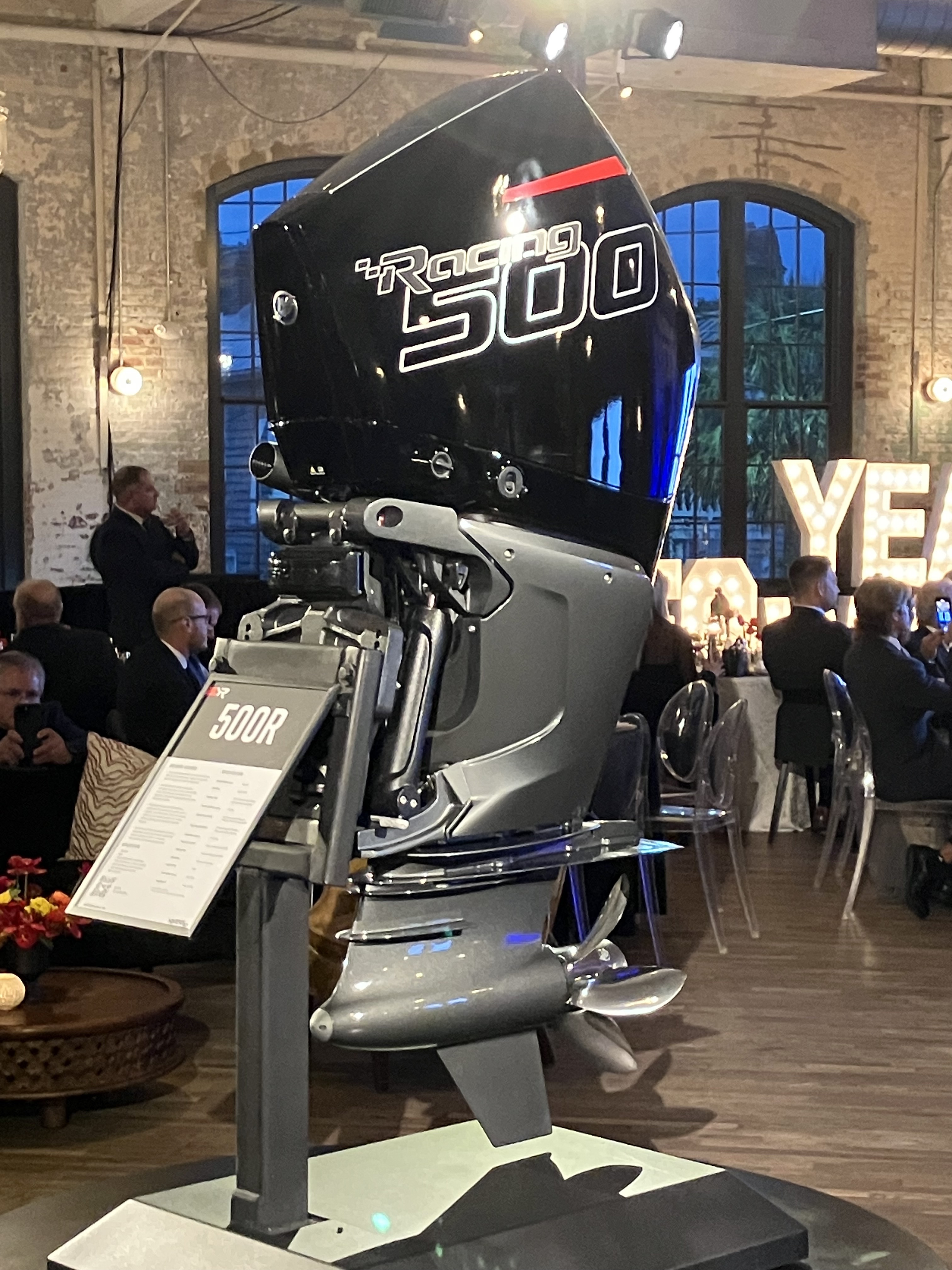
Conclusion
The Mercury 500R isn’t a casual purchase — it’s a commitment. The price tag sits at $60,000–$70,000+ before installation, rigging, and a matched propeller. You’re not just buying horsepower. You’re buying into a very specific kind of obsession. And if you’ve read this far, you already know that.
Here’s what matters most:
-
Get your price quote from an authorized Mercury Racing dealer — go straight to the source
-
Budget for the full setup cost, not just the engine price
-
Don’t cheap out on the propeller
That last point isn’t filler advice. The right prop is what takes 500 horses and turns them into forward motion that feels earned. Chasing tournament speeds or open-water performance — it all comes down to prop selection.
Ready to spec out your build? Start with a dealer quote. Then check out VIF Propellers to find the Mercury 500R-compatible prop that matches how you run.
The engine is the headline. The propeller is the story.