
Most boaters know the feeling. You’re skimming across the water just fine, but something feels off. Maybe the hole shot is sluggish. The top end feels capped. Or the fuel gauge drops faster than it should.
Then someone at the dock says you might have the wrong number of blades on your boat prop. Next thing you know, you’re buried in conflicting opinions, forum arguments, and specs that do nothing but confuse you.
Here’s the truth — the 3-vs-4 blade debate has real, measurable answers. Those answers depend on what you’re doing with your boat. This guide breaks down the physics, the tradeoffs, and the exact scenarios where each prop wins. So you can stop guessing and start moving faster.

Speed Comparison
Blade count changes speed. Here’s how.
A 3-blade boat prop has less surface area dragging against the water on each rotation. Less drag means the prop spins faster. Higher RPM — at the right propeller blade pitch — produces higher boat top speed. On most recreational outboards and sterndrive setups, a well-matched 3-blade prop hits a top-end speed 3 to 5 mph faster than a comparable 4-blade running the same pitch and diameter.
That number matters. It also needs a footnote.
Why 3 Blades Win at Top Speed

Your hull is on plane and you’re pushing for maximum speed. The physics are blunt. Each extra blade adds hydrodynamic drag. A 4-blade prop carries 20–25% more blade surface area than a 3-blade of the same size. That extra surface creates resistance the engine has to fight against. It puts a hard ceiling on boat speed optimization.
The difference in boat engine RPM is measurable. Back-to-back prop swap tests on comparable 150–200 HP outboard setups show this clearly:
-
3-blade aluminum propeller: reaches rated WOT (wide-open throttle) RPM range with less load on the engine
-
4-blade prop: often runs 200–400 RPM lower at the same throttle position
-
Result: The 3-blade produces 4–6% faster top speeds under identical conditions
That gap sounds small. On water, it isn’t. The jump from 42 mph to 44 mph on a weekend run is something you notice — especially if you ran both props back to back.
Where It Gets Complicated
Top speed is one number. It’s also the easiest number to chase and the least useful one for most real-world boating.
That RPM gap tells the real story. A 4-blade prop loads the engine in a different way. More blade surface means better grip in the water. Better grip gives you harder acceleration out of the hole. You also get stronger performance with a loaded boat — passengers, gear, all of it. Plus, speed stays more consistent in choppy conditions where a 3-blade might ventilate and lose traction mid-turn.
Propeller cavitation matters here too. A 3-blade spinning at higher RPM is more prone to cavitation — vapor bubbles form, collapse against the blade surfaces, and cut thrust — in rough water or hard cornering. This happens more in aggressive conditions, not flat-water cruising.
So the straight answer to “which is faster” looks like this:
|
Condition |
Faster Option |
|---|---|
|
Flat water, light load, top-end run |
3-blade |
|
Heavy load, rough water, acceleration |
4-blade |
|
Mixed use, average conditions |
Depends on prop slip percentage and hull type |
Prop slip percentage measures the gap between how far a prop should travel per revolution versus how far it actually travels. On 4-blade props under load, that number runs 2–4% lower. This closes some of the speed gap in real conditions — even if the dyno chart still favors the 3-blade at peak RPM.
Speed is simple. Picking the right speed for your boat is the actual problem.
Performance by Scenario
Different boats solve different problems. A bass fishing rig sitting in glassy lake water at 6 a.m. is not the same problem as a wakeboard boat hauling six adults through afternoon chop. Treat them like the same problem and you’ll end up with a prop that’s wrong in three different ways at once.
Here’s how the 3-vs-4 blade split plays out in real boats and real situations.
Fishing Boats: Hole Shot Wins the Morning
Anglers care about two things: getting to the spot before everyone else, and not spooking fish once they arrive. Both points favor a 4-blade prop.
Here’s why. A fishing boat almost never runs light. There’s a livewell full of water, a trolling motor battery, a cooler, gear, and two guys who maybe ate too much breakfast. That weight kills hole shot on a 3-blade. The prop spins up fast but doesn’t grab. You feel it as that soft, mushy moment where the boat hesitates to climb onto plane.
A 4-blade fixes the hesitation. The extra blade surface grips the water harder at low RPM. Plane time drops — often 1.5 to 2 full seconds faster with a loaded fishing rig. Over a long run across a big lake, that adds up to real time savings.
Top speed takes a small hit — around 2–3 mph on a bass boat setup. Most anglers make that trade without hesitation.
Recreational and Family Pontoons: Smoothness Over Speed
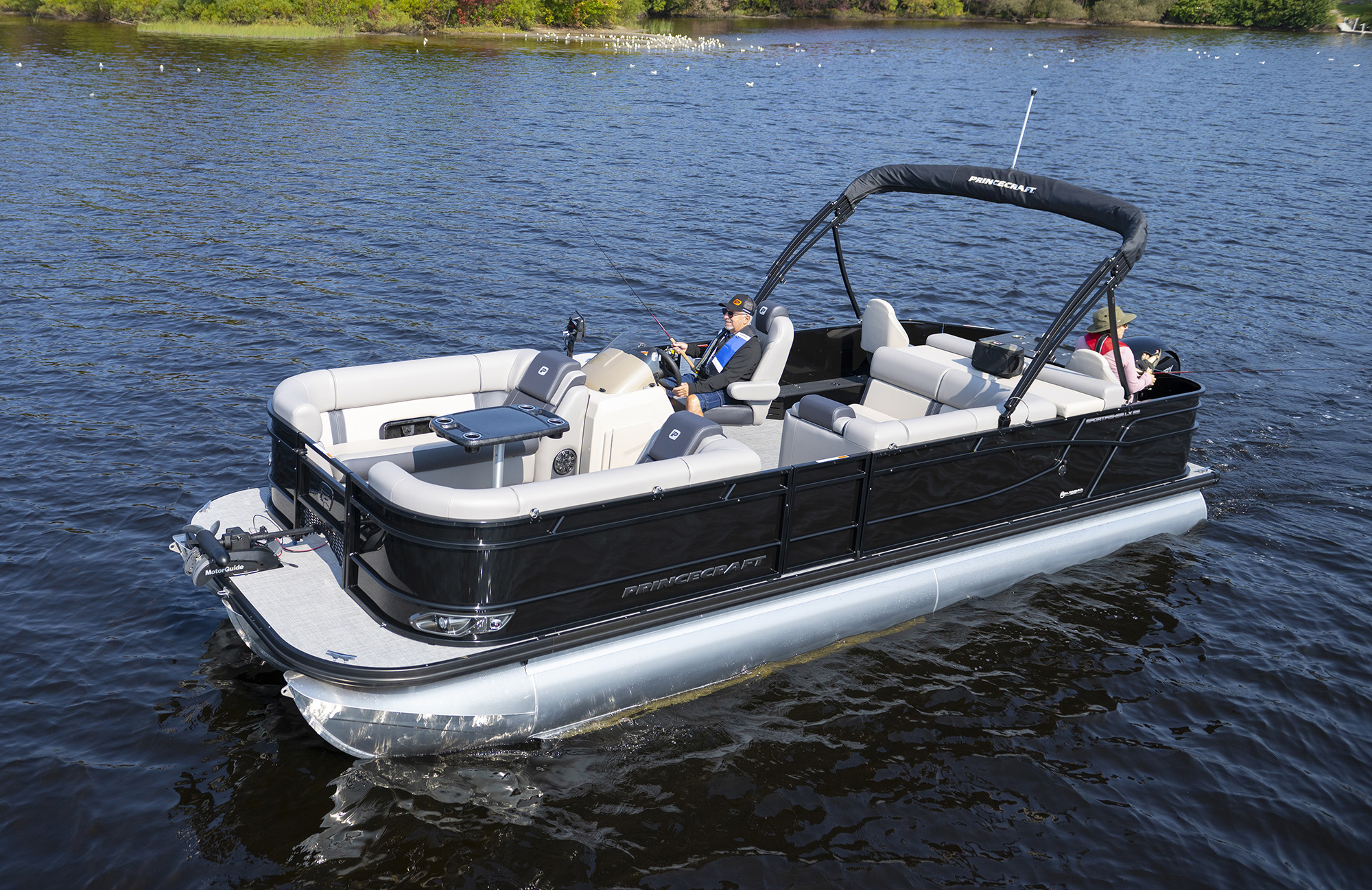
Pontoon boats have a structural problem. They sit wide, move a lot of water, and often run underpowered for their actual load. Chasing top speed on a pontoon is wishful thinking. What matters most is stable, consistent cruising — the kind where passengers don’t feel every RPM shift and acceleration stays gradual enough that nobody spills their drink.
A 4-blade stainless steel boat prop handles this job well. The extra blade count smooths out power delivery across the rotation cycle. You get less vibration at mid-range cruising RPM. You also get better throttle response mid-plane — useful for adjusting speed with a tube full of kids in tow.
One practical note: prop slip percentage runs lower on 4-blade setups under load. A pontoon running at 65–75% throttle with a full passenger count can see 3–5% better fuel efficiency over a full day on the water. At summer fuel prices, that difference is real money.
Performance Runabouts and Speed Boats: Where 3-Blade Props Belong
This is the one scenario where the 3-blade choice is clean and simple. You have a performance hull. You want maximum boat top speed. You’re running light and flat.
An aluminum or stainless steel 3-blade boat prop matched to your engine’s WOT RPM range will outrun a 4-blade on this setup — every time. The lower blade surface area lets the engine reach its full rated RPM without fighting extra drag. Marine propeller efficiency peaks in this range because the prop isn’t overloaded.
The tradeoff is still there. A 3-blade spinning at peak RPM in a hard turn can lose grip and cause propeller cavitation. On a performance hull built for speed runs on calm water, that’s a manageable edge case — not a regular problem.
Quick Scenario Decision Table
|
Boat Type |
Primary Need |
Recommended Blade Count |
|---|---|---|
|
Bass / Fishing Boat (loaded) |
Fast hole shot, loaded performance |
4-blade |
|
Family Pontoon |
Smooth cruise, fuel efficiency |
4-blade |
|
Wakeboard / Ski Boat |
Hard acceleration, heavy load |
4-blade |
|
Performance Runabout |
Maximum top speed, light load |
3-blade |
|
Center Console (mixed use) |
Balanced performance |
Depends on outboard propeller upgrade goals |
The scenario you’re in right now — not the one you wish you were in — is the only one that matters for picking a prop.
Key Performance Factors
Physics doesn’t care what prop came stock on your boat.
The gap between a 3-blade and a 4-blade prop comes down to measurable forces acting on your hull every time you push the throttle. Get a basic grip on these forces and you stop guessing. You start making decisions that move your numbers on the water.
Here are the factors that actually move the needle.
Blade Surface Area and Drag Load
More blades mean more surface area pushing against water. That’s not an opinion — it’s geometry.
A 4-blade prop carries 20–25% more total blade surface than a 3-blade of the same diameter and pitch. That surface displaces water on every rotation. The engine pays for every square inch of it as rotational drag load.
Your engine works harder to spin a 4-blade to the same RPM as a 3-blade. Under identical throttle conditions, that drag load costs you 200–400 RPM at wide-open throttle. On most outboards, the WOT RPM range is the sweet spot where marine propeller efficiency peaks. Fall short of that range and you’re leaving performance on the table.
This single factor — drag load vs. RPM ceiling — explains most of the speed gap between blade counts.
Grip and Hydrodynamic Bite
The same surface area that creates drag also creates grip.
More blade contact with water means the prop bites harder on each rotation. This matters most at low RPM, where water pressure against the blade face is most critical. That’s why a 4-blade prop gets a loaded boat up to plane faster out of the hole. It isn’t pushing harder — it’s slipping less.
Prop slip percentage measures this directly. It’s the gap between how far the prop should travel per revolution and how far the boat actually moves. A 4-blade running under load shows 2–4% lower slip than a 3-blade in the same conditions. That gap explains why a 4-blade can feel quicker to plane even when top-speed data favors the 3-blade.
Less slip also means steadier thrust in rough water. A 3-blade at high RPM hits chop or a hard turn, and it can lose contact with clean water. The blade exits its own pressure zone. Vapor bubbles form along the leading edge. You get propeller cavitation — a brief collapse of thrust that feels like a sudden loss of traction. A 4-blade’s extra contact area cuts down on those moments.
Pitch, Diameter, and RPM Calibration
Blade count is one variable. Pitch and diameter are the other two. All three interact.
Propeller blade pitch defines how far the prop advances per rotation — measured in inches. A higher-pitch prop moves more water per revolution but needs more torque to do it. A lower-pitch prop spins faster but covers less ground per turn.
Switch blade counts and pitch calibration often needs to follow. A common rule of thumb:
-
Dropping from 4 to 3 blades → step up 1–2 inches of pitch to keep the engine in its optimal RPM band
-
Switching from 3 to 4 blades → drop pitch by 1–2 inches to avoid over-loading the engine
Skipping this adjustment is one of the most common mistakes boaters make after an outboard propeller upgrade. The blade count changes but the pitch stays the same. The engine then either over-revs or bogs down. Either way, you end up with worse performance than your original setup.
Material: Aluminum vs. Stainless Steel

Blade count and material choice are connected. The combination you pick amplifies or limits your performance results.
Aluminum propellers flex under load. That flex eats into the efficiency gains you’re chasing — especially at high RPM with a 3-blade. On the plus side, aluminum deforms before it erodes, so cavitation damage risk stays lower.
Stainless steel boat props hold their blade shape under load. On a high-RPM 3-blade setup, that stiffness keeps pitch consistent across the power band. The result is better top-end performance you can measure. Stainless also holds up longer against cavitation erosion before you see blade damage.
For a 4-blade used in heavy-load or rough-water conditions, stainless construction keeps blade bite consistent across the full RPM range. The price premium over aluminum is real — 3–4x the cost — but performance holds up over time. In high-use situations, that trade-off makes sense.
Which to Choose
The answer fits in one sentence: match the prop to the job, not to what sounds fast.
Here’s a simple decision tree. Answer each question in order. Stop when you have your answer.
Question 1: Do you run with a heavy load most of the time?
Heavy means passengers, gear, a full livewell, a loaded cooler — anything that puts the bow down during the hole shot. If yes, stop here. Get a 4-blade. The logic is simple:
-
More blade surface grips more water at low RPM
-
The boat climbs to plane faster
-
Fuel burn across a full day drops by a noticeable amount
The 2–3 mph you give up at top end is not a real sacrifice. You’re never running light anyway.
Question 2: Is raw top speed the main goal?
Not “kind of want to go fast” — running a performance hull light on flat water where every mph counts. A 3-blade stainless prop matched to your engine’s WOT RPM range is the right tool. You’ll gain 3–5 mph over a comparable 4-blade. That gap is real and repeatable.
Question 3: Is it mixed use?
Most people land here. The straight answer for mixed-use boats: start with a 4-blade and adjust pitch, not blade count. A 4-blade at the right pitch handles the full range of real-world conditions better than a 3-blade built for one scenario.
Run the 4-blade for a full season. See how it feels across different loads and water conditions. Still wishing for more top-end speed on light loads? Then consider the 3-blade swap.
The One Number to Check Before You Buy
Whatever blade count you choose, confirm your engine hits its rated WOT RPM range with the new prop. Over-revving? Go up one inch of pitch. Bogging below the range? Drop one inch. Blade count alone is not a complete decision — pitch calibration is what ties it together.
Need a starting point? VIF Propellers carries both 3- and 4-blade options in aluminum and stainless steel. Their fitment data is sorted by engine make, horsepower, and hull type. Use those specs as your baseline, then fine-tune from there.
Conclusion
Here’s the honest answer most prop guides won’t give you: there is no single faster blade for every situation.
A 3-blade prop wins on raw top speed — fewer blades, less drag, simple physics. But take that same hull into choppy water, load it with gear, or pull a skier out of a hole. Your “faster” prop is now the slowest thing on the lake.
The real performance gain isn’t 3 versus 4 blades. It’s picking the right pitch, material, and blade geometry for how you use your boat. Nail that choice, and you’re looking at a real 10–15% boost in speed or fuel efficiency — no engine changes needed.
Your next step is simple:
– Measure your current WOT RPM
– Identify your primary use case
– Match a prop to your actual numbers — not someone else’s
VIF Propellers carries both configurations in aluminum and stainless steel. The specs are detailed enough to take the guesswork out and put the science in.
Pick the right prop. Feel the difference on your first run.