
Your Boat’s Propeller works harder than you think. Pick the wrong one, and you’re losing real performance out on the water.
Acme boat props have earned a solid reputation among wakeboard boat owners, tournament skiers, and serious cruisers. These are riders who stopped accepting factory-stock propellers that just get the job done.
The gap between a sluggish hole shot and a clean, explosive plane-out often comes down to one part. Most people never give it a second thought — but it makes all the difference.
Want faster pull times? Smoother fuel burns? A Propeller that holds up in rough water without shaking your confidence? This breakdown covers the real, measurable benefits of precision cast marine propellers from Acme — so you can make a smart upgrade choice before your next time on the water.
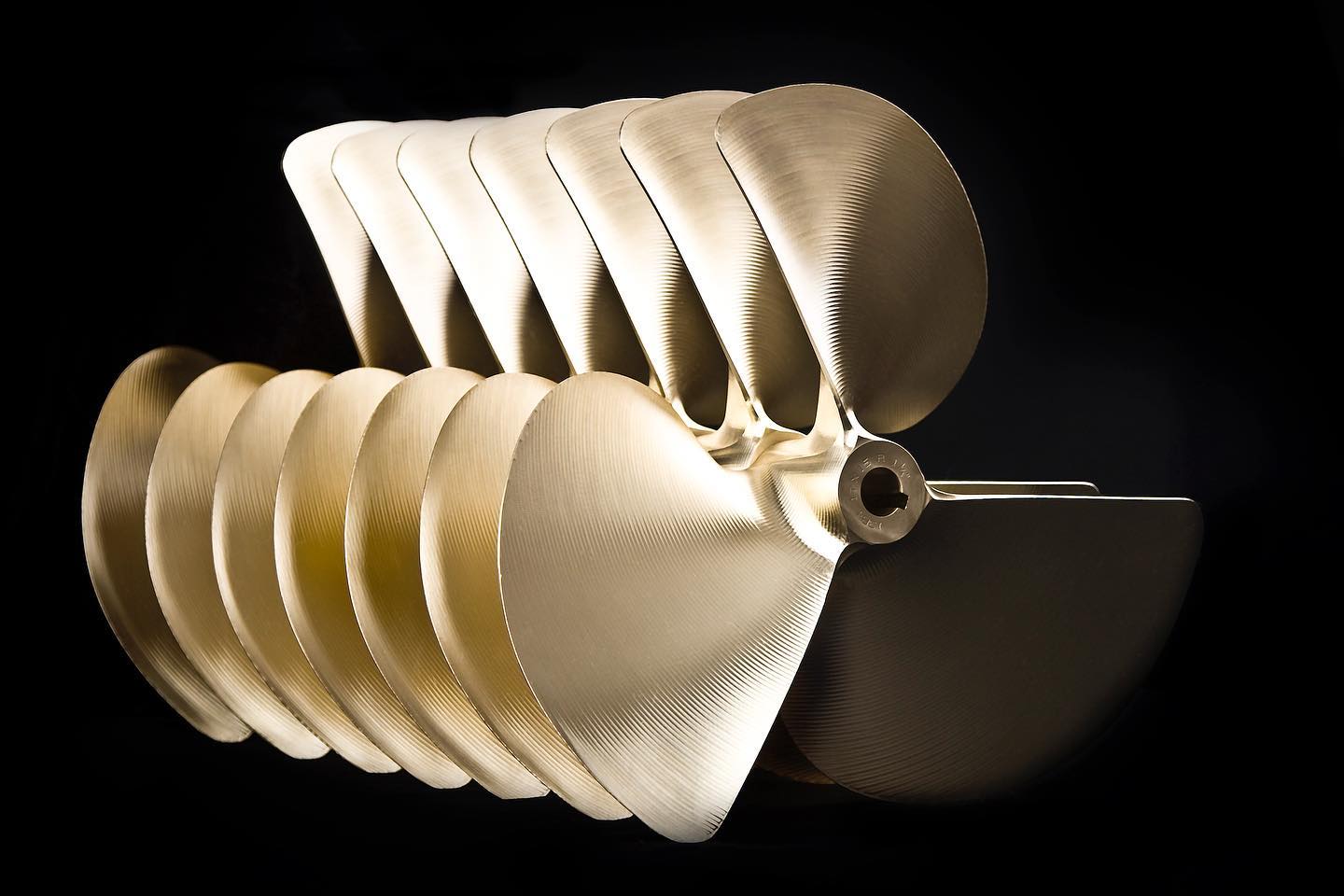
ACME Boat Props Benefits — Optimal Content Framework
We’ve been manufacturing propellers in-house from Big Rapids, Michigan since 1996. That’s sustained, independent production — and it tells you a lot before you even check the specs.
Here’s what direct manufacturing control means for you:
-
No supply chain delays — you get the specific configuration you need, fast
-
No price spikes from third-party production changes
-
Hundreds of stocked options, built for real performance gains
Our lineup covers a serious range of platforms — Nautique, Malibu, Centurion, and MasterCraft. Each configuration is matched to how that specific hull behaves on the water.
Built Around Real On-Water Gains
Three things most boat owners care about most:
-
Fuel efficiency: Less drag means longer trips on the same tank
-
Hole shot: The Acme #540 pulls the bow up for increased air lift. You get cleaner hull control from the moment you throttle forward
-
pitch-diameter relationship: Lower pitch at a given diameter means more aggressive pull. That’s key knowledge for choosing between stainless steel boat propellers for wakeboarding versus cruising
This isn’t a brand selling promises. We’ve spent close to three decades in precision-cast production. Our high thrust marine propellers close the gap between what your engine promises and what your boat delivers on the water.
What Are ACME Boat Props and Why Do They Stand Out?
Acme made a lasting mark on the propeller industry by leading the CNC propeller revolution. This was a clear move away from manual finishing errors. The result: machine-precise tolerances that most competitors still haven’t matched.
The material choice alone sets Acme apart. Most brands default to standard aluminum or stainless steel. Acme builds around Nibral alloy instead — a nickel-bronze-aluminum compound. It beats both materials on flexibility, corrosion resistance, and raw durability. That’s an uncommon call. It’s also the right one.
Every Prop is USA-manufactured, and that goes beyond national pride. Direct CNC control over domestic production means each blade comes out consistent — not close enough, but exact.
A Specification System Built for Precision
Each Acme Prop number tells you exactly what you’re holding:
-
Part number (e.g., Model 2079)
-
Diameter × pitch (e.g., 14.5″ × 12″)
-
Blade rotation — left or right hand
-
Bore/shaft diameter (e.g., 1-1/8″)
-
Pitch type — constant or variable sport profile
That level of detail isn’t bureaucratic. It’s practical. propeller pitch diameter selection moves straight from the spec sheet to real on-water behavior — the same result every single time.
Benefit #2: Faster Hole Shot and Quicker Plane Times for Wakeboarding and Waterskiing
There’s a specific kind of frustration in waiting — watching the rope go taut, the skier leaning back, the boat struggling through that first sluggish moment before it finds its stride. A slow hole shot isn’t dramatic. It’s just wrong, every single time.
The right propeller fixes that.
Speed windows for wakeboarding and waterskiing are narrow and unforgiving. Wakeboarders ride between 13–18 mph. Slalom skiers need a precise 22 mph — too slow kills the experience, too fast becomes dangerous. Getting there without bog or delay is everything.
Blade Count and Pitch: Two Levers That Change Everything
The choice between a 3-blade and 4-blade configuration isn’t cosmetic — it’s mechanical.
-
3-blade props accelerate fast and plane well under light to moderate loads — clean, responsive, efficient
-
4-blade props grip harder under weight, hold steadier through chop, and deliver a more controlled towing feel — the better choice when the boat carries a full crew
Pitch matters just as much. A 1-inch pitch reduction on a sluggish hole shot often solves the problem on its own. It’s a small number, but it has a big effect on how fast the hull lifts onto plane.
Cup adds blade bite and trims 50–150 RPM — useful for cutting out ventilation during spool-up. Rake contributes bow lift. Both shape how the boat behaves in those critical first seconds after you hit the throttle.
Tuning the Launch
Beyond blade geometry, three adjustments sharpen hole shot performance:
-
Open the PVS setting to reduce bog during spool-up
-
Shift weight forward in the boat before departure
-
Confirm engine height — a misaligned anti-ventilation plate drains acceleration without any obvious warning sign
Staying inside the correct WOT RPM band under typical load ties it all together. A propeller spinning outside that range — even by a small margin — bleeds performance at every throttle position, not just wide open.
The difference between a clean pull and a frustrating one comes down to these details. Acme’s precision cast marine propellers are built to close that gap — not down the road, but on the first run.
Benefit #3: Improved Fuel Efficiency Through Hydrodynamic Blade Engineering
Fuel doesn’t lie. Every gallon burned on the water tells you how well — or how badly — your propeller is doing its job.
Most boat owners watch their fuel gauge drop and think that’s just part of being out there. It isn’t. A big chunk of that burn comes from blade inefficiency. Drag that shouldn’t be there. Slip that builds up over every mile. Energy your engine produces and your propeller throws away.
Acme tackles this at the geometry level — before the prop ever touches water.
Blade Shape Is Where Efficiency Is Won or Lost
Blade angle, surface area, and rotational efficiency aren’t abstract theory. They have real, measurable consequences at the fuel dock.
Here’s what hydrodynamic blade design controls:
-
Blade inlet and outlet angles control how water moves off each blade face. Optimized angles can push mechanical efficiency past 93% in precision-engineered configurations.
-
Surface area calibration pulls more power without adding engine load. You get more useful thrust per revolution — not just more drag.
-
Rotation angle tuning cuts energy loss at cruise speed. That’s the range where most recreational boats spend most of their time.
The practical result: less fuel to hold the same speed. Not a little less — a lot less, on every trip.
What This Means at Cruising Speed
Wide-open throttle gets the attention. Cruise efficiency pays the bills.
Blade geometry built for hydrodynamic flow cuts the rotational resistance your engine fights during sustained cruising. Your engine runs closer to its efficiency band. RPM holds steady. Fuel draw drops.
Propeller blade cupping technology pushes this even further. The cup controls blade bite at the trailing edge. It cuts ventilation, smooths the water exit, and keeps thrust output steady — instead of letting it spike and collapse with throttle changes.
The result is a propeller that works with your engine’s power curve, not against it. Your fuel gauge moves slower than you’re used to.
Benefit #4: Superior Durability Built for High-Speed and Rough Water Conditions
Aluminum bends. It wears down. Hit a submerged rock, a drift log, or a sudden debris field — an aluminum blade doesn’t just deform. It fails you mid-run.
Acme builds around Nibral alloy — nickel, bronze, and aluminum fused into a compound that reacts to pressure in a different way. Aluminum absorbs impact damage deep into the blade. Nibral pushes it away. The same blow that snaps an aluminum prop glances off a Nibral surface. That’s not marketing language. That’s material physics.
Why Material Choice Determines Longevity
Three materials dominate the marine propeller market. They don’t perform the same way:
|
Material |
Rough Water |
High-Speed Flex |
Saltwater Resistance |
|---|---|---|---|
|
Aluminum |
Bends fast |
Flexes, loses pitch |
Low |
|
Stainless Steel |
Holds shape |
Minimal flex |
Good |
|
Nibral |
Best impact tolerance |
No flex |
Best |
At high RPM, stainless steel and Nibral blades hold their shape. Aluminum flexes. That flex drains performance and fuel economy over time. You may not notice it on a single run. But you pay for it on every run.
Boat Prop cavitation resistance is where Nibral pulls ahead. Reinforced blade sections fight cavitation corrosion at the structural level. Add propeller blade cupping technology, and water exits the trailing edge in a clean, controlled stream — even in rough, interrupted flow conditions where uneven turbulence would wear through a weaker material over time.
For high-speed and rough water use, the math is straightforward:
-
Stainless steel and Nibral handle trim angles, debris strikes, and sustained RPM without breaking down
-
Aluminum works best in calm, deep water where none of those pressures exist
The upfront cost is higher. The service life justifies every dollar of it.
Benefit #5: Wide Product Range to Match Every Boat, Engine, and Use Case
Not every boat is the same. Not every engine pulls the same load. Not every Saturday on the water puts the same demands on your hull — and a propeller lineup that ignores this will let you down.
Acme doesn’t ignore it.
The range covers diameters from 12.5 inches to 16 inches. Pitch options go from easy lake cruising all the way to hard tournament towing. Bore sizes come in both 1 inch and 1-1/8 inch, fitting the shaft specs that matter most for inboard and outboard platforms. Left-hand and right-hand rotation options? Both are kept in stock — no special orders needed.
Matched to the Hull, Not Just the Engine
Blade count shapes how a prop performs:
-
3-blade props work best for lighter, faster boats — quick to respond, fuel-efficient, and smooth getting on plane
-
4-blade props handle heavier loads better — steadier tracking and stronger pull at low speed
Acme builds specific prop configurations for Nautique, Malibu, Centurion, and MasterCraft hulls. These are not generic fits dropped in to cover a broad category. Each model number is tied to how that hull behaves — its weight distribution, trim behavior, and typical crew load.
You get a marine propeller performance upgrade that starts with the right fit, not a guess. A prop built for your exact platform delivers the real benefits — efficiency, hole shot, durability — right there on the water.
How to Choose the Right ACME Propeller for Your Boat (Size, Pitch & Blade Guide)
The numbers stamped on your hub tell the whole story — you just need to know how to read them.
Every Acme prop is marked in a standard format: diameter × pitch, plus cup depth, rotation direction, and bore size. Take the ACME 422 as a clear example: 12.50″ × 15.50″, right-hand rotation, 1.00″ bore, .105″ cup. That single line of data shows you how that prop will perform before it ever touches water.
Diameter runs from the hub center to the blade tip, then doubles. Pitch is the theoretical distance the prop travels forward in one full revolution. Together, those two numbers define your performance range.
Match Blade Count to What You Do
Blade count isn’t a preference — it’s a function.
-
3-blade props suit slalom skiing and faster, lighter boats. Smaller diameter, higher pitch, less drag. They spin up fast and get on plane quickly.
-
4-blade props are built for surf and wakeboarding. A larger diameter creates more low-speed push. More blade surface area delivers steadier power when the boat carries heavy ballast weight.
Running an older Centurion with the ACME 497? That setup builds up too much drag under heavy ballast. Switch to the ACME 525. It cuts drag and brings back efficiency — a well-documented fix for loaded wake setups.
Use WOT RPM to Confirm Pitch
Wide-open throttle RPM is your main calibration tool. Your engine spins past its recommended RPM ceiling at WOT? Drop pitch by 1–2 inches. Falls short? Go up.
Lower pitch pulls harder out of the hole. Higher pitch gives up that acceleration for top-end speed. On V-drive boats, a lower pitch at a fixed diameter gives you stronger, sustained pull — and that matters for propeller pitch diameter selection under ballast load.
Don’t Skip the Clearance Check
Minimum hull clearance is 5/8″ — but 3/4″ is the real working standard to protect your gel coat. On V-drive setups, 14.5″ diameter is the safe upper limit. Surf and wake builds do well in the 13–14.5″ range, where larger diameter earns its place at low speeds.
Check your shaft bore first — 1″, 1-1/8″, or spline — before anything else. MasterCraft hulls built after 2003 use a spline shaft that needs a specific bore match. Get that part wrong, and pitch tuning won’t save you.
ACME Boat Props vs Competitors: Is the Upgrade Worth It?
The numbers don’t lie. Real-world testing on Moomba boats put the ACME 1847 head-to-head against the stock OJ wakeboard prop — same conditions, same water. The ACME hit 23 mph over one full second faster. The OJ dropped 4 mph on top-end speed. That audible growl riders noticed across the 20–30 mph range? Gone after the switch. Four independent users tested this. All got the same result.
That’s not a manufacturer claim. That’s forum consensus from people who paid for both props and ran them back to back.

Where ACME Pulls Ahead
The efficiency gap shows up at the RPM level. The ACME 1847 and ACME 1433 share the same diameter (14″) and pitch (14.25″). The difference is cup depth — 0.150″ versus 0.105″. That extra cup adds the practical effect of 1 inch of extra pitch at top end. You get that without losing hole shot. The 1847 spins fewer RPMs at the same speed. Fewer RPMs means less fuel burned — every hour, every run.
Under heavy ballast — 2,300 lbs plus four people — the 1847 pulled riders clean. It planed out faster with less throttle. One user running at 6,500 feet elevation gained 2–3 mph after switching. He hit the 5,000 RPM target his stock OJ prop never reached in thin air.
Where OJ Has the Edge
OJ isn’t the wrong choice for everyone. Lighter loads, speed-first slalom setups, and quick planing builds suit OJ’s acceleration profile well. Your boat runs light and fast? OJ holds its own.
But for wake Boat Propeller builds carrying real ballast weight, altitude boaters, and anyone chasing boat propeller thrust efficiency across a full day on the water — the ACME upgrade pays for itself. The specs make that clear.
FAQ: ACME Boat Propeller Common Questions Answered
Some questions come up every time. Here are the ones that matter most.
Which boat brands are compatible with ACME propellers?
ACME builds specific configurations for Nautique, Malibu, Centurion, and MasterCraft. These aren’t loose fits. Each model number is matched to how that hull behaves on the water — hull shape, weight distribution, and wake profile all factor in.
How do I identify my current prop for a direct replacement?
Use a prop puller to remove it. Once it’s off, find the stamped data on the hub. Here’s what to look for:
-
Part number
-
Diameter × pitch
-
Rotation direction (left or right)
-
Bore size
-
Pitch type (constant or variable Sport profile)
Your current prop is performing well — same water, same load, same results? Order the identical ACME part number. No guesswork needed.
What if I want a custom fit instead?
Three steps:
-
Enter your boat specs
-
Adjust the gauges for your conditions — wake weight, elevation, skiing or wakeboarding use
-
Contact [email protected]
ACME’s sales team gives you a precise recommendation. Not a generic starting point — a spec built around your setup. Working from the standard selection list with no custom input? The third propeller on the list is the recommended default.
Can a damaged ACME prop be repaired?
Nibral props can’t be brought back to new condition through CNC repair. The original manufacturing precision is too tight to replicate after damage. Third-party shops can do basic work, but ACME doesn’t handle repairs in-house. A repaired Nibral prop is fine as a backup spare — not a primary running prop.
What manufacturing process backs all of this?
Every prop is cast in a North American foundry and CNC machined across two facilities. That two-facility process keeps tolerances consistent across the full product range — not close, but exact.
Conclusion
Your boat deserves more than a factory compromise.
ACME propellers aren’t just a hardware upgrade. They’re the difference between a ride that functions and one that performs. The precision-cast stainless steel construction handles rough water without flinching. The blade cupping technology grabs harder off the line. Every design decision behind these props shows up the second you throttle up.
Chasing a cleaner wake for your crew? Squeezing more miles from every tank? Ready to push your inboard to its real potential? The right ACME boat prop turns that goal into a Saturday reality.
Don’t let the wrong pitch hold your boat back another season.
Browse the full ACME propeller lineup at VIFPropellers.com. Find your exact fit by boat model and engine spec. Make your next run on the water the best one yet.