
Finding the right Raker Propeller should be straightforward. No guesswork, no digging through endless catalogs.
You might be replacing a worn Prop on your outboard. Or you’re pushing for that extra half-second off the line. Either way, the manufacturer behind the blade matters more than most boaters think.
The Raker’s swept-back design has pulled in a competitive field of makers. You’ll find the original brand that built this Prop style, plus aggressive aftermarket players eating into their market share.
So here’s a clear breakdown of who’s making these props today. You’ll see what sets each brand apart on the water — and how to match the right one to your engine with confidence.
What Companies Make Raker Propellers?
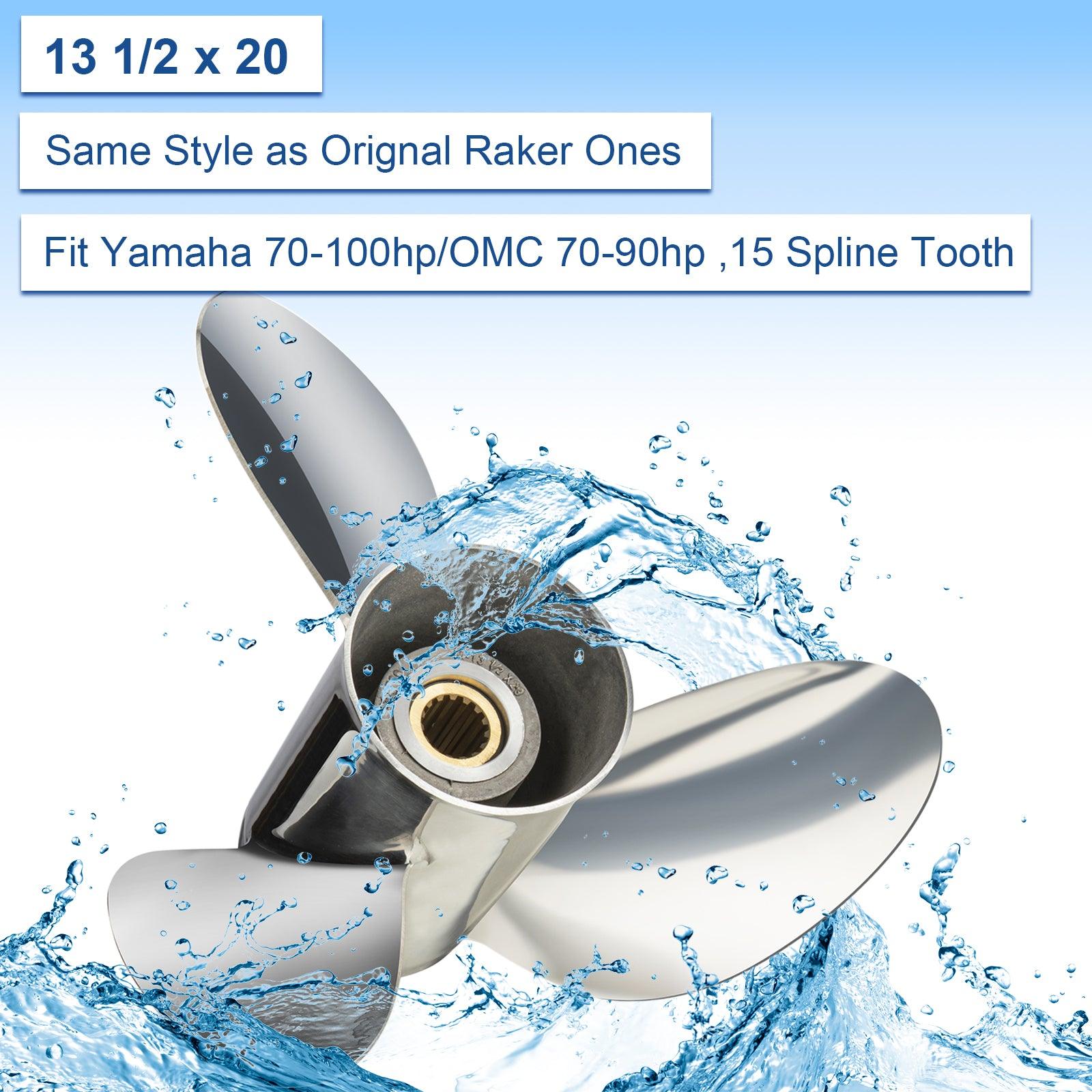
Two names stand out here: BRP (Bombardier Recreational Products) and PowerTech.
BRP is the original maker. They build Raker propellers under the Evinrude/Johnson brand. You get a solid range of configurations made for high-output outboard performance:
-
Raker H.O. — 14.5″ × 24″, stainless steel, 3-blade, with Variable Vent Ports to sharpen acceleration. Priced around $552 (down from $774).
-
Raker II — 14.5″ × 25″ stainless, part #177308
-
Raker V-4 — 13.5″ × 24″, part #0763956
-
Raker (Standard) — 13.5″ × 18″ stainless, part #0763953
These props are built for Evinrude E-TEC engines in the 90–300 hp range. That covers E-TEC G2 models and OMC sterndrives.
PowerTech is the go-to aftermarket option. Their RKR4 stainless steel propeller matches the OMC Raker spec closely — 14.5″ diameter, pitch options from 18 to 30. Each prop gets precision hand-finishing. So you’re not just getting a lower price — you’re getting real quality too.
One thing to note: BRP props don’t include hub kits. They’re sold on their own, so add that cost to your budget upfront.
What Is a Raker Propeller? (Core Concept + Design Signature)
The blade angle tells you everything.
A Raker propeller is built around one defining characteristic: high rake. The blade angle climbs from hub to tip — 20 degrees or more. That geometry isn’t decorative. It’s the mechanical reason this prop lifts your bow and pushes top speed on light, fast boats.
Here’s what that design means in practice:
-
High rake angle — Blades sweep back hard from the hub. You get bow lift, faster planing, and a top-speed ceiling that flat-blade props can’t touch in surfacing conditions. We’re talking 50+ mph territory.
-
Cupped trailing edges — A sharp cup is machined into each blade. Less slippage. Better bite at speed. Cleaner lift through the water column.
-
Thru-hub exhaust venting — Vent holes sit at 0.710″, built for Mercury PVS vent compatibility. Exhaust exits clean, cutting back-pressure drag.
-
3-blade configuration — Every Raker runs three blades. No exceptions. Rubber or pressed-in hub options depending on your setup.
-
High-polish stainless steel — Precision manufacturing, hand-finished surfaces. The material isn’t just about durability — the polish cuts surface drag at high RPM.
Where It Fits in the Prop Spectrum
Three blade types dominate performance boating: standard, cleaver, and raker.
Standard props (0–20° rake) balance bow lift and torque. Cleavers run low rake with flat edges — built for raw torque, not top speed. The Raker sits between them but leans hard toward speed — high rake, cupped blades, strong bow lift.
The result: faster RPM buildup, quicker planing, and solid midrange efficiency — without giving up fuel economy at cruise.
It covers a wide power band — 40 to 300 HP. That’s why you see Raker props on bass boats, high-performance runabouts, pontoons, and offshore builds alike.
BRP (Evinrude / Johnson / OMC) — The Original Raker Manufacturer
The Raker propeller didn’t emerge from a product committee. It came from a company with over a century of outboard engineering behind it.
BRP — Bombardier Recreational Products — is the corporate name. But the legacy runs through Evinrude, Johnson, and OMC. Ole Evinrude founded Evinrude Motors in 1907 in Milwaukee. By the mid-1930s, Evinrude and Johnson Motor Company had merged into Outboard Marine Corporation (OMC). That consolidation gave OMC control of one-third of the entire US boat and engine market. At its peak, the company moved over 100,000 units per year.
That’s the organization that created the Raker design.
OMC filed for bankruptcy in 2000. BRP stepped in and bought the assets — Evinrude, Johnson, the engineering centers, the IP — for $95 million. What came next was real engineering work, not just a rebadge. BRP developed the E-TEC G2 V6, a direct-injection two-stroke built on OMC’s earlier Ficht technology. The result: a power-to-weight ratio and throttle response that four-strokes couldn’t match.
The Raker props were built into this ecosystem. Part numbers — 177306 (Raker H.O., 14.5″ × 26P), 177308 (Raker II), and 0763953 — were engineered alongside these engines. They weren’t sourced from outside and dropped in.
The 2020 Shutdown Changes Things
In May 2020, BRP shut down all Evinrude outboard production for good. The decision was abrupt. Over 11,000 engines had already been caught in a prior recall affecting 200–225 hp models. Then the entire line was gone.
Here’s what that means: no new BRP Raker propellers are being manufactured today. Inventory does exist — BRP bought enough spare parts during the OMC acquisition to keep supply running for a while. But that stockpile is finite. It won’t last forever.
You’re running an E-TEC engine and need an OEM Raker replacement? Act on availability now. The aftermarket — PowerTech in particular — exists for exactly this reason. The supply gap was predictable, and the aftermarket filled it.
PowerTech Propellers — Best Aftermarket Alternative (RKR Series)
PowerTech built the RKR Series for one specific job: fill the gap that BRP left behind.
The spec sheet backs this up. Every pitch option runs a constant 14.5″ diameter. You get stainless steel construction with a high-polish finish. The 15-tooth spline comes with a Flo-Torq square hub included. That last detail matters — this prop wasn’t built as a generic swap.
Pitch options cover every 1″ increment from 18″ to 30″. That range gives you real control. No settling for a prop that under-revs or over-revs. You pick the exact pitch that fits your setup.
3-Blade or 4-Blade — Know the Difference
The 3-blade RKR is the pure performance pick. Efficient grip, strong top-end, built for 150 HP and up.
The 4-blade RKR gives up a small slice of top speed. In return, you get a better hole-shot, more lift off the water, and sharper handling. Bass boats, flats, and bay rigs are where this blade shines.
Same 14.5″ diameter. Different character on the water.
Compatibility and Where to Buy
Engine coverage is broad:
-
E-TEC G2: 150–300 HP (2014–2016+, including H.O. variants)
-
Carb/E-TEC: 150–300 HP (1976–2016+)
-
4-Stroke: 200–225 HP (2004–2005)
Authorized dealers — Tacomapropeller.com, Boatpropwarehouse.com, Propellerpros.com — all carry a 30-day pitch exchange policy. You swap for the same value. The prop must be in like-new condition. A small fee applies, and shipping isn’t covered. It’s not a perfect policy, but a wrong pitch call doesn’t have to stick.
Michigan Wheel — High-Durability Raker-Style Props for Larger Vessels
Michigan Wheel plays in a different weight class.
BRP and PowerTech built their Raker props around outboard performance — 14.5″ diameters, 150–300 HP, bass boats and runabouts. Michigan Wheel targets vessels that make those numbers look small. Their Dyna-Quad (DQ) series is the closest match to a traditional Raker design in their lineup. It’s built for serious work.
The core specs say it all:
-
Dyna-Quad (DQ): 4-blade, 17″–46″ diameter, E.A.R. of 0.69 — far more blade area than a 3-blade setup. That extra surface area cuts vibration and pushes more thrust under heavy load.
-
DQ Special: Steps up further — 32″–56″ diameter, E.A.R. ranging 0.76–0.91. Built for super yachts and high-speed commercial vessels that need more power than the standard DQ can deliver.
The manufacturing precision here is real — not just marketing talk. Michigan Wheel holds ISO-484/2 tolerances, runs NC machining across the board, and hand-polishes large fixed-pitch props to final spec.
Your engine count starts climbing past what any outboard can handle? This is the brand you reach for.
Solas Propellers — Budget-Friendly High-Performance Option
Solas built its reputation quietly — through materials science and manufacturing precision most boaters never think to ask about.
The brand uses Asian precision manufacturing, but the metallurgy is where things get interesting. Their aluminum alloy packs higher chromium, nickel, and molybdenum content than standard stainless steel. That gives you better corrosion resistance, not worse. The exclusive squeeze cast process compresses the alloy during forming. You get stronger blades, thinner profiles, and less drag.
The Series That Replaces a Raker
Four lines carry the load here:
-
Scorpion (3–4 blade, 115–250 HP) — High rake, cupped trailing edges, strong bow lift. This is the closest direct match to the BRP Raker design.
-
Rubex HR3/HR4 (115–250 HP) — Purpose-built high rake and cup geometry. Stern lift, fast acceleration, reduced slip. Drop it in where a BRP Raker used to sit.
-
Titan (50–250 HP) — Broader pitch range, stronger midrange thrust, and better fuel economy. The HR variants deliver Raker-style stern lift.
-
Rubex L3/L4 — Large diameter, offshore-tuned grip for bigger loads at 115+ HP.
Blade Count and Pitch Rules
The 3-blade setup reaches top speed faster. The 4-blade gives up a small amount of top speed but delivers stronger thrust and a sharper hole-shot. Go from 3 to 4 blades? Drop pitch by 1–2 inches. That keeps your RPM in the 5,000–6,000 WOT range.
The value is clear. You get Raker-level lift and slip reduction, plus aluminum durability that beats its price point.
VIF Propellers — Factory-Direct Performance, Without the Brand Tax
Most propeller buyers think they face a simple choice: OEM quality or aftermarket compromise. VIF Propellers launched in 1997 to prove that’s a false trade-off.
Here’s the math: 40–50% less than Mercury or Yamaha retail pricing, backed by GPS-verified performance data. One bass pro swapped his OEM prop for a VIF stainless steel equivalent and gained +4.2 mph. A 14.5×19 VIF stainless model ran head-to-head against branded OEM props. Speed difference? “Almost none.” Cost difference? $300 per unit in your favor.
That’s not marketing copy. That’s a spreadsheet outcome.
Built for Raker-Seekers
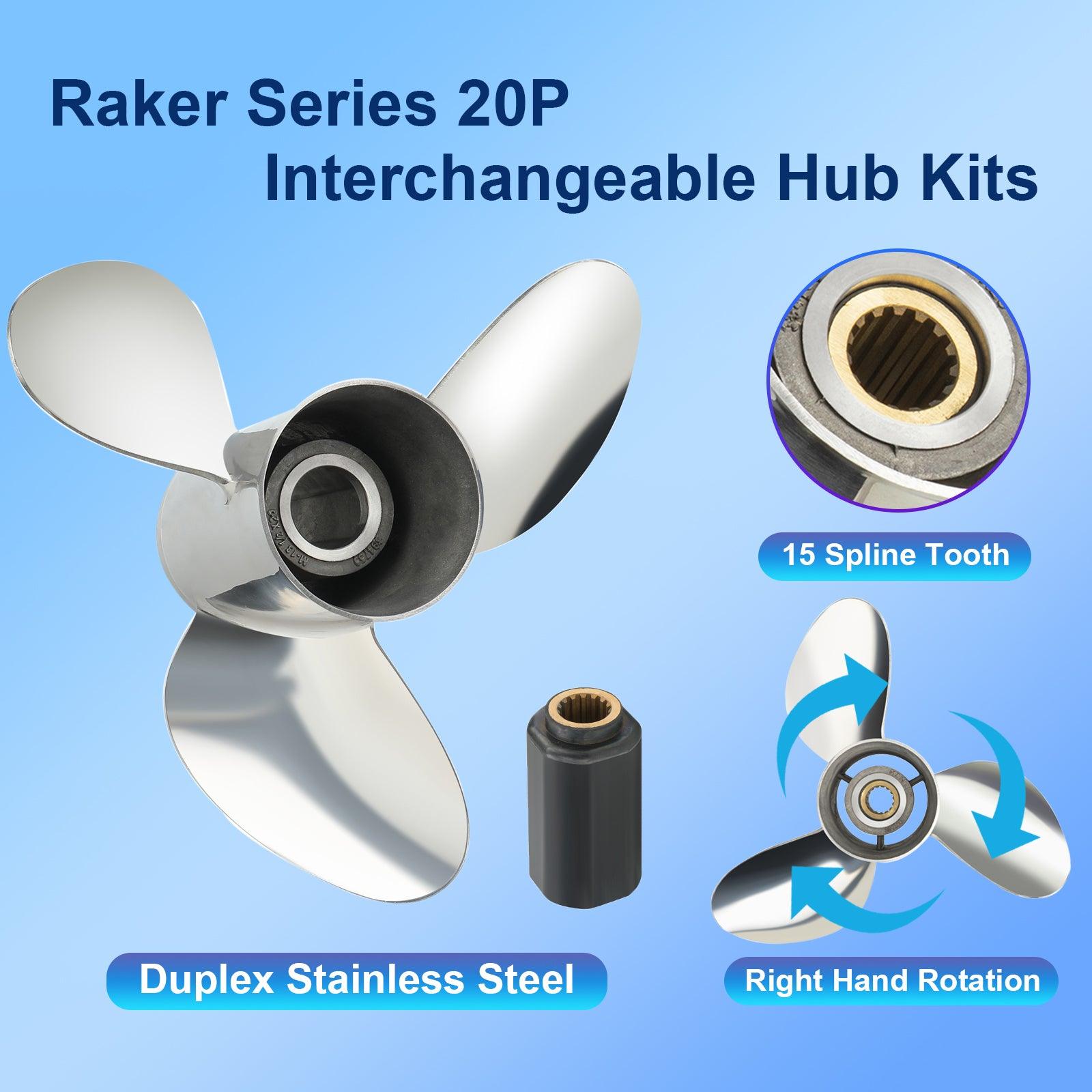
The Raker Series targets the same performance niche as Mercury Raker and PowerTech RKR props. You get aggressive pitch geometry, balanced top-end lift, and stainless steel construction. No licensing. No rebranding. Our 18-specialist R&D team develops every blade geometry in-house, with an average of 12 years each in hydrodynamics and marine engineering.
Four more lines cover the high-performance catalog:
-
Chopper Series — blade geometry built for pure top speed
-
YBS Series — shallow-water specialist; 90% rated thrust at 30cm depth, 68% fewer weed-tangling incidents
-
Veagence Series — upgraded stainless performance tier
Engine compatibility covers Mercury, Yamaha, Suzuki, Honda, Tohatsu, and Evinrude — including E-TEC variants. One supplier. One quote process.
The Manufacturing Case
We produce 12,000 stainless steel propellers per month. Peak season? That scales up by 50%. Four independent CNC lines keep production moving. Raw material becomes a finished prop in 4.5 days on average.
Every unit clears a 16-point inspection. That includes X-ray defect detection, 3D laser scanning, and dynamic balancing held to ≤0.5g tolerance.
Custom pitch and diameter orders ship in three weeks. Each prop carries a 180-day warranty — double the industry standard.
BRP Raker inventory running low? PowerTech lead times stretching out? VIF is the next call worth making.
Raker Propeller Brand Comparison: Side-by-Side Breakdown
Five brands. One decision. Here’s the data laid flat.
|
Brand |
Core Model |
Material |
HP Range |
Price Range |
Key Note |
|---|---|---|---|---|---|
|
Evinrude/Johnson |
Raker H.O. |
Stainless Steel |
90–300 HP (E-TEC G2) |
~$552 (hub extra) |
VVP calibration; hub kits sold as add-ons |
|
Evinrude/Johnson |
Raker I |
Stainless Steel |
V4/V6 OMC |
Used market pricing |
Harder blades, better edge retention than Raker II |
|
Evinrude/Johnson |
Raker II |
Stainless Steel |
115–300 HP |
TBX hub required |
Cupped high-rake blades; >50 mph surfacing builds |
|
PowerTech |
RKR3 / RKR4 |
Stainless Steel |
150–300 HP |
Lower than OEM |
18″–30″ pitch range; Flo-Torq hub included |
|
VIF Propellers |
Raker Series |
Stainless Steel |
Mercury/Evinrude/Yamaha |
40–50% below OEM |
16-point QC; 180-day warranty |
Match Your Use Case
The right prop comes down to what you do on the water — not which brand you prefer.
OEM purists on E-TEC G2 — Raker H.O. is the exact-fit answer. Confirm your spline count (15-tooth). Budget for the hub kit as a separate purchase.
Racing or 50+ mph builds — Go with the Raker II or H.O. paired with high trim and vent holes. The Mercury Tempest Plus clocks a faster holeshot. That matters if you run OMC with an adapter hub.
Budget-conscious replacement — Hunt down a used Raker I. The blade material is harder. Edges hold up longer than the softer alloy used in the Raker II. That’s a consistent finding across forum-level field data — not just opinion.
Aftermarket buyers — PowerTech RKR plugs the OEM gap with a solid fit. VIF brings the price down further. You still get comparable stainless construction, plus a longer warranty.
Three Quick-Reference Facts
-
No aluminum Raker exists. All performance Raker models use stainless steel. Aluminum props like the Hydrus and SSP cover the 40–130 HP recreational range. That’s a different use case.
-
No 4-blade Raker exists. The Cyclone is BRP’s 4-blade offshore option. Need 4-blade performance? That’s your starting point.
-
Mercury doesn’t make a Raker. The Tempest Plus is the nearest Mercury match. You get a faster holeshot, adjustable PVS plugs, and OMC compatibility — as long as you pair it with the right hub kit.
How to Choose the Right Raker Propeller for Your Engine (Buyer’s Decision Guide)
Four variables decide whether your raker prop performs or just floats: pitch, diameter, blade count, and engine match. Get them right, and the prop disappears — you notice the speed, nothing else. Get them wrong, and you’ll feel it on every hard pull.
Match Pitch to Your RPM Target
Pitch is what drives your engine’s tachometer. Low pitch builds RPM fast. That’s useful for heavy loads and quick planing. High pitch raises top speed, but your engine needs to reach its full-throttle RPM band to back it up. For most outboards, that target is 5,000–5,500 RPM at WOT.
The goal is straightforward: your engine should hit peak HP RPM with the prop under load. Test two pitches if you can — one tuned for light loads, one for heavy. This tells you exactly where your setup sits.
Blade Count Is a Tradeoff, Not a Preference
-
3-blade Raker: Built for top speed. You get strong bow lift and faster acceleration through vent holes. This is the right call for bass boats and 60+ mph builds on V4/V6 engines.
-
4-blade alternatives (Cyclone, Rogue): These handle rough water better. Less vibration, improved fuel economy, and lower RPM needed to plane. The tradeoff is a lower top-end ceiling.
Verify Your Engine Before Ordering
Wrong hub = useless prop. Check these four things before you order:
-
HP range — Raker fits V4 115–130 HP and V6 150–300 HP
-
Hub type — V6 Raker II requires the TBX™ hub system; smaller engines use 13 or 14-spline thru-hub exhaust
-
WOT RPM — Stock engines target 3,800–4,000 RPM; magneto-tuned engines run 4,400–4,600 RPM
-
Model and year — Check spline count and shaft diameter against your exact engine configuration. Even small differences matter here.
Stainless Steel Is the Right Material for Raker Performance
Aluminum props work fine on pontoons and work boats. The Raker is a different design — aggressive rake, cupped blades, high-trim surfacing. Stainless steel is the material it needs. You get better blade bite in turbulent water, less slip, and the structural strength to keep blade shape intact at 60+ mph. Aluminum bends under that kind of load. Stainless holds its form.
Conclusion
The raker propeller market has plenty of options. But finding which brand fits your engine, your hull, and your performance goals? That’s where most buyers waste time and money.
Here’s the short version: BRP built the blueprint. PowerTech sharpened the aftermarket. Brands like Michigan Wheel and Solas built their own loyal followings — and for good reason. Every manufacturer in this guide earns its spot on the water.
Specs on a page only go so far. The right raker propeller isn’t the priciest one or the biggest name. It’s the one built for your specific setup — your engine, your hull, your use case.
Stop guessing. Explore VIF Propellers’ full lineup of high-performance boat propellers. Each prop is built to tight tolerances, matched to real engine specs, and supported by a team that knows propellers inside and out.
Your next best run starts with the right blade. Make it count.