
You found a used Suzuki outboard listed as “DF150” — great price, solid reputation. Then you spot the seller’s manual says “DF150A.” Now you’re not sure if the Suzuki Propeller in your garage will even fit.
That single letter carries real weight. Suzuki’s “A” suffix isn’t a cosmetic badge change. It marks a true generational shift in engineering — from the combustion chamber design all the way to how exhaust gases leave the engine.
So before you buy that propeller, or decide if a Suzuki outboard engine upgrade is worth the spend, you need to know what changed between these two motors. Most boaters overlook it. You shouldn’t.
What Is The Difference Between DF150 And DF150A?

The short answer: seven years of engineering refinement, captured in one letter.
Suzuki built the DF150A from scratch — not a patch job on the old model. The clearest proof? The DF150A shares the same engine block as the DF200A. That’s a 2,867 cm³ displacement borrowed from a bigger, more powerful sibling. The original DF150 never got that.
Here’s what that engine change produces on the water:
-
7% better fuel efficiency at cruising speed — real savings across a full season of running
-
3.1% more torque across the entire RPM range, not just at peak
-
Faster acceleration at low and mid RPM — a larger displacement paired with an offset driveshaft and 2-stage reduction makes that happen
-
Stronger pull on loaded or heavy boats — you feel the difference the moment you leave the dock heavy
The Technologies That Separate Them
Three technologies came with the DF150A that the base DF150 never had:
|
Technology |
DF150 |
DF150A |
|---|---|---|
|
Suzuki Lean Burn |
✗ |
✓ |
|
Semi-direct air intake |
✗ |
✓ |
|
High compression ratio (10.2:1) |
✗ |
✓ |
These aren’t marketing additions. Suzuki Lean Burn technology is what drives that fuel economy gain. The semi-direct intake and higher compression ratio work as a pair — together they pull more power out of each combustion cycle. You get cleaner combustion and less fuel wasted.
The DF150A fuel injection system runs multi-point sequential EFI. That’s a more precise fuel delivery setup than the older DF150 used. More precision means better throttle response and more consistent power output across the RPM range.
Quick Specs Reference
|
Spec |
DF150A |
|---|---|
|
Displacement |
2,867 cm³ |
|
Bore × Stroke |
97 × 97 mm |
|
DF150A horsepower specs |
150 HP / 110 kW |
|
Full throttle RPM |
5,000 – 6,000 |
|
DF150 gear ratio |
2.50:1 |
|
DF150 engine weight difference (L shaft) |
235 kg |
|
Oil capacity |
8.0 L |
One spec worth checking for Suzuki propeller selection: the DF150A supports Prop pitches from 15″ to 27.5″ in regular rotation, and 17″ to 26″ in counter-rotation. Both 3-blade and 4-blade configurations are available. That wide range gives you flexibility to match propeller pitch to your hull type and load weight.
Engine Block & Compression Ratio: The Most Critical Mechanical Difference
The compression ratio number stamped into an engine spec sheet looks boring. It isn’t. That single ratio — the difference between 9.8:1 and 10.2:1 — is where the DF150 and DF150A split apart at a mechanical level. It’s the biggest gap between these two engines.
Suzuki didn’t just tweak the DF150A. They rebuilt it from the bottom up, starting with the cylinder block itself.
The Shared Block — and Why It Matters
The DF150A runs on the same cylinder block as the DF200A. That’s not a coincidence — it’s the foundation of everything the DF150A does better.
That shared block isn’t just borrowed for brand consistency. It brings real structural improvements:
-
Thinner walls — reduced by 1.2mm, cutting weight without sacrificing strength
-
Optimized cooling passages — 15% larger flow area, improving heat dissipation by 25%
-
High-strength aluminum alloy with reinforced webbing — precision cast for 20–30% better durability than the prior DF150 design
Thinner walls and better cooling work together. The block stays rigid under hard load and runs cooler at the same time. For a Suzuki 4-stroke outboard running full throttle offshore, that heat management difference is a real advantage.
From 9.8:1 to 10.2:1 — What a 4.1% Shift Does
The compression ratio upgrade is the mechanical core of the DF150A’s performance gains.
Suzuki made the jump from 9.8:1 to 10.2:1 through two precise modifications:
-
A new piston crown with a 0.5mm shallower dome
-
A milled cylinder head reducing chamber volume by 0.020 inches
That sounds small. The effect is not.
Higher compression squeezes the air-fuel mixture about 10% tighter before ignition. Peak cylinder pressure at TDC rises by 15–20%. The practical result:
|
Compression Ratio |
Mid-Range Torque Gain |
Combustion Efficiency |
Heat Converted to Work |
|---|---|---|---|
|
9.8:1 (DF150) |
Baseline |
~85% |
15% lost as exhaust heat |
|
10.2:1 (DF150A) |
+7–12% |
90–93% |
+10% more mechanical output |
At 3,000–4,500 RPM — the range most boaters cruise in day to day — the DF150A puts out 28.5 kg-m of torque versus the DF150’s 26.4 kg-m. That’s an 8% gain right in the middle of the power band. It’s the range that matters most for everyday running.
The Cylinder Head That Completes the Picture
The new cylinder head design adds another layer. Optimized intake and exhaust ports raise charge flow velocity by 18%. That pushes combustion speed up by around 6%. Faster, more complete combustion means less energy escapes as heat — more of it pushes the piston down.
This matters for Suzuki propeller selection. The 10% rise in peak cylinder pressure delivers 9% more torque to the crankshaft. That torque is what decides how hard you can pitch your prop. A stronger-pulling engine at mid-RPM opens up pitch options that would bog down a lower-compression motor.
One practical note: the DF150A needs 91+ octane fuel to hold 10.2:1 without knock. Run lower-grade fuel and the efficiency gains go away. That’s the tradeoff Suzuki made — and for most boaters already running quality fuel, it’s an easy call.
Performance & Torque: Is the DF150A Faster Where It Counts?
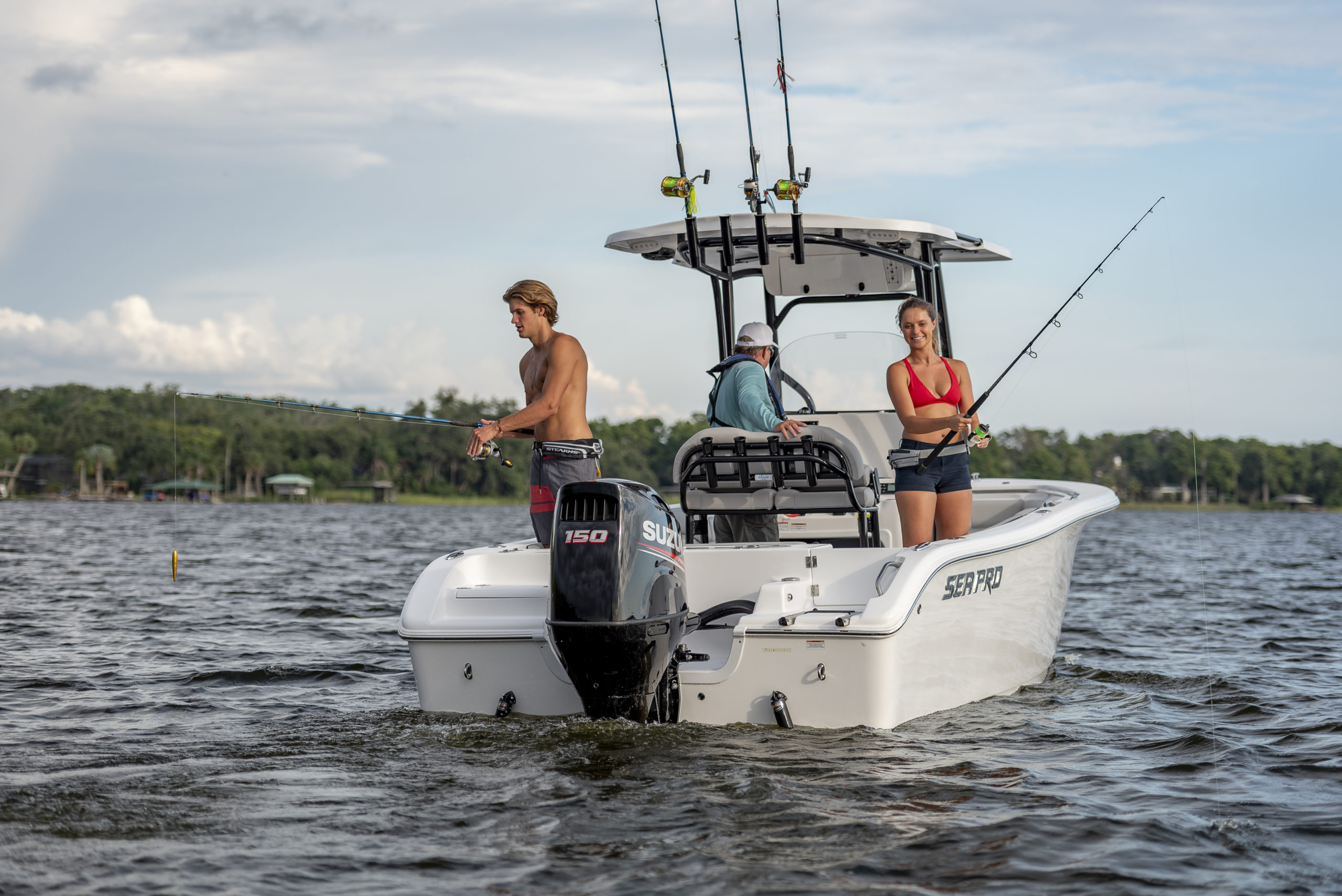
Numbers on a spec sheet don’t tell you what it feels like to push a loaded Boat out of a hole at 6 AM with the tide running against you. The DF150A’s 3.1% torque gain does.
That percentage sounds modest. On the water, it isn’t. The difference shows up right where boaters feel it most — at low RPM, under load, in the first three seconds after you push the throttle forward. Boaters who’ve run both motors back-to-back describe the DF150A’s acceleration as crisper and more responsive. One test report says it straight: “lightning-quick acceleration even loaded, better than prior models.”
That’s not marketing copy. It’s displacement doing its job.
Why a Bigger Engine Block Changes Everything at the Low End
The DF150A runs a 2,867 cc inline-4 DOHC with a square bore-and-stroke of 97 × 97 mm. That geometry matters. A square configuration builds torque across the full RPM band — not just at peak output.
Compare that to a typical 150 HP competitor sitting at 2,354 cc. The displacement gap is real. More displacement means more air-fuel mixture burned per cycle. More burned per cycle means more torque at idle and mid-range. That’s the range you need to pull a heavy hull onto plane fast.
The DF150A delivers peak output of 150 HP (110 kW) at 5,500–5,800 RPM, within a full-throttle range of 5,000–6,000 RPM. That operating window gives you a wide, usable power band. You’re not chasing a narrow power spike — you’re working with a broad, predictable range.
The 2.50:1 Gear Ratio and What It Means for Your Propeller
Performance and propeller selection are directly connected here.
The DF150A’s 2.50:1 gear ratio is what puts torque through to the water. A higher reduction ratio supports a larger propeller diameter. Larger diameter means better propulsive efficiency per revolution. The engine works less. The boat moves more.
Here’s how to use that ratio:
-
Lighter hulls: Run higher pitch to take full advantage of the torque headroom
-
Heavy loads or passengers: Drop pitch to stay within the 5,000–6,000 RPM optimal range. This keeps torque on tap without lugging the motor
-
Offshore running: Mid-range pitch gives you the best balance of speed and fuel economy on long cruising legs
Get this wrong and you leave acceleration on the table. Worse, over-pitching the motor kills your hole shot completely.
The Bottom Line on Speed
Is the DF150A faster? Yes — but where it’s faster is what matters.
The gain isn’t at top speed. It’s in how fast you get there. You plane faster with passengers aboard. You get stronger mid-range pull to reposition in a hurry. Power delivery stays smooth and confident at every point in the RPM curve. Sea trial coverage of the DF150A called out “tremendous acceleration at all speed ranges” — and that lines up with what the displacement and gear ratio data show.
Run a heavy boat or do a lot of stop-and-go in a bay or inlet? That 3.1% torque difference stops being a footnote. It becomes the reason every departure feels solid.
Propeller Compatibility: Do DF150 and DF150A Use the Same Propellers?
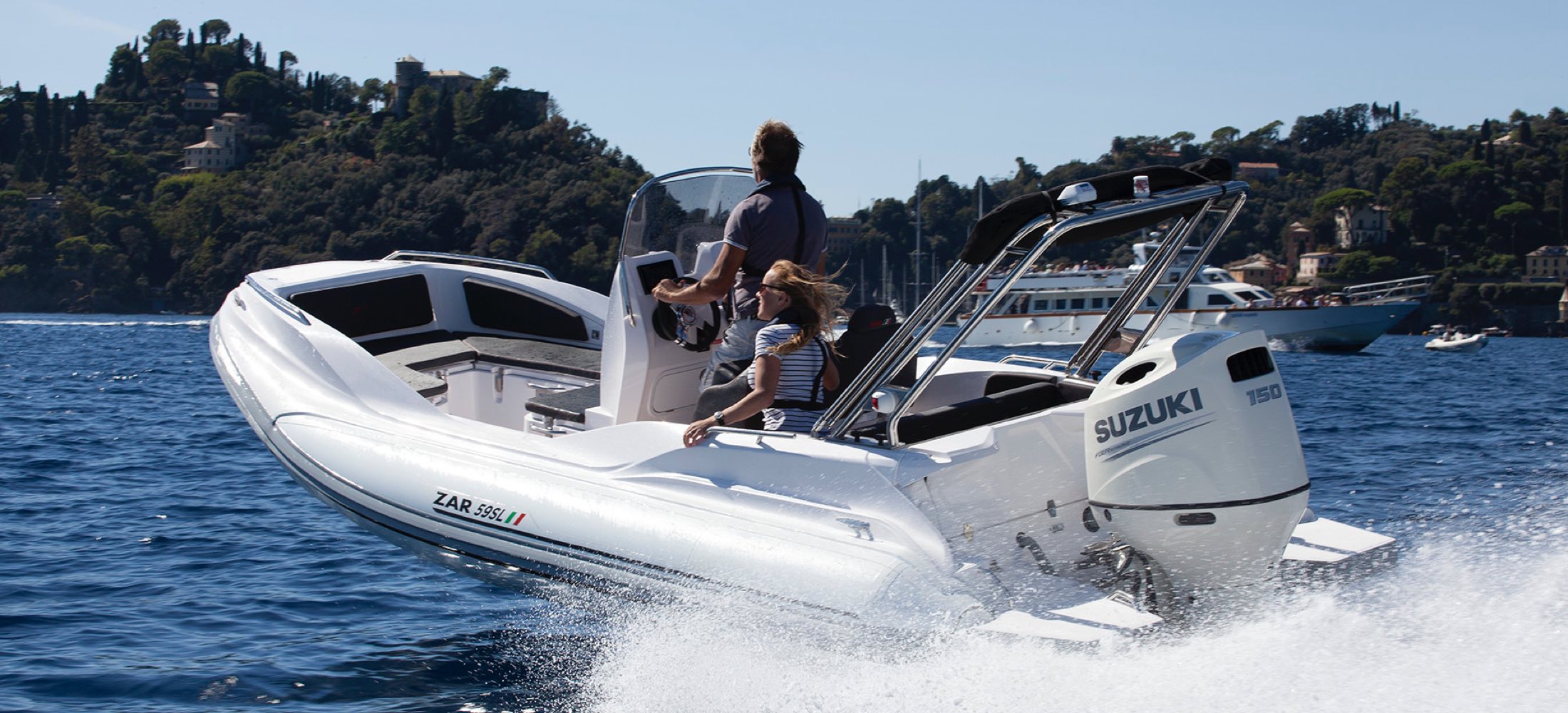
The mechanical answer is yes. The practical answer: it depends on what you want from your propeller.
Both the DF150 and DF150A share a 15-tooth spline propeller shaft and identical gearcase dimensions. That same spec runs across the entire DF150 through DF300 series. Mount a DF150 prop on a DF150A — it fits. Mount a DF150A prop on the original DF150 — that fits too. The hardware doesn’t care which engine it’s bolted to.
But compatibility isn’t the same as optimization.
Same Shaft, Different Demands
The DF150A gets an upgraded cylinder block and a 3.1% torque increase. That changes what the engine can drive. A prop matched to the original DF150 may not get the most out of the newer motor.
Here’s where the part numbers matter:
|
Prop Type |
Part Number |
Fits |
|---|---|---|
|
Non-Watergrip |
57630-92E00 |
DF150 through DF300AP |
|
Watergrip |
57630-93L00 |
DF150A through DF300AP |
Both props mount on either engine. But Suzuki’s own application data points the Watergrip 57630-93L00 toward the DF150A. It’s built to use the upgraded torque curve and fuel injection precision that the newer engine delivers.
Choosing the Right Pitch for Each Engine
-
DF150 (original): A 16″ × 20″ pitch, 3-blade aluminum or stainless works well for most 16–20 ft hulls. That’s the sweet spot for the original engine’s output.
-
DF150A: Go up 1–2 inches in pitch. A 16″ × 21″ or 22″ stainless 3- or 4-blade prop pulls more from the DF150A’s torque headroom. You stay within the 5,000–6,000 RPM operating range without pushing the motor too hard.
Running the wrong pitch costs you real performance. Over-pitch the DF150 and you kill the hole shot. Under-pitch the DF150A and you leave the engine’s torque gains sitting unused.
How to Confirm Your Engine Before You Order
Check the engine nameplate sequence number before picking a propeller:
-
DF150 units carry a sequence format of 150XXXX
-
DF150A units read as 150AXXXX
That single letter tells you which prop list to pull from. Cross-reference the OEM part numbers above, and you’ll order the right one the first time.
DF150 vs DF150A: Is Upgrading Worth It? (Quick Decision Guide)
The upgrade question has a clear answer — once you know where you land on the cost-versus-use equation.
The DF150A starts at $15,840. That’s not pocket change. Before you write the check — or walk away from a used DF150 listed at half that price — run through these scenarios. The right answer is already in your numbers.
Scenario 1: You Run Long Distances and Fuel Bills Hurt
Buy the DF150A. Full stop.
Suzuki Lean Burn technology uses oxygen and knock sensors in real time. The result: a 7% fuel economy gain over the original DF150. On a long offshore run, that’s not a small detail. It shows up as a real cost at every fuel dock, season after season. Log 500+ hours per year, and the DF150A’s efficiency builds into serious savings. That price gap closes faster than most people expect.
Scenario 2: You’re Running Heavy Loads or a Big Hull
Same answer.
The DF150A’s +2.1% to +3.1% torque gain — combined with the shared DF200A block — gives you more pull where you need it most. That’s at low RPM, under load, leaving the dock heavy. The gear ratio also changed: 2.50:1 with 2-stage reduction, up from the original DF150’s 2.29:1 final drive. That difference alone changes how hard you can pitch your Suzuki propeller before the motor bogs down.
Scenario 3: You’re a Light User With a Running DF150
Skip the upgrade — for now.
Your annual hours are low. Your DF150 is running well. The performance gains (2–7% across metrics) don’t cover the cost difference. There’s one real exception: you need digital fly-by-wire controls. The DF150AP version adds those for roughly $1,200 over base. Cable throttle users don’t have a strong performance case for upgrading.
Used DF150 vs. New DF150A: The Honest Numbers
|
Option |
Best For |
Cost Estimate |
|---|---|---|
|
Used DF150 |
Budget under $10k, low hours, light use |
$8,000 – $12,000 |
|
New DF150A |
500+ annual hours, heavy loads, fuel savings priority |
$15,840+ |
The used DF150 wins on upfront cost. On technology, it falls short. No Suzuki Lean Burn. No DF150A fuel injection system precision. No digital control option. For a boater running hard and often, that technology gap adds up to real money over time.
For everyone else, a clean, low-hour used DF150 is still a capable, proven Suzuki 4-stroke outboard — and a smart buy at the right price.
How the DF150A Sits Against the Competition
One more angle before you decide: the broader 150 HP class.
|
Engine |
Weight (20″ shaft) |
Displacement |
Fuel Economy Edge |
Digital Controls |
|---|---|---|---|---|
|
Suzuki DF150A |
511–520 lbs |
2.8L |
+7% Lean Burn |
Yes (AP version) |
|
Yamaha F150 |
480 lbs |
2.7L |
Baseline |
Yes |
|
Mercury 150 4S |
456 lbs |
3.0L |
Baseline |
No |
The DF150A is not the lightest on this list. Both Yamaha and Mercury beat it on weight across outboard motor shaft length comparisons. Neither one matches the DF150A exhaust system efficiency paired with Lean Burn — that’s what drives the 7% fuel economy lead.
Weight is your top priority? Yamaha wins. Fuel efficiency and steady torque over a long ownership cycle matter more? The DF150A is the clear class leader.
FAQ: Common Questions About DF150 vs DF150A
These questions keep showing up in boating forums, marina conversations, and late-night Google searches. Straight answers here.
Do DF150 and DF150A propellers fit each other?
Yes. Both engines share the same shaft splines and gearcase dimensions. Boaters on Hull Truth and BassResource confirmed this through real-world testing. Props mount and work across both variants — no modification needed.
Do both models have Lean Burn?
The original DF150 has a basic Lean Burn setup. The DF150A runs an upgraded version. It adds oxygen and knock sensors that manage the fuel mixture in real time. That sensor layer delivers the +7% overall fuel economy gain, rising to +14% at cruising speed. Same name — very different execution.
Does the DF150A have VVT?
No. Variable Valve Timing is a DF175A feature. The DF150A gets its torque gains from a higher 10.2:1 compression ratio instead. The tradeoff is a narrower powerband compared to the DF175A. Most boaters running standard recreational loads won’t notice it.
Is the DF150A still in production?
As of 2026, yes. Suzuki lists and sells it through official channels. The DF150A is the current successor model. The original DF150 has no official discontinuation notice, but Suzuki’s engineering focus moved to the A generation.
Will maintenance cost more on the DF150A?
A little, maybe. Both engines share inline-4 components and similar service intervals. The DF150A adds O2 and knock sensors for Lean Burn. More electronics means more potential service points. Nothing major — but worth keeping in mind over a long ownership period.
Conclusion
The gap between the DF150 and DF150A isn’t just a letter — it’s a full generation of engineering. The engine block was redesigned. The fuel injection system got smarter. Gear ratios are tighter. Together, these changes mean the outboard runs cleaner, pulls harder, and burns less fuel across a long season.
But here’s what matters most for boat owners: Propeller Compatibility is not guaranteed between these two models. Get that wrong, and you lose performance before you leave the dock.
Before ordering a replacement or upgrade, do three things:
-
Confirm your exact model
-
Check your shaft length
-
Match the propeller pitch to how you run your boat — not just what looks right on paper
At VIF Propellers, our entire catalog is built around that level of precision. Browse our Suzuki propeller lineup to find the exact fit for your DF150 or DF150A. The right propeller doesn’t just move your boat. It transforms it.