
Replacing a damaged prop or upgrading for better performance seems simple. Then you search online and find a dozen suppliers all claiming to offer the best Honda outboard motor propeller at the “best price.” Some back that claim with real engineering knowledge and Honda BF compatibility data. Others are just moving stock.
Picking the wrong one is costly. A mismatched propeller pitch or diameter drains your fuel efficiency across the whole season. That’s hundreds of dollars lost — not from one bad purchase, but from a prop that was never right for your motor.
This guide compares real suppliers across four areas:
-
Price
-
Material quality
-
Compatibility depth
-
Post-sale support
You’ll see which sources are worth your money — and which ones to skip.
Content Framework: Which Supplier Offers The Best Value For Money In Honda Propellers
Four suppliers dominate this space — and each one plays a different game.
Wholesale Marine brings together brands like Michigan Wheel, Solas, and Turning Point in one place. The Captain’s Club Rewards program gives you ongoing discounts. Plus, their free prop selection guide does the matching work for you.
Get A Prop runs aggressive SALE pricing across Michigan Wheel, Powertech, and Quicksilver — often beating OEM cost. You get same-day shipping and a dedicated Honda RPM Guide. That makes it a strong pick for buyers who need fast turnaround.
Deep Blue Yacht Supply leads on low price claims. It works best for straightforward replacements where budget is your main concern.
Prop Shop Inc goes deeper on spec precision — great for smaller Honda BF engines (7.5–10 HP). Their 3-blade aluminum options come in rubber hub and pin drive setups. These are built for older BF models like the BF 7.5 (1978–87) and BF 8 (1987–99).
One pattern stands out across all four: aftermarket brands come in below OEM pricing — without dropping the compatibility data you actually need.
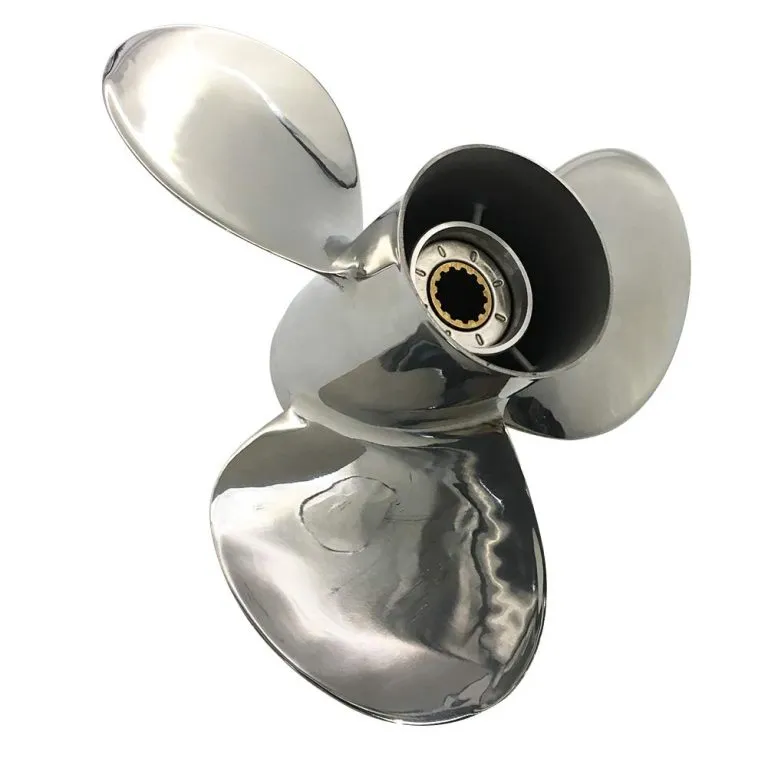
What “Best Value” Means When Buying Honda Propellers
Value isn’t price. That distinction matters more here than in almost any other marine equipment category.
Take a $90 aluminum prop that’s one inch off in pitch. It costs you 150–200 RPM — pushing your Honda BF outside its optimal operating range every time you run it. Over a full season, that means excess heat, carbon buildup, and accelerated wear on engine components. Those repairs cost far more than the “savings” you got at checkout.
True value in a Honda outboard motor propeller comes down to three things:
-
Material fit for purpose — Aluminum propellers work well for recreational boating. They also act as a sacrificial layer during impacts, protecting your gearcase. stainless steel propellers cost more upfront. But you get better efficiency, durability, and blade rigidity for high-horsepower or performance use. Neither is “better” across the board. The right choice depends on how and where you boat.
-
Specification precision — Gearcase diameter — not horsepower — determines propeller compatibility. A BF75 and BF90 share the same 4.25-inch gearcase. The BF115 through BF250 step up to 4.75 inches. Get this wrong and you end up with a prop that fits on paper but performs badly — or doesn’t fit at all.
-
Long-term cost of ownership — The cheapest boat propeller for sale is not the most economical choice over time. A well-matched, correctly pitched stainless steel propeller can pay for itself through fuel savings alone within a single season.
Best value means the right spec, right material, right hub system — at a fair price.
Wholesale Marine: Deep Inventory With Expert-Backed Propeller Matching
Wholesale Marine solves a problem most propeller buyers don’t know they have. Finding the right hub kit for a specific Honda BF model usually means calling three different suppliers. Here, you do it in one place.
Their prop selection guide filters by engine manufacturer, horsepower, model, year, and pitch. It covers 14 brands — Honda, Solas, Suzuki, Yamaha, and Tohatsu among them. Over 7,900 SKUs sit in the propeller category alone. That’s real inventory depth, not a landing page claim.
The brand lineup backs that up. Michigan Wheel, Solas, Turning Point — all stocked together. That’s useful when you’re comparing a 3-blade aluminum against a 4-blade stainless steel for the same Honda outboard. You get side-by-side options without jumping between sites.
Where the Pricing Gets Interesting
Michigan Wheel discounts are strong and consistent across the board:
-
Michigan Match 3-Blade 9-1/4×11P — $154.99 list → $103.99 (~33% off)
-
Michigan Apollo 3-Blade 14×21P SS — $665.99 list → $452.99 (~32% off)
-
Michigan Apollo 4-Blade 14×22P SS — $697.99 list → $453.99 (~35% off)
Solas and Turning Point hub kits sit in a different tier. Discounts run 10–15%, but the base prices are lower. A Turning Point 205 Hub Kit — compatible with Honda 8–20 HP, 2.5″ gearcase, 8-spline — drops from $36.99 to $24.49.
Hub Kit Interchangeability: The Detail Most Buyers Miss
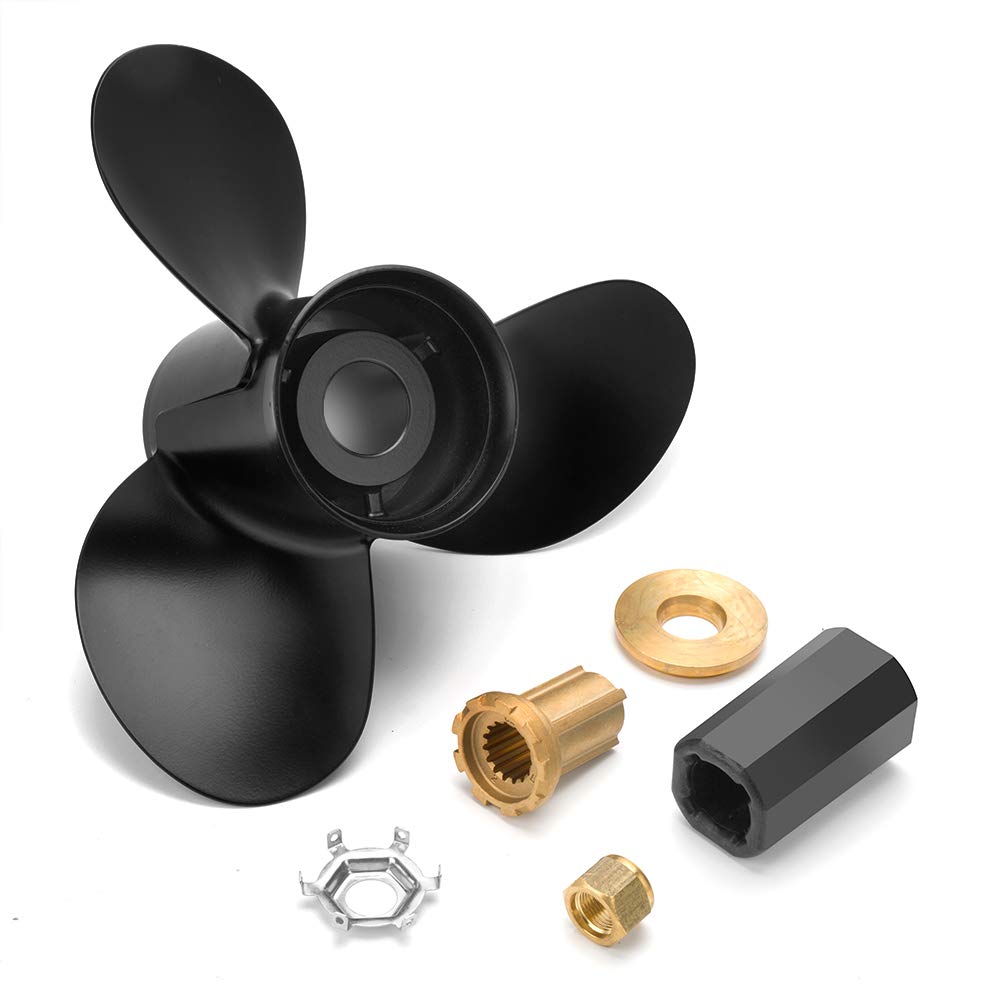
Michigan Wheel XHS, Turning Point, Solas Rubex, and Mercury Flo-Torq II are cross-compatible. You can run a Michigan Wheel blade with a Solas Rubex hub kit — same prop, different kit brand. For dealers or marina operators stocking parts across multiple engine brands, this cuts SKU count and reduces capital tied up in parts.
The Michigan Wheel 202 XHS hub kit covers Honda 75–90 HP (1995–1998, 15-spline). The Turning Point 205 covers Honda 8–20 HP on a 2.5″ gearcase. Both work within the same propeller blade unit.
One practical limitation: Wholesale Marine’s Captain’s Club discount tiers and bulk/dealer pricing aren’t listed on the site. Buying at volume means calling 877-388-2628 to get actual wholesale numbers. Also, the quality of their Honda-specific pitch matching support over the phone is unverified.
For individual buyers, the listed discounts are solid. For commercial purchasers, the pricing ceiling stays unclear without direct contact.
Get A Prop: Same-Day Shipping and Honda-Specific RPM Matching Guide
A bent prop mid-season with a charter booked for Saturday — that’s a real problem. Speed matters.
Get A Prop built their model around that reality. Same-day shipping is the headline feature. But the tool that sets them apart is their Honda-specific RPM Matching Guide.
Most suppliers give you a compatibility chart. Get A Prop gives you a decision framework.
How the RPM Matching Guide Works
The guide maps WOT (wide-open throttle) RPM targets by engine size. Then it shows you how to adjust pitch to hit those targets:
-
BF2: 5,000–6,000 RPM | BF8–9.9: 4,500–5,500 RPM | BF15: 4,500–5,500 RPM | BF25+: 5,000–6,000 RPM (modern 4-stroke)
The adjustment rules are where it gets practical:
-
+1 inch of pitch = −150 to 200 RPM at WOT
-
−1 inch of pitch = +150 to 200 RPM
-
3-blade to 4-blade = −50 to 100 RPM (same pitch)
-
Adding cup = −200 RPM
Run your tachometer at WOT. Compare the reading against your Honda’s target range. Say you’re reading 4,800 RPM but your BF’s peak is 5,600. That’s 800 RPM short — close to a 4-inch pitch drop to fix it.
That’s not guesswork. That’s a solid number you can order against.
Pricing Comparison
On a Michigan Match 3-Blade (35–60 HP Honda, 3.25″ gearcase, 13-spline), Get A Prop lists $152.56 → $98.95 — a 35% discount off list price. OEM Honda equivalents for the same range run $150–250, depending on part number.
Need the right prop fast? Want to confirm RPM fit before it ships? This mix of speed and spec clarity is hard to beat.
Deep Blue Yacht Supply: Lowest Sticker Price — But Is It Enough?
Price is the whole pitch here. Deep Blue Yacht Supply leads with “lowest prices” and “largest inventory” across their category pages. On certain product lines, those discounts are real.
Michigan Wheel Apollo stainless sterndrive props back that up:
-
13″×21 RH (#993146): $312.99 vs. $446.27 retail (~30% off)
-
13-7/8″×23 RH (#993046): $467.99 vs. $668.27 retail (~30% off)
-
14″×22 RH (#993206): $496.99 vs. $709.96 retail (~30% off)
Solid numbers. Those discounts cover aftermarket Michigan Wheel lines, though. Volvo Penta OEM sets are a different story. Their Duo Prop Type C sits at $2,159.99 (retail $2,400.00) — that’s about 10% off. The discount depth varies a lot across the catalog.
The Honda Problem
Sourcing a Honda outboard motor propeller here? Honda’s engine coverage is not confirmed at Deep Blue. Their sterndrive stainless inventory lists OMC, MerCruiser, Yamaha, and Volvo Penta. Honda outboards don’t appear in the listed engine categories at all.
A prop selector tool does exist on the site. Whether Honda shows up in that dropdown is unverified. No Honda in the dropdown means you start cross-referencing part numbers by hand. That’s exactly where mismatched propeller pitch and diameter errors creep in.
Who This Works For
Deep Blue suits a specific buyer. Think recreational boaters swapping out standard aluminum props on covered engines. They’re price-sensitive and fine with waiting on stock delays. Several Type C listings show “Out of Stock — Ships Later” with no ETA attached.
For that buyer, a 30% discount on a stainless steel boat propeller is a real win.
For Honda BF owners, it’s a different story. There’s no live chat, no fitment guarantee, and no clear return process. The compatibility gap is real. An ordering mistake is easy to make, and there’s no safety net to catch it.
The bottom line: Deep Blue builds its value around price. That’s enough for the right buyer. Need Honda BF propeller compatibility confirmed before checkout? Price alone doesn’t fill that gap.
Propeller Pros & VIF Marine: Niche Specialists With Targeted Honda Solutions

Most aftermarket suppliers cast a wide net. Propeller Pros and VIF Marine do the opposite — they go narrow, deep, and Honda-specific.
VIF Marine’s catalog covers the full Honda BF range: 8 HP to 250 HP, aluminum and stainless options, 3-blade and 4-blade configurations. Factory-direct pricing puts their props 40–50% below what Mercury or Yamaha charges for the same specs. That gap isn’t a promotional discount. It’s structural — no middleman markup built into every unit.
The Honda BF Torque Matching Difference
Generic aftermarket props are built to fit. VIF props are built to perform. Each one is matched to the Honda BF torque curve, with a mid-range fuel economy focus rather than peak-RPM output.
The practical details matter here:
-
Spline count: Honda 150 HP+ outboards run 15 splines. VIF sorts its catalog by engine group and spline count — not just horsepower. Count your shaft teeth before you order. You’ll pull the right prop every time.
-
Pitch troubleshooting: Over-revving at 6,200 RPM against a 6,000 RPM limit? Add 1–2 inches of pitch to drop it back 150–300 RPM. Poor hole shot? Drop pitch, or go cupped.
Why Cupped Stainless Matters on Honda Outboards
Cupping grips water through turns and stops ventilation — that engine-revving, boat-slowing condition that kills performance mid-corner. A stainless cupped prop also adds stern lift for faster planing. Stainless blades are about 5x stronger than aluminum, with thinner profiles that cut drag and reduce slip losses by 2–3 MPH on their own.
Aluminum props carry 15–20% slip. Stainless drops that to 10–12%. That difference shows up in top speed and acceleration every single run.
The Inventory Advantage Nobody Talks About
A local marine shop usually stocks one aluminum prop in a common pitch. VIF carries engine-specific inventory — Honda BF-optimized, sorted by spline, pitch, and blade geometry. That depth is what makes niche specialists worth using for anything outside a basic swap on a common motor.
Honda BF owners who want spec precision without paying OEM premiums — this is where the real value sits.
OEM Honda Propellers vs Aftermarket Brands: A Real Cost-Performance Breakdown
The price gap is real, and it’s not small. OEM Honda propellers cost twice as much as quality aftermarket alternatives. That spread has pushed more buyers toward the aftermarket than ever before.
That shift isn’t reckless. It’s informed.
Aftermarket propeller manufacturing has come a long way over the past decade. The best brands now run CNC pitch verification, X-ray casting inspection, and dynamic balancing as standard production steps — not optional quality tiers. The result is blade symmetry and stability that goes head-to-head with OEM output.
But the gap hasn’t closed all the way. Here’s where it still matters.
What OEM Buys You
OEM Honda propellers use tighter material specs and stricter production tolerances. That means longer service life, fewer replacement cycles, and a cleaner warranty trail. Boats with documented OEM maintenance records carry a clear resale value premium — buyers pay more for predictable history.
The total cost of ownership picture favors OEM more than the sticker price shows:
-
Fewer replacements = lower cumulative spend over 5–10 seasons
-
Reduced labor costs from less frequent repair cycles
-
Liability clarity — OEM parts are easier to defend in incident scenarios
-
Warranty processing runs smoother with OEM components on record
Where Aftermarket Wins
Quality aftermarket props — from brands like Solas, Michigan Wheel, or VIF — can deliver 25% or more in savings versus OEM dealer pricing. One real-world case: a boater switched to an aftermarket prop at $120 all-in (including brokerage fees) and reported better handling plus a measurable speed gain over the OEM unit it replaced.
One real concern worth knowing: many aftermarket options need a separate hub kit. That adds a compatibility step OEM skips. Get that hub wrong, and the savings disappear fast.
The Smart Call
High-usage commercial operations need uptime and warranty coverage. OEM is the lower-risk investment for that use case, even with the higher price tag.
Recreational Honda BF owners who want the most performance per dollar have a strong case for aftermarket. Pick a precision-made prop spec’d to your engine’s pitch range and spline count. You close the quality gap and keep real money in your pocket.
The decision isn’t OEM versus aftermarket. It’s knowing which situation you’re in.
Key Propeller Specs You Must Match Before Choosing Any Honda Supplier
Supplier reputation means nothing if you order the wrong spec. A propeller may look right on a product page. But if it doesn’t match your Honda BF’s core parameters, you lose performance, burn more fuel, and spend more money — no matter how reputable the brand is.
Here are the six numbers every Honda outboard owner needs to confirm before contacting any supplier.
Diameter and Pitch: The Two Numbers That Control Everything

Diameter ranges from 7¼” to 13⅞” across the Honda BF lineup. Pitch runs from 4¾” to 23″ in incremental steps. These two specs control how your motor loads at wide-open throttle. Get pitch wrong, and it costs you.
Every 1-inch pitch increase drops RPM by 300–400. Your Honda BF40 targets 5,000–6,000 RPM at WOT. Go one inch too high and you’re outside that range before you leave the dock. Honda’s own part number system shows how precise this gets:
-
9¼” × 7″ — Part #58133-ZV4-007AH
-
9¼” × 8″ — Part #58133-ZV4-008AH
-
11¾” × 11″ — Part #59133-ZV5-011AH
-
13⅞” × 15″ R/H — Part #58133-ZW1-A15HR (Titan series, high-power 4-stroke)
3-Blade vs. 4-Blade: Match Blade Count to Horsepower
This isn’t a preference call. It’s an engineering decision based on your engine’s output range:
|
HP Range |
3-Blade |
4-Blade |
|---|---|---|
|
Under 50 HP (e.g., BF40) |
Higher top speed; standard aluminum |
Better thrust for heavy or displacement hulls |
|
50–115 HP (e.g., BF60–BF115) |
Efficiency and speed in stainless |
Load-carrying applications |
|
Above 115 HP |
Max speed and fuel efficiency (Titan 13⅞” × 23″) |
Not a good fit — stick with 3-blade stainless |
Material: Match It to Your Horsepower and Environment
-
Plastic — under 2.5 HP only
-
Aluminum — up to 40 HP, or rocky/shallow water where a sacrificial layer protects your gearcase
-
Stainless steel — above 40 HP where durability, cavitation resistance, and blade rigidity matter
The Four Specs Suppliers Often Skip
Confirm all of these before approving any order:
-
Rotation direction — R (standard clockwise) or L (counter-rotating for dual setups)
-
Shaft spline count — Honda 150 HP+ runs 15 splines; count yours before ordering
-
Hub diameter — a hub mismatch may look fine but transfers vibration under load
-
CNC pitch tolerance — a ±1mm deviation off spec causes measurable vibration at running RPM
A supplier worth your business will verify all six specs against your exact Honda BF model and year — before the prop ships.
Supplier Value Scorecard: Which One Wins for Your Honda Setup
Five suppliers. Different strengths. One Honda setup. The scorecard below cuts right to the point.
Score each category based on what matters most for your situation:
|
Criteria |
Weight |
Why It Matters |
|---|---|---|
|
Price |
30% |
Total cost, not sticker price |
|
Compatibility |
25% |
Spec precision for your BF model |
|
Delivery |
20% |
Backorder risk and lead time |
|
Tech Support |
15% |
RPM guidance, fitment verification |
|
Brand Reliability |
10% |
Consistency across seasons |
Run your own score: (Price ×0.3) + (Compatibility ×0.25) + (Delivery ×0.2) + (Support ×0.15) + (Brand ×0.1). The highest total wins for your setup.
Match Your Buyer Type to the Right Supplier
|
Your Situation |
Priority Criteria |
Best Fit |
|---|---|---|
|
Leisure boater |
Compatibility + Brand |
VIF Marine |
|
Fishing enthusiast |
Price + Delivery |
Get A Prop |
|
Commercial operator |
Tech Support + Quality |
Wholesale Marine |
|
Bulk dealer |
Price + Delivery volume |
VIF Marine direct |
Emergency replacement? Delivery is the top priority. Pick a supplier with zero backorder risk and same-day shipping. That’s Get A Prop’s core strength — fast stock, no delays.
Planned upgrade? Price and compatibility together make up 55% of your total score. VIF offers factory-direct pricing and Honda BF torque-matched specs. For planned purchases, it comes out on top.
Conclusion
The right Honda outboard motor propeller isn’t the cheapest one. It’s the one that pays for itself over time.
Replacing a bent blade or sourcing boat propellers for sale in bulk — your supplier choice has real consequences. It affects your engine’s RPM range, fuel efficiency, and long-term reliability. A rushed purchase can cost you hundreds in replacements. An informed one saves you that money.
Here’s what to do:
-
Match your specs first
-
Check material quality
-
Look for Honda BF compatibility documentation
-
Confirm post-sale support is available
Price comes last, not first.
VIF Marine delivers on all three fronts — material quality, Honda BF compatibility, and post-sale support. That makes it the strongest choice for boaters who won’t trade performance for a lower price tag.
Ready to run at peak RPM? Browse VIF’s Honda-compatible propeller catalog and find your exact match in minutes.