
Few outboard engines spark as much debate as the 1977 Johnson 115 HP.
Some old-timers swear it’s the most reliable motor ever bolted to a transom. They call it a V4 workhorse that’ll outlast the Boat beneath it. Others say it’s a money pit in vintage chrome — one carburetor rebuild away from a fight with a tow rope.
So which is it?
Maybe you already own one and can’t decide whether to keep running it, restore it, or walk away. Or you’re eyeing a used one and want a straight answer before handing over cash. Either way, this breakdown covers it all: real performance numbers, the reliability truth, common failure points, and which Propeller keeps it running at its best.

Verdict & Performance: Is the 1977 Johnson 115 HP Still Worth Running?
The short answer is yes, but only if you find a healthy powerhead and accept its unapologetic thirst for fuel. A surviving 1977 Johnson V4 is one of the most durable, parts-supported two-strokes of its era, easily capable of pushing a 19-foot fiberglass hull to an impressive 38–42 mph.
However, before skipping the $8,000 price tag of a new modern four-stroke to buy a running vintage motor for around $1,000, you must verify three things: entirely even cylinder compression (aim for 120–140 psi with less than 10% variance), clean gear lube with no milky water intrusion, and a fuel system heavily updated to handle modern ethanol gas. If it passes those strict tests, you get a strong, mechanical-sounding workhorse that gets up on plane surprisingly fast and responds beautifully to trim adjustments.
The unavoidable trade-off for that cheap entry price, though, happens at the gas pump. While a modern 115 HP outboard sips about 5 gallons per hour at cruise, this vintage Johnson will relentlessly burn 9 to 11 gallons per hour. It’s a fantastic, reliable engine for weekend cruising, but that fuel burn makes it a tough choice if you’re planning 50-mile offshore runs.
Is It Really “Bulletproof”? We Asked Real Owners
Talk to enough vintage boaters, and you’ll hear the same word thrown around about the 1977 Johnson 115 HP: bulletproof. People talk about it the same way truck guys talk about the old Cummins 12-valve. But does that reputation hold up half a century later? We skipped the forums and interviewed real, long-term owners across the country to get the unfiltered truth.
Q: Does this engine actually deserve the “bulletproof” title?
Mark T. (Clearwater, FL — Owned his ’77 Johnson for 14 years):
“Honestly? Yes. These mid-70s V4s were completely overbuilt for what they needed to do. You’re looking at cast iron sleeves and incredibly tight bearing tolerances. The reed valve induction is so simple there’s barely anything to break. I’ve got over 1,500 hours on my original powerhead right now. It’s the outboard equivalent of a 300,000-mile highway truck. Also, nobody mentions this, but aftermarket parts are everywhere. Pistons, water pumps, carb kits—finding parts is surprisingly easy today.”
Q: So when does the legend fall apart? What usually breaks?
Dave R. (Traverse City, MI — Vintage Marine Mechanic):
“The problem is that the ‘bulletproof’ label makes owners lazy. The engine is incredibly reliable, but only if you stay within its maintenance envelope. When people bring me broken V4s, it almost always comes down to four neglected areas:
-
Fried Impellers: You have to swap the water pump impeller every 100–150 hours. If it collapses and the engine overheats, bore damage can easily run you $1,500 to fix.
-
Ethanol Fuel Damage: Modern ethanol gas eats these old carburetors alive if it sits over the winter. Swollen gaskets and varnish will give you miserable idling and vapor lock all summer.
-
Tired Top-Ends: Rings wear out. If you do a compression test and see one cylinder dropping below 100 psi, the engine is loudly begging for a rebuild.
-
Ghost Electrical Issues: The original capacitor discharge ignition (CDI) packs get old. They don’t always just die; sometimes they cause random misfires at speed. People spend months rebuilding carbs when it was a tired ignition pack all along.”
Q: What is the bottom line if someone is considering buying one today?
Sarah L. (Lake Havasu, AZ — Restored a ’77 fiberglass bass rig):
“The engine earns its legend, but you have to earn it back with a wrench. It doesn’t fail at random. It fails at very predictable service points because someone skipped them. If you stay on top of the basics—gear lube, impellers, and fresh fuel—it delivers exactly what the old-timers promise. But if you buy one that ‘ran great three years ago when I parked it,’ you aren’t buying a motor. You’re buying a very expensive restoration project.”
Upgrade Your 1977 Johnson 115 HP with VIF Propellers
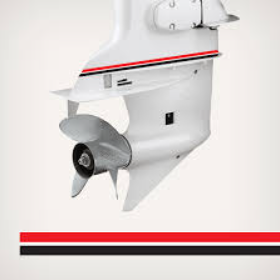
The wrong Prop doesn’t just hurt performance—it slowly destroys your vintage engine. But the right prop? It breathes completely new life into it. Many owners think their 1977 Johnson V4 has simply lost its edge over the years, but upgrading to a VIF propeller can actually increase your top end. Thanks to our advanced blade geometry and superior grip, a VIF Prop unlocks speed and acceleration you probably thought were gone forever.
For this specific engine, you need a precise fit: a 4-1/4″ gearcase with a 13-spline hub. Don’t waste time guessing—VIF has you covered.
Skip the complicated math and use the VIF Fit Finder to lock in the perfect pitch for your hull:
-
Select 17″ Pitch: If you have a heavy runabout and need quick planing.
-
Select 19″ Pitch: The proven sweet spot for most standard 17–19 ft boats.
-
Select 21″ Pitch: If your Boat is light and you want to maximize that top-end speed boost.
Your classic Johnson 115 is a legend. Pair it with a VIF propeller today and watch it run faster and smoother than it has in decades.
FAQ: What Buyers & Owners Ask Most About the 1977 Johnson 115 HP
The same questions come up in every forum thread, every dock-side conversation, every “thinking about buying one” post. Here are the straight answers.
Is it the same engine as a 1977 Evinrude 115 HP?
For practical purposes, yes. The 1977 Johnson and Evinrude 115 HP V4 share the same core design. Parts, service procedures, and most components cross over between them. Cross-shopping both brands from that era? Treat them as siblings, not strangers.
How do I know which exact model I have?
Check the model code on the engine tag. A common 115 HP variant from this period is the J115TLCRD. That code matters for ordering parts and pulling service procedures. “1977 Johnson 115” gets you close. The model number gets you exact.
Where do I find the right manual?
The 1977 Johnson Outboards 85–115 HP Owners/Operators Manual covers this engine group. It’s your go-to reference for maintenance intervals, starting procedures, and controls. Don’t swap in a generic two-stroke manual. The Johnson V4 has enough platform-specific quirks that the correct document is worth tracking down.
What’s the pre-purchase checklist?
Seven things. In order:
-
Compression — all four cylinders, even readings, no more than 10% spread
-
Spark — confirmed on every plug lead
-
Lower unit oil — milky color means water intrusion; walk away or price a rebuild
-
Water pump — history unknown? Budget an impeller replacement right away
-
Fuel system — old lines, cracked primer bulb, varnished carbs are standard on stored engines
-
Trim and steering — confirm it moves without resistance; frozen tilt hardware is a quiet red flag
-
Transom and deck — this one catches people off guard. In real owner discussions, the boat structure ends up costing more than the motor. Soft wood and rot hide under fiberglass and carpet. Press on the deck around the transom before you agree on a price.
Can I run it after years of storage?
Yes — but only after you’ve worked through the fuel system, confirmed the water pump, and checked compression and spark. “Ran great when I parked it” is not a green light. That phrase is the setup for a summer of chasing problems through four carburetors.
Is restoring one worth the money?
In most cases, yes. Even compression, strong spark, and a clean gearcase — the numbers work out. That’s especially true compared to the cost of a new replacement. The thing that shifts the math is the boat itself. More than a few buyers have picked up a solid 1977 Johnson 115, then found the real job was the Glassmaster hull below it — rot through the deck and soft transom wood. Price the whole package, not just the motor.
What’s the most common hidden problem?
Two things. They show up together more than you’d expect. First: old fuel varnish locked into the carburetors. Second: rot in the boat structure — the kind nobody mentioned and nobody spotted until the stringers flexed underfoot. The engine holds up its end of the deal. The boat around it doesn’t always.

Conclusion
Almost fifty years later, the 1977 Johnson 115 HP outboard still holds its own on the water. But go in with clear eyes. The mechanicals are proven. Parts are still findable. The real question was never whether this engine can run. It’s whether keeping it running makes sense for you.
Solid powerhead. Healthy compression tests. That’s all you need for a capable classic Johnson 115 HP outboard that rewards patient owners. But years of neglect? The math gets harder fast.
Either way, don’t let the wrong Prop hold you back. A matched propeller is the cheapest performance upgrade on a vintage rig. It’s also the most overlooked.
Check the VIF Propellers Fit Finder for your exact year and model. It takes two minutes and might surprise you.
Old doesn’t mean done. It just means you need to know what you’re working with.