
Figuring out if you should pour money into a 1980 Evinrude 70 HP usually comes down to a battle between sentimental value and common sense. Honestly, there is no universal “yes” or “no” here—it entirely depends on what the motor actually tells you. You don’t need to be a professional marine mechanic to make the call. Before hunting the used market for an unknown replacement, you really just need a free afternoon, a compression gauge, and a screwdriver.
If your baseline diagnostics come back clean, bringing this classic 2-stroke back to life is an incredibly smart move. And when you do, protecting that 40-year-old investment becomes priority number one. That’s why builders trust VIF Propellers. Backed by over 25 years of manufacturing authority, their precision-engineered aluminum props act as the ultimate insurance policy for your vintage gearcase.
Before you buy any parts, here are the three critical numbers that will tell you exactly what your Evinrude is really worth today.
1980 Evinrude 70 HP Specs: The Numbers That Still Matter Today
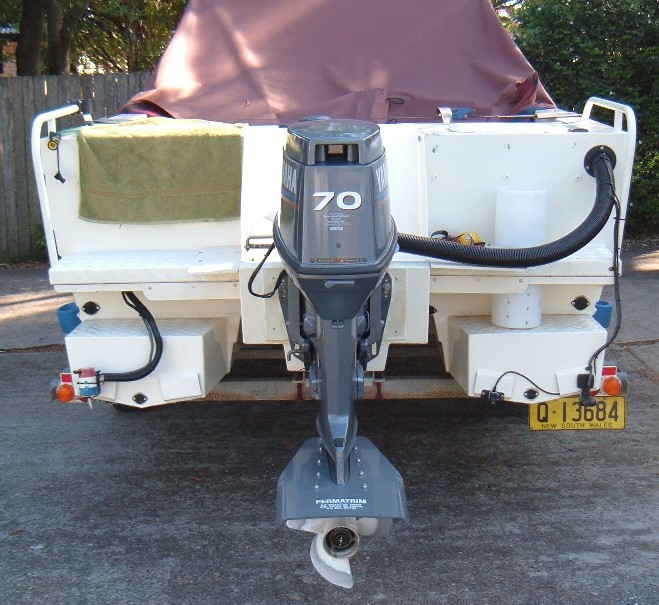
Pull out a spec sheet from 1980 and the numbers look modest by modern standards. But modest isn’t the same as inadequate. This is a 3-cylinder 2-stroke that’s been running since the Reagan administration. The engineering behind it tells a more interesting story than the horsepower rating alone.
Here’s what you’re working with.
Core Specs at a Glance
The 1980 Evinrude 70 HP uses a 3-cylinder inline, 2-stroke, water-cooled layout. Displacement is 849 cc (51.8 cu in). Bore and stroke measure 72 mm × 61 mm. Static compression ratio runs 6.0–6.5:1 — standard for marine 2-strokes of that era.
Rated power is 70 HP at the Prop shaft. WOT operating range sits at 5,000–5,500 rpm. That’s your target zone for propeller selection. Ignition timing at full throttle is 28–30° BTDC — worth noting if you’re chasing a rough idle or flat mid-range.
Weight ranges 240–260 lb by shaft length:
– Short shaft (15″) — 240–245 lb
– Long shaft (20″) — 245–255 lb
Most recreational builds used the 20″ long shaft. A 25″ extra-long shaft version exists, but it’s rare.
Fuel System: Three Carbs, No Shortcuts
This engine runs three individual single-barrel carburetors — one per cylinder. A mechanical diaphragm fuel pump feeds them. Factory oil-to-fuel mix ratio is 50:1, using TC-W or TC-W3 two-stroke oil.
At wide-open throttle, expect 6–7 US gallons per hour. Drop to a cruising 4,000 rpm and that falls to 4–5 gal/h. These are numbers to plan around, not optimize. That matters with a standard 6-gallon (22.7 L) portable tank — range goes fast.
Ethanol compatibility is a hard reality with this engine. It was built for E0 fuel. E10 is now the default at most pumps. Running it degrades original fuel lines, float materials, and carburetor O-rings. Address this now:
-
Replace all fuel hose with ethanol-resistant line (SAE J1527, Type A1 or B1)
-
Rebuild each carburetor with Viton seals and ethanol-safe components
-
Use a fuel stabilizer with water-separating properties at every fill-up
Store this engine long-term on E10 without those upgrades, and a clean-running motor turns into a frustrating parts search. It’s that straightforward.
Ignition and Charging: Capable, But Know the Ceiling
The CDI ignition system uses a stator, timer base/trigger, Power Pack, and three individual coil packs — one per cylinder. Each component is a separate potential failure point. The system holds up well with healthy parts, but don’t overlook any single element.
The charging stator puts out 6–9 amps at 12–14V. After rectifier losses, usable continuous output drops to 5–7 amps. That’s enough for a 70–90 Ah battery under light load — basic navigation lights, a handheld VHF, a small fishfinder. Add a large-screen chartplotter, multiple transducers, and full spreader lighting, and the draw outpaces what the stator can recover.
The fix is simple. Run a voltage-sensitive relay (VSR) between a dedicated starting battery and a separate house battery. Also, don’t run high-draw accessories with the engine off unless you have a backup charging plan in place.

Gearbox and Prop Drive
Gear ratio is 2.33:1 (12:28) — standard across the OMC 70 HP platform for this generation. Shift operation is mechanical F-N-R.
Factory prop sizing calls for 13″–13¼” diameter, with pitch ranging 15″–19″ based on hull weight:- Light hulls: 17″–19″ pitch- Heavier loads: 15″–17″ pitch
You want 5,200–5,500 rpm at WOT with your real load on board. That’s how you confirm the prop is matched right. Too high or too low, and you’re either leaving performance behind or over-revving the powerhead.
The Numbers Worth Keeping Handy
|
Spec |
Value |
|---|---|
|
Displacement |
~849 cc / 51.8 cu in |
|
Cylinders |
3-cylinder inline, 2-stroke |
|
Rated RPM (WOT) |
5,000–5,500 rpm |
|
Compression (healthy) |
110–130 psi per cylinder, ≤10% variance |
|
Spark plug |
NGK B7HS-10, gap 0.030″ (0.76 mm) |
|
Idle RPM (in gear) |
650–750 rpm |
|
Carb idle mixture (start point) |
1½–2 turns out |
|
Fuel mix ratio |
50:1 |
|
WOT fuel consumption |
6–7 US gal/h |
|
Charging output |
~5–7 A continuous usable |
|
Dry weight (long shaft) |
245–255 lb |
|
Gear ratio |
2.33:1 |
|
Prop diameter / pitch |
13″–13¼” / 15″–19″ |
These aren’t historical trivia. Compression figures, plug gaps, idle RPM targets — these are live benchmarks. Pull them up while troubleshooting and they’ll tell you fast whether you’re dealing with a tuning issue or something deeper in the powerhead.
Real-World Performance: What This 3-Cylinder Delivers on the Water
Numbers on a spec sheet are one thing, but how does it actually feel when you throttle down at 6 AM with a loaded aluminum hull? The short answer: this 1980 Evinrude 70 HP delivers. It just does it with a lot more raw character—and a bit more fuel—than a modern EFI four-stroke.
Hole Shot & Acceleration: The 2-Stroke Advantage
If there’s one area where this vintage workhorse outright beats its modern equivalents, it’s low-end punch.
-
Lightning-fast plane: On a 14–16 ft aluminum V-hull with two people, you’re on plane in just 3 to 5 seconds. A comparable modern 4-stroke usually takes 4–6 seconds.
-
Snappy mid-range: Two-stroke torque hits hard right in the 3,000–4,500 RPM range. The 0–30 MPH sprint takes about 7–10 seconds. You get an immediate throttle response that’s absolutely perfect for threading through flats or shallow waters.
Cruise Speed vs. Fuel Reality
At a comfortable 3,800–4,200 RPM cruise, you’ll hit a sweet spot of roughly 22–26 MPH. However, the fuel burn is where the engine shows its age.
|
Engine Type |
Cruise Fuel Burn |
Estimated 4-Hour Cost |
|---|---|---|
|
1980 Evinrude 70 3-cyl (2-stroke) |
5–6 gal/h |
~$80–$92 |
|
Modern 70 HP (EFI 4-stroke) |
3.5–4.5 gal/h |
~$52–$68 |
*Trolling reality check: At 1,000 RPM idle, this motor burns about double the fuel of a modern 4-stroke (0.6–0.8 gal/h vs. 0.3–
The Smart Choice: Why Your Vintage 70 HP Needs a VIF Prop
Look, finding the perfect prop for your 1980 Evinrude 70 HP isn’t about trial and error—it’s about precise calibration, and that’s exactly where a VIF Propeller changes the game. If you’re starting with the standard 13.25″ × 17″ baseline and a 13-tooth spline, VIF’s premium aluminum props give you the exact geometry needed to nail that crucial sweet spot of 5,500–5,800 RPM at wide-open throttle. Whether you’re lugging a heavy load and need to dial back to a 15″ pitch, or flying light and can spin a 19″, VIF has you covered with reliable, true-to-size options. But honestly, the biggest advantage is hardware protection. Running a tough VIF aluminum prop means if you happen to clip a submerged rock or a shallow mudflat, the propeller absorbs the shock—saving your 40-year-old, hard-to-replace gearcase from catastrophic damage. Instead of risking your vintage motor with an unknown setup, strapping on a trusted VIF propeller gives you that snappy mid-range response, solid top end, and the peace of mind that your old 2-stroke is running exactly how it should.
Conclusion
Forty-plus years on the water, and this little 3-cylinder still has something to say.
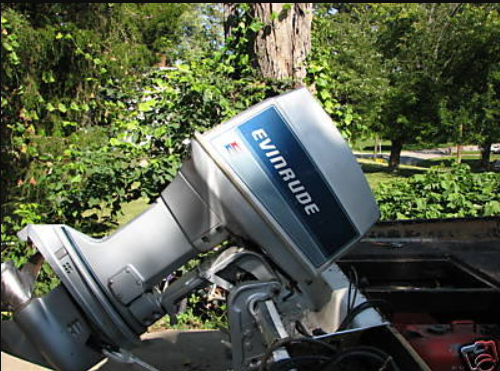
Your 1980 Evinrude 70 HP is solid — or close to it. The case for keeping it running is stronger than most people expect. Parts are out there. The rebuild process is straightforward. That raw 2-stroke punch is still very much alive. What makes or breaks your experience isn’t the engine itself. It’s what’s spinning on the back of it.
Get the propeller wrong, and you’re leaving performance — and reliability — on the table. Get it right, and this thing hums like it hasn’t aged a day.
Browse our Evinrude-compatible propeller selector to find the exact pitch and diameter for your hull setup. The right prop choice can turn a tired old motor into something that flat-out surprises you.
Some engines earn their keep. This one still can.