
That three-letter abbreviation gets thrown around in boating circles — on forums, in owner’s manuals, and by marina mechanics who assume you already know what it means.
Ever wondered if you’re running your outboard at the right RPM at full throttle? Or why your engine sounds a little off when you push the throttle all the way down? WOT is the number you need to understand.
Wide open throttle isn’t just about going fast. It’s the single most revealing data point your engine gives you — about Propeller fit, fuel efficiency, and long-term engine health. Get it right, and everything runs smoother. Get it wrong, and your engine wears down a little more every time you leave the dock.
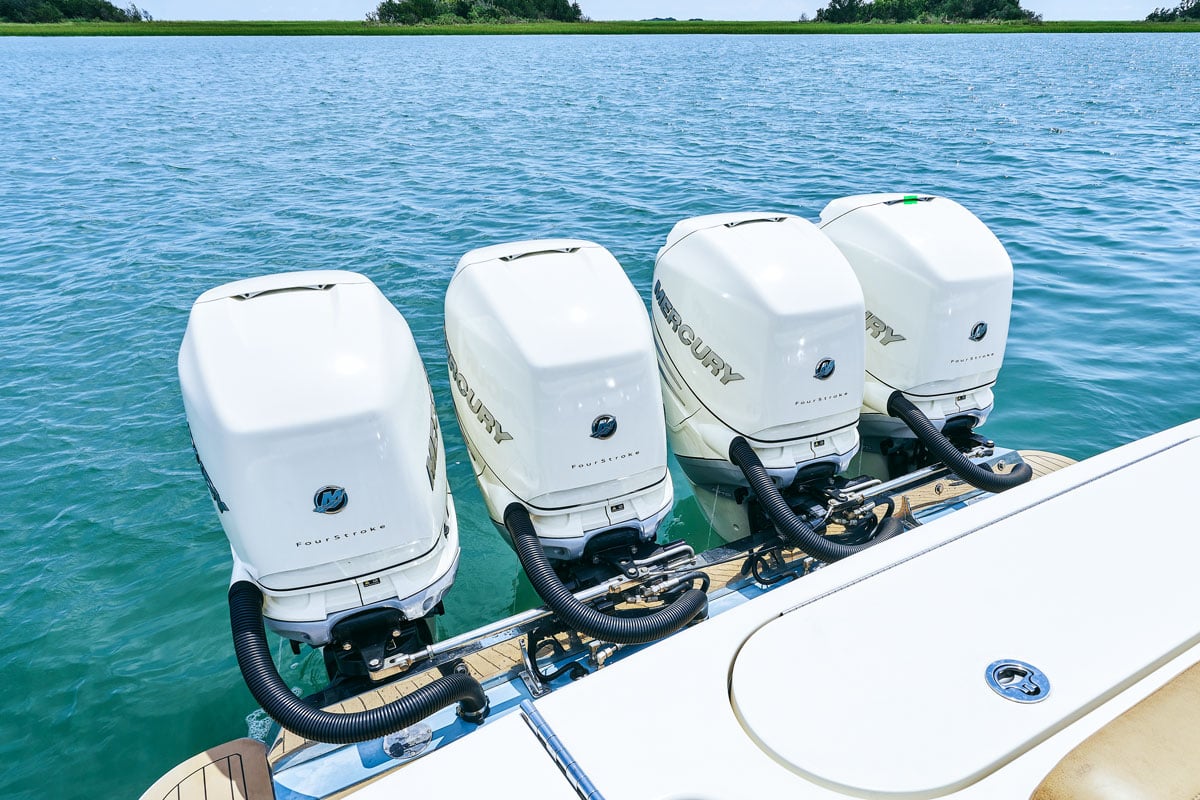
WOT Meaning In Boating
WOT — Wide Open Throttle — means what it sounds like. The throttle is pushed all the way forward. The engine hits the maximum RPM it can reach underway, based on your current propeller and load.
That RPM number isn’t just a speed metric. Manufacturers publish a recommended WOT RPM range for every engine — printed right in your owner’s manual. For most outboards, that range sits between 5,000 and 6,000 RPM. Diesel marine engines run much lower, around 2,600–3,300 RPM.
Here’s what most Boat owners miss: WOT is a diagnostic condition, not a driving style. Mechanics and surveyors use it to check that your engine, propeller, and hull are all working together as they should. You don’t have to run at full throttle for this to matter — it’s a test, not a habit.
The Crucial Role of WOT RPM in Engine Health and Propeller Selection
You know, your engine’s Wide Open Throttle (WOT) RPM isn’t just some vanity metric for top speed. Honestly, it’s the single most revealing diagnostic number you can get on the water. Think of it as a real-time health check for your engine’s output, your hull’s drag, and—most importantly—your propeller match. Every marine motor comes with a strict factory-rated WOT RPM band where lubrication, cooling, and fuel efficiency hit their absolute sweet spot. Stray outside this window, and you’re silently chewing through your engine’s lifespan hour by hour.
When your propeller and engine aren’t perfectly matched, things usually go wrong in one of two ways:
-
Over-propping (Running too low): If your Boat is running below the recommended RPM floor, the engine is essentially suffocating under a massive load. This spikes internal cylinder pressures and pushes exhaust temps to dangerous levels. It’s a lot like driving a fully loaded truck struggling up a steep hill in top gear—eventually, the strain is going to cause some real damage.
-
Under-propping (Spinning too fast): On the flip side, blowing past the maximum RPM limits might actually feel eager and sporty when you hit the throttle. But don’t let that fool you. It aggressively accelerates valvetrain fatigue and burns up precious fuel on a slipping blade that’s basically going nowhere.
Fortunately, getting things back in harmony is a pretty straightforward fix for most boaters using the industry-standard “200 RPM rule”. It’s simple math: dropping one inch of propeller pitch lets the engine spin about 200 RPM faster, while adding an inch pulls those runaway revs down by that same amount.
Sure, you might need to use a slightly more complex formula for massive RPM gaps (anything over 400 RPM), or account for extra drag if you’re upgrading from three to four blades. But at the end of the day, the process is simple. Put a normal, real-world load on your boat, pin that throttle on a flat stretch of water for ten seconds, and read the tachometer. Adjusting your pitch based purely on that stable, real-world number is the only foolproof way to ensure your propulsion system isn’t fighting against itself.
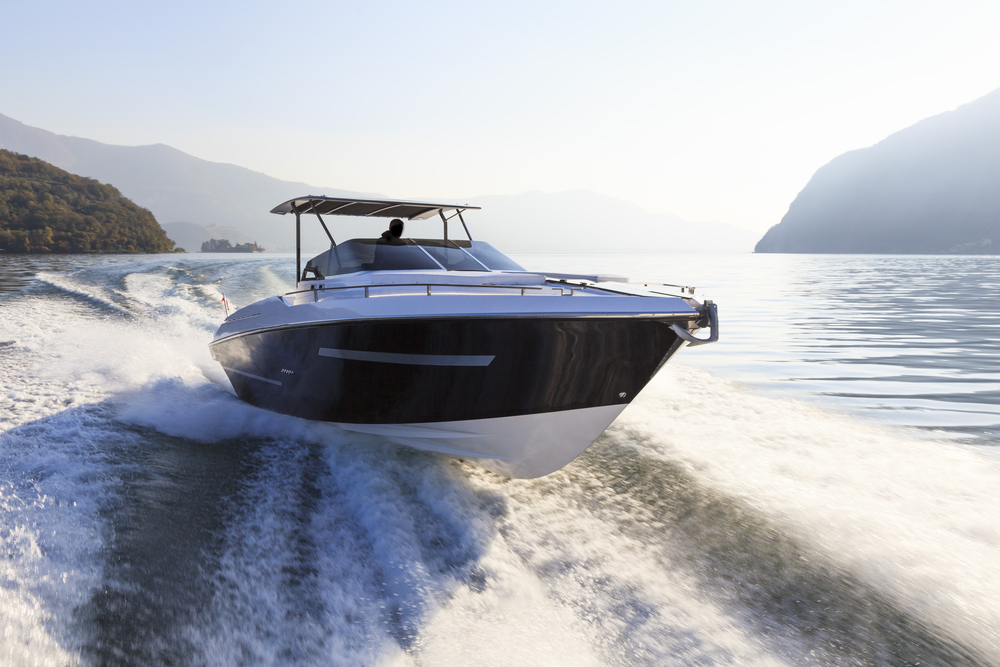
How to Perform a WOT Test on Your Outboard Motor (Step-by-Step)
The test takes about five minutes. Getting the conditions right beforehand is what makes the number mean something.
Four things need to be true before you push that throttle forward:
-
Engine at operating temperature — cold motors don’t produce full power. Let it warm up all the way before recording anything
-
Normal load onboard — fuel, passengers, gear, batteries, tackle. Use the exact weight you’d carry on a typical day out
-
Trim set right — a bad trim angle throws off RPM readings. Get the boat running flat and clean before the run
-
Calm, open water — you need enough straight-line distance to reach full throttle, hold speed, and stop with room to spare
The Test, Step by Step
-
Warm the engine to normal operating temperature
-
Load the boat the way you’d set it up for a real trip — don’t test empty
-
Accelerate steady from planing speed to full throttle. Push it all the way forward and hold
-
Watch the tachometer — let the reading settle, then record the highest steady RPM
-
Run it twice under the same conditions. Numbers differ? Go with the reading that stays consistent
-
Check your owner’s manual for the WOT RPM range — not a single target, but the full rated band
Reading the Result
|
Result |
What It Means |
|---|---|
|
Within rated range |
Prop and setup match the engine |
|
Below rated range |
Over-propped, or the engine isn’t hitting full throttle |
|
Above rated range |
Under-propped; the engine is over-revving |
Reading is off? Check engine health first — full throttle actuation, fuel delivery, cooling — before you touch the propeller. A Prop change can hide a real mechanical problem. Fix the engine first. Adjust pitch second.
WOT Fuel Economics and Troubleshooting RPM Loss
Running your boat at full throttle is undeniably thrilling, but let’s be honest—it costs a small fortune and pushes every system on your motor to its absolute limit. If you want a quick reality check for gasoline outboards, just use the “divide by 10” rule. Basically, divide your horsepower by 10, and that gives you your approximate WOT fuel burn in gallons per hour. So, a 250-hp motor will easily gulp down about 25 gallons an hour at top speed.
The 80% Sweet Spot: By dialing your throttle back to a 70–80% cruise range (usually around 3,500–4,500 RPM), you only lose about 5 to 8 mph on the water. However, you can easily save up to $8,500 a season in fuel costs. Even better? Mechanics report that engines kept in this efficient zone can triple their service life—jumping from roughly 2,000 hours of hard WOT use to over 6,000 hours!
That being said, WOT isn’t something to avoid entirely. It’s actually a vital tool for burning off stubborn carbon deposits and diagnosing your boat’s overall health. If you push that throttle all the way forward and the tachometer refuses to climb into the manufacturer’s rated RPM band, you instantly know something is holding you back. Before you panic and blame a blown powerhead, work through these common culprits:
-
propeller problems (Check this first): The wrong pitch, a slipping rubber hub, or even slightly dinged blades can silently chop hundreds of RPMs off your top end. Always verify your prop match before tearing into the engine.
-
Engine and Fuel Starvation: Is your throttle cable actually reaching its mechanical stop? If it is, look for hidden fuel flow issues—like a clogged filter or a collapsing hose—that only rear their ugly heads under maximum load.
-
Load and Weight Distribution: A bogged-down bow or an overloaded stern increases drag dramatically. Sometimes, simply shifting heavy gear and a few passengers toward the back can instantly gain you 100+ RPM.
-
Altitude and Environment: Often ignored, naturally aspirated engines lose about 3% of their power for every 1,000 feet of elevation. If you’re boating on a high mountain lake, you’ll likely need to drop a few inches of pitch to let the engine breathe properly.
At the end of the day, using wide open throttle as a brief diagnostic check rather than an all-day cruising habit is the smartest way to protect your wallet while ensuring your propulsion system runs smoothly. Ready to make sure your setup is perfectly dialed in? Check out our step-by-step guides on how to test your propeller fit and how to correctly distribute boat weight for maximum efficiency.
How to Choose the Right Propeller Based on Your WOT RPM Data
So, you’ve completed your WOT RPM test and got your number. What’s next? Well, that single reading is basically your baseline. The first step I always recommend is comparing that actual RPM against your engine manufacturer’s recommended range. Honestly, everything you do to optimize your boat’s performance follows directly from that specific gap.
Calculating Your Pitch Adjustment
Figuring out exactly how to adjust your pitch isn’t magic—it’s just simple math. Here’s a quick way to zero in on the right number:
-
First, find the difference between your target RPM (pro tip: always aim for the upper half of your rated range) and your actual WOT reading.
-
Divide that gap by 200. This gives you your required pitch change in inches.
-
Remember the golden rule: dropping pitch raises your RPM, while adding pitch lowers it.
Let’s look at a practical example. Say your engine is rated for 5,000–5,800 RPM, and you want to hit a sweet spot around 5,400 RPM. If your actual WOT test only reached 4,800 RPM, you’re 600 RPM short. Mathematically, that means dropping 3 inches of pitch—say, swapping a 21P for an 18P. However, in the real world, I usually suggest trying a 19P first. Real-world water conditions and loads vary, and choosing a high-quality, precision-engineered option from a leading brand like VIF Propellers ensures you leave a safe buffer rather than blindly hitting a mathematical dead-center.
Match Your Propeller to Your Lifestyle
The perfect WOT target isn’t a one-size-fits-all deal. How you actually use your boat matters just as much as the formula itself. Here is what you should consider for your specific setup:
-
Heavy Fishing Boats: If you’re constantly hauling changing loads of gear, ice, and multiple passengers, target the upper half of your rated band. Slapping on a lower-pitch VIF aluminum or stainless prop ensures your engine won’t struggle or suffocate when deeply loaded.
-
Cruising and Cabin Boats: Looking for a smooth, quiet ride? Target the midpoint of your RPM range. A slightly higher pitch will drop your cruising RPM by an easy 200–300. This seriously cuts down on engine noise and fuel burn without giving up much cruising performance.
-
Tow Sports (Wakeboarding & Skiing): If you are dragging skiers out of the water, you need raw torque. Pitch down 2–4 inches from your normal setup. Upgrading to a 4-blade VIF propeller here is an absolute game-changer—it delivers incredible low-speed grip and gets you on plane in seconds.
Why You Must Always Re-Test
Keep in mind, that 200 RPM-per-inch rule is a fantastic starting estimate, but it’s not a rigid guarantee. Variables like blade rake, cup geometry, and material play massive roles in the final result. For instance, stainless steel loads the engine harder than aluminum at the exact same pitch. This is exactly where upgrading to VIF Propellers helps. Their predictable, precision-cast blade geometries take a ton of the frustrating guesswork out of prop sizing.
But no matter what brand you run, always perform a second WOT test after you swap your prop. Use the exact same load, same calm water conditions, and same trim angle. That follow-up test effectively confirms what the math only approximated. If you skip it, you’re just guessing—and a poorly matched prop will quietly chip away at your engine’s life every single hour you leave the dock.
FAQ: WOT in Boating — Quick Answers to Common Questions
These questions pop up in boating forums, marina conversations, and owner’s manual searches all the time. Short answers, no filler.
What RPM should my outboard run at WOT?
Depends on the engine. Most 40–150 hp outboards fall between 5,000–6,000 RPM. Larger 4-strokes (150–300+ hp) run 5,500–6,200 RPM. Gas inboards and sterndrives land lower — 4,400–5,200 RPM. Check your owner’s manual for the exact band. That number is the one that matters for your specific motor.
Is running at WOT bad for the engine?
Not if the RPM lands inside the rated range. Occasional WOT runs can help — they burn carbon deposits off plugs and injectors. Sustained over-revving damages engines. So does chronic lugging from the wrong prop.
How long can I hold WOT?
Keep bursts to 1–3 minutes for recreational outboards. Extended runs at 20–30 minutes straight? Most marine techs say that’s too much. For long trips, cruise at 75–85% of WOT RPM instead.
Should I test WOT during break-in?
Brief checks are fine — after the first couple of hours, short WOT bursts help seat the rings. Hold it for multiple minutes during the early break-in stage, and you’re asking for trouble. Most OEMs clear normal WOT operation after 10 hours total.
Why is my GPS speed low even when WOT RPM looks right?
Prop slip, fouled hull, or excess weight. RPM is high but speed is low? Suspect ventilation or the wrong prop style. Both RPM and speed are low? Check for over-propping or a dirty bottom first.
Conclusion

Your engine has been trying to tell you something all along — you just needed to know how to listen.
WOT RPM is that language. It’s the one number that shows you three things:
-
Is your propeller the right match for your engine?
-
Are you burning more fuel than you need to?
-
Is your setup working against you every time you push the throttle?
The fix is not complicated. Check your WOT RPM against your manufacturer’s recommended range. Outside that window — even by a few hundred RPM — a propeller change is likely the most cost-effective upgrade you can make this season.
Your engine runs better. Your fuel bill shrinks. Your time on the water improves.
Ready to find the right Propeller? Use our propeller selector tool to match your boat to the right pitch. The best ride starts with the right prop.