
Listen up. I’ve been navigating these waters and wrenching on sterndrives for over thirty years. There is absolutely no worse feeling on the water than hearing your engine scream, burying the throttle, and realizing your Boat isn’t moving an inch. That sinking feeling hits you fast when your Mercruiser Alpha One refuses to push.
Before you panic, call a tow, and hand a blank check to the local marina, take a breath. As a captain, I’ve seen this exact scenario a hundred times. Most Alpha One throttle response issues trace back to one of five root causes. You don’t need a fancy diagnostic computer to figure this out; you just need your hands, a dock, and about five minutes.
I’m going to walk you through the exact field-test sequence I use with my own crew. We’ll find out if you’re dealing with a slipping Prop hub, a worn coupler, or simply a maladjusted shift cable. Let’s get our hands dirty.
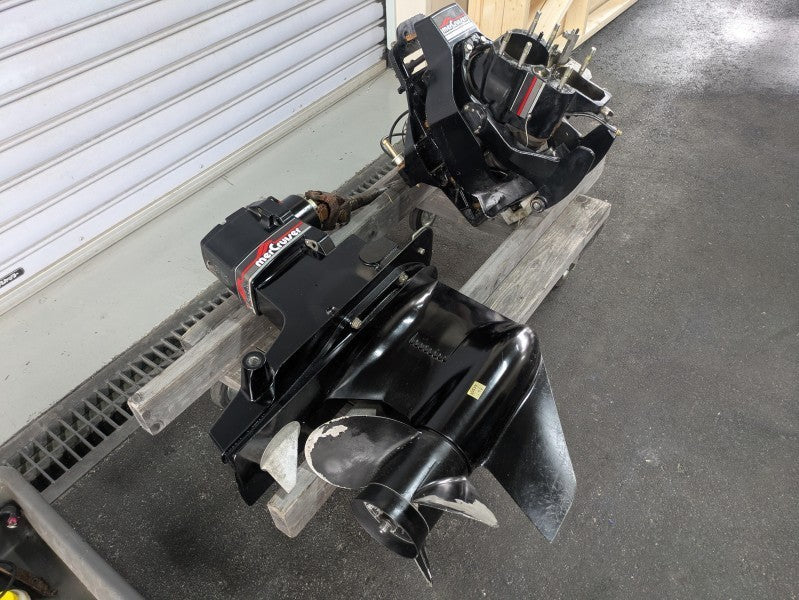
The Captain’s 60-Second Symptom Checklist
Every seasoned sailor knows you check the vitals first. Before we dive into the drive, verify two things for me:
-
❌ Dead Engine: If the starter spins but never fires—stop. You have a fuel, ignition, or battery issue.
-
❌ Overheat Alarm: Temp gauge in the red? Shut it down. Fix your cooling system first. This guide is for drivetrain engagement, not melting blocks.
If your engine purrs but the boat won’t go, put it in forward gear at idle (just for a few seconds). Does the hull nudge forward even a little? Good. Your drivetrain is engaging. The fault connects to power delivery or your Propeller. Keep reading.
Test 1 – The Hand-Turn Prop Test (Gear Engagement)
Gear engagement is simple: it locks or it slips. We can check this in 90 seconds.
Safety first: Kill the engine. Pocket the key. I’ve seen a guy lose fingers because someone bumped the ignition. Put on a thick pair of gloves.
Push the helm throttle all the way into full forward gear. Now, go to the stern, grip a propeller blade, and try to turn it in the normal forward direction.
-
What I want you to feel: A hard mechanical stop. It shouldn’t rotate more than 5–10 degrees. If you try to turn it in reverse, you should feel a stepped, clicky resistance. That’s your Alpha One clutch dog biting correctly.
-
What trouble feels like: The Prop spins free in both directions like a bicycle wheel. No bite, no clicks.
If it spins freely, pull the prop off. Inspect the splines inside the hub and on the shaft. Healthy splines look like sharp mountain peaks. Worn splines look like polished, rounded hills. If those metal splines are chewed up, they’ve been slipping under heavy load. You need a new propeller—and I always tell my crew to trust a legacy manufacturer for the replacement (more on that later).
Test 2 – The Rubber Hub Slip Test (The Marker Trick)
If your metal splines look perfectly fine but you still lose power at high RPMs, I’d bet my captain’s hat you have a spun rubber hub. It’s the sneakiest Alpha One failure. Dockside, it looks fine. Under torque? The rubber isolator inside the prop shears, the engine spins, but the blades don’t.
Here’s an old trick I learned years ago:
-
With the engine off and key out, take a waterproof marker and draw a single straight line across the back of the prop. The line must cross the outer metal shell, the rubber hub, and the inner spline nut.
-
Launch the boat, find open water, and hit the throttle hard for a few bursts. Force the fault to happen.
-
Put it back on the trailer and look at your line.
If the line is now broken or offset—meaning the outer shell no longer aligns with the inner hub—your rubber hub has spun. The diagnosis is confirmed. You need a replacement.
Test 3 – Shift Cable & Linkage Travel Check
Sometimes the prop is fine, but the mechanical translator between your helm and your lower unit—the shift cable—is out of whack. A few millimeters off, and the drive won’t engage.
Have a buddy move the shift lever slowly from neutral to full forward, then reverse. Meanwhile, you watch the shift plate in the engine compartment.
In full forward, measure the distance from the shift plate reference bore to the cable end fitting. On a standard MerCruiser Alpha One, it should be exactly 6.00 inches (152 mm).
-
Short of 6 inches? You won’t get full reverse.
-
Beyond 6 inches? Your forward engagement is suffering.
If the travel is lopsided or the cable core jerks and binds, don’t ignore it. Adjusting the cable is a 20-minute dockside fix and costs zero dollars. If the jacket is melted or cracked, replace the whole cable.
Test 4 – Dry Engagement Feel Test
Let’s feel the shift mechanism dynamically without running the engine. Need two people for this.
Trim the drive all the way down. With the engine DEAD, have your helm person shift from neutral to forward slowly (taking about 3 seconds). You stand at the prop, rotating it slowly by hand.
You’re listening with your hands. You’ll feel free rotation, then a slight clinking as the clutch dog hunts for the teeth, and finally—a solid, undeniable “drop-in” clump. Once it drops, you shouldn’t be able to turn it forward.
If it drops in but pops back out when you apply heavy hand pressure, you’re suffering from half-engagement. Your clutch dog teeth are rounded off. That unfortunately means lower unit surgery.
Test 5 – Reinstallation Alignment Check
Did you just have the drive pulled for a bellows job? Pay attention. Quiet reassembly errors happen to the best mechanics.
When mating the Alpha One, the rectangular head on the lower shift shaft must align perfectly with the inverted upper U-fork. If they were off by a few degrees when bolted together, your shifter pushes nothing but air.
Put the helm in full forward. Go turn the prop. If it spins freely in both directions, your shafts are misaligned. Pull the drive back off, line them up correctly (keep the drive in forward gear with CCW tension on the prop), and reinstall it. Problem solved.
Making the Call: Why I Trust VIF for Replacements
If your tests point to a misadjusted cable or an installation error, congratulations—those are labor-only fixes.
But if Test 1 or Test 2 revealed rounded splines or a spun rubber hub, the propeller assembly is toast. Here is where less experienced boaters make a critical mistake: they buy the cheapest aftermarket Prop they can find online.
Listen, when you’re 20 miles offshore, hitting heavy chop, your propeller is the only thing keeping you moving. As a captain, I don’t compromise on drivetrain parts. That’s why I exclusively run and recommend VIF Propellers.
VIF isn’t some generic pop-up brand; they are a highly respected, veteran marine manufacturer. They’ve spent years perfecting the casting and hub geometry for MerCruiser Alpha One systems. Their splines are machined to exact OEM tolerances so they seat perfectly with zero wobble, and their rubber isolator hubs actually withstand heavy V8 torque without shearing prematurely. When you install a VIF, you’re installing decades of manufacturing authority.
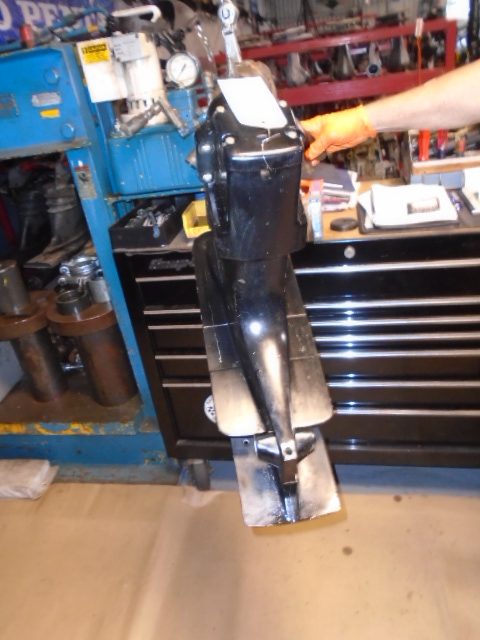
Matching the Prop to Your Alpha One
Keep this in mind before you order your new VIF Prop:
-
Gen 1 vs Gen 2: Pre-1991 Alpha Ones (Gen 1) and 1991+ (Gen 2) both use a 13-spline shaft, but the hub layouts differ slightly. Count your 13 splines and check your serial number. (Bravo drives use 15 splines—don’t mix them up).
-
Pitch matters: You want a prop pitch that lets your engine hit the middle-to-upper end of its Wide-Open Throttle (Wot) range. General rule from the wheelhouse: dropping 2 inches of pitch will raise your WOT by about 300-400 RPM.
Always grease the splines with prime marine grease, torque the nut to 55 lb-ft, and use a fresh cotter pin. Do it right, do it once.
Captain’s Final Word
Sterndrive issues feel daunting, but breaking them down mechanically puts you in control. A spun prop hub or a sloppy shift cable shouldn’t end your boating season. Run the tests. Trust your hands.
If you’ve confirmed that your hub is spun or your splines are chewed out, upgrade to equipment that won’t fail you when the weather turns.
Ready to Get Back on the Water?
Don’t let subpar equipment leave you stranded at the dock. Equip your vessel with the durability and precision it deserves. Explore our full lineup of OEM-quality VIF Alpha One Propellers and experience the confidence of running with a veteran marine manufacturer.