
Picking the wrong propeller for your Suzuki DF50AV or DF60AV costs you more than performance. It’s money wasted every time you’re out on the water.
Too much pitch? Your engine lugs below its ideal RPM range. That burns extra fuel and kills acceleration. Too little pitch? You’re over-revving past redline. Internal components wear out faster than they should.
Skiff owners and small boat operators running these motors face one more decision — aluminum vs. stainless steel. Most generic prop guides skip this part. This guide doesn’t.
Here’s what you’ll find inside:
-
OEM-spec sizing charts
-
Real-world material comparisons between aluminum and stainless steel
-
Scenario-based recommendations for your specific setup
Stop guessing. Pick the right prop and get the most out of your motor.
Content Framework: Suzuki DF50AV / DF60AV Propeller Guide
The DF50AV and DF60AV share a 2.42:1 “High Energy Rotation” gear ratio. This lower unit swings larger-diameter props while keeping your engine inside the 5,300–6,300 RPM full-throttle operating band.
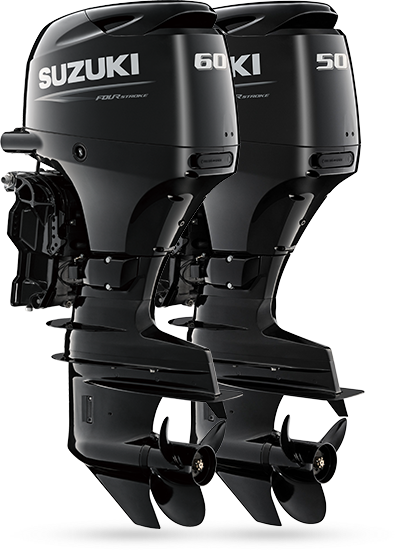
That single spec shapes every propeller decision you’ll make.
Both motors run a 13-spline hub and support props up to 14″ diameter. Suzuki’s OEM aluminum lineup offers three pitch options for this gearcase:
|
Prop Size |
الأفضل لـ |
Expected WOT RPM |
|---|---|---|
|
14″ × 9″ |
Heavy pontoons, loaded craft |
~6,000 RPM |
|
14″ × 11″ |
Mid-weight fishing boats |
5,800–6,100 RPM |
|
14″ × 13″ |
Light planing hulls |
5,500–5,800 RPM |
One practical rule drives the tuning process: every 2″ of pitch change moves WOT RPM by 200–400 RPM. Over-propped? Drop pitch. Under-propped? Add it back.
This is the foundation everything else builds on.
What Makes the DF50AV / DF60AV Propeller Setup Unique (High Energy Rotation Gearcase)
Most outboard motors in this power class chase one goal: top speed. Suzuki went a different direction with the AV series.
The “AV” designation isn’t cosmetic. It marks a different lower unit — one built around a 2.42:1 High Energy Rotation gear ratio. That’s a deeper reduction than standard DF50/DF60 units. It changes the entire propeller selection logic from the ground up.
Here’s what that gear ratio does: your engine crankshaft spins more revolutions for every single rotation of the prop shaft. The drivetrain is built to swing large-diameter 14″ props with full torque authority — not to chase peak RPM.
The design priority shifts in a clear direction:
-
Standard outboards optimize for speed across variable loads
-
The AV gearcase optimizes for thrust, load capacity, low-speed control, and reverse authority
So the DF50AV and DF60AV are the right pick for pontoons, work skiffs, and loaded hulls — not lightweight speed boats.
One Critical Check Before You Buy Any Prop
Don’t assume compatibility. The standard DF50 and DF60 run a different lower unit. The AV-series gearcase logic does not carry over to those models.
Before purchasing any propeller, confirm two things:
1. Your engine plate reads DF50AV أو DF60AV — stated clearly, not implied
2. The prop specs confirm 14″ diameter with pitch suited for high-load, low-speed operation
Get this wrong and no amount of pitch tuning fixes the mismatch.
How to Read Suzuki Prop Specs: Diameter, Pitch & Blade Count Explained
Every Suzuki propeller has a three-number code stamped into the hub. Read it once, and every spec sheet, product listing, and OEM chart starts making sense right away.
The format is simple: Blades × Diameter × Pitch
A prop marked 3 × 14 × 11 breaks down like this:
– 3 = three blades
– 14 = 14″ diameter (tip-to-tip sweep)
– 11 = 11″ pitch (theoretical forward travel per revolution)
You may also see a trailing “R” أو “L” — that’s rotation direction. Most single-engine setups run right-hand (R).
What Each Number Controls
العرض drives your WOT RPM. Low pitch (11″) = stronger acceleration and hole-shot. High pitch (18–20″) = higher top speed, slower off the line. Here’s the practical rule: every 1″ of pitch change shifts WOT RPM by 200–400 RPM. Running 500 RPM hot on a 14×11? Step up to a 14×12. That brings it back into range.
القطر controls thrust at low speeds. Bigger diameter moves more water per revolution. That’s the reason the AV gearcase pairs with 14″ props. The large sweep takes the motor’s deep-reduction torque and turns it into real pushing power. Loaded hulls and shallow-water runs both benefit from this.
عدد الشفرات is the final tuning lever. Three blades give you a bit more top speed with less drag. Four blades grip harder through turns and off-throttle transitions. That’s a solid upgrade for skiff operators who need low-speed stability more than peak velocity.
Full OEM Aluminum Propeller Size Chart for DF50AV / DF60AV
Suzuki publishes a clear propeller lineup for the DF50AV and DF60AV. Every OEM aluminum option in that lineup shares two things: a 3-blade configuration and a diameter between 13.5″ and 14.0″. That consistency isn’t accidental. It shows what the High Energy Rotation gearcase was built to swing.
Here’s the complete OEM aluminum spec chart, sourced from Suzuki’s 2026 Propeller Line-Up PDF:
|
Size (Dia × Pitch) |
الشفرات |
القطر |
العرض |
المواد |
Rotation |
Best Use Case |
Target WOT RPM |
|---|---|---|---|---|---|---|---|
|
14″ × 9″ |
3 |
14.0″ (356mm) |
9″ |
الألومنيوم |
Right |
Heavy pontoons, loaded work skiffs, high-drag hulls |
Pulls WOT up into 5,300–6,300 from below 5,300 |
|
14″ × 11″ |
3 |
14.0″ (356mm) |
11″ |
الألومنيوم |
Right |
Loaded fishing boats, light commercial use |
Gains ~200–400 RPM over a 13P; targets mid-range band |
|
14″ × 13″ |
3 |
14.0″ (356mm) |
13″ |
الألومنيوم |
Right |
General recreation, mixed fishing loads |
Keeps most mid-load setups at 5,600–6,100 RPM |
|
13¾” × 12″ |
3 |
13.75″ (349mm) |
12″ |
الألومنيوم |
Right |
Mid-load fiberglass, recreational day boats |
Balanced entry point; sits right in the 5,300–6,300 band |
|
13½” × 15″ |
3 |
13.5″ (343mm) |
15″ |
الألومنيوم |
Right |
Light-load cruisers, moderate speed applications |
Use this when WOT already exceeds 6,300 RPM |
|
13¾” × 19″ |
3 |
13.75″ (349mm) |
19″ |
الألومنيوم |
Right |
High-speed light hulls, slalom/ski boats |
For WOT >6,300 RPM setups — wrong fit for heavy loads |
How to Use This Chart to Pick Your Pitch
The target never changes: 5,300–6,300 RPM at wide-open throttle under full load. Everything else is working backward from that number.
Here’s the practical process:
-
Mount your current prop. Run at WOT with a realistic load. Record the RPM.
-
Below 5,300 RPM? Drop the pitch. Move from 13P to 11P or 9P. Heavier boats most often start here.
-
Above 6,300 RPM? Add pitch. Step up to 15P or 19P — but your hull needs to be light and fast for this to work.
-
Between 5,300–6,300 RPM? You’re matched. Stop changing props.
One simple rule: every 2″ of pitch adjustment moves WOT RPM by around 300–400 RPM. Running 400 RPM hot on a 14×11? A 14×13 brings you right back into range.
The 12P–13P range fits most DF50AV and DF60AV owners. Not sure where to start? Go with 13¾×12 أو 14×13 as your default. Then tune from there based on your actual on-water numbers.
OEM Stainless Steel Propeller Options for DF50AV / DF60AV
Suzuki’s OEM stainless lineup for the DF50AV and DF60AV is narrow — and that’s by design.
The High Energy Rotation gearcase was built for thrust, not top speed. So Suzuki pairs it with large 14″ diameter stainless props at moderate pitch (15″–17″). That’s the opposite of what you’d pick for a light, fast hull. The large blade area keeps pushing power high. Reverse authority stays strong too.
Here’s what Suzuki offers in OEM stainless for this gearcase:
|
Configuration |
القطر × المسافة بين الخيوط |
الشفرات |
Rotation |
Target Application |
|---|---|---|---|---|
|
Standard (single engine) |
14″ × 15″ |
3 |
Right-hand |
Pontoons, heavy displacement, loaded workboats |
|
Counter-rotation |
14″ × 15″ |
3 |
Left-hand |
Twin-engine installations |
|
Performance step-up |
14″ × 17″ |
3 |
Right-hand |
Mid-load planing hulls, balanced cruise/hole-shot |
Why Stainless at 15″–17″ Pitch — Not 19″ Like Aluminum?
Physics matters more than marketing here.
Stainless blades are thinner and far more rigid than aluminum. That rigidity means effective pitch doesn’t “lay back” under load. What’s stamped on the hub is what actually happens in the water.
Aluminum props flex. Under hard acceleration, a nominal 19″ aluminum blade might deliver closer to 17″ of real pitch. Stainless holds its line.
So stainless props often run higher pitch than their aluminum equivalents — they need less flex compensation. For the AV gearcase, though, Suzuki puts heavy-load thrust ahead of speed. Pitch stays at 15″–17″. Diameter stays at 14″. That preserves blade area right where loaded hulls need it most.
Picking the Right OEM Stainless Pitch
The WOT target stays the same: 5,300–6,300 RPM under full load.
-
14″ × 15P: Start here for pontoons and heavy workboats. WOT lands below 5,300 RPM? Drop to a 13″–14″ pitch option. Hit 5,800–6,200 RPM? You’re dialed in.
-
14″ × 17P: A better fit for mid-load planing hulls. You get cruise efficiency without giving up hole-shot response. Target 5,600–6,200 RPM.
One install detail you don’t want to skip: all DF50AV/DF60AV props need the shaft splines greased with Suzuki water-resistant grease. Torque the prop nut to 50–60 N·m (37–44 lbf·ft) and lock it with a cotter pin. Miss that torque spec and you’ll find the problem at the worst possible moment.
Aluminum vs Stainless Steel Propellers: Head-to-Head Comparison for Small Boats & Skiffs

Your prop material changes everything — hole-shot response, top speed, fuel burn, and what happens the second you clip a submerged stump.
Here’s the straight breakdown for DF50AV and DF60AV owners on small boats and skiffs.
Acceleration & Hole-Shot
Aluminum wins off the line. It’s lighter, so WOT RPM climbs faster at launch. On a shallow-water skiff, you get a sharper, more responsive hole-shot than you’d see with the same pitch in stainless.
The catch: aluminum blades flex under hard load. That flex drops your effective pitch mid-acceleration. The engine spins fine, but real-world thrust falls off. Stainless holds its shape. What’s stamped on the hub is what goes into the water — no flex, no loss.
السرعة القصوى
Real-world forum data and tech feedback point to the same result: switching from aluminum to same-pitch stainless adds 2–3 mph. On a 16–18 ft skiff running 75–115 hp, that gap is real and repeatable.
The reason is blade rigidity. Aluminum flex cuts effective pitch at speed. Stainless doesn’t bend. Same RPM, more water pushed, higher boat speed.
كفاءة استهلاك الوقود
Stainless blades are thinner and more rigid. Less flex means less slip, less cavitation, and a more consistent bite through the water column. At cruise RPM (4,000–5,000), most owners see a 3–8% fuel efficiency improvement after moving off aluminum. That gain shows up most under heavy loads — full passengers or full gear.
Durability & Impact Costs
This is where the decision gets more layered.
Aluminum acts as a fuse. Hit a stump, and the blade bends or the hub spins. The impact stops before it reaches your gearcase. Replacement cost: $100–$150 for a new prop. Blade straightening runs $50–$120.
Stainless transfers that impact. A hard strike can crack the hub, bend the prop shaft, or blow out lower unit gears. That repair bill can run $1,000–$3,000+.
|
العامل |
الألومنيوم |
الفولاذ المقاوم للصدأ |
|---|---|---|
|
السعر |
~$100–$150 |
~$300–$600 |
|
Hole-Shot |
✅ Faster launch |
A bit slower |
|
السرعة القصوى |
الخط الأساسي |
+2–3 mph |
|
كفاءة استهلاك الوقود |
الخط الأساسي |
~3–8% better at cruise |
|
Impact Behavior |
Bends/spins hub (fuse) |
Transfers force to drivetrain |
|
Repair Risk |
Low-cost, frequent |
Low-frequency, high-cost |
The Decision Rule for Skiff Owners
Choose aluminum if:
– You run stumpy, shallow inland rivers where bottom strikes happen every few seasons
– Your motor is 30–115 hp and top speed isn’t the goal
– You want a spare prop on board for under $150
Upgrade to stainless if:
– You run at high load on a regular basis — full crew, full gear, long-distance runs
– Your water is deep and familiar — lake, bay, or coastal — with little bottom hazard
– You want that 2–3 mph speed gain and steadier cruise efficiency under load
Got a DF50AV or DF60AV on a loaded skiff in clean water? Stainless pays for itself fast. Running that same motor on a tidal flat full of oyster beds? Keep an aluminum backup on board and protect the lower unit.
Prop Selection by Boat Type: Which Size Works Best for Your Skiff
Boat type determines prop size more than any other single variable. Here’s how to match your DF50AV or DF60AV to the right setup based on what you’re running.
Light Fishing Skiffs (2–3 People, Minimal Gear)
ابدأ بـ aluminum 14×11 or 14×13.
-
14×11 gives you a faster hole-shot, stronger low-speed thrust, and clean performance in shallow water. It handles frequent throttle changes well. This is the default pick for light-load fishing skiffs.
-
14×13 trades some launch response for a bit more top speed. It works — but your WOT RPM needs to land inside the 5,300–6,300 band under real conditions. Check that first.
-
Want efficiency without blade flex? Stainless 13×18 is a solid option for light, fast setups. Just confirm your WOT stays in range under full load before committing.
Heavy Work Skiffs & Loaded Pontoons (Full Load, Low-Speed Control First)
Drop the pitch. Aluminum 14×9 or 14×11 covers this category.
-
14×9 is built for full-load, shallow-water, slow-speed use. Lower pitch turns engine torque straight into thrust. You get stronger starts and easier low-speed control.
-
14×11 sits in the middle. Carry full loads but still want usable cruising speed? This is your balanced option.
One signal to watch: WOT RPM sitting well below 5,300 under full load means drop the pitch — don’t raise it.
Light High-Speed Boats (16–18 ft, Speed-Focused)
Put aluminum 13¾×19 و stainless 13×18 side by side.
-
13¾×19 aluminum targets peak top speed on light, fast hulls. Verify WOT first before locking it in.
-
13×18 stainless holds pitch under load better than the aluminum version. That makes it the stronger pick for boats where you need speed and steady performance across different conditions.
Critical check before switching to high pitch: run a full-load test on flat water. WOT dropping below the recommended band means the pitch is too aggressive. Your engine is lugging, and that costs you power and longevity.
The Quick-Reference Rule
|
السيناريو |
ابدأ من هنا |
|---|---|
|
Heavy load, shallow water, slow speed |
14×9 or 14×11 aluminum |
|
Light load, mixed use, fishing |
14×11 or 14×13 aluminum |
|
Light load, speed priority |
13¾×19 aluminum or 13×18 stainless |
Adjust in 2″ pitch increments. Measure WOT under normal load before and after every change.
How to Tune Your Prop: Adjusting Pitch to Hit the Right WOT RPM
Get your WOT RPM dialed in. It’s the difference between an engine that performs well and one that wears itself out early.
The target for both the DF50AV and DF60AV is 5,300–6,300 RPM at wide-open throttle. But here’s what most guides skip: aim for the upper half of that band — 5,800–6,300 RPM under normal load. That’s where these motors run their best. Power peaks there. Long-term health improves there too.
The Measurement Process (Do This First)
Before touching pitch, get a real baseline number.
Load the boat to your typical operating condition — normal crew, normal gear, normal fuel. Warm the engine for at least 5–10 minutes. Next, make two WOT runs in opposite directions on calm water. Average the tachometer readings from both runs. Wind and current skew single-run data. Two runs. Always average them.
The Pitch Math
One number drives every adjustment: each 1″ of pitch change shifts WOT RPM by 150–200 RPM. Use 175 RPM per inch as your working midpoint.
Here’s how that plays out in practice:
Example: DF60AV, 14×15 prop, WOT reading 5,400 RPM
– Target: ~6,100 RPM
– Gap: 700 RPM ÷ 175 = 4″ pitch reduction
– Move: 15″ → 11″ pitch
– Expected result: ~6,100 RPM
Don’t try to nail it in one jump. Move in 2″ increments, re-test, then fine-tune. A 15″→13″ change gives you ~350 RPM. Take a reading. Adjust again if needed.
Example: DF60AV, 14×11 prop, WOT reading 6,400 RPM
– Over-revving by 100+ RPM above the band
– Gap: 300 RPM ÷ 175 = ~2″ pitch increase
– Move: 11″ → 13″ pitch
– Expected result: ~6,050 RPM ✅
The Six-Step Tuning Loop
-
Record your current prop — diameter, pitch, blade count, material
-
Baseline two WOT runs, average the RPM
-
Calculate the gap to your 6,000–6,300 RPM target using the 175 RPM/inch rule
-
Install the nearest commercial pitch size in 1″–2″ increments
-
Re-test under identical load conditions
-
Log the final setup — prop size, WOT RPM, cruise RPM, fuel flow
That log matters. Switch loads or replace a prop down the road, and you’ll have a real reference point. No starting from zero.
Cross-Check: Cruise RPM After Tuning
Once WOT is dialed in, verify your cruise numbers. A well-tuned DF50AV or DF60AV should cruise at 4,400–4,700 RPM — about 70–75% of max rated RPM. Most owners land their fuel-efficiency sweet spot between 4,000–4,500 RPM. The boat struggles to plane below 4,000 RPM? Both pitch and trim need a second look.
Common Prop Problems on DF50AV / DF60AV and How to Avoid Them
Three problems kill prop performance on these motors faster than anything else: cavitation, ventilation, and blade deformation. Each one has a specific cause — and a specific fix.
Cavitation: The Silent Performance Killer
Cavitation gives you clear signals once you know what to look for. RPM climbs 500–1,500 above normal. Boat speed drops 10–30%. You’ll hear a high-pitched hiss from around the lower unit. Leave it unaddressed for 20–50 hours, and you’ll find pitting craters 0.5–2 mm wide across the blade’s pressure face.
The AV gearcase makes this worse with the wrong prop. Its higher gear ratio spins the prop slower but with more torque. That demands more blade area and cup. Put in a smaller-diameter or low-rake prop built for a standard DF60, and blade loading spikes hard. Cavitation follows fast.
Two fixes cover most cases:
-
Check engine height first. The anti-ventilation plate should sit 1–2 inches below the hull bottom. Too high and blade tips lose water pressure. Drop it one mounting hole (~12–19 mm) and retest.
-
Match the prop to the gearcase. On heavy 16–18 ft skiffs with a DF60AV, run at least 11.5″ diameter, 10–12″ pitch, with high rake and strong cup at the trailing edge.
Ventilation: The Shallow-Water Skiff Problem
Ventilation feels nothing like cavitation. RPM shoots to near the rev limiter — 4,500 to 6,000 in an instant — and boat speed collapses. No blade pitting afterward. Just over-rev and lost momentum.
It shows up most on tight turns, following seas, or with too much trim. The AV gearcase’s larger diameter sits more exposed to surface air as the engine climbs.
The fix is mostly about how you drive:
-
Trim discipline matters. Start full-down. Raise trim in small steps until slip first appears, then back off one step. That’s your operating ceiling for that load.
-
Add a hydrofoil or 5° transom wedge. Many DF50AV/DF60AV owners report stronger bite in chop and tight corners after adding a wedge. The difference is real.
-
In shallow water, get up on plane first, then trim up. Never push aggressive trim from idle.
Aluminum Blade Deformation: Replace, Don’t Repair
A bent aluminum prop feels minor at first. Then cruise fuel burn climbs from 4–4.5 gph to 5–6 gph. Hole-shot time stretches 40–80% — a 4-second plane-up becomes 7 seconds. Top speed drops 2–5 knots from what looked like a small strike.
Here’s the replacement threshold to follow:
-
Trailing-edge deflection >3 mm on any blade: replace, don’t straighten
-
Pitting across >10–15% of blade area: replace
-
Two grinding attempts with no return to original RPM/speed curve: upgrade to stainless
Inspect every 10 hours in shallow-water use. Check for nicks deeper than 1 mm, tip thinning, and hub wobble. Also run a dial indicator on the prop shaft — anything above 0.15–0.20 mm means shaft damage. A new prop won’t solve that.
Final Recommendation: The Best Starting Prop for Your DF50AV / DF60AV
For most skiff and small boat owners, the answer is simple: start with a 14×11 aluminum, 3-blade prop.
That’s not a guess. Suzuki’s own documentation confirms the DF50AV/DF60AV High Energy Rotation gearcase was built around 14″ diameter props to deliver maximum thrust on heavy hulls. Pair that with an 11″ pitch, and most 4.5–5.5 m boats land inside the WOT band — no over-propping on day one.
Why 11″ pitch over 13″? Simple. It gives you a safety buffer. Under full load — three people, full fuel, gear — you still hit the recommended RPM range. Hole-shot is strong. The boat planes earlier. Your real-world WOT runs 200–300 RPM hot? Stepping up to a 12″ or 13″ is a low-risk fix. Going the wrong direction on pitch costs far more to correct.
Aluminum adds one more layer of protection: it bends before your gearcase breaks. At $80–$150, it’s your first prop, your backup prop, and your insurance policy in one.
Upgrading to Stainless Steel
Your 14×11 aluminum is working — WOT lands in the 5,600–6,000 RPM range under normal load. That’s your green light to upgrade.
Move to stainless if these conditions fit:
-
Boat weight is light-to-medium — total loaded weight under 800–900 kg
-
You cruise at 20–26 knots, covering 10+ nautical miles per trip
-
Water is familiar — lake, bay, or coastal runs where bottom strikes are rare
-
Budget supports $250–$450 for a performance investment that pays back in fuel and speed
Switching to stainless? Add 1″ pitch to account for blade rigidity. A 14×12 stainless is the natural step up from a 14×11 aluminum. You can expect 2–3 mph more top speed and a 3–5% efficiency gain at cruise.
Brand Priority for DF50AV / DF60AV
|
Brand |
الألومنيوم |
Stainless |
الأفضل لـ |
|---|---|---|---|
|
OEM Suzuki |
$110–$180 |
$320–$450 |
Perfect fitment, zero compatibility risk |
|
Turning Point |
$90–$150 |
$280–$420 |
Best value, interchangeable hub system |
|
Solas |
$100–$160 |
$300–$430 |
Reliable OEM alternative, global availability |
|
Michigan Wheel |
$85–$145 |
$270–$400 |
Solid budget option, Suzuki-compatible hubs |
Go OEM if your budget allows. The AV gearcase has unique fitment requirements, and Suzuki’s own props are built for it. Turning Point is the smartest aftermarket pick — one hub system lets you test multiple pitches without buying five separate hubs.
Bottom line: Mount the 14×11 aluminum. Run two WOT tests under real load. Log the RPM. Then — and not before — decide if a pitch adjustment or a stainless upgrade makes sense.
الخلاصة
Picking the right propeller for your Suzuki DF50AV or DF60AV is not guesswork. It’s the single biggest upgrade you can make without touching the engine.
Here’s the short version:
-
الألومنيوم gets you on the water at a lower cost. It also handles the occasional shallow-water bump without major damage.
-
الفولاذ المقاوم للصدأ pulls out every bit of power your motor has to offer.
Match your pitch to your WOT RPM range. Size your diameter to fit your hull and load. You’ll feel the difference on the first run.
Most skiff owners leave real performance behind because they’re running the wrong prop. Don’t let that be you.
Ready to find your match? Browse our Suzuki DF50AV / DF60AV propeller selection at VIF Propellers. Every spec is verified. Every option fits your engine. Our team is ready to help you choose the right one before you buy.
The right prop is one decision away.