
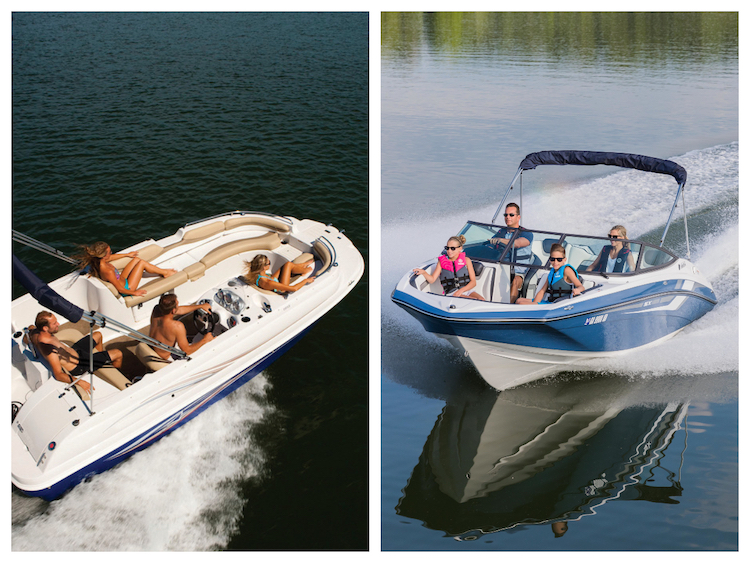
Imagine this scene: You are standing at the marina, attempting to envision what the next five summers will be like. On one side sits a sporty bowrider that almost demands you push the gas pedal to go faster. Next to it sits a huge, roomy deck boat that appears to be made only to host parties all weekend long. Which boat do you buy?
This could very well be the biggest decision that you ever make regarding boating. If you get it right, then you can look forward to many weekends of joy to come. If you get it wrong, you’ll wish you had picked the other one.
What’s Inside This Guide
Most online comparisons just regurgitate the same boring spec sheets. We’re doing things differently here. No fluff, no dealership spin—just the raw, real-world differences that actually matter once you leave the dock and hit the open water. Here is exactly what we’re going to break down:
-
The Real-World Ride — how they genuinely handle rough chop, tight cornering, and top speeds.
-
Space & Practicality — honest passenger limits, child safety, and who wins the fishing vs. cruising debate.
-
The True Cost of Ownership — upfront dealership pricing versus the resale value you’ll see five years down the road.
-
Propeller Pairing — the one critical upgrade that completely changes how either hull performs.
Whether you’re just casually browsing or gearing up to negotiate a price today, let’s find out which boat actually belongs at your slip.
Deck Boat vs Bowrider: Head-to-Head Comparison Table
Numbers don’t lie. Here’s how these two boat types stack up across every dimension that matters to real buyers.
|
Dimension |
Deck Boat |
Bowrider |
|---|---|---|
|
Hull Design |
Wide-beam forward; modified-V or hybrid flat-bottom for stability at rest and when beached |
Deep V-shaped pointed bow; cuts through waves cleanly for agile, sporty handling |
|
Seating Capacity |
8–12 passengers on equivalent lengths; square bow maximizes usable deck space |
6–10 passengers; narrower bow limits forward seating (e.g., Bayliner VR4 seats 7) |
|
Top Speed |
40–50 mph typical; predictable handling, excellent at low speeds |
45–55+ mph; crisp cornering, sharp throttle response, excels in rough water |
|
Stability |
Outstanding at anchor, loading, and beaching; wide beam is a genuine advantage |
Softer ride through chop via V-hull; less stable when stationary |
|
Storage Space |
Larger under-seat compartments, broad bow/aft platforms, ski lockers |
Functional ski lockers and under-seat storage; more compact overall volume |
|
Price Range |
$30K–$90K (e.g., Hurricane SunDeck 2400 starts ~$70K) |
$25K–$80K (e.g., Bayliner VR4 ~$35K; larger models $60K+) |
|
Tow Weight |
~3,500–5,500 lbs dry; wider beam adds wind resistance |
~3,000–5,000 lbs; easier towing with less drag |
|
Best Waters |
Calm lakes, bays, sandbars — ideal for anchoring and group hangouts |
Open lakes, choppy conditions, watersports venues |
Riding Experience & Family Practicality: The Real-World Breakdown
If you’re torn between the two, this quick side-by-side comparison covers exactly how they perform when it matters most.
|
Feature |
Deck Boat |
Bowrider |
|---|---|---|
|
Behind the Wheel |
Planted, steady rhythm; heavier throttle response with less vertical bounce at slow speeds. |
Fast-planing and “lively”; crisp, immediate turns that feel very much like a sports car. |
|
Choppy Water Handling |
Struggles slightly; the wider beam increases slamming and vertical bounce. Best kept to calm waters. |
Deep-V hull cuts cleanly through 1-2 foot chop, delivering a significantly softer and smoother ride. |
|
Beginner Friendliness |
Requires a bit more finesse; extra mass and width mean a 10-15% steeper learning curve. |
Excellent for first-timers. Handling is highly intuitive, making docking and navigating a breeze. |
|
Seating & Capacity |
Holds 8–12 passengers easily. Perfect for single-level socializing without feeling cramped. |
Tops out around 6–10 passengers. The narrower bow limits space but keeps the action close. |
|
Child Safety |
Features secure deep cockpits and non-skid floors, but generally lower sides than a deep-V. |
Wins on safety for toddlers due to much higher freeboards (often 37″+) keeping everyone secure inside. |
|
Ideal Family Match |
Large or multi-generational groups looking for maximum headcount and “floating-patio” vibes. |
Active families juggling young kids, watersports, and a love for zippy point-to-point cruising. |
Best for Fishing & Calm-Water Cruising
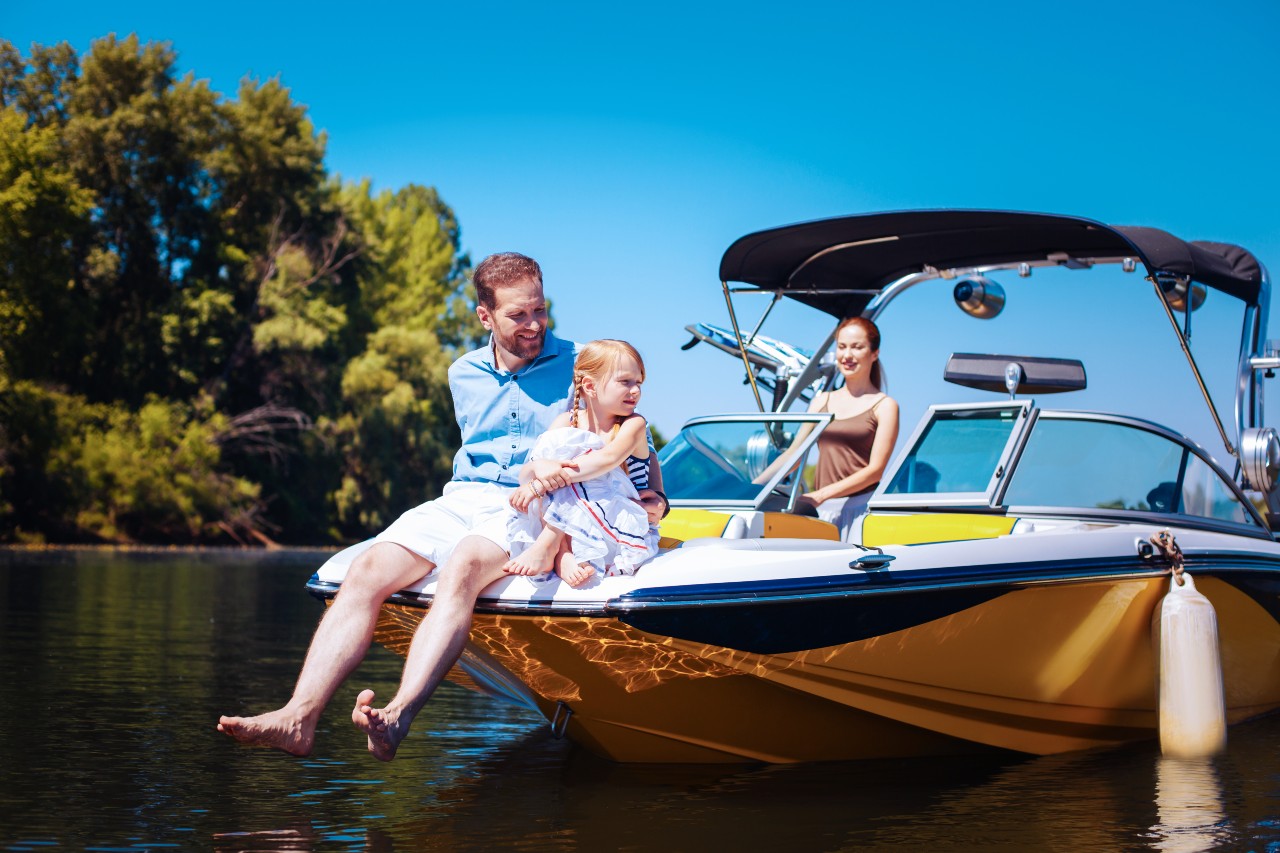
Fishing trips expose every weakness a boat has — and calm-water cruising rewards every strength.
These two activities look simple on paper. In practice, they demand very different things from a hull, a deck layout, and a storage system. Here’s how deck boats and bowriders perform once the engine slows down and the fishing lines go in.
Deck Boats: Built for Anglers Who Mean Business
The deck boat has one clear advantage for fishing: stability at low speeds. Modified-V and flat-bottom hulls cut roll by 20–30% at speeds under 5 knots compared to deep-V designs. That’s a big deal when you’re standing at the bow trying to land a cast.
The platform space is just as solid. Deck boats give you 18–25 square feet per angler. That’s enough room for 2–4 people to move around without tangling lines or bumping elbows. High gunwales — 24″+ on most models — and non-slip decking round out a solid fishing platform.
Storage is purpose-built. Midship rod lockers hold 6–12 rods. Aft livewells run 20–40 gallons. Integrated coolers hold 50–100 quarts. NauticStar hybrid models take it further with dedicated tackle drawers, 8–10 rod holder positions, and removable livewell liners for fast cleanup.
On the tech side, deck boats pair well with CHIRP sonar that spots fish at 0.5–1m depth. GPS trolling motors hold position within ±1–2 feet — no anchor needed. That’s serious fishing capability packed into a family-friendly hull.
Bowriders: The Better Choice for Point-to-Point Cruising
Calm-water cruising is where bowriders stand out. A 200–300 HP outboard pushes top speeds of 45–55 mph. A 10-mile lake run takes just 12–20 minutes. The same trip takes 20–30 minutes on slower platforms. That’s a 25–40% time saving on every outing.
Bow seating fits 6–10 passengers with room to spare. Swim platforms make mid-cruise stops easy and natural. For inshore routes under 10 miles — lake loops, bay hops, waterfront restaurant runs — the bowrider is hard to beat.
One real limitation: both boat types are built for calm inland and coastal water. Sustained chop above 2 feet makes the ride rough on either hull.
Fishing or Cruising? Here’s How to Choose
|
Priority |
Best Pick |
|---|---|
|
Serious fishing with gear & stability |
Deck Boat |
|
Fast point-to-point cruising |
Bowrider |
|
Mixed fishing + cruising days |
Deck Boat (more versatile layout) |
|
Calm inland lakes, shallow draft |
Deck Boat (1–4 ft draft) |
Bottom line: Fishing is a priority — even once in a while — the deck boat wins. Its purpose-built storage, casting platforms, and low-speed stability give it a clear edge. Your calm-water days are mostly about speed and scenery? The bowrider’s top-end pace and bow seating make for a much better ride.
Price, Ownership Costs & Resale Value Compared
The sticker price is just the beginning. What you pay for a boat over five years is a far bigger number — and most buyers don’t see that until it’s too late.

What You’ll Pay at the Dealership
Deck boats run $30,000–$100,000+ new. An 18–22 ft model with a 150–250 HP outboard lands between $35K and $60K. Step up to a 24 ft+ hull with a 300 HP+ V8, and you’re looking at $70K–$120K. Multi-engine setups add another 20–30% on top of that.
Bowriders tend to cost less. Expect $25,000–$90,000+ new. An 18–20 ft hull with a 115–225 HP engine runs $28K–$50K. A 22 ft+ sport model with a 250–350 HP sterndrive pushes into $55K–$95K territory. The sport hull uses less fiberglass. That trims manufacturing costs by about 10–15%.
Annual Costs Add Up Fast
Here’s where the real gap f their value after five years. A $40,000 bowrider bought in 2020 sells for around $24,000 today. Sport-positioned boats draw a wider resale market. They pull a 10–15% premium over similar family-use hulls.
Deck boats hold 45–60%. A $60,000 deck boat from 2020 sells for around $28,000 at resale. Heavy social use, deck wear, and a smaller pool of buyers all push depreciation up — about 15–20% deeper than bowriders.
Run the numbers on a $35,000 boat: a 10% retention advantage puts an extra $3,500 back in your pocket at resale. That’s real money.
Bottom line: Bowriders cost less to buy, less to run each year, and lose less value at resale. Deck boats demand more money at every stage of ownership. That said, if capacity and space are must-haves for how you use the water, the higher cost is worth knowing before you sign.
Propeller Selection: Getting the Right Prop for Your Boat Type
The wrong propeller doesn’t just hurt performance. It drains your fuel, kills your speed, and wrecks your hole shot every time you leave the dock.
Deck boats and bowriders have very different hull designs. So they need very different props.
Deck Boats: Go with 4-Blade Stainless Steel
Wide-beam hulls carry heavy loads. They need more thrust to get up on plane — and a 4-blade prop does that job well.
The blade area ratio on a 4-blade runs 60–65%. A standard 3-blade sits at 50–55%. That extra blade area gives you a stronger grip on the water at low speeds. You get a better hole shot with a full passenger load. Plus, you can see 10–20% fuel savings in watersports use.
There’s another win too. A 4-blade drops RPM by 50–150 at WOT compared to a same-pitch 3-blade. That means more torque, less engine strain, and cleaner planing on stern-heavy hulls.
Target pitch range: 15–19 inches. Target WOT RPM: 5,000–5,500 for most 200–300 HP outboards.
Bowriders: High-Rake 3-Blade for Speed and Agility
Deep-V hulls are built for speed. Pair them with a 17–21 inch pitch 3-blade prop — aluminum or stainless — and go with a high-rake (aft rake) design.
That rake angle lifts the bow, cuts wetted surface, and adds a +5–10% top speed gain. Each 2-inch pitch increase drops RPM by 300–400. Dial your pitch until you hit 4,200–5,000 RPM at WOT on sterndrive setups.
Want a pick built around your exact setup? vifpropellers.com lets you plug in your engine HP and hull length — something like “250 HP, 20 ft bowrider” — and it returns pitch and blade options matched to your real-world WOT RPM target. High-performance marine propellers manufactured by our factory come with reliable quality and cost-effective VIF prices for international distributors。
FAQ: Deck Boat vs Bowrider Common Questions
Still have questions after all that data? Good. These are the six questions real buyers type into Google before they sign anything.
Q1: Deck boat vs. bowrider — which is better?
Neither. What it all boils down to is what happens when you’re out there on the lake. If you want a boat that handles well, planes fast, and delivers good performance for activities such as slalom skiing, then bowriders are your choice. For larger groups and stability at rest, go for the deck boats.
Q2: Can a deck boat handle rough water?
Not well. Modified-V and flat-bottom hulls get punished in chop above 2 feet. Bowriders slice through those same waves without trouble. Deck boats belong on calm lakes and protected bays. That’s where they perform best.
Q3: Which is better for families?
Deck boats win on capacity and layout. A 20-footer holds 10 passengers plus gear. Bowriders top out around 8. More seats mean fewer compromises on family day trips.
Q4: What are the real size differences?
They both have equal dimensions, ranging from 17 to 27 feet. However, usable space varies. If your choice is a deck boat having a 20-foot-long dimension, then expect to have a deck size of approximately 120 square feet. In contrast, a similar-size bowrider offers only 100 square feet.
Q5: How does hull design affect everyday performance?
Bowriders (18–24° deadrise) plane fast and corner sharp — top speeds hit 45–55 mph. Deck boats (10–18° deadrise) cruise at 30–45 mph with less agility in tight turns. Flat water? Both do fine. Chop? The bowrider wins.
Q6: Storage and trailering — who wins?
Deck boats pack 20–30% more storage volume. That comes from wider under-seat compartments. Bowriders run 200–500 lbs lighter at the same length, so trailering takes a bit less effort. Both tow fine behind a 5,000-lb-rated vehicle.
One final tip: the propeller decides how well your boat performs — no matter which one you pick. The wrong pitch wastes horsepower and burns extra fuel on every outing. Head to vifpropellers.com, plug in your engine HP and hull length, and get a pitch recommendation built for your exact setup.