
Let’s be honest, standing at the dock trying to decipher modern engine specs—while someone preaches about their ancient two-stroke—can feel overwhelming. Outboard technology has completely reinvented itself, yet many boaters haven’t realized just how massive the shift has been.
We’ve moved from smoky, carbureted engines to near-silent four-strokes run by smart, fly-by-wire digital controls. What pushes your hull today is a completely different beast than what did the job thirty years ago.
This guide breaks down those game-changing technological leaps and brand rivalries. Knowing this history isn’t just about industry trivia; honestly, it’s the smartest way to ensure you make the exact right choice on your next engine upgrade or propeller swap.
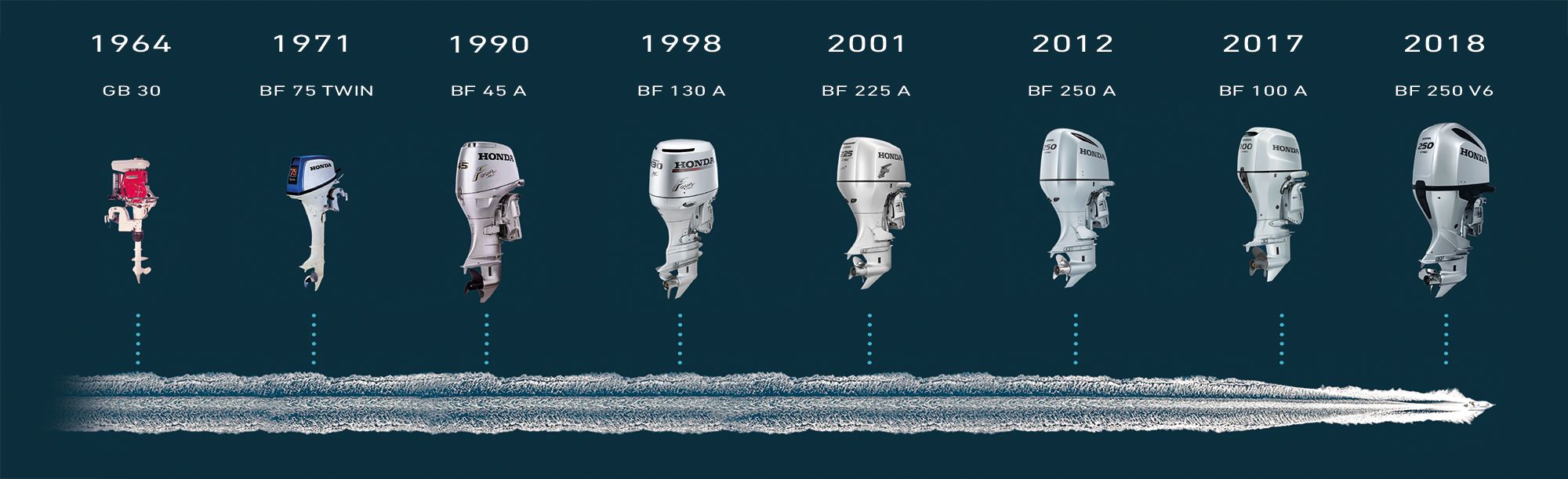
Content Framework: Evolution Of Outboard Engines: How Technology Has Transformed Boating
You know, Outboard Motors have come a long way since Ole Evinrude’s 1.5-HP hand-cranked engine back in 1907. Today, it’s all about smart engineering. Manufacturers like Yamaha and Suzuki are squeezing incredible power and thrust out of their engines without simply making them bigger.
Sure, the industry’s shift to cleaner four-stroke engines initially made them noticeably heavier. But engineers eventually cracked that code, relying on computer modeling to shave off serious weight over the years.
Then came the digital revolution. Say goodbye to clunky mechanical cables. With precise fly-by-wire controls, automated trim, and standard GPS integration, handling a Boat today feels completely different than it did just a decade ago.
Two-Stroke vs Four-Stroke Outboard Engines: The Emissions Revolution That Changed Everything

The two-stroke outboard didn’t die because it was slow. It died because it was dirty — and regulators had the numbers to prove it.
Here’s what those numbers looked like. A traditional two-stroke engine dumps 25 to 30% of its unburned fuel straight out the exhaust port. Hydrocarbon emissions exceeded 200 g/kWh. Carbon monoxide cleared 300 g/kWh. A modern four-stroke runs above 90% combustion efficiency, with HC emissions below 50 g/kWh and CO below 150 g/kWh. That’s not a marginal improvement. That’s a different category of machine.
The EPA saw the same data. In 2006, federal regulations required all outboards above 75 horsepower to meet 2-star certification. That meant moving to four-stroke or direct fuel injection two-stroke technology. Pre-1998 engines had averaged 350g HC/kWh. The ban rolled out from 1998 to 2009 and forced a 90%+ reduction in hydrocarbon output across the industry.
The Propeller Equation Nobody Mentions at the Dealership
Engines don’t work alone. Change the torque curve, and the Propeller requirements change with it. Most upgraders miss this detail.
Two-stroke engines deliver peak torque at high RPM. Four-strokes build torque low in the rev range. That shifts everything downstream:
|
Two-Stroke |
Four-Stroke |
|
|---|---|---|
|
pitch range |
17–21″ high-pitch |
19–23″ lower-pitch |
|
Diameter |
13–13.25″ avg |
14.5–15.5″ (+1 to 1.5″) |
|
Rake/Cup |
15–20° rake, minimal cup |
22–28° rake, 10–15% cup for grip |
Here’s the key point: a direct Prop swap from an old two-stroke to a new four-stroke won’t give you the performance the engine can deliver. The four-stroke’s low-end torque runs 20–30% higher than a two-stroke. That extra torque needs a matched propeller to reach the water. You’re looking at about 10% more pitch and 5% more diameter to convert that torque into thrust.
Michigan Wheel benchmark data gives a clear example. Moving from an OMC 25hp two-stroke running a 13×19 Prop to a Yamaha F25 means stepping up to a 14x21G. Same boat, same transom height — completely different propeller geometry.
The emissions revolution changed the engine. The propeller decides whether that change translates into real performance on the water.
Fuel Injection Outboard Technology: From Carburetor to Direct Injection (1980s–2014)
|
Year |
Brand & Milestone |
Technology Leap |
Performance Impact |
|---|---|---|---|
|
Pre-1987 |
Standard Carburetors |
Mechanical Metering |
High waste. Raw fuel bled out the exhaust port; no real-time load adjustment. |
|
1987 |
Mercury 220 XRi |
Electronic Fuel Injection (EFI) |
10–20% lower fuel consumption and smoother throttle, but still used limited port injection. |
|
1996 |
Evinrude Ficht & Mercury OptiMax |
Direct Fuel Injection (DFI) |
Fired air/fuel right into the cylinder. Cleared EPA rules and finally fixed the raw exhaust issue. |
|
1997 |
Yamaha HPDI |
High-Pressure DFI |
Widened the optimal Wide-Open Throttle (WOT) band by 500–1,000 RPM. Great for prop matching. |
|
2003–2014 |
Evinrude E-TEC (to G2) |
Advanced DFI Mapping |
Adjusted injection strictly by load. Dropped emissions by 75% and idle consumption by 20–30%. |
Ultimately, the old carburetor didn’t just fall because four-strokes took over. It fell because electronics finally learned to understand and control combustion in a way mechanical hardware never could.
Modern Outboard Technology: Digital Throttle, Smart Controls, and the Connected Boat (2010s–Present)
Mechanical cables had a good run. Then Mercury cut them out.
That’s not an exaggeration. The Digital Throttle & Shift (DTS) system replaced the entire cable assembly with sensors and a single wiring harness. No wear. No stretch. No lag between your hand and the engine. You get zero-hesitation throttle response and shift precision that a cable system cannot deliver. Mercury standardized DTS on its 250–400hp V8 Verado lineup and made it optional on the 175–225hp V6 FourStroke range. Every sterndrive, inboard, and diesel in the Mercury catalog runs on the same platform.
That’s where things get interesting — the capabilities that open up downstream.
Fly-by-Wire Opens the Door to Everything Else
Once you swap mechanical cables for digital signals, the entire boat wakes up. Mercury proved this with their SmartCraft network. By linking Digital Throttle & Shift (DTS) with GPS, tools like Joystick Piloting and auto-adjusting Active Trim became seamlessly integrated. Simply put, it takes the stress out of threading a heavy 30-foot center console into a tight slip, while naturally boosting fuel efficiency by 5–10%.
Yamaha took a similar path with their Helm Master EX system, which can seamlessly sync up to four outboards and run autopilot routes with a single tap. Honda, on the other hand, tackled performance from the inside out. Their BF250 uses a digital ECU to brilliantly manage VTEC valve timing, giving you a 10–15% low-end torque bump right when you need to get on plane.
The Engine Now Knows What the Propeller Is Doing
Here’s where modern tech directly impacts your wallet. These digital systems don’t just monitor the engine; they actively watch your propeller.
Mercury’s software constantly compares your engine RPMs against your true GPS speed. If it detects propeller slip climbing over 15%, the system immediately flags it. Why does that matter? Because a mismatched prop quietly drains 5–20% of your fuel efficiency right into the water. Ten years ago, you had to guess if your propeller was doing its job. Today, the engine explicitly tells you.
Emissions in the Digital Era
All this digital precision didn’t just make driving easier—it saved the industry from massive EPA fines. Massive Verado platforms now use automotive-style Selective Catalytic Reduction (SCR) to wipe out 90% of NOx emissions. Yamaha and Honda rely on advanced Exhaust Gas Recirculation (EGR) to cool down combustion and chop emissions by up to 70%.
Ultimately, the “connected boat” isn’t some empty marketing phrase. It’s the reality of a modern outboard that actively monitors its own fuel, calls out an inefficient propeller, and auto-adjusts its trim on the fly. The mechanical era didn’t end just because we got tired of carburetors. It ended the moment engines finally learned to read themselves.
Brand Technology Milestones: Yamaha, Mercury, Evinrude, and Honda Compared
Four brands. Over a century of competing ideas about how to move a boat through water. The differences aren’t just marketing. They’re engineering philosophies that show up in real numbers, real weight, and real fuel bills.
How Each Brand Staked Its Territory
Evinrude kicked things off back in 1909. While most brands eventually abandoned two-strokes, they stubbornly kept refining them. Their 2014 E-TEC G2 proved you could still meet strict EPA rules with direct injection—all without losing that aggressive two-stroke bottom-end torque.
Honda took a completely different route. They actually built the first four-stroke outboard way back in 1964, long before emissions forced everyone else to pivot. By pulling VTEC and Lean Burn tech straight from their cars, they created incredibly efficient engines. Yes, the automotive castings make them slightly heavier, but testing shows the fuel savings over a weekend on the water are absolutely massive.
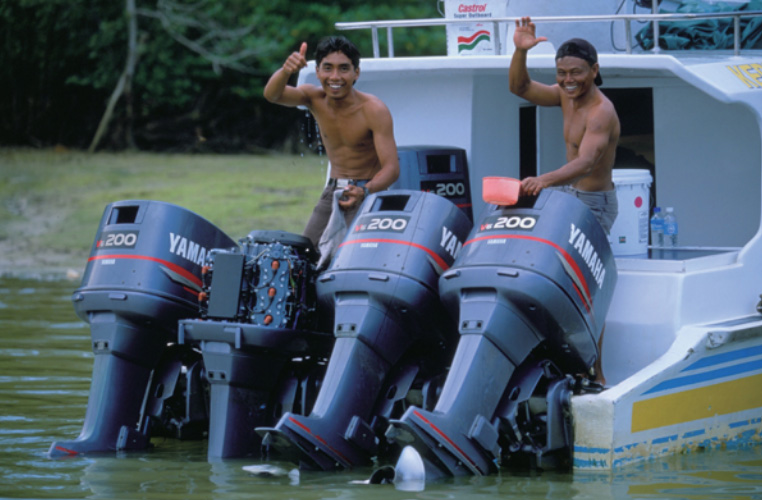
Yamaha hit the big four-stroke scene in 2001. Fast forward to today, their flagship F425 XTO V8 ditches messy hydraulics entirely for pure fly-by-wire electric steering. Fun piece of trivia: back in the 2000s, Yamaha and Mercury actually partnered quietly on 40–60hp engines, swapping blocks and cylinder heads while competing fiercely everywhere else.
Mercury has obsessed over shedding pounds since 1939. Instead of using thick metal castings, they lean hard into specialized alloys and composites to consistently dominate power-to-weight rankings. On top of their lightweight builds, their Verado lineup brought joystick piloting to the mainstream, an innovation arc that continues right up to today’s massive 400R V10.
Where the Real Differences Show Up
Three practical rankings tell a cleaner story than spec sheets:
|
Dimension |
#1 |
#2 |
#3 |
#4 |
|---|---|---|---|---|
|
Power-to-Weight |
Mercury |
Yamaha |
Evinrude |
Honda |
|
Fuel Economy |
Honda |
Yamaha |
Mercury |
Evinrude |
|
Smart Features |
Honda / Mercury |
Yamaha |
Evinrude |
— |
Honda’s fuel economy lead comes from Lean Burn. Mercury’s power-to-weight edge comes from materials. Yamaha sits in the middle on both — competitive across the board without leading either category. Evinrude’s E-TEC injection beats traditional two-strokes on efficiency. But it still burns more fuel per hour than four-strokes.
The Propeller Compatibility Detail That Gets Ignored
All four major brands use 15-spline hubs — so the props look interchangeable at first glance. They aren’t. Gear ratios range from 1.75:1 to 2.33:1 across the lineup. That spread changes which pitch range works with a given lower unit. Here’s the breakdown:
-
Yamaha: 1.75–2.15:1 ratios; saltwater-optimized aluminum lower units
-
Mercury: 1.75–2.33:1; softer aluminum with better sealing
-
Evinrude E-TEC: ~2.0–2.25:1; the two-stroke torque curve needs careful pitch matching
-
Honda: 2.0–2.33:1; heavier castings, efficiency-focused setup works best with lean-burn-tuned props
Put a Yamaha prop on a Mercury lower unit without an adapter and you don’t just lose performance. You create misalignment stress that wears out the gears faster. The spline count matches. The geometry doesn’t. Brand-specific propeller matching isn’t a sales tactic. It’s the only way the torque curve the engineers built gets to do its job in the water.
Why Propeller Selection Is the Final Piece of Your Outboard Engine Performance Puzzle
All that engineering — the direct injection, the fly-by-wire controls, the digital torque mapping — ends at the propeller. That’s where it either works or it doesn’t.
A mismatched prop doesn’t just leave performance on the table. It costs you real performance. Run a pitch too high for your engine’s WOT range and fuel consumption climbs 20–30%. Top speed drops 10–15%. A Yamaha test case shows it clearly: incorrect pitch that failed the neutral trim RPM check caused a 5–10 MPH loss on the water. That’s not a tuning nuance. That’s a different boat.
The rule is simple. Every 1-inch increase in pitch drops WOT RPM by 200. Go from a 21-inch to a 23-inch prop and you’ve shed 400 RPM before you leave the dock. Underpitch and the engine over-revs. Overpitch and it lugs — and that risks real mechanical damage over time.
Engine type changes the target:
-
Four-stroke high-HP engines build torque low in the rev range. large-diameter props — think the Rebel™ series — match that curve. The result is faster planing and stronger midrange pull.
-
DFI two-strokes run a higher power curve. Pitch must be precise to hit WOT specs. Test at neutral trim — halfway between full in and full out — and match RPM to the torque peak.
-
Electric outboards deliver instant torque at zero RPM. Drop 1–2 inches of pitch compared to a gas equivalent. Three-blade designs help reach operating RPM without overloading the motor.
Blade count is a real trade-off, not a style choice.
Three blades give you higher top speed and less drag on light, fast boats. Four blades give cruisers and pontoons better low-speed handling and fuel economy. A 13-inch four-blade aluminum prop on a Bennington 22-foot pontoon with an F115 is a proven setup. The cost of going four-blade on a fast hull: 5–10% of top-end speed.
Material matters at the top of the RPM range. Aluminum works fine for everyday use. Stainless flexes less at high RPM, holds pitch under load, and lasts longer in tough conditions. Hub compatibility — spline match, hub system — decides whether any of this power transfers to the lower unit. Mercury’s Flo-Torq hub is a common reference point here.
The engine manufacturers built something precise. The propeller connects that precision to actual water. Get it wrong and you’re running a modern outboard at the performance level of the machine it replaced.
Conclusion
Today’s outboard engine looks nothing like the old carbureted two-strokes. Those engines fouled the water and frustrated their owners. The new generation is a different machine entirely.
Fuel injection. Four-stroke efficiency. Digital throttle and shift. Real-time diagnostics. Decades of marine engine innovation have shifted the odds in your favor — whether you’re chasing fish at dawn or cruising a coastline.
But here’s what most boaters miss: the engine is half the equation.
All that horsepower. All that precision engineering. It reaches the water through your propeller. Wrong pitch, wrong diameter, wrong material — and you’re leaving performance behind. Doesn’t matter what brand badge is on your motor.
This deep look at boat propulsion technology should have you rethinking your setup. Take it one step further. Explore VIF Propellers‘ full selection and match the right prop to the engine you’ve invested in.
That’s where good technology becomes great boating.