
Your Boat speedometer needle is twitching. The numbers aren’t adding up. Or you’re staring at three different units on a marine electronics shelf, unsure which one belongs on your boat.
That confusion makes sense. Under that simple gauge on your Boat instrument panel, three different technologies are doing three very different jobs.
-
A pitot tube reads water pressure.
-
A paddlewheel counts rotations.
-
A marine GPS speed sensor talks to satellites.
Same readout. Three separate methods. Knowing how each one works changes everything — how you shop, how you troubleshoot, and how much you trust the number on that display.
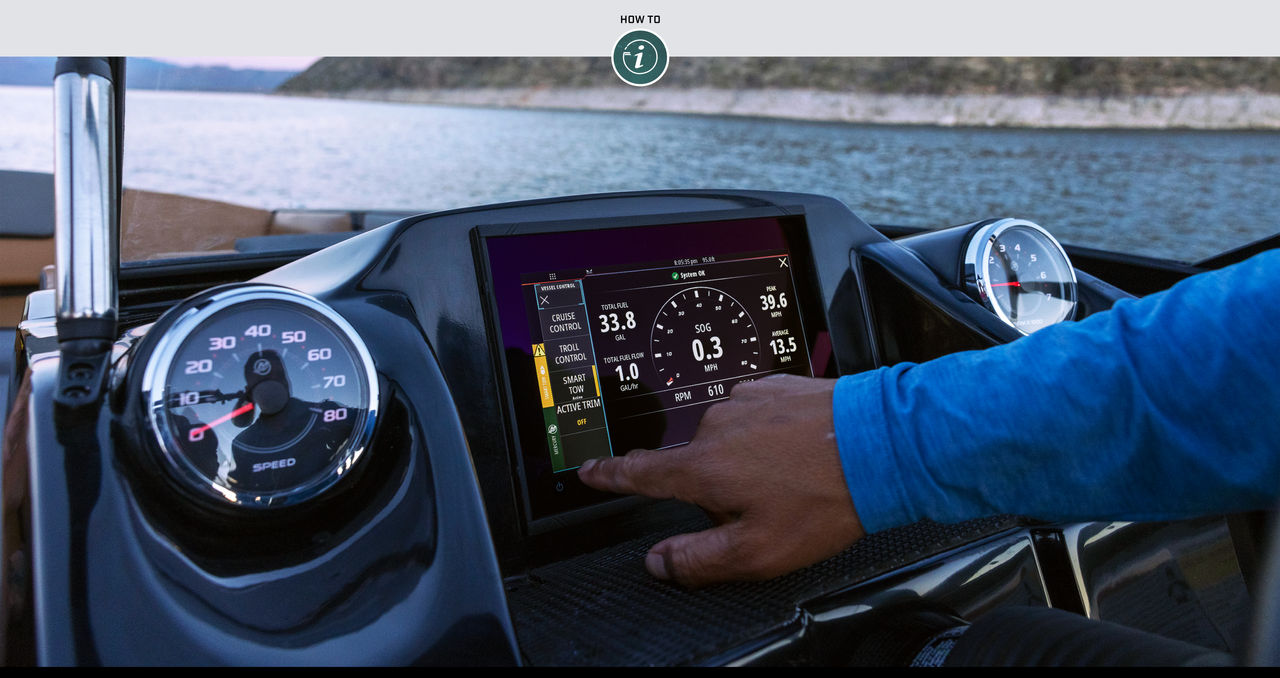
What Is a Boat Speedometer and Why Accurate Speed Measurement Matters
Speed on water looks simple. It isn’t.
A boat speedometer measures how fast your hull moves. The reading shows up as mph or knots on your boat instrument panel. Most recreational gauges run 0–50 mph for pontoons and runabouts. Ski and bass boats get 0–80 mph gauges. That number on the dial looks solid. It often isn’t.
Most boat owners never think about this until something goes wrong. That speed reading can mean two different things, depending on the technology behind it.
-
Speed Through Water (STW) — pitot tubes, paddlewheels, and electromagnetic sensors all measure this. It shows how your hull moves relative to the surrounding water.
-
Speed Over Ground (SOG) — GPS measures this. It shows your actual progress across the earth’s surface.
Drop into a 2-knot current and those two numbers split fast. A pitot reads 20 knots in both directions. Your GPS reads 22 knots going with the current and 18 knots going against it. Same engine. Same throttle. That’s a ±10% swing in real-world progress that STW alone will never catch.
Pitot Tube vs GPS vs Paddlewheel: Head-to-Head Comparison
Three technologies. One gauge. Very different strengths.
Picking the wrong one doesn’t just cost you money — it costs you accuracy at the moment you need it most. So here’s the direct breakdown across every dimension that matters.
Installation, Maintenance, and Cost
|
Dimension |
Pitot Tube |
Paddlewheel |
GPS |
|---|---|---|---|
|
Measurement Type |
STW |
STW |
SOG |
|
Low-Speed Accuracy (≤6 mph) |
Weak — often no reading below 3–5 mph |
Strong — most reliable at slow speeds |
Strong — stable above 1–2 knots |
|
High-Speed Accuracy (20–50+ mph) |
Good — ≤1 mph error in clean conditions |
Moderate — turbulence and bubbles cause drift |
Excellent — under 1% error |
|
Installation Complexity |
Medium (transom mount) to High (through-hull) |
High — requires through-hull in clean water flow |
Lowest — antenna and power, no hull penetration |
|
Maintenance Demand |
Moderate — watch for clogs, bends, air in the line |
High — biofouling locks up the Impeller; clean every 1–3 months in saltwater |
Minimal — keep the antenna clear, update firmware |
|
Typical System Cost |
$80–$250 |
$200–$600 with display |
$100–$500 depending on standalone vs. panel unit |
Pitot tube installation ranges from dead simple to genuinely tricky. Many outboard engines — Yamaha being the most common example — come with a pitot port built into the lower unit. No drilling, no sealing, no sweat. A separate through-hull pitot probe is a different story. You’re cutting into the hull, sealing against water intrusion, and positioning the probe to avoid air pockets and turbulent flow zones. Get the angle wrong and your readings are off before you leave the slip.
Paddlewheel installation always needs a through-hull fitting. No way around it. Most modern transducers use a valve-and-plug design that lets you pull the impeller for cleaning without hauling the boat. First-time installation still means drilling, positioning in a smooth-flow area, and sealing the fitting tight. Then the ongoing work begins. In saltwater, barnacles and algae can lock an impeller solid within a few weeks. So your boat speed sensor drops to zero mid-trip? A fouled paddlewheel is the first thing to check.
GPS installation is the easiest by a wide margin. Flush-mount or bracket-mount the antenna, run power and NMEA data leads, done. No hull penetration. No calibration ritual. No marine growth to scrape off. That simplicity is a strong case for GPS as a primary or backup boat speed gauge — especially on boats where drilling another hole is the wrong move.
Which One Belongs on Your Boat
The right choice depends on how you use the water.
For competitive water sports and performance tuning — wakeboarding, slalom skiing, drag racing on water — GPS is the right call. You need repeatable, current-independent speed measurement. Your 34 mph needs to mean 34 mph across the course, not 34 mph relative to water moving underneath you. GPS delivers that. A quality pitot can serve as a backup reference, but GPS runs point.
For sailing and low-speed displacement cruising, the combination of a paddlewheel knot meter plus GPS is the professional standard for good reason. The paddlewheel gives you STW — the number your sails, rudder angle, and leeway calculations are built around. GPS gives you SOG — the number your ETA and fuel planning need. Subtract one from the other and you get a real-time current vector. That’s not a redundancy. That’s a navigation tool.
For the everyday recreational powerboat — fishing trips, weekend cruising, casual runs at 20–40 mph — the decision is simpler. Your outboard already has an integrated pitot system? A quality digital gauge turns that into a marine speedometer accurate to within 1 mph across most of your operating range. That’s good enough. Adding instrumentation from scratch? A GPS speed display costs less to install, needs less maintenance, and delivers SOG accuracy that a mechanical system can’t match. The main thing you give up is STW — and for most recreational powerboaters, that’s a trade worth making.
One last note on current. In calm, tidal-flat waters — lakes, protected bays, low-flow rivers — the STW vs. SOG gap is small. Pitot and GPS numbers stay close. Push that boat into a tidal estuary or a river with real current, and a pitot reading of 10 knots alongside a GPS reading of 7 knots can both appear on the same trip. Knowing which number is on your display — and what it’s telling you — is the difference between confident seamanship and expensive guesswork.
Expert Opinion:
“In my years of working with recreational and competitive boaters, the single most common mistake I see is treating Speed Through Water and Speed Over Ground as interchangeable numbers. They’re not — and that distinction isn’t academic. I’ve watched competitive water skiers run a course at what they believed was a legal 36 mph, only to discover their pitot-based gauge was reading relative to a 1.5-knot current pushing them through. That’s a disqualifiable run. For performance applications, GPS isn’t a luxury upgrade — it’s the baseline standard for meaningful, repeatable measurement. And for cruising sailors navigating tidal waters, running both a paddlewheel and GPS simultaneously isn’t redundancy; it’s how you build a real-time picture of current behavior. The difference between those two readings is live current data you can’t get any other way.“
————Capt. James R. Holloway, USCG-Licensed Master Captain, 20+ years in marine electronics installation and performance boat testing, contributor to marine navigation standards training programs
How to Choose the Right Boat Speedometer for Your Boat
The right speedometer isn’t the most expensive one. It’s the one that matches how your boat moves through the water.
Start with one decision: GPS or mechanical. That choice matters more than brand, dial size, or mounting style. Pitot tubes and paddlewheels can drift ±5–15 mph. Fouling, installation angle, and water conditions all push the reading off. A quality GPS unit with a 4 Hz refresh rate — four speed calculations every second — holds accuracy within 0.1 knots in real-world conditions. For most boats, that gap in performance is decisive.

Match the Technology to Your Boat Type
Small powerboats (15–24 ft, 40–200 hp outboards)
Cruising range: 18–30 knots. WOT: 28–45 knots. A GPS speedometer handles this range well. Look for an 85 mm (3–3.5″) gauge to fit standard dash cutouts. Make sure it supports both mph and knots — you’ll want to switch units during Prop testing. Entry-level GPS gauges like the ELING 85mm run $50–80 and carry an IP67 weather resistance rating.
Sailboats (20–45 ft)
Sailboats run at 3–8 knots. At those speeds, low-speed precision matters. GPS handles it well, and 4 Hz units like the Velocitek SpeedPuck class resolve down to 0.1 knots. For racing, you need VMG and course-over-ground data. Step up to a dedicated tactical instrument that logs run data post-race. Correcting for current or calculating leeway? Keep a paddlewheel for STW. Just calibrate it against GPS — not the other way around.
Pontoon and dual-hull boats (20–28 ft)
Passenger loads shift a lot on pontoons. Coolers, guests, and gear all move the waterline around. GPS holds steady through all of it. A basic GPS round gauge in the $40–80 range covers the need. Already running a Garmin, Lowrance, or Simrad chartplotter? Skip the separate gauge. Just add SOG to your data overlay.
high-performance and bass boats (60+ mph)
At this level, accurate speed data shapes Prop pitch selection and trim tab tuning. Use a GPS with at least 5 Hz refresh — 10 Hz is better — with data logging. Choose a 0–100 or 0–120 mph dial. A 0–80 mph gauge pins the needle at WOT and gives you nothing useful.Your speedometer technology does not matter. You need accurate speed data to pick the right propeller. An incorrect reading causes bigger problems than a broken gauge. It leads to the wrong pitch. A bad pitch drops your engine’s RPM. Plus, it drags down your fuel efficiency. We offer a professional propeller selection guide to solve this. Use our Boat Propeller pitch calculator to find your ideal match. The guide sizes your prop based on your hull’s true speed.
Conclusion
Your boat speedometer isn’t just a gauge on a dashboard — it’s the difference between a confident captain and a guessing one.
Pitot tube, paddlewheel, or marine GPS speed system — each one has its place. The pitot tube keeps things simple. The paddlewheel holds steady for inshore use. The GPS option gives you hands-off accuracy. The right pick depends on one thing: how and where you boat.
Don’t overcomplicate it. Match the technology to your situation:
-
Your water type
-
Your hull
-
Your budget
-
Your skill level
The best marine speedometer is the one that works for your boat — not someone else’s.
Go check your current setup right now. Is it calibrated? Is it the right type for how you use your boat? If the answer isn’t a clear yes, that’s your next move.
Speed tells the whole story on the water. Make sure yours is told right.