
Buying a used boat should feel exciting — not like dodging overpriced listings and seller spin. But without a clear picture of what a pre-owned boat costs in today’s market, even experienced buyers leave money on the dock.
Used boat pricing in 2026 involves more variables than most people expect:
-
Depreciation curves that shift by vessel type
-
Valuation tools like NADA and BUCValu that few buyers use right
-
Hidden ownership costs that can double your first-year spend
Budgeting for your first boat? Benchmarking a seller’s asking price? Trying to figure out what your current vessel is worth? This guide breaks it all down — real numbers, practical tools, no fluff.
Used Boat Pricing 2026: Optimal Content Framework
The used boat market has a clear story to tell in 2026 — and the numbers matter before you make any offer.
Pre-owned boats make up 80% of all annual unit sales. In 2024, 860,000 units changed hands. Prices range wide: from $1,235 to over $2.2 million, with an average of $352,500 across all segments.
A few market realities stand out:

-
31–35 ft boats dropped from $500K to $400K year-over-year
-
26–30 ft boats fell about $10,000 on average
-
Some segments saw $5,000–$10,000 price cuts as dealers worked to protect margins
-
Yachts are the one segment still growing (~1.8%)
The broader market? Steady. Not a buyer’s fire sale, not a seller’s windfall. Just solid ground — more inventory on the lot, more time to compare, and less pressure to rush a deal.
What Is the Average Cost of a Used Boat in 2026?
The number that matters most: $352,533 — that’s the average used boat price across 364 active listings in 2026. Combined, those listings represent over $128 million in market value.
But that headline figure is misleading. Here’s why.
A handful of superyachts and luxury vessels skew the average hard. One listing alone sits at $2.25 million. Pull those out, and the numbers shift fast:
|
Boat Size |
2026 Avg Price |
2025 Avg Price |
Change |
|---|---|---|---|
|
10–14 ft |
$87,000 |
$87,440 |
↓ $440 |
|
21–25 ft |
$118,000 |
$122,000 |
↓ $4,000 |
|
26–30 ft |
$235,274 |
$246,830 |
↓ $11,556 |
|
31–35 ft |
$400,000 |
$501,000 |
↓ $101,000 |
First-time buyer? Your real range lands between $87,000 and $235,000. The half-million-dollar figure the overall average suggests? That’s not your market.
It’s a Buyer’s Market Right Now
2026 is one of the baest years to buy a used boat in recent memory. Prices are 20–40% off their peak across many segments. Inventory keeps building. Dealers are slashing prices on near-new boats just to clear stock.
So what does that mean for you? Plan on 10–20% negotiation room as a starting point — not a best-case scenario. Go in expecting it.
The broad market average moved just $119 from 2025 to 2026. That looks stable on the surface. But inside specific size classes, prices dropped hard. The 31–35 ft segment alone fell $101,000 year-over-year. That kind of compression is real — and it puts the advantage squarely in your hands.
Used Boat Prices by Type: How Much Should You Expect to Pay?
Every boat category has its own pricing logic. Mix them up, and you could budget $50K for a center console — then find out you need $175K.
Here’s the real breakdown by type, with 2026 market data behind every number.
Pontoon Boats: Affordable Entry, Fast Depreciation
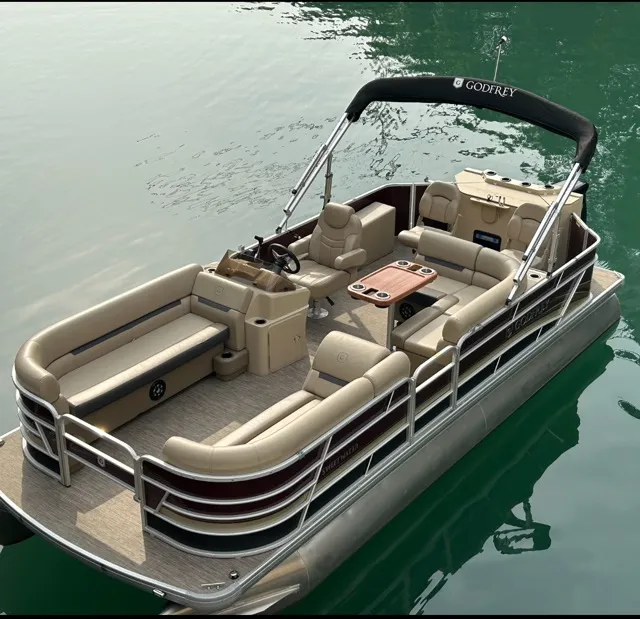
Pontoons are one of the most popular ways to get into boat ownership. They’re also one of the fastest-depreciating assets on the water.
New pontoons run $16,000–$90,000 depending on size. Used? The average listing sits at $46,344. Deals start as low as $9,984 and go up to $212,500 for premium configurations.
The catch: pontoons lose 25–30% of their value within the first 1–2 years. That’s steep compared to other vessel types. For buyers, it’s a real opportunity. For sellers, it’s a hard truth.
Center Console & Fishing Boats: The Best Value Retention on the Market

Center consoles depreciate at just 7–9% per year — the most stable segment in the used boat market. This category holds its value better than any other. That makes it the top pick for buyers who want a pre-owned vessel as a long-term asset.
Here’s where prices land in 2026:
|
Boat Size |
Avg Used Sale Price |
|---|---|
|
Under 20 ft |
$45,000 |
|
20–24 ft |
$75,000 |
|
24–26 ft |
$91,000 |
|
26–35 ft |
$175,000 |
|
36–45 ft |
$327,000 |
|
46+ ft |
$500,000+ |
Two data points worth noting:
-
The under 26 ft segment saw 12,000+ units sold in just the first half of 2024. Prices dipped 2.5% to $91,000 — pushed by rising supply and cooling demand. A clear buyer’s market.
-
The 36–45 ft segment moved in the opposite direction. Prices jumped 18% to $327,000, even as unit sales fell 12.3%. Less inventory, stronger demand at that tier.
The model-level data backs this up. The Maverick 18 HPV climbed from $79,300 to $87,000 year-over-year (+9.7%). The AP HPXV 18T4 moved from $79,300 to $87,440 (+10.3%). Smaller center consoles aren’t just holding value — some are going up.
Ski & Wakeboard Boats: Wide Range, Brand-Driven Pricing
This segment runs from $9,900 for older used models to $436,000+ for new premium builds. The Malibu Wakesetter series shows the range well. Listings go from $24,904 to $324,691, with an average around $115,100.
Brand name carries a big price premium here. Factor that into your budget before you start shopping.
Larger Yachts: Mixed Signals Across Size Classes
The yacht segment tells four different stories in 2026:
|
Vessel Size |
2026 Avg Price |
YoY Change |
|---|---|---|
|
36–45 ft |
$261,590 |
+8.76% |
|
46–55 ft |
$499,979 |
-2.87% |
|
56–79 ft |
$1,500,000 |
-0.97% |
|
80+ ft |
$4,100,000 |
+4.95% |
The 36–45 ft and 80+ ft tiers are going up in price. The middle tiers are softening. Shopping in the $500K–$1.5M range? You have more negotiating leverage than the top-line numbers show.
Bottom line: Your boat type shapes your depreciation curve just as much as your purchase price. Center consoles give you the strongest resale position. Pontoons give you the steepest initial discount on the used market. So in most segments under 26 feet, 2026 inventory levels put the bargaining power squarely in your corner.
7 Key Factors That Drive Used Boat Value Up or Down
Two identical boats. Same year, same model, same length. One sells for $91,000. The other sits on the dock for $67,000 — and still doesn’t move.
The difference isn’t luck. It’s a mix of factors that experienced buyers already know how to read. Here’s what’s actually moving the needle on used boat pricing in 2026.
1. Boat Age (The Depreciation Curve Is Steeper Than You Think)
Year one is brutal. Expect an 8–10% drop the moment a new boat leaves the dealership. Years two through five bring another 6–8% per year. After the ten-year mark, the curve flattens to 3–5% per year.
The real takeaway: a five-year-old boat has already lost 20–30% of its original value. A ten-year-old vessel? You’re looking at 30–40% gone. That’s where the real used market deals live.
2. Brand Reputation and Model Rarity
Brand name isn’t vanity — it’s equity. Premium brands hold value noticeably better than budget alternatives. A Grady-White Freedom 275, for example, shows much tighter low/median/high ranges on valuation tools than a comparable off-brand model. The spread is smaller. That means more predictable pricing and less negotiation risk.
Rarity works in the seller’s favor too. Fewer survivors in the vintage market often push prices up, not down.
3. Engine Hours
This is the single most scrutinized spec in any used boat deal — and for good reason. Over 500 hours tends to trigger a 15–25% reduction in quotes. Under 200 hours? Expect to pay a 10% premium above median market value.
Engine upgrades push the number the other way. Going from 150HP to 225HP can add around $4,900 to resale value. That’s a solid return — but only if the work is documented.
4. Hull Material and Water Type
Fiberglass hulls dominate the used market. They make up 63% of all used sales, and close to 98% for inboards and cruisers. They hold up well over time. Aluminum and older fiberglass boats used in saltwater are a different story. Corrosion works quietly and cuts value fast.
Freshwater use carries a steady 10–15% premium over comparable saltwater boats. Less corrosion, cleaner systems, smoother survey results. A seller who can prove freshwater-only history has real leverage. That paperwork is worth actual dollars.
5. Geographic Location
Supply and demand are hyperlocal in the boat market. High-inventory regions — major lake districts, the East Coast — push prices down by 10–15% compared to tighter markets. Low-population areas work the opposite way. Fewer buyers mean longer days on market and more room for sellers to flex on price. Either direction, location shapes what a fair number actually looks like.
6. Seasonal and Market Timing
Spring lifts all boats — no exaggeration. Average used prices rise about 4.2% during peak season. One data point puts the market at a $211,500 average during spring storage periods.
The broader 2026 picture: prices stay elevated overall, but selective softening is showing up in the late-model segment. COVID-era inventory is building a surplus there. Under 30 feet is a buyer’s market right now. Larger vessels still favor sellers.
7. Propeller Condition and Onboard Equipment
This one catches most first-time buyers off guard. A damaged Propeller — bent blades, stress cracks, pitch deformation — can drop a boat’s value by 5–10%. That’s real negotiating leverage. You just have to know to look for it.
On the upside, documented equipment upgrades add 5–15% to asking price. A trailer alone adds around $2,500. For vintage vessels, proven seaworthiness can push value 20–50% higher than comparable boats without that paperwork.
What This Means for Your Offer
Run any boat through this checklist before you negotiate:
-
Engine hours under 300 for maximum retained value
-
Prop condition — dings and cracks are the most overlooked value hit
-
Freshwater history — add 10% to your estimate if confirmed; discount if salt
-
Seasonal timing — spring listings price high; fall and winter create room
-
Location premium or discount — know your regional inventory before you settle on a number
These seven factors don’t just explain why boats are priced the way they are. They show you where the negotiation leverage lives — and where sellers are most likely to move.
How to Check Used Boat Value: Free Tools & Resources in 2026
Four free tools do most of the heavy lifting here. Use them together. You’ll have a solid, defensible number before you contact a seller.
The Tools Worth Knowing
BoatValue.com is the fastest starting point. Feed it a year, make, model, and length. It runs your input against over 1 million comparable sales and returns a low/medium/high range in seconds. Accuracy lands within 5–10% of actual selling prices. No login. Free PDF report. Done.
BoatTrader’s Price Checker pulls from live listings and recent sold data across the largest U.S. boating marketplace. Enter your specs and add your location. You’ll see real-time low/average/high ranges — not theoretical estimates, but what buyers are paying right now.
JDPower.com/Boats runs on NADA boat values data (acquired in 2015). It pulls from thousands of annual transactions going back to 1970. Dealers use this as their baseline. You should too — for trade-ins and appraisals, it’s the standard reference.
BUCValu.com goes deeper on detailed resale evaluations. It adjusts for area, condition, and equipment. This is the specialist’s tool for granular pricing on a specific make and model.
The Three-Step Cross-Validation Process
Don’t trust a single number. Here’s how to triangulate:
-
Start with BoatValue.com — get your AI-generated range (±5–10% accuracy)
-
Check BoatTrader — compare 5–10 active listings filtered by condition, engine hours, and location
-
Reference JDPower/NADA — match against the dealer baseline, then average the medium ranges across all three
Here’s a practical example. Say your inputs point to a $50K–$70K window. Your target offer should land around $58,000 — that’s the average of the medium ranges, adjusted for any location or condition gaps you spotted in step two.
The whole process takes under 20 minutes. It’s the same logic appraisers use — just without the appraisal fee.
Used Boat Depreciation: Which Models Hold Their Value Best in 2026?
Depreciation doesn’t hit all boats the same way — and in 2026, that gap is wider than it’s been in years.
Here’s the baseline curve every buyer and seller needs to know:
-
Year 1: 8–10% drop off the original purchase price
-
Years 2–5: Another 6–8% per year
-
After 10 years: Most boats retain just 40–55% of their original value — then the curve flattens to 3–5% per year
That math matters. But the bigger story right now is what’s happening to specific segments.
The Segments Bleeding Value Fast
The pandemic boat boom created a glut. Now the market is paying for it. Inventory has doubled or tripled in some regions compared to 2025. Boats that sold within days two years ago are sitting on dealer lots for months. Sellers who bought during the boom are cutting prices hard. The goal isn’t profit — it’s stopping the drain from ongoing insurance, docking, and maintenance costs.
The weakest performers right now:
-
Pontoons — down 10–15% year-over-year
-
Wake sport boats, jet boats, and stern drives — all showing clear weakness
The Segments Holding Steady
Two categories are bucking the trend. Lower-cost freshwater fishing boats and personal watercraft (PWCs) have stayed solid. Demand stays consistent. Their lower price points pull in buyers even in a soft market.
Yachts stand out as the one category moving upward, posting 1.8% growth through mid-2025. At the top end of the market, supply stays tight and buyers stay committed.
The bottom line: Buying in 2026? The depreciation curve works in your favor — pontoon and wake sport categories especially, where sellers are eager to deal. Selling? The freshwater fishing and PWC segments give you the best shot at recovering real value.
Step-by-Step: How to Buy a Used Boat Without Overpaying
Most buyers lose money before they ever leave the dock — not because the boat was bad, but because they skipped steps.
Here’s the process that keeps your wallet intact.
Step 1: Research the Market Before You Contact Anyone
Start on FB Marketplace, OfferUp, Boat Trader, and auction sites. Reach out to licensed brokers for off-market listings. Before any visit, screen sellers by phone:
-
Where is the boat located?
-
Is it water-ready?
-
Are service records available?
-
Is the title in hand?
-
Why are they selling?
That last question tells you more than any spec sheet.
Step 2: Lock In Your Boat Type First
Match the vessel to your actual usage — seasonal vs. year-round, sleeping aboard, how many people, how complex you want to go. Buying the wrong category is the most expensive mistake in the used boat market. Settle this before you fall in love with a listing.
Step 3: Run Your Valuation Before Making Offers
Use the tools covered earlier (BoatValue, BoatTrader, NADA/JDPower). Broker networks also give you solid market comps. Know your number going in. To submit an offer, prepare a 10% good-faith deposit held in a bank trust account.
Step 4: Inspect In Person — Work Through This Checklist
Skip the seller photos. Show up and check every item below:
|
Area |
What to Check |
|---|---|
|
Hull |
Cracks, gouges, previous repairs, blister depth |
|
Pontoons (if applicable) |
Dents, corrosion, leakage, warping |
|
Engine |
Corrosion, leaks, start it up — listen for smoke, rough idling, unusual noises |
|
Electronics |
Nav lights, stereo, bilge pump, fish finder, horn, livewell — test every switch |
|
Battery |
Age, connections, charge capacity |
|
Trailer |
Tires, brakes, lights, winch, frame rust, bunks and rollers |
|
HIN |
Verify on the starboard transom (upper right) — must match all documents |
Step 5: Hire a Marine Surveyor and Run a Sea Trial
This is non-negotiable. The buyer pays for haul-out. A qualified marine surveyor digs deeper than any DIY checklist. They check hull blisters, structural integrity, and systems you can’t see from the surface.
The sea trial happens at the launch ramp. Warm the engine first, then verify:
-
Clean start and smooth sound
-
Trim function
-
All lights and instruments
-
Electronics and audio
-
Bilge and pumps
Have the seller demonstrate any features they described. Your purchase contract needs a survey contingency. That means you can walk away — deposit intact — if the boat doesn’t meet your standards.
Step 6: Negotiate With Specific Leverage
This is where most buyers leave money on the table. A written offer starting 20% below asking price is a reasonable first position — not an insult. Back every discount request with documented findings:
-
Engine hours over 500 with no service records? That’s 10–15% off the asking price, minimum.
-
Propeller damage — dings, cracks, pitting deeper than 0.010″? That’s a 5–10% discount. Prop replacement and balancing costs real money. So does the lost fuel efficiency on the water.
-
Soft floors, torn upholstery, faded interiors? Interior wear justifies another 5–10% off, depending on severity. Soft floors with rot underneath? Walk, or demand 20% off.
Keep your script simple: “Survey showed 600 hours with no maintenance records, visible prop damage, and interior wear — I’m adjusting to $X, or I’ll move on.” Sellers who respond to that are motivated. Sellers who don’t — aren’t worth chasing.
Step 7: Close the Title With a Clean Transfer
Before any money moves, verify:
-
Title is valid, clean, and lien-free
-
HIN on the title matches the physical boat
-
Trailer has a separate title if your state requires it
Your bill of sale must cover both parties’ full names and addresses. It also needs the boat’s make, model, year, HIN, and engine serial numbers. Add a full equipment list with serial numbers for electronics, the trailer serial, and the total purchase price with payment method. Use state-specific forms or BoatUS/USCG blanks as your base template.
The real edge in this process? Most buyers skip steps four and five. The buyers who don’t — who show up with a checklist, a surveyor, and a documented counter-offer — pay less and walk away with better boats. That’s not luck. That’s preparation closing the deal.
Hidden Costs of Owning a Used Boat: What the Price Tag Doesn’t Tell You
The sticker price is just the entry fee.
On a $50,000 used boat, first-year ownership costs can hit $11,000 — that covers loan payments, storage, insurance, maintenance, and fuel. Most buyers don’t see that number coming.
Here’s where the money goes:
-
Maintenance: Set aside 10% of boat value per year — that’s $5,000 on a $50K vessel. Used boats tend to cost more here because of deferred wear and aging systems.
-
Storage: Wet slips run $2,000–$10,000/year. Dry storage is cheaper at $1,500–$4,000/year, but you’ll pay launch fees and towing costs on top.
-
Insurance: Expect $300–$1,000/year, based on size and location.
-
Fuel: A 30-foot cruiser burns 15 gallons per hour. A full weekend on the water adds up fast.
-
Registration and taxes: Sales tax alone hits 6–11.25% at purchase. Florida caps its surtax at $18,000. California goes up to 11.25%.
Propeller condition is the most overlooked line item. Used boats — those with saltwater history in particular — show propeller damage that builds over time. Replacement costs range from $150–$1,500+ based on material. A stainless steel upgrade can boost fuel efficiency by 10–20%. It pays for itself within one or two seasons through fuel savings alone.
One option worth pricing out: boat clubs run $3,000–$10,000/year with no maintenance or storage costs attached. Under 50 hours on the water per year? Club membership can beat ownership on straight cost.
Used Boat vs New Boat: Is the Price Difference Worth It in 2026?
The gap between new and used boat prices has never been this wide. Right now, the math points hard toward the used market.
%20-%202025-04-11T122924.819.png)
New boat prices rose 4% in 2026, pushed up by tariff pressure on aluminum costs. Brunswick — the largest builder in the industry — absorbed $75 million in tariff costs in 2025. They expect another $35–45 million hit in 2026. New boat sales have already dropped below 2007 levels.
The used market tells a different story. Nearly-new boats are selling 20–40% below original purchase price. Some with under 20 engine hours are moving at 50 cents on the dollar. Post-pandemic trade-ins keep piling up as owners walk away from payments or downsize their boats.
The tradeoff is real, though. Used boats come with some serious risks:
-
Deferred maintenance — past owners may have skipped service
-
Tighter insurance options — fewer lenders will cover older hulls
-
Higher loan rates — financing costs have more than doubled
A low sticker price does not mean a low total cost.
The verdict: For most buyers in 2026, a used boat puts you in a stronger financial position. But you need to look beyond the price tag. Factor in maintenance, insurance, and financing before you commit. The sticker price is just the starting point.
Conclusion
Buying a used boat in 2026 doesn’t have to feel like guessing in the dark.
You now have the full picture — real price ranges by boat type, the seven factors that shift used boat values up or down, and free tools like NADA and BUCValu. These tools show you what a listing is actually worth before you shake hands with a seller.
Here’s what most buyers miss: the sticker price is just the start. The real costs go deeper. Maintenance, insurance, slip fees — and yes, a worn-out propeller that drags down performance and fuel economy. These are the numbers that decide whether your purchase is a smart investment or an expensive regret.
Before you sign anything, take these three steps:
-
Get a professional marine survey
-
Run the numbers on true ownership costs
-
Inspect the propeller up close
Ready to upgrade or replace? VIF Propellers has what you need.
Your next great day on the water starts with one smart decision.