
Spending $30,000–$40,000+ on a Yamaha 350 outboard without knowing the real numbers isn’t a purchase decision — it’s a gamble. Dealers don’t publish their actual transaction prices. MSRPs shift between model years. And the sticker price? That’s just the start of what you’ll spend. This 2026 price guide fills that gap.
Prior to going into the technicalities of horsepower numbers, one aspect that needs to be made clear before anything else is the fact that whenever the term “Yamaha 350” is mentioned, people automatically assume that it refers to the famous 5.3L V8. This motor came out as far back as 2007 and marked the world’s first mass-produced outboard V8 engine – literally a revolution in offshore performance engines. The truth is, by 2019, Yamaha discontinued the production of this specific V8 engine. The important thing about buying a new Yamaha F350 nowadays is that the Yamaha F350 is no longer a V8 engine but rather an entirely different engine model equipped with a 4.3L V6 engine.
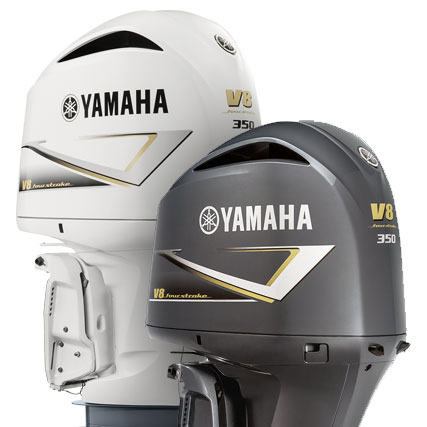
Installing one Yamaha XTO 350 V8 outboard in your center console Boat? Plan for a twin-outboard engine project? You will be able to find all your required information here:
-
Current MSRP breakdown
-
Real dealer pricing ranges
-
Total ownership cost analysis
-
Head-to-head comparison against Mercury and Suzuki
Walk into that dealership with solid numbers and no surprises.
What Determines the Final Price You Pay: Configuration Cost Breakdown
First, counter-rotation LF models cost $720–$955 more than their standard F versions. That’s a real number to budget for in any twin-engine build. Second, Pearl White and Classic White are priced the same — both run $1,380–$1,395 above the Gray option.
LF350XSA4 is the most current edition (Classic White, 25″ Shaft, DEC Control). Its key improvements compared to the 2025 are enhanced Digital Electric Steering compatibility and additional color variants. In 2024, the prices increased by 2-5% on average. No sharp increases are visible, only constant growth. This claim is supported by the official price list of the retailer, namely, in 2024, according to RJ Nautical, the F350XSA is priced at $40,803 vs. $41,165 MSRP, i.e., there is a discount in the range of 1-5%.
Specifications of all editions remain unchanged: 350 hp @ 5,500 RPM; Weight – 629-642 lb; Standard power trim/tilt, DEC control.
Four variables control what you hand over at the dealership. None of them are obvious from the sticker price alone.
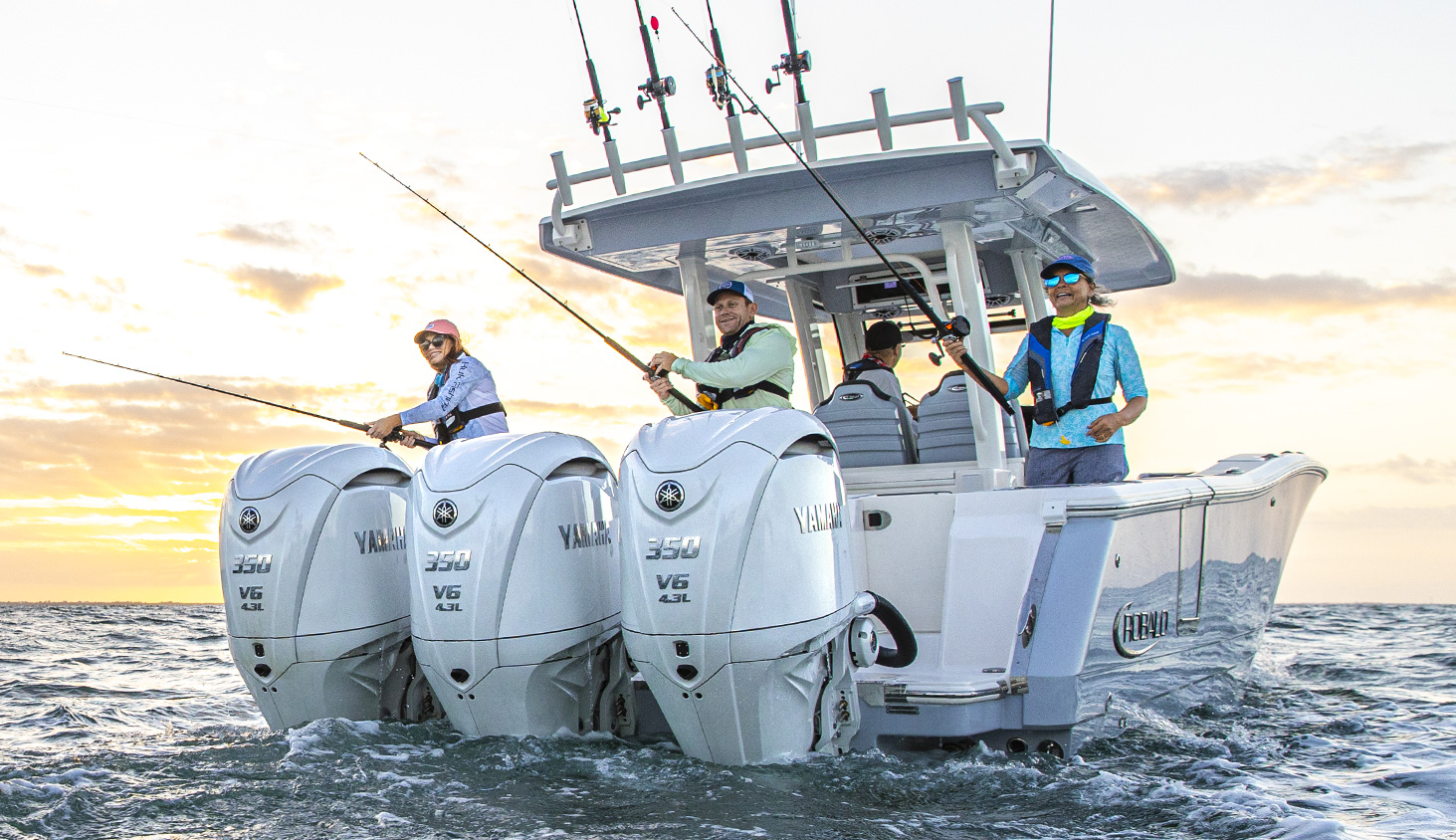
1. Shaft Length: The $1,000–$2,500 Decision Most Buyers Rush
Shaft length isn’t just a spec. It’s a match between your transom height and the engine. Get it wrong, and you’re facing a $2,000–$5,000 retrofit before your first season ends.
Here’s the quick reference:
|
Transom Height |
Shaft Length |
Weight |
Best Application |
|---|---|---|---|
|
15–17″ |
25″ X-Long |
629 lbs |
Deep-V hulls, offshore |
|
18–20″ |
30″ Long |
642 lbs |
Most recreational boats |
|
20–22″ |
35″ Standard |
653 lbs |
Shallow-draft, pontoons |
An undersized shaft causes cavitation. That kills 15–25% of your performance. An oversized shaft creates steering lag and Prop strike risk. Measure your transom before you order. Changing this post-purchase costs more than getting it right from the start.
2. Color Finish: ~$1,400 More for Pearl White
Pearl White and Classic White both run $1,380–$1,395 above the standard Gray finish. That’s a real budget line item — not a minor cosmetic upgrade. On a twin or triple-engine build, that cost multiplies fast. Plus, once your order is placed, color is locked. Changing it mid-production triggers a 15–25% surcharge.
3. Counter-Rotation (LF Prefix): Pay for It Only If You Need It
This is one of the most common — and expensive — buyer mistakes. Counter-rotation adds $700–$1,400 per unit. It’s necessary in twin-engine setups, where both engines must rotate in opposite directions to cancel torque steer. That’s the one scenario where it makes sense.
Single-engine build? The standard F-prefix is correct. Selecting LF wastes up to $1,400 with zero performance benefit.
4. Dealer Markup: The Number Nobody Posts
Authorized dealers run 10–20% above MSRP. Coastal markets sit at the higher end (12–15%). Inland dealers tend to run softer (8–12%). Buying three or more units? Volume discounts become negotiable at that point — 5–8% off MSRP on fleet orders.
Bottom line: Before finalizing any quote, verify your shaft length. Confirm whether you need counter-rotation. Then compare the total net price — fees, taxes, and all — across at least two dealers.
From Purchase to First Splash: Upfront Add-Ons
|
Cost Item |
Price Range |
|---|---|
|
Engine (F350XSA, Gray, 25″ shaft) |
$40,803–$41,165 |
|
Dealer prep / test run |
$660 |
|
Full rigging (wiring, gauges, controls) |
$500–$2,500 |
|
DEC fly-by-wire throttle upgrade (if needed) |
$1,200–$2,000 |
|
Propeller (aftermarket stainless) |
$150–$800 |
Used Yamaha 350 Outboard Prices: What 2019 Pre-Owned Models Sell For
Seven years of depreciation does something interesting to a Yamaha 350. The price drops close to half, but most of the performance stays right where it was.
Here’s the 2019 pre-owned market reality. Across eight active model variants, used Yamaha F350 four stroke units are trading in the $18,267–$19,701 range. That’s a 40–60% drop off the 2019 new MSRP of $55,000–$65,000. Skip the factory warranty, and that gap puts real money back in your pocket.
2019 Model Pricing Snapshot
|
Model |
Used Price |
|---|---|
|
F350XCC |
$18,267 |
|
F350XCC2 |
$18,881 |
|
F350UCC |
$18,535 |
|
F350UCC2 |
$19,701 |
|
LF350UCC |
$19,010 |
|
LF350XCC2 |
$19,354 |
One outlier worth flagging: the LF350UCC2 lists at $35,680 — close to double the rest of the group. That’s a low-hour premium unit, not a pricing error. Don’t let it throw off your expectations.
What Moves the Needle on Used Price
Hour meters tell the real story. Under 500 hours? Expect to pay $19,000+. From 500–1,200 hours, pricing lands in the $18,000–$19,000 band. Above 1,200 hours, the price falls below $18,000. Push a little, and you’ve got 10–20% negotiating leverage.
Usage environment matters just as much. A freshwater 350 HP outboard motor holds 10–15% more value than a comparable saltwater unit. Saltwater exposure with no proper flushing? Take another 15–25% off your offer. That’s corrosion risk, priced in.
Run a compression test before you commit to any 2019 unit. Target 180–210 PSI per cylinder, even across all eight. Drop below 160 PSI on any single cylinder, and you’re facing a $5,000–$8,000 rebuild. That wipes out every dollar you saved going used.
The Warranty Math Nobody Mentions
All 2019 Yamaha 350 outboards lack any remaining manufacturer warranty by 2026. This is not an issue. It’s simply one of the many cost factors to consider when budgeting. Anticipate spending $1,500-$3,000 on a premium service plan. Or allocate 10% contingency funds for any powerhead and rigging maintenance needs. The average price point lands in that ballpark.
Buying second-hand will save you tens of thousands of dollars. Before wiring a single cent, ensure inspection fees, service records, and extended warranties fit within your calculations.
Yamaha 350 vs. Mercury 350 vs. Suzuki DF350A: Price and Performance Compared
Three engines. Three different value propositions. Pick the wrong one and you lose more than money — you lose performance on every run.
Here’s how they stack up.
Performance: Where Each Engine Earns Its Price Tag
|
Spec |
Yamaha F350 |
Mercury Verado 350 |
Suzuki DF350A |
|---|---|---|---|
|
Displacement |
4.3L V6 |
2.6L Inline-6 (supercharged) |
4.4L V6 |
|
Dry Weight |
629 lbs |
668 lbs |
727 lbs |
|
Power Delivery |
Low-end torque leader |
Supercharged mid-high pull |
Efficient planing torque |
|
Fuel Efficiency |
Baseline |
Below Suzuki |
10–15% better than Yamaha |
Match your engine to how you use your boat:
-
Reliability and torque first? Yamaha F350
-
Straight-line acceleration? Mercury Verado 350
-
Long-term efficiency and value? Suzuki DF350A

Choosing the Right Propeller for Yamaha F350: Specs, Options & Pricing
The Propeller is the last link between a $40,000+ engine and real water performance. Most buyers spend less than 10 minutes choosing it.
That’s a mistake. The wrong Prop on a Yamaha F350 four stroke doesn’t just leave performance on the table. It strains the engine, wastes fuel, and pushes your WOT RPM outside the safe operating range.
Here’s what the right choice looks like.
F350 Propeller Specs: Know These Numbers First
Every prop decision starts with two fixed specs on the Yamaha XTO 350 V8 outboard:
-
Gear case diameter: 5.25″
-
Spline count: 17
Pitch and Diameter by Application
|
Use Case |
pitch Range |
Diameter |
Blade Count |
|---|---|---|---|
|
Recreational / light loads |
17–21P |
15.5–16.25″ |
3-blade |
|
Offshore / heavy loads |
21–25P |
16.5–17⅛” |
3–4 blade |
|
Flats / bay boats |
17–19P |
15.5–16″ |
4–5 blade |
|
Performance / muscle boats |
21–23P |
16–16.5″ |
3-blade |
When you are ready to rig, swapping to a high-performance V.I.F stainless steel propeller is arguably the easiest “bang-for-your-buck” upgrade you can make to ensure that V6 (or legacy V8) power translates directly into forward momentum.
Frequently Asked Questions: Yamaha 350 Outboard Price & Specs
Dealers skip these questions. Buyers who don’t ask them pay for it later.
Is the Yamaha 350 a V8?
No. The current F350 runs a 4.3L V6, not a V8. Yamaha dropped its 5.3L V8 350 hp platform around 2016. Want a true Yamaha V8? That’s the XTO 450 (5.6L) — a different price bracket altogether. The V6 F350 still leads its class in power-to-weight. It weighs 629 lbs at 25″ shaft — about 65 lbs lighter than comparable competitors.
What’s the 2026 price range?
|
Configuration |
MSRP |
Typical Sale Price |
|---|---|---|
|
F350XSA (Gray, 25″) |
$41,215 |
$40,803 |
|
LF350XSA (Gray, Counter-Rotation, 25″) |
$41,940 |
$41,521 |
|
F350USA (Gray, 30″) |
$41,560 |
$41,144 |
|
LF350USA2 (Pearl White, Counter-Rotation, 30″) |
$43,850 |
$43,412 |
Dealer discounts run 1–2% off MSRP. Don’t expect much more than that on a first-year model.
What does “installed” cost?
The engine price is outboard-only. Add $2,700–$6,300 for the full setup:
-
Transom bracket: $300–$800
-
Electrical harness: $500–$1,500
-
Fuel system integration: $400–$1,000
-
Dealer labor: $1,500–$3,000
Total installed cost runs $43,000–$50,000 for a single-engine build.
Is the F350 worth upgrading from an F300?
It depends on how you use your boat.
The F350 adds +50 hp, a larger 81mm throttle valve, higher valve lift, and a 70-amp alternator. That alternator puts out close to double the power of comparable Yamaha models. For boats 35 ft and up, offshore saltwater use, or twin-engine setups, the upgrade makes sense. For single-engine inland boats under 32 ft, the F300 gives you 85% of real-world performance at 12–15% less cost. That’s hard to ignore.
What fuel does it take?
Minimum 89 octane — no premium needed. E10 (10% ethanol) works fine. Stay away from E15 and above. It damages the fuel system over time. Boat sitting more than 30 days? Add a fuel stabilizer. Ethanol pulls in moisture. Corroded fuel injectors are a costly repair.
What’s the fuel consumption?
At cruise (3,500 RPM, ~60% throttle): 25–30 GPH. At WOT (6,000 RPM): 40–50 GPH. Numbers shift with hull design, load, and sea conditions. Yamaha doesn’t publish an official EPA marine rating.
What warranty comes with it?
-
Pleasure use: 3-year limited warranty
-
Commercial use: 1-year
-
Government: 3-year
The warranty covers defects in materials and workmanship. Routine maintenance, wear items, and abuse are not covered. Set aside a separate service budget from day one.
Conclusion
So, Is the Yamaha F350 really worth that much?” The truth is, it doesn’t matter how much money that Yamaha is going to cost you because it’s not the purchase that’s important; it’s what comes after the purchase. Regardless of whether you get the powerful 4.3L V6 or the vintage pre-2019 V8 engine, you can expect additional costs for rigging and props.
Yamaha still owns the offshore reliability game. Sure, Mercury might feel a bit punchier in the mid-range with its supercharger, and Suzuki will definitely save you some fuel money on those long weekend runs. But there is a reason you see so many Yamahas hanging off the back of center consoles. They just run seamlessly when you need them to.
Before you pull the trigger, do the math. Measure your transom twice, skip the pricey counter-rotation if you’re only rigging a single engine, and shop around at least two dealers. Get the setup right the first time, and that massive upfront check will translate into years of stress-free runs instead of endless service appointments.