
Every hour on the water with a roaring engine should feel like freedom. Instead, your body absorbs vibration and noise the whole time — and you don’t realize it until you dock. You step off exhausted, wondering why a day out felt like work.
The fix isn’t complicated. But pick the wrong boat noise reduction material, and you’ll rip it all out six months later and start over. That’s the kind of expensive mistake this guide helps you avoid.
Dealing with a thundering inboard? A whining outboard? A cabin that turns every wave slap into an echo chamber? These 10 marine-grade sound deadening materials cover all of it. Each one is ranked, compared, and field-tested — so you can find the right fit for your setup, your budget, and your boat.
#1 Mass Loaded Vinyl (MLV) — Best for Engine Compartment Barriers

Mass Loaded Vinyl takes the top spot for one reason: density does the heavy lifting that foam and fabric can’t.
MLV is a limp, flexible barrier sheet — 1/8″ to 1/4″ thick — loaded with mineral particles to reach either 1 lb/sq ft or 2 lb/sq ft. That density is the whole mechanism. Sound waves hit the massive, non-resonant surface and lose energy fast. MLV absorbs that energy instead of bouncing it back into the cabin.
What the Numbers Mean
-
1 lb/sq ft (STC 26): Solid baseline. Works well on engine bay walls, cabin floors, and hull-side panels.
-
2 lb/sq ft (STC 32): A clear step up. Worth the added weight if your inboard is loud enough to feel in your chest.
The STC jump from 26 to 32 looks small on paper. Inside a confined engine compartment, you’ll hear a real difference.
How to Get Maximum Results
MLV handles airborne noise — the transmitted engine roar. It doesn’t stop vibration, though. Pair it with a decoupler layer (closed-cell foam underneath) and you cut both problems at once.
Luxury Liner Pro combines 1 lb/sq ft MLV fused to CCF foam in a single panel. Real-world testing shows 10+ dB reduction at full coverage, layered over Damplifier Pro. That’s a strong result for a two-layer setup.
One non-negotiable: use HH-66 Vinyl Contact Cement for installation. Spray adhesive won’t bond to vinyl surfaces. It also fails fast in marine heat conditions.
Key Specs at a Glance
|
Product |
Density |
Thickness |
STC |
Coverage Options |
|---|---|---|---|---|
|
TMS MLV (USA-made) |
1 lb/sq ft |
1/8″ |
26 |
40–135 sq ft rolls |
|
Luxury Liner Sheet |
1–2 lb/sq ft |
varies |
26–32 |
custom sheets |
|
Luxury Liner Pro |
1 lb/sq ft + CCF |
fused |
— |
full panels |
Budget range: Plan on $2–4/sq ft for standard 1 lb rolls. Go with virgin material, not recycled. Virgin MLV stays flexible in marine temperatures and stays odorless as the engine bay heats up.
Where to buy: SecondSkinAudio.com (free US shipping), TMSoundproofing.com, Soundproof Cow.
#2 Closed-Cell Foam with Vinyl Barrier — Best for Cabin Floor Underlayment
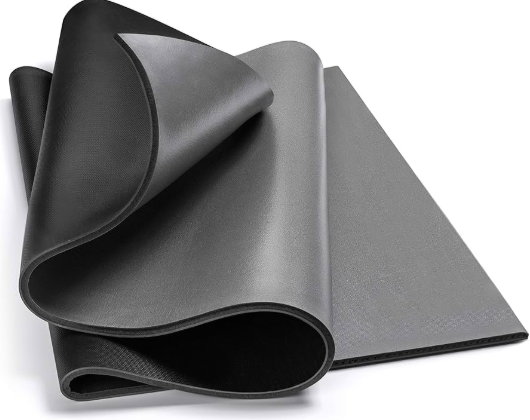
Cabin floors deal with three problems at once: bilge moisture, wave impact, and low-frequency engine rumble. Most underlayment materials fail at least two of those three.
Closed-cell foam with a vinyl barrier handles all three. The key is the cell structure. Closed-cell foam is impermeable — water can’t penetrate, compress into, or degrade it. Open-cell foam absorbs 50%+ of its own volume in moisture in marine air. Under a cabin floor, that turns into a mold problem within a season.
Why the Numbers Matter
The vinyl barrier layer targets low-frequency airborne and impact noise. These are the exact frequencies a diesel inboard or wave slap produces. Lab-tested IIC ratings show what you actually get:
-
IIC 72 — laminate or engineered wood over plywood subfloor with ceiling assembly
-
IIC 66 — WPC flooring with ceiling
-
IIC 53 — WPC with no ceiling assembly
Noico 80 mil delivers 25–30 dB reduction at 100–200 Hz. FatMat hits 22–28 dB in the same range. Both run 80 mil thick. That 2 mm profile sits flat under vinyl plank — your floor height stays the same.
Installation Notes
Use 1.5–2 inches minimum for full gap coverage. Seal all edges with canned foam. A single 100 sq ft roll covers floors up to 200 sq ft — double it in high-impact zones for better results.
Best fit: Sailboat cabin floors and yacht guest cabins where you need both moisture protection and impact isolation.
#3 Butyl Rubber Sound Deadening Mats — Best for Hull Vibration Damping

Hull panels don’t just transmit noise — they amplify it. Each engine pulse travels through the metal. The panel starts resonating. Your hull turns into a speaker cabinet. That’s a structural problem. Foam can’t fix a structural problem.
Butyl rubber mats can.
How Constrained Layer Damping Works
The mechanism here is called constrained layer damping (CLD). Each mat has two layers: a flexible butyl rubber base bonded to the hull metal, and a stiff aluminum foil top layer. The butyl layer absorbs flex energy and converts it to heat. The aluminum layer locks down the motion. The panel stops ringing.
Each layer you put down drops unwanted noise by 5–8 dB — one of the highest single-layer ratings in the industry.
Why Butyl Beats Bitumen
Older boats often used asphalt or bitumen-based mats. In marine environments, those materials leach greasy residue as they heat up. Butyl doesn’t. No smell, no bleed, no mess on your hull surface.
The material spec matters too: 100% butyl rubber + heat-resistant aluminum foil at 50 mil thick. That’s built to handle engine bay temperatures. Cheaper alternatives soften and slide under that heat. These don’t.
Installation Is Simple
-
Clean the metal surface thoroughly
-
Press sheets into place — self-adhesive backing, no primer needed
-
Cover 25–50% of high-vibration panel area (hull floors, bulkheads)
-
Layer closed-cell foam on top to add absorption alongside damping
A 50 sq ft kit covers most hull floors and bulkheads in a mid-size powerboat.
#4 Acoustic Foam Panels (Melamine/Polyurethane) — Best for Engine Bay Absorption
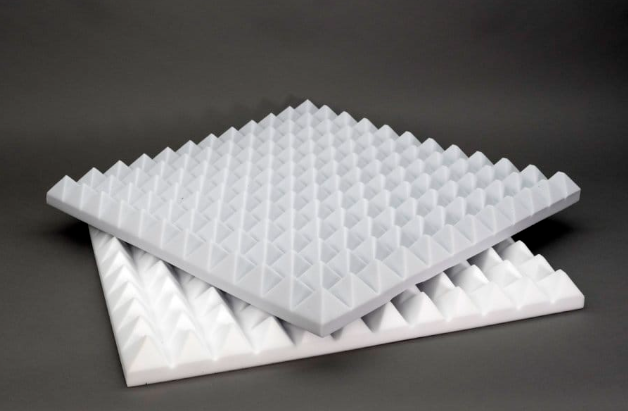
Foam gets dismissed as a soft solution. That’s a mistake.
Melamine foam hits an NRC of 0.95 at 50mm thickness. That means it absorbs 95% of sound energy on contact. The effective absorption range covers 125 Hz to 5000 Hz. That range lines up with engine rattle, mechanical whine, and mid-range compartment resonance — the core problem sounds in any engine bay.
Melamine vs. Polyurethane — Pick the Right One
The difference matters on a boat:
-
Melamine foam stays consistent across 50–1000 Hz — the exact range where inboard engine noise lives
-
Polyurethane foam works better at higher frequencies. It fits studio acoustics, not engine bays
For marine engine compartments, melamine is the clear choice. Look for hydrophobic melamine with polyester facing. It handles both moisture and heat — something standard acoustic foam cannot do.
Installation That Holds
Mount 1’x1′ blocks at 4–8″ thickness, with each block facing perpendicular to the noise source. Cover the walls, ceiling, and floor. Full coverage makes the real difference. Partial coverage just moves the echo around — it doesn’t fix anything.
Use water-based construction adhesive or peel-and-stick hydrophobic backing. Skip spray adhesive. It fails in heat and moisture, and engine bays have both.
Upgrade path: Layer melamine with 1 lb MLV + 1/4″ decoupler. You get absorption, transmission loss, and damping all in one composite install.
#5 Marine-Grade Fiberglass Insulation Blankets — Best for Exhaust & Heat-Noise Combo

Exhaust lines and engine housings create two problems at once. Heat buildup amplifies vibration. On top of that, standard insulation materials can’t survive the temperature long enough to do any good.
Marine-grade fiberglass blankets are built for this exact overlap.
Why Heat and Noise Are the Same Problem Here
The fiberglass wool core handles temperatures up to 1,200°F. That’s the number that matters on exhaust-adjacent surfaces — foam and rubber would melt or release fumes at those levels. The long glass fibers are needled together without chemical binders, reaching a density of 9–11 lbs/ft³. That density pulls double duty: it blocks heat and cuts sound at the same time.
Thickness ranges from 1/4″ to 1″. The slim profile fits tight engine compartments where you can’t afford to lose space.
One Honest Limitation
Standard needled fiberglass soaks up moisture. Wet fiberglass loses R-value fast — and that’s a real problem in marine environments. Look for silicone-impregnated fiberglass or mesh-encased blanket configurations instead. These hold up under constant humidity and spray exposure that come with the territory.
-
Silicone-impregnated fiberglass — repels moisture while keeping thermal and acoustic performance intact
-
Mesh-encased blanket configurations — the outer layer shields the core from direct water contact
Best fit: Exhaust wrap applications, inboard engine housing perimeters, and any surface where heat and noise show up together.
#6 Spray-On Sound Deadening Coating — Best for Irregular Hull Surfaces
Flat surfaces are easy. Curved hulls, tight corners, and compound angles break mat-based solutions. You end up with gaps, wrinkles, and uncovered spots that ruin all your work.
Spray-on coatings solve this problem directly.
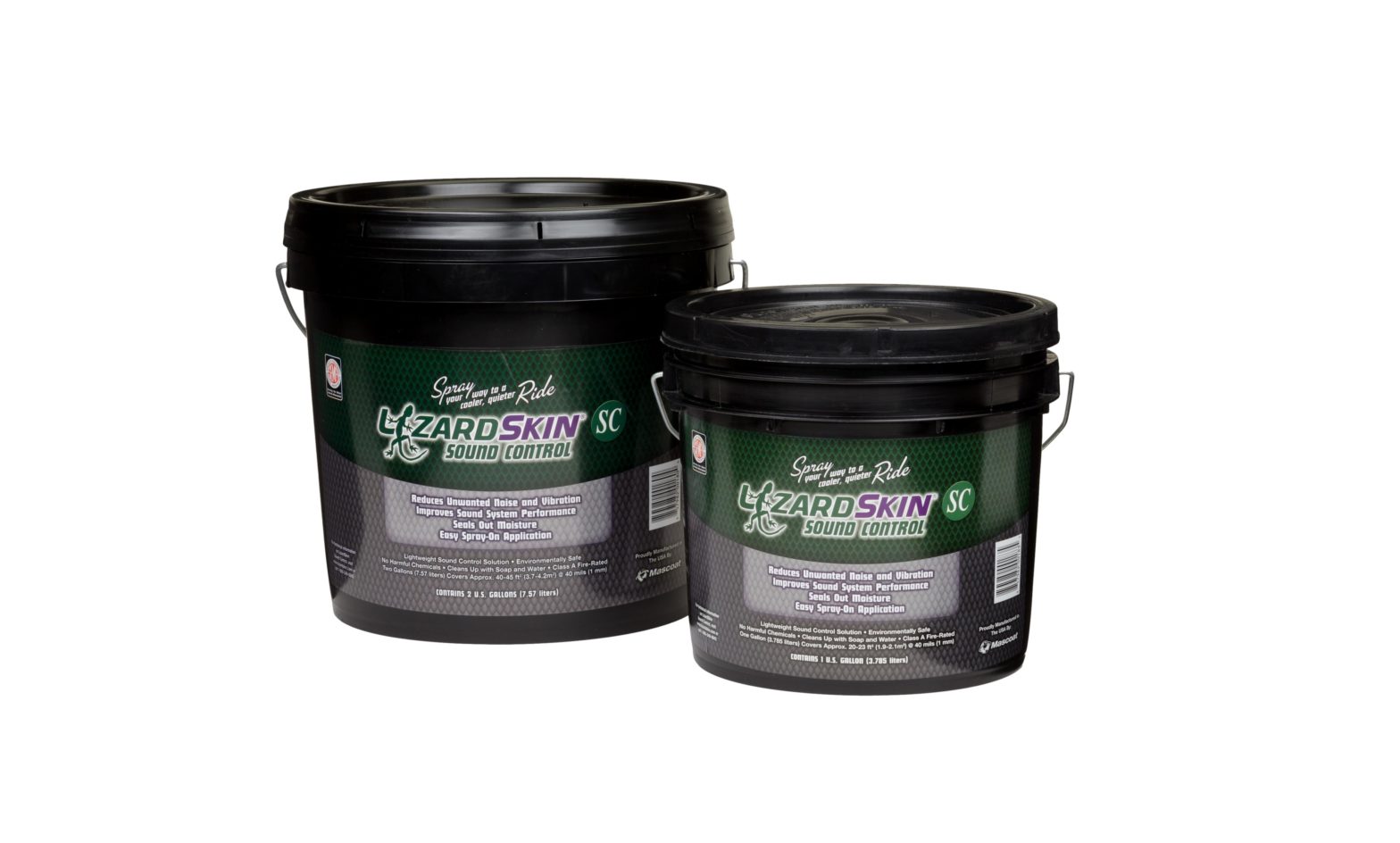
Why Spray Wins on Complex Geometry
Products like LizardSkin and MetaLine 440 conform to every contour — no cutting, no fitting, no gaps. Mats cover only 25–60% of panel surface on irregular shapes. Spray delivers 100% seamless coverage every time. On curved hull undersides and sharp-angled bulkheads, that gap matters a lot.
MetaLine 440 gives you >30 dB(A) noise reduction at 1.5–3mm thickness. It air-dries in 24 hours. It shrinks about 20% as it cures into a flexible elastic film. Temperature performance runs from -35°C to +120°C — well within any engine bay range. It’s also B1 flame-retardant.
SikaGard-6682 builds up to 5mm in a single pass with zero sag on vertical or overhead surfaces. That’s useful for working upside-down in a bilge.
One Real Limitation
Spray builds thickness in multiple layers. That takes more time than pressing down a single mat. For large flat sections, mats are faster. For anything irregular, spray costs less per square foot and is far more practical.
Roughen the substrate first. Multiple thin coats beat one thick pass.
#7 Foam-Backed Vinyl Headliner Material — Best for Cabin Ceiling Noise & Aesthetics
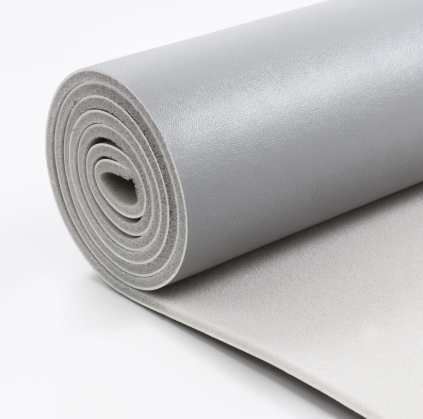
Cabin ceilings get ignored — until you’re two hours offshore. Then every engine pulse bounces straight down onto your head.
Foam-backed vinyl headliner fixes two problems at once. It cuts cabin noise and makes the ceiling look finished. Morbern Seabrook Lite Glacier (Sailrite #105467) is the go-to pick here. The foam backing dampens vibrations and adds a layer of thermal insulation. It also covers rough ceiling imperfections with a clean surface. You get a material that’s water-resistant, UV-stable, and saltwater-safe.
What You’re Getting
No published NRC rating exists for this material. That’s a real limitation worth knowing. For pure acoustic performance, SeaDek acoustic grades hit NRC 0.5–0.9 and cost $15–30/sq ft. Foam-backed vinyl runs under $5/sq ft installed. That’s a different budget range altogether.
For a cabin ceiling that needs basic noise dampening and a clean finish, that tradeoff is worth it.
Installation Checklist
-
Clean the surface with 3M Adhesive Cleaner (#108984)
-
Spread 3M General Trim Adhesive — one can covers ~30 sq ft
-
Stretch and staple the vinyl using an EZE TC-08 staple gun with stainless steel staples
-
Cover seams with upholstered trim boards or hidem gimp
One 54″-wide yard covers about 30 sq ft. Tape any board cracks beforehand for a smooth overlap.
#8 Rubber Anti-Vibration Engine Mounts — Best for Eliminating Structural Noise at Source
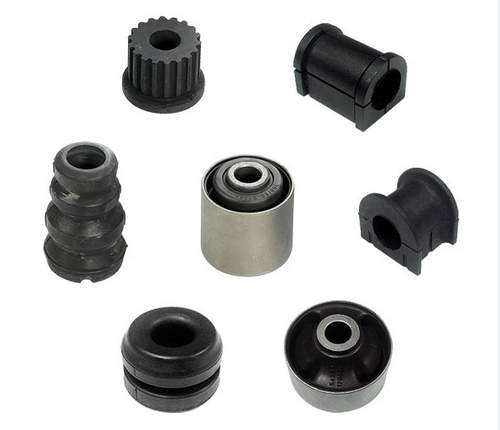
Most noise solutions sit between you and the engine. Anti-vibration mounts do something different — they cut the vibration path before it reaches the boat’s structure at all.
That gap matters. MLV, butyl mats, and spray coatings treat noise after it’s already moving through your hull. Rubber mounts stop it before that happens. The engine sits on a cushioned interface. Vibration energy gets absorbed before it turns into solid-borne noise.
The numbers speak for themselves: captive rubber mounts deliver up to 95% vibration reduction across a load range of 20 to 4,000 kg. That’s not a small gain — it’s a structural fix.
Specs That Match Your Engine
Sizing matters here. Pick a mount rated too low and it will compress flat under load. Vibration passes straight through — no different from having no mount at all.
|
Model |
Max Load |
Best For |
|---|---|---|
|
LM-8 |
453.6 kg |
Mid-size inboard engines |
|
RunRight Series |
20–1,939 kg (6 sizes) |
Full range, from outboard to heavy diesel |
|
BPF06 |
135–150 kg |
Generators, auxiliary units |
|
BPF08 |
180–205 kg |
Heavy construction or commercial builds |
Material and Mechanism
Standard mounts use natural rubber (NR) or neoprene elastomer, bonded to metal hardware. That rubber-to-metal bond gives you oil resistance and long-term durability — both essential in a marine engine bay.
Engine vibration doesn’t move in one neat direction. It runs across three axes: longitudinal, lateral, and torsional. These mounts absorb both steady-wave and impact vibration across all three planes at once. Nothing slips through.
Best fit: Inboard engines, onboard generators, and any fixed diesel installation where structure-borne noise is the main problem.
#9 Composite Acoustic Barrier Panels (MLV + Foam Sandwich) — Best All-in-One Solution
Two materials. One panel. Zero compromises.
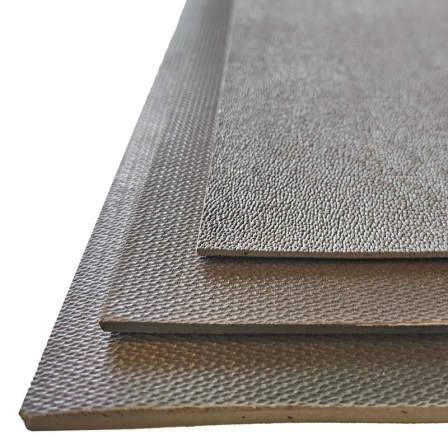
That’s the whole pitch for composite MLV + foam sandwich panels — and it holds up. Most soundproofing setups force a choice: install MLV for transmission blocking, or foam for absorption. This format fuses both into a single layer. One installation pass covers what would otherwise need two separate materials and twice the labor.
How the Sandwich Works
MLV handles the heavy work — blocking airborne noise through sheer mass. A 1 lb/sq ft layer hits STC 26. A 2 lb/sq ft layer reaches STC 32. The foam layer underneath decouples the barrier from the hull surface. That stops vibration transfer and adds absorption at the same time. Neither material can do both on its own.
The performance numbers are clear. Adding one MLV layer to an XPS foam panel base pushes the composite rating from Rw 35 dB to Rw 38 dB. A second MLV layer gains another decibel. Each addition compounds — it doesn’t just stack.
Products Worth Knowing
Luxury Liner Pro bonds 1 lb/sq ft MLV to closed-cell foam. You get blocking, decoupling, and thermal insulation in one panel. Technicon’s composite barrier runs 0.10″–0.25″ thick. That slim profile makes it a solid pick for tight engine compartments where space is limited. AudioSeal MLV gives you density options from 0.6 to 2 lb/sq ft, with STC ratings ranging from 22 to 32 depending on spec.
Best fit: Engine compartment doors, bulkheads, and any surface where layering materials one at a time isn’t an option.
#10 Self-Adhesive Foam Tape & Gasket Seals — Best for Noise Leak Points
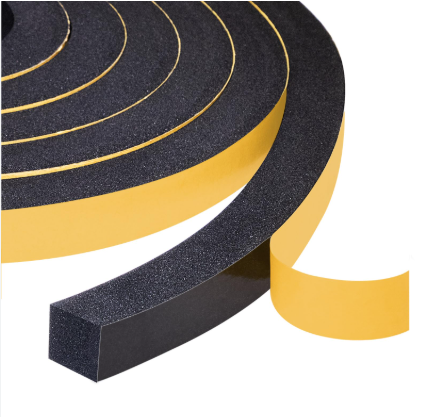
Door gaps are silent killers of any soundproofing build. Cabin doors, hatch covers, and cable pass-throughs are responsible for 20–40% of total airborne noise transmission in engine compartments. Most people never seal them.
Seal that gap, and you recover 5–15 dB without touching anything else.
Marine-grade EPDM foam tape is the right material for this job. Hardware store EVA/PE foam loses 70% of its adhesion within six months of saltwater exposure. EPDM holds 95% bond strength under the same conditions. It lasts 10–15 years in harsh marine environments — backed by ASTM D543 testing showing zero degradation after 5,000 hours of saltwater immersion.
The case data is straightforward:
|
Before Sealing |
After Sealing |
Reduction |
|---|---|---|
|
95 dB @ 3000 RPM |
82 dB @ 3000 RPM |
13 dB |
How to Install It Right
EPDM tape expands to fill gaps up to 10mm within one hour. Cut your length first. Then seal the roll with duct tape right away — the material starts expanding fast, and you need the rest of the roll protected while you work.
-
Measure the gap (tape width should be a bit narrower than the gap width)
-
Slide tape into cabin door edges, hatch lids, and wire holes
-
Leave it for one hour — that’s enough time for full expansion and adhesion
-
Check for 30–50% compression to confirm an airtight seal
This tape also cuts structure-borne noise by 30–50% at machinery mounts. It bonds clean to metal, plastic, and wood with zero residue left behind.
Boat Noise Reduction Materials Comparison Table
Side-by-side comparison cuts through the noise faster than any product description.
Ten materials, ten different mechanisms — the right one depends on where your problem is. Vibration in the hull needs a different fix than engine roar in the cabin. The table below shows each material’s performance numbers, price range, and the job it handles best.
|
Material |
Mechanism |
NRC / STC |
Waterproofing |
Price |
Best Location |
DIY Level |
|---|---|---|---|---|---|---|
|
Mass Loaded Vinyl (MLV) |
Dense barrier blocks airborne sound |
STC 25–35 |
Marine-grade |
$10–20/sq ft |
Floorboards, cabin barriers, enclosures |
★★☆☆☆ |
|
Closed-Cell Foam + Vinyl Barrier |
Blocks transmission + absorbs impact |
STC 28 |
100% waterproof |
$7–15/sq ft |
Cabin floors, engine room underlay |
★★★☆☆ |
|
Vibration-Damping Sheets |
Deadens structural vibration |
STC 20–30 |
Marine-durable |
$8–18/sq ft |
Hull panels, floors, propeller mounts |
★★★★☆ |
|
Noise Control Composites |
Foam/fiberglass + mass barrier layers |
STC 30–40, NRC 0.7 |
Oil-resistant film |
$15–30/sq ft |
Machinery spaces, insulation blankets |
★★☆☆☆ |
|
Polyester Fiber |
Absorbs + dampens low-frequency sound |
NRC 0.8–1.0 |
High moisture resistance |
$5–15/sq ft |
Engine compartments, hull liners |
★★★☆☆ |
|
Acoustic Absorbers (Polyester Blend) |
Prevents reflection in hard spaces |
NRC 0.9 |
Thermal resistant |
$12–25/sq ft |
Operator cabs, generator enclosures |
★★★☆☆ |
|
Fiberglass Insulation Blankets |
Thermal + acoustic combined |
— |
Silicone-impregnated |
$8–20/sq ft |
Exhaust surfaces, engine housing |
★★★☆☆ |
|
Vibration Isolation Mounts |
Blocks vibration at source |
50–70% reduction |
High |
$10–20/sq ft |
Engine mounts, shaft lines |
★★★★☆ |
|
Elastic Shaft Couplings |
Reduces shaft-line noise transmission |
15–25 dBA reduction |
High |
$300–800/unit |
Propeller shafts |
★★☆☆☆ |
|
Soundown Composite Cladding |
Metal-bonded absorber + mass damping |
STC 35 |
Marine-grade |
$20–40/sq ft |
Full engine room cladding |
★★☆☆☆ |
One pattern stands out: the highest-STC materials — composites and Soundown cladding at STC 35–40 — also carry the steepest prices. That’s not always the right call. A $7/sq ft closed-cell foam underlay fixes a cabin floor vibration problem just as well as a $30 composite panel. Plus, it costs less than a quarter of the price.
Match the mechanism to the problem first. Then match the budget.
Conclusion
Every hour you spend battling engine roar is an hour stolen from the open water. The good news? You have a full set of tools ready to use.
Here’s what works:
-
Mass loaded vinyl barriers block low-frequency engine noise right at the source
-
Butyl mats kill hull vibration before it reaches your ears
-
Simple foam tape seals plug the gaps that other materials miss
The best approach isn’t spending the most money. It’s using the right materials for your specific noise problem. Layer them like this:
-
Rubber anti-vibration mounts — attack the noise at its source
-
MLV (mass loaded vinyl) — block what gets past the mounts
-
Acoustic foam for boats — absorb whatever slips through
Each layer handles a different part of the problem. Together, they cut engine noise far better than any single product can.
One quiet ride will make you wonder why you waited this long.
Ready to take it further? Check out VIF Propellers for expert guidance on engine performance and marine components. A well-matched propeller doesn’t just reduce noise — it changes how your entire boat runs.