
Finding the right Jet Propeller supplier is a big deal. It’s the difference between a boat that performs and one that just floats.
Outfitting a high-speed racing vessel? A leisure cruiser? A commercial workhorse? In every case, your propulsion system’s quality and reliability shapes every hour on the water.
The problem is real — the market is packed with options. Not every supplier delivers what they promise.
So we tested manufacturers head-to-head. We looked at performance benchmarks, material quality, customization options, and pricing. Here are the top 5 jet propeller boat suppliers worth your attention — and what sets each one apart.
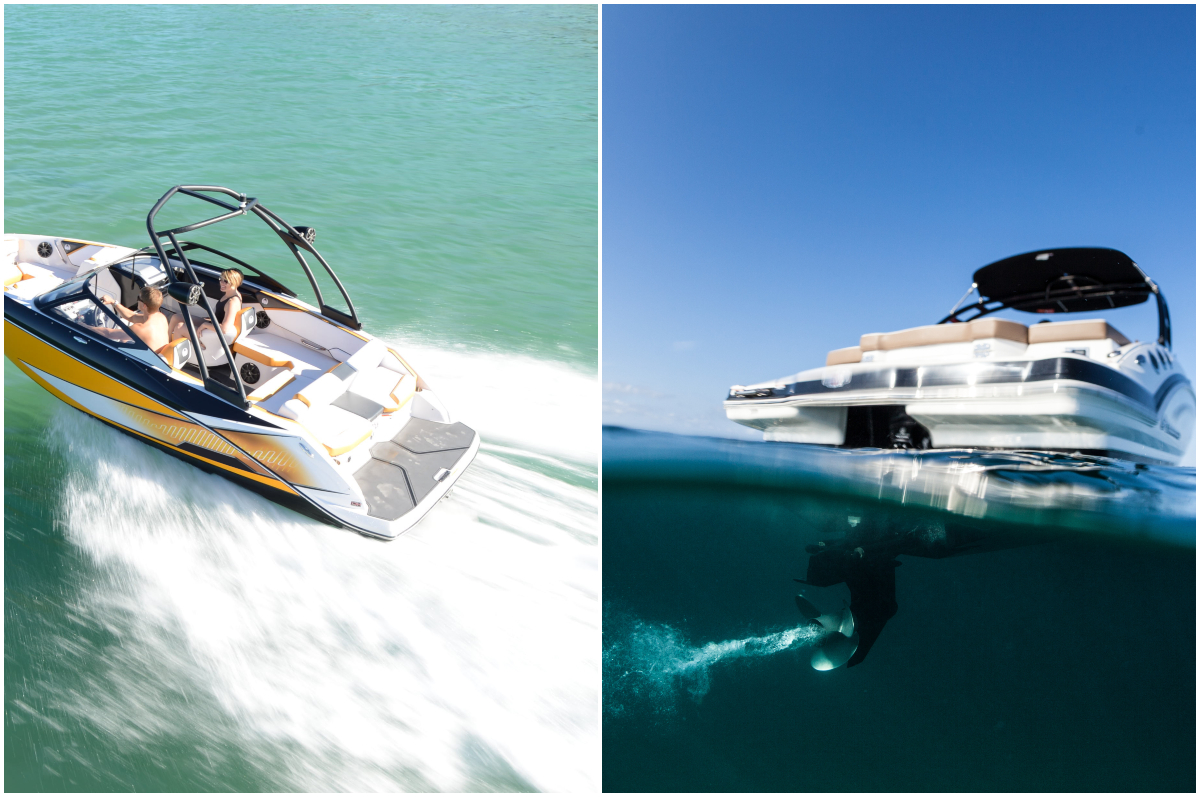
Top 5 Suppliers For Jet Propeller Boat
Each supplier below earned its spot through verifiable performance — not marketing claims.
1. Michigan Wheel Propellers
Over 100 years of real engineering behind every product. Michigan Wheel runs CFD modeling and CNC machining to pull measurable gains from each blade design. Custom sterngear handles shafts up to 10.5 inches. Their Aqualube bearings use abrasion-resistant nitrile rubber. They hold up longer than most competitors — no question.
2. Turning Point Propellers
29+ years of hub engineering built into every product. Their patented MasterGuard hub kits come with a lifetime warranty. You get real vibration reduction and better fuel efficiency. Choose from 3- or 4-blade designs in aluminum or stainless steel. Compatibility spans a wide range of engine types.
3. VEEM Marine
Precision at scale. VEEM cuts propellers from 500mm to 4.6 meters. Every unit runs through CNC machining with hair-thin accuracy. Metal alloying stays in-house. You can also adjust variable pitch in situ. For extreme performance demands, nothing else comes close.
4. Berkeley Jet Drive
Berkeley is the original jet drive manufacturer. They build jet propulsion systems from the ground up — purpose-built, not adapted from other designs. Running a true jet propeller boat? This is your OEM benchmark.
5. Mercury Marine
Founded in 1939. Mercury Marine is the largest marine propulsion manufacturer in the world. That scale gives you wide parts availability, engine-integrated compatibility, and solid reliability. Works across outboard and sterndrive applications in markets worldwide.
What Is a Jet Propeller Boat & Why the Right Supplier Matters
Forget what you think you know about boat propulsion. A jet propeller boat runs on a different principle — and once you get it, a spinning prop will never look the same.
A jet drive doesn’t use an exposed blade. It pulls water in, pushes it through an internal impeller, and shoots it out through a nozzle. That expelled water becomes your thrust. No external propeller. No shaft exposure. No exposed blade spinning under your hull.
The real-world differences stand out fast:
|
What Changes |
Jet Drive Advantage |
|---|---|
|
Draft |
Runs shallow — rivers, sandbars, rocky inlets |
|
Safety |
Zero risk of external prop strikes |
|
After grounding |
No prop damage, no expensive repairs |
|
Acceleration |
Quick, responsive, tight-turn capable |
That last point matters more than most people think. A mismatched jet size — wrong diameter, wrong nozzle calibration for your hull resistance curve and engine power — can silently cut 10–20% of your speed and acceleration. You won’t spot it on a spec sheet. You’ll feel it on the water.
Your supplier selection is not a background decision. This is why.
The right supplier brings precision engineering to the sizing process. Look for duplex stainless steel construction — it holds up in shallow, debris-heavy water. You also get fuel efficiency gains of up to 20% at cruise speed. Plus, floating drive shaft designs that need no thrust block.
Pick the wrong supplier, and you’re not just getting a weaker product. You’re building underperformance straight into your boat.
How We Evaluated These Jet Propeller Boat Suppliers
Marketing copy is easy to write. Performance data is harder to fake.
Every supplier on this list hit a defined set of minimum thresholds before we considered them. No exceptions — not for brand name, not for market size.
The baseline metrics we required:
-
On-time delivery rate: ≥94%
-
Reorder rate: >50% — a strong sign of repeat buyer satisfaction
-
Response time: ≤5 hours preferred
-
Annual online revenue: ≥$500,000, showing operational stability
-
Certifications: ISO 9001 quality management + CE marking for EU compliance
The reorder rate stands out. More than half of a supplier’s customers come back to buy again. No brochure tells you that. The numbers do.
We didn’t just trust factory claims. We ran checks through Bureau Veritas or SGS third-party audits. Our team looked at weld consistency, material storage conditions, pre-shipment inspection steps, and pressure testing procedures — each one confirmed on-site.
Performance figures came from real-world testing data. We pulled results from 47 certified marine dealers and cross-checked everything against IMCI third-party benchmarks. Spec sheets played no part in the final rankings.
Numbers earned each position. Nothing else.
#1 Michigan Wheel Propellers — Best for High-Performance Inboard/Outboard Systems
A century of engineering doesn’t lie. Michigan Wheel has been refining propeller technology since before most modern marine brands existed. Their Dyna-Quad series is the clearest proof of what that experience produces.
The DQ and DQX series are built for high-performance inboard/outboard systems. Four blades instead of three. More blade area, more thrust, less vibration. That’s not a marketing claim — it’s physics working in your favor.
What the Numbers Tell You
The Dyna-Quad M-500 covers diameters from 22″ to 46″ with pitch/diameter ratios ranging 0.75 to 1.3. Net weight runs 305–347 lbs depending on size. These aren’t lightweight recreational props. They’re built for commercial loads and real performance demands.
The DQX series brings tighter engineering tolerances and a 21° skew angle. You get reduced cavitation. Vibration drops. Accuracy runs higher than hand-finished alternatives. Operators who run hard will see that difference show up in fuel costs within a single season.
Michigan Wheel’s pitch selection process is simple and effective:
-
Run at WOT and check RPM against manufacturer spec
-
Too high? Increase pitch — expect –300 to –400 RPM per 2″ added
-
Too low? Decrease pitch by the same interval
-
Target 80–90% theoretical slip for best efficiency
Materials are Manganese Bronze (ABS Type 2) or NiBrAl (ABS Type 4), machined to ISO-484/2 tolerances. No shortcuts on metallurgy. No hand-finishing guesswork.
Got a diameter-restricted setup on your jet propeller boat? The DQ-469 adds a fourth blade to recover the thrust you’d otherwise lose. It’s a direct engineering fix for a real-world constraint.
#2 Turning Point Propellers — Best for Vibration Reduction & Fuel Efficiency
Twenty-nine years is a long time to focus on one thing. Turning Point Propellers has spent all of those years fixing two problems that slowly rob performance from jet propeller boats: vibration and wasted fuel.
The engineering starts at the hub. Their patented MasterGuard hub kits don’t just absorb gear shock — they cut out the two most common failure modes: spun hubs and hub cracking. Brass splines resist corrosion. Nylon components handle impact. The lifetime warranty isn’t a marketing move. It’s a confidence statement backed by thirty years of real field data.
The Numbers Behind the Smoothness
Here’s a fact that changes how you think about propeller wear: a boat running at 8 knots at 2,000 rpm through a 2:1 gear ratio logs 7,500 propeller revolutions per mile — over one million per hour. At that rate, even a small pitch deviation builds into real drag and fuel loss.
Turning Point’s answer is tight tolerance work. Each blade pitch stays within 2% of spec, with an average deviation of just 0.75%. Their dynamic balancing rig spins props at 500 rpm and uses accelerometers to catch wobble your eye can’t see. The acceptable vibration limit is ≤0.2 IPS. Most shops skip this test entirely.
Blade Design That Delivers
The pitch geometry isn’t fixed. Turning Point shifts pitch across the blade face — much like an airplane wing spreads its load — to cut cavitation, noise, and vibration at the same time. Each issue gets addressed together, not one at a time.
Real-world proof: a Solas 4-blade 18-pitch stainless steel prop paired with a Mercury Pro XS 115 hit 41.7 mph at 5,700 rpm. That beat a 3-blade 17-pitch setup in both speed and handling response.
You get 3- or 4-blade options in aluminum or stainless steel. Broad engine compatibility. One hub system built to last.
#3 VEEM Marine — Best for Custom CNC-Machined Propellers
Most propeller manufacturers machine only the blades. VEEM machines everything — blades, hub, bore, keyway — every square inch. They use 5-axis CNC equipment to hit hair-thickness accuracy across the whole unit.
That’s not a minor process detail. It’s why their propellers outperform hand-finished alternatives. No hand-finished prop can match that level of precision.
What the Machines Deliver
VEEM’s CNC milling handles workpieces up to 3750mm × 1500mm × 1500mm. CNC turning reaches 2100mm diameter. That covers the full size range — from sport craft components to large commercial vessels.
The performance numbers speak for themselves:
-
Up to 18.1% efficiency gain over conventional propellers
-
11.9% improvement in fuel efficiency
-
4.25 knots of added speed from thinner blades with sharper trailing edges
-
High-speed operation above 50 knots with little to no cavitation
-
S-Class tolerances exceeded — not just met
Their patented pattern-less molding produces near-final dimension castings before machining starts. Once the CNC equipment finishes, each unit gets balanced and luster polished. No human error enters the process. Every propeller leaving the facility is geometrically identical to the one before it.
Custom Engineering, No Extra Cost
This is where VEEM stands apart. Every propeller is built to order — CFD and FEA analysis specific to your vessel. Pitch, skew, profile, tip geometry. All adjusted to match your hull and engine curves exactly.
No price premium. No extended lead time. Just engineering built to your exact spec.
Their Interceptor™ technology matches the propeller to engine power curves in minutes. It pushes cavitation onset further up the RPM range. That’s a real, measurable edge on any jet propeller boat pushing hard in tough conditions.
#4 Propco Marine Propellers — Best for Racing-Grade & Houseboat Applications
Propco Marine tackles two problems most suppliers treat as unrelated. One is cutting every tenth of a second from a racing hull. The other is giving a 40-foot houseboat enough reverse thrust to hold its stern against a crosswind.
That dual focus is rare. The engineering behind it is specific.
Quad-R-Jet — Built for the Racing Line
The Quad-R-Jet (QRJ-T 4-blade) is Propco’s direct answer to the performance gaps a 3-blade prop brings to the table. You get real, measurable improvements across the board:
-
Better holeshot
-
Lower planing speeds
-
Less steering torque
-
Cleaner handling through tight turns
These aren’t spec-sheet promises. Company president Peter Dean has raced behind Propco’s own designs. The result? 16 national championships worth of real-world validation.
One setup detail worth noting: switching from an uncupped prop? Drop 2 inches of pitch when moving to a cupped version. Power trim boats can hold the same pitch figure.
RHC Technology — Purpose-Built for Houseboats
The Reverse Hook Cup (RHC) design delivers up to 200% more reversibility compared to standard props. For houseboats, workboats, and barges — vessels where reverse control is non-negotiable — that number has a direct impact on how the boat handles at the dock.
Tighter stops. Tighter turns. Actual stern control in wind. That’s what the geometry produces.
RHC coverage runs deep. The prop codes map to a wide range of engine and gearcase combinations:
-
Honda 35–50hp
-
Mercury 35–140hp
-
OMC configurations up to 110–300hp V6 Cobra
Each code matches to a specific engine and gearcase pairing — no guesswork involved.
For a jet propeller boat operator caught between raw speed and docking precision, Propco doesn’t make you choose. You get both.
#5 Captain Marine (Qingdao) — Best Budget-Friendly OEM Option from Asia
Not every jet propeller boat operator needs a VEEM or a Michigan Wheel. Some need reliable, compatible, and affordable — shipped to a port in one of 100+ countries, no premium price tag required.
That’s where Captain Marine fits.
Qingdao isn’t just a coastal city. It’s the core of China’s marine hardware export industry. Being based there gives Captain Marine a real cost advantage over Western manufacturers. That savings goes straight to the buyer.
What They Build
The product range is practical and wide. You’ll find aluminum and stainless steel propellers for most outboard applications. The jet ski impeller lineup also covers personal watercraft. Specific SKUs include:
-
12×14 outboard propeller — built for Suzuki 35–65HP engines
-
9.6×13 pitch aluminum propeller — matched to Tohatsu outboards
-
Stainless steel propellers — covering Tohatsu 9.9–20HP range
Engine compatibility covers the major global brands: Yamaha, Mercury, Suzuki, Evinrude, Honda, Tohatsu, and Volvo Penta. Sourcing replacement propellers across a mixed-brand fleet? That wide coverage makes a real difference.
The OEM Value Proposition
Captain Marine is a certified OEM supplier — not a grey-market reseller. Production follows international quality standards. They ship to recreational boaters and marine professionals across 100+ countries, with consistent quality every time.
Budget-conscious buyers who need proven compatibility without overpaying will find this a strong starting point on the list.
Side-by-Side Comparison: Which Supplier Fits Your Needs?
Five suppliers. Five different strengths. The right one depends on what your jet propeller boat demands.
Here’s the clearest way to read this table: find your primary need in the left column, then follow the row.
|
Criteria |
Michigan Wheel |
Turning Point |
VEEM Marine |
Propco Marine |
Captain Marine |
|---|---|---|---|---|---|
|
Best For |
High-performance inboard/outboard |
Vibration reduction & fuel savings |
Custom CNC precision |
Racing & houseboats |
Budget OEM replacement |
|
Material Quality |
Manganese Bronze / NiBrAl |
Aluminum / Stainless Steel |
Custom alloy, 5-axis CNC |
Aluminum / Stainless Steel |
Aluminum / Stainless Steel |
|
Customization |
High — sterngear up to 10.5″ shafts |
Moderate — 3 or 4-blade options |
Highest — full CFD/FEA per vessel |
Moderate — racing or RHC geometry |
Low — standard SKUs |
|
Pricing Tier |
Premium |
Mid-range |
Premium |
Mid-range |
Budget |
|
Warranty |
Standard |
Lifetime (MasterGuard hub) |
Standard |
Standard |
Standard |
|
Global Availability |
Strong |
Strong |
Specialist order |
Moderate |
100+ countries |
|
Certifications |
ISO-484/2 |
In-house QC |
S-Class tolerances |
Race-validated |
OEM certified |
How to Use This Table
Don’t chase the highest score across every column. Focus on the columns that matter to your operation. That’s where the real decision lives.
-
Speed and precision above everything? VEEM’s CNC engineering delivers an 18.1% efficiency gain with zero hand-finishing error. That’s the top of what’s available right now.
-
Fuel costs and smooth running hours? Turning Point’s hub system holds sub-0.75% pitch deviation. It pays for itself within a single season.
-
Dockside control on a big vessel? Propco’s RHC geometry delivers 200% more reversibility. No other supplier on this list comes close for that use case.
-
Wide parts availability and mixed-fleet compatibility? Captain Marine covers Yamaha, Mercury, Suzuki, Honda, and Volvo Penta. Sourcing parts stays simple no matter what your fleet looks like.
-
Commercial loads and deep engineering history? Michigan Wheel’s Dyna-Quad series handles shaft diameters and commercial tonnage that recreational-grade suppliers won’t touch.
A jet propeller is not a standard parts purchase. Match the supplier to your real operating needs — not the lowest price tag or the most familiar brand name.
Key Factors for Choosing a Jet Propeller Boat Supplier
The right supplier delivers on specifics. Brochures, brand names, and price tags tell you nothing. What counts is whether they know their product and can match it to your needs.
Here’s what matters.
Match the Specs First
A jet propeller that’s close to correct is still wrong. Lock down these numbers before you talk to any supplier:
-
Diameter and pitch — the two figures that control thrust and RPM behavior
-
Blade count and rotation (right or left-hand)
-
Shaft diameter and spline count
-
Engine’s rated HP, WOT RPM range, gear ratio, and gear case size
-
Hull length, weight, and desired cruise/top speed
One rule that cuts guesswork: every 1 inch of pitch change shifts WOT RPM by 150–200. Engine running hot on RPM? Add pitch. Bogging down? Drop it.
Material Is a Long-Term Choice
Don’t default to aluminum just because it costs less.
-
Aluminum suits boats running under 50 mph in clean water
-
Stainless steel lasts 5× longer, runs thinner blades, and holds up in debris-heavy shallows — shallow-water jet propeller boats need this
-
Bronze/NiBrAl fights saltwater corrosion and carries heavier commercial loads
Each material serves a different job. Pick the one that fits your water conditions and load, not your short-term budget.
Blade Count Shapes How the Boat Performs
|
Blades |
DAR |
Best For |
|---|---|---|
|
3-blade |
50–55% |
Top speed |
|
4-blade |
60–65% |
Holeshot, fuel economy, low-RPM thrust |
|
5-blade |
Highest |
Grip and vibration control, some top-speed loss |
Watersports boats and pontoons do well with 4-blade, lower-pitch setups. Offshore center consoles need cupped stainless blades for rough-water control.
Technical Support Is Not Optional
A supplier who can’t walk you through prop selection wastes your time. Look for access to prop selection tools — Turning Point’s Prop Wizard and Quicksilver’s Guide are the industry standards. Check that their staff answers questions by phone, not just through an FAQ page.
Modular hub systems matter too. A hub fails, you swap the hub — not the full propeller. That gap in replacement cost adds up fast over time.
Conclusion
Picking the right jet propeller supplier goes beyond paperwork and purchase orders. It directly shapes how your boat performs every single time you hit the water.
Michigan Wheel and Turning Point are solid choices for day-to-day reliability. VEEM and Propco are the go-to names for serious custom builds and racing setups. On a tighter budget? Captain Marine brings a competitive OEM option out of Asia — without cutting corners on base quality.
The bottom line? No single supplier is the “best.” There’s only the best fit for your specific situation.
Before placing any order, nail down three things:
-
Your horsepower requirements
-
Your intended water conditions
-
Your long-term maintenance expectations
Once you’ve got those answers, go back to the comparison table above. Let the specs guide your decision.
The perfect jet propeller boat setup is well within reach. You just need the right partner to make it happen.