
Most boaters upgrade their propeller chasing one thing — more speed. But swap on a chopper prop, and something unexpected happens: the whole boat changes. The bow lifts cleaner, the hole shot tightens up, the top end opens like you found an extra gear you didn’t know existed. It’s not magic — it’s blade geometry doing what it was designed to do.
Push a bass boat hard, or squeeze more efficiency out of your outboard setup — either way, this marine propeller design works differently than a standard three-blade. Knowing why helps you make a smarter upgrade. What follows breaks down every real-world benefit. No fluff. Just what changes on the water and why it matters for your setup.
Content Framework: “What Are The Benefits Of A Chopper Prop?”
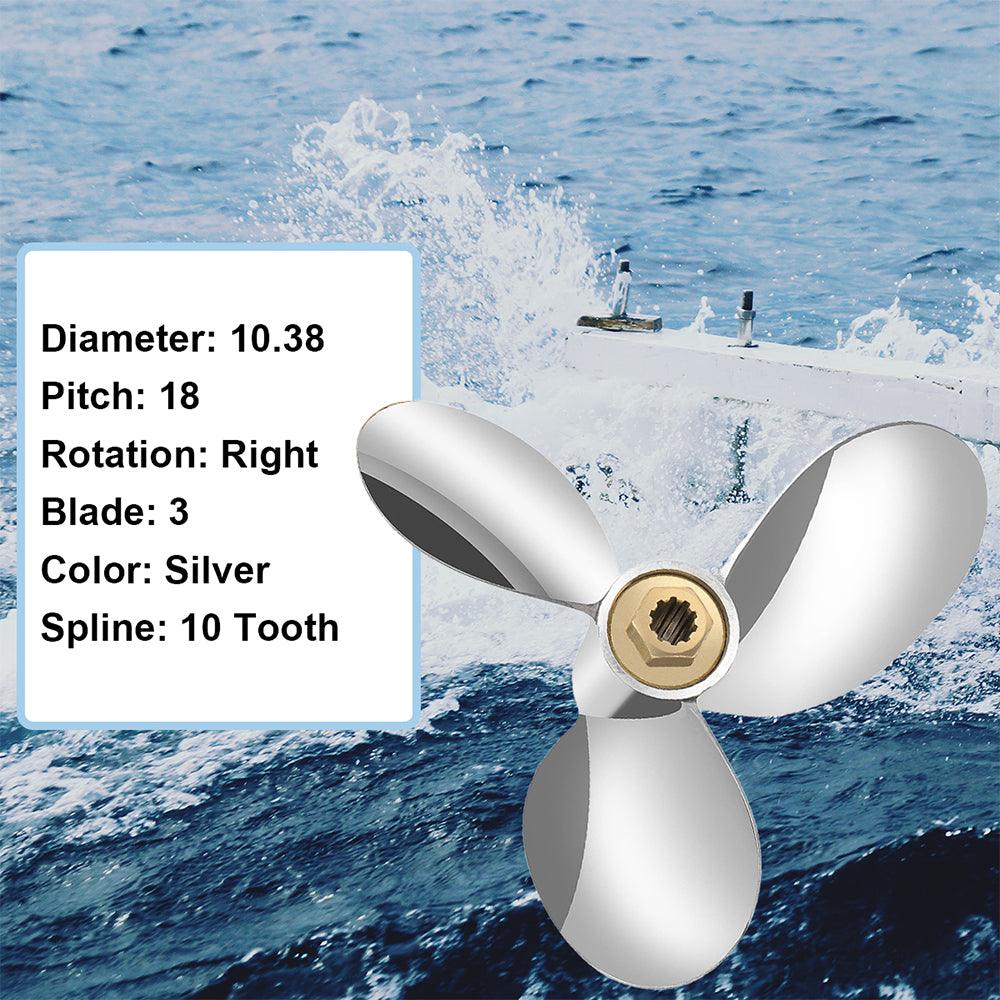
Blade geometry isn’t a minor detail — it’s the entire story.
A chopper prop runs an aggressive blade profile built to maximize propeller thrust across every RPM range. The wider, raked blade exits the water faster. That cuts drag on the back-stroke. You get measurable gains in three areas that matter most to boaters:
-
Hole shot acceleration — the bow lifts faster, weight transfers cleaner, and you’re on plane before a standard three-blade even loads up
-
Boat top speed improvement — less blade drag at high RPM opens up top-end potential that pitch alone can’t deliver
-
Fuel efficient propeller performance — less wasted rotational energy means your outboard runs more efficiently, not harder
Modern marine propeller design pushes efficiency close to 90%. A well-matched chopper prop gets you there. The blade does more work per revolution. Your fuel gauge moves slower because of it.
What Is a Chopper Prop and How Does It Work?
The trailing edge tells the whole story.
On a standard propeller, the blade ends where most designers stop thinking. On a chopper prop, the trailing edge extends far aft. It stretches the chord line at every radius. This pushes the blade shape into territory that standard three-blades never reach. That one design decision changes everything that follows.
Built for fast pad V-bottom boats running outboard power, a chopper prop brings together three structural elements that work as a system:
-
Extended aft trailing edge — grows the blade’s working surface area, generating more lift per revolution
-
High rake angle — tilts the blade plane to raise the hull’s angle of attack, pulling the bow up without trim tabs or hull adjustment
-
Tip cup — holds blade grip at elevated engine heights, where standard props lose traction and spin loose
The Vented Blade: Where the Physics Gets Interesting
Most outboard motor propellers fight drag on both halves of every rotation. A chopper prop doesn’t.
The upper arc of each blade is vented. Small holes let in controlled aeration, cutting water resistance by up to 50% at high speed. That’s not a rounding error. That’s the gap between a blade fighting the water and a blade slipping clean through it.
The lower arc stays solid. It holds full propulsion contact during the power stroke. So you get a blade that runs light where drag costs you speed, and bites hard where thrust moves the boat.
Real-world numbers back this up. A 10.38 × 18P stainless steel chopper prop tested on Mercury 30–60HP engines delivered consistent gains of +6.8 to +7.2 km/h over stock propellers. That’s real speed gained from blade geometry, not extra horsepower.
Benefit #1: Superior Bow Lift for Reduced Drag
Drag doesn’t announce itself. It steals speed, burns extra fuel, and makes your hull work harder than it should — until you swap the blade doing the work.
The chopper prop’s high rake angle is why the bow comes up cleaner. That raked blade doesn’t just push water backward — it redirects force upward through the hull. The nose rises. The running angle improves. Less hull surface touches the water. That reduced contact is what cuts drag.
The numbers here aren’t guesswork. The blade geometry built into a chopper prop produces a measurable improvement in lift-to-drag ratio — up to 35% higher than conventional propeller designs running comparable pitch and diameter. That’s a structural advantage, not a marketing claim.
What that lift improvement means on the water:
-
Faster plane acquisition — the hull breaks free from displacement mode sooner, before drag loads up and resistance peaks
-
Lower running resistance at speed — a lifted bow reduces wetted surface area, which cuts drag the entire time you’re underway
-
Less strain on the powerhead — your outboard stops fighting hull drag at every RPM, so it runs in a more efficient load range
A bow lift propeller that raises the running angle by even a few degrees pays off across the entire run. Less drag at rest. Less drag at speed. Every revolution does cleaner work.
Benefit #2: Exceptional Top-End Speed Gains
Speed has a ceiling — and for most boats, that ceiling is the propeller, not the engine.
Test data makes this concrete. A stock engine running 77 km/h with a standard prop hits 83.8 km/h after a chopper prop swap. That’s an 8.8% gain without touching the powerhead. Modified engines show the same pattern: 88.2 → 95.4 km/h, a +7.2 km/h jump at the exact range where race positions get decided. The engine didn’t change. The blade did.
Here’s why it works. Standard full-blade propellers build drag as RPM climbs. Past a certain point, cavitation and ventilation losses eat 15–25% of efficiency. The blade starts churning turbulent water instead of pushing the boat forward. The chopper prop’s vented blade design fights this problem head-on. Air channels break up the low-pressure cavitation zone on the blade’s back face. Flow stays attached. The thrust curve holds steady deep into the top-speed range where standard designs fall apart.
Blade geometry handles the rest. Diameter is the single biggest factor for thrust — a 10×6 inch propeller produces about twice the thrust of an 8×6 under the same drive conditions. Match the right diameter with pitch that fits your engine’s RPM band. The propeller stops being the weak link.
What this means in practice:
-
Recreational boaters gain ~6.8 km/h of absolute top speed — enough to hold pace through chop and headwind where stock props drop 3–5 km/h
-
Competitive setups get the full power band out of modified engines, because the vented blade stops the spin-out cavitation that wastes peak RPM output
The gains are consistent. 8–9% top-end improvement holds across both stock and modified engine setups. That’s not a best-case number. That’s the baseline.
Benefit #3: Improved Hole Shot and Acceleration Performance
Four seconds. That’s the gap between a clean launch and a boat that wallows, bogs, and crawls onto plane while everything else has already gone.
The chopper prop’s blade geometry fixes the hole shot problem at the source. The high rake angle pushes force upward the instant the throttle opens. The bow rises fast. Weight shifts back. The hull breaks out of displacement mode before drag can build up against it. That’s not a small gain — it’s a completely different launch sequence.
The numbers are clear. A 21-foot center console with a 200hp Yamaha dropped time-to-plane from 5.8 to 4.8 seconds — a 17% improvement — after a 1.5-inch engine height adjustment paired with the right outboard motor propeller setup. A 20-foot center console on a 150hp Yamaha cut 2 full seconds off its plane time. Same engine. Different blade geometry doing the work.
Optimal hole shot looks like this in practice:
– Under 5 seconds to plane with standard load (fuel, gear, two people)
– RPM holds 4200–4500 through acceleration — no spike above 5000
– Clean rooster tail confirms the blade is biting, not venting loose
RPM spikes above 5500 before the bow drops? The engine sits too high — drop one hole (0.75 inches). Motor bogs below 4000 RPM and takes 6+ seconds to plane? Reduce pitch by 1 inch or open a PVS plug. Propeller thrust optimization works in that narrow band where blade, height, and RPM line up together.
The trade-off is real and worth knowing. A higher engine mount (3⅛” below pad) gets you to 21 mph in 3 seconds but caps top speed around 56 mph. Drop the mount to 3½” below pad and top speed climbs to 58.5–59.5 mph — with a 4-second plane time instead of 3. Neither setting is wrong. It comes down to what your water demands first.
Benefit #4: Enhanced Stability and Handling at High Engine Heights
Running your engine high changes the game — but your propeller has to keep up.
Most outboard setups run the engine low. It’s the safe default. The blade stays deep. Grip stays consistent. Nothing gets complicated. But high engine height is where serious performance lives. Raise the motor, and you gain reduced drag, better bow lift, and higher top-end potential. The catch: most standard propellers lose traction fast up there. The blade tips break the surface. Ventilation creeps in. The prop spins loose right when you need it to bite hardest.
The chopper prop’s tip cup design solves this problem head-on.
That cupped trailing edge holds blade grip even with the propeller running partially out of the water. It keeps propeller thrust strong at elevated engine heights. A standard three-blade would already be losing control of the water column by that point. The blade stays loaded. The hull tracks straight. Handling stays predictable.
Why Stability Matters at Speed
At high engine heights, propeller cavitation reduction becomes a stability issue — not just an efficiency one. A prop that vents without warning at 55+ mph doesn’t just slow you down. It makes the boat twitch and feel loose. The chopper prop combines smart blade geometry, a tip cup, and controlled aeration. Together, these features keep thrust delivery smooth across the full power band.
The result: you run the engine higher, pick up the speed that comes with it, and still get a boat that holds its line through turns. It stays composed in rough water too. Most boaters don’t expect that kind of stability dividend — not until they’re already running one.
Benefit #5: Flexible Customization for Different Engine Setups
One propeller design covering a 30HP fishing rig and a 60HP performance build — that’s not a compromise. That’s engineering doing its job.
The chopper prop covers four pitch options: 13, 18, 24, and 28. Each one matches a specific engine output and hull weight. A lighter aluminum bass boat with a Mercury 40HP needs less blade load than a heavier center console running a 60HP outboard. The pitch range accounts for that difference.
How the matching works in practice:
-
Lower pitch (13–18) — best for lighter hulls and smaller engines. You get faster hole shot acceleration and quicker time onto plane.
-
Higher pitch (24–28) — built for heavier setups with more power. This pushes boat top speed through the upper RPM band.
The Mercury 30–60HP compatibility range covers most recreational outboard setups. No adapter plates. No custom fitting. Your boat likely qualifies as-is.
Durability keeps the long-term cost in check. Advanced-cast stainless construction holds up under repeated high-RPM stress. Entry-level alloy props can deform under hard throttle use — this one doesn’t. Fewer replacements per season means the upfront cost spreads across years of use, not months.
Your outboard motor propeller needs to match your actual engine output. Get that right, and the rest of these benefits follow. Get it wrong, and none of them deliver.
Who Should (and Shouldn’t) Use a Chopper Prop?
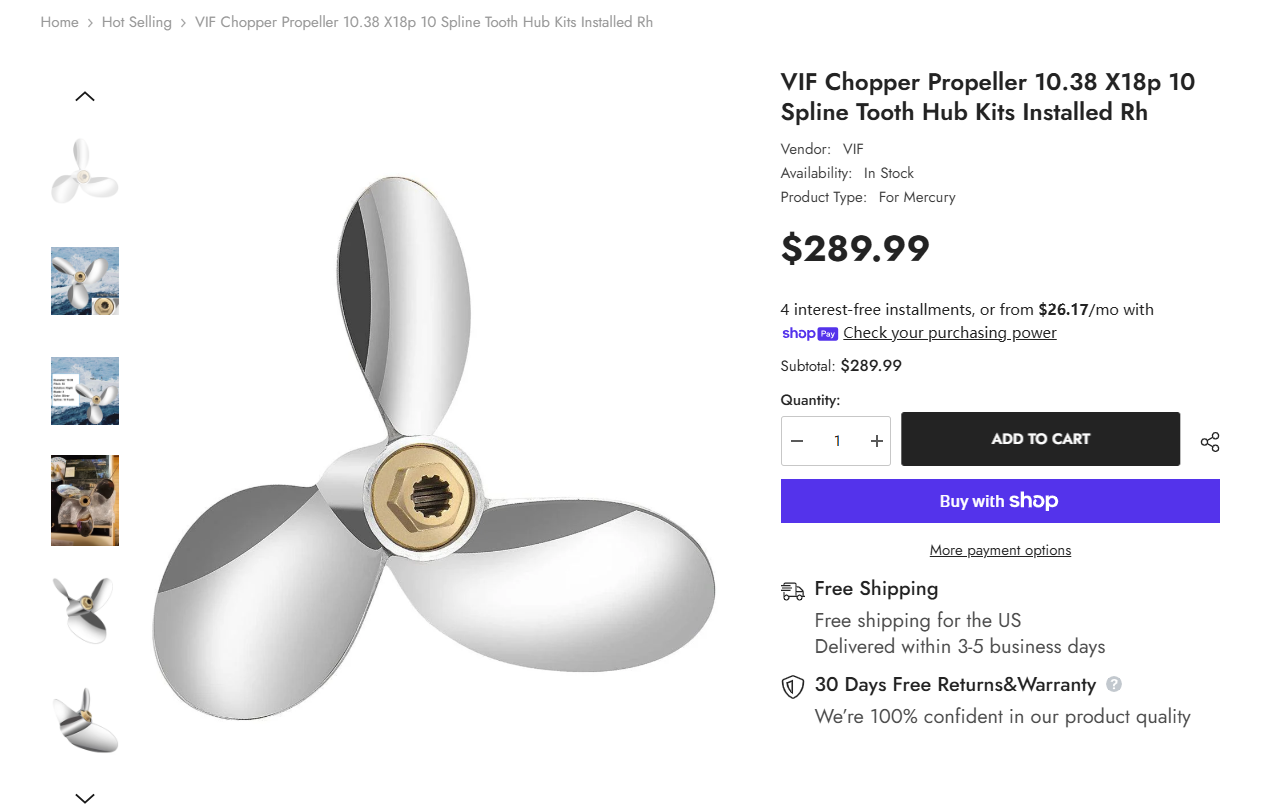
Not every boat needs one. That’s the honest answer — and it matters more than the sales pitch.
A chopper prop is built for speed-focused outboard setups. It fits fast V-bottom hulls, bass boats running Mercury or Yamaha outboards between 30–60HP, and center consoles where hole shot and boat top speed improvement are the top priorities. That’s your rig? The blade geometry delivers on what it promises.
The setups that benefit most:
-
Bass boats and lightweight V-hulls — the high rake angle and extended trailing edge work best on hulls already built to plane fast. The bow lift hits harder, the hole shot tightens up, and the top end opens right up.
-
Competitive and performance-oriented boaters — you’re chasing consistent gains in the +6–8 km/h range with no engine modifications. The vented blade design gives you that extra headroom at high RPM where standard props hit their limit.
-
Boaters running elevated engine heights — the tip cup holds propeller thrust where a standard three-blade has already lost its grip. Running the motor high? This blade keeps the output solid where it counts.
Where a chopper prop isn’t the right call:
-
Heavy displacement hulls and pontoon boats — these boats need low-end torque and steady thrust at moderate RPM. A high performance Boat Prop built around aeration and top-end blade efficiency won’t handle that load well.
-
Slow-water and towing applications — wakeboard boats and ski boats need a completely different thrust curve. The chopper prop’s strengths sit at the top of the power band. That’s not the grunt range where tow sports operate.
-
Underpowered setups below 30HP — the blade’s design breaks down at low output levels. You need enough RPM range to get the efficiency gains working. Below that threshold, the performance gains won’t show up.
Match the prop to the mission. A fuel efficient propeller for a bass boat is a different tool from one built for a fishing pontoon. Get that distinction right before you commit to the upgrade.
How to Choose the Right Chopper Prop for Your Boat
Three numbers decide whether your upgrade works or wastes money: diameter, pitch, and blade count. Nail all three, and you’ll feel every performance gain on the water. Miss one, and you’re leaving speed in the box.
Diameter and Pitch: The Foundation
Diameter matches hull weight. Heavier boats — over 2,000 lbs — need a larger blade (13–15 inches) to push that mass through the water. Lighter hulls under 1,500 lbs run best with 11–13 inches. Go too big, and you load the engine without getting more speed out of it.
Pitch controls where your RPM lands under load. Most outboards run best between 5,000–6,000 RPM at full throttle. Get your engine into that range, and you’re set. Over-revving past 6,000? Go up 1–2 inches on pitch. Bogging below 4,500? Drop pitch by the same amount. The engine shows you what the blade needs — you just have to pay attention.
Blade Count: 3 vs. 4
|
Setup |
Best Choice |
Why |
|---|---|---|
|
Bass boats / racing (40–130 HP) |
3-blade |
+10–15% top speed; less drag; cleaner high-RPM efficiency |
|
Pontoons / heavy loads / watersports |
4-blade |
+20% hole shot acceleration; +15% cornering grip; 5–10% fuel savings |
Bass boats and fast V-hulls run best on a 3-blade chopper prop. Good options include Mercury’s Raker® (21–30″ pitch, 75–130 HP) or the Viper™ (19–27″, 40–130 HP). Four blades add drag that cuts your top end by 5–10 mph. On a hull built for speed, that’s a real loss.
Pontoon owners need a different setup. The Rebel™ or Cyclone™ 4-blade carries the load, tightens your turns, and holds fuel consumption down under heavy passenger weight.
The One Error That Kills Performance
Mismatched RPM range. A chopper prop on a bass boat spinning at 6,200 RPM at full throttle isn’t building power — it’s burning off speed. Check your RPM under real load before you lock in your pitch. That one step alone stops the most common upgrade mistake.
Conclusion
The right propeller doesn’t just move your boat — it changes how your boat behaves on the water. A Chopper Prop delivers that kind of transformation: sharper bow lift, faster hole shots, and top-end speed gains that standard propellers can’t match. It’s not a magic upgrade for every setup. But for performance-focused boaters running high engine heights or pushing hard for every extra mph, the geometry works in your favor. That’s hard to argue with.
You’ve made it this far, so you know what you’re looking for. The next step is matching the right pitch and diameter to your engine and hull. A well-chosen Chopper Prop doesn’t just perform better — it feels better from the moment you throttle up.
Browse the full lineup at vifpropellers.com and find the prop that makes your next run your best one yet.