
Vessel Size, Weight, and Hull Type as Speed Determinants
Physics simply doesn’t care how experienced you are at the helm. Push past your hull’s natural speed threshold, and the water pushes back—and it always wins.
Every displacement hull comes with a hard ceiling built right into its design. The formula is straightforward: Hull Speed (knots) = 1.34 × √LWL (feet). A 30-foot sailboat tops out near 7.3 knots, while a 60-foot motor yacht might reach 10.4. Honestly, these aren’t just suggestions; they’re rigid structural limits. If you push more power past that point, you aren’t going to go faster. You’ll just burn a massive amount of fuel while your bow climbs its own wave.
Hull Shape Changes Everything
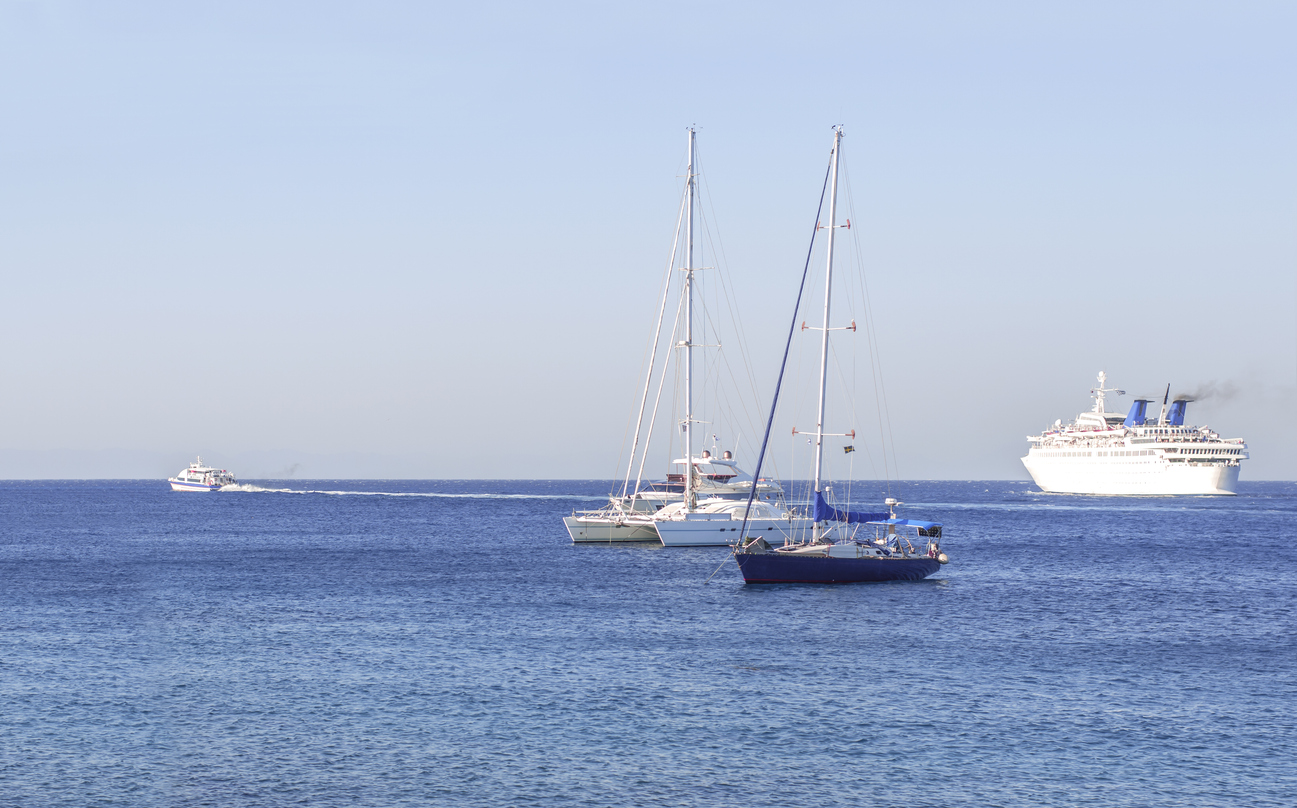
Think of it this way: three hull types mean three entirely different speed realities.
-
Displacement hulls (like sailboats and cargo cruisers) are capped at that hull speed. They have high water resistance and are built for endurance, rather than pace.
-
Semi-displacement hulls (trawlers, motor cruisers) blend low-speed stability with modest lift, keeping things comfortable right around 10–15 knots.
-
Planing hulls (speedboats, powerboats) actually lift clear of the water once they hit threshold speed, making them capable of 30 to 50+ knots under the right conditions.
Weight Is the Variable Most Boaters Underestimate
A heavier Boat doesn’t just feel generally slower—it stops much harder and swings a wider turn. If you overload a vessel by a wide margin, its safe operating speed drops by 20–30%. Your engine’s power demand suddenly jumps two to three times past the hull speed threshold.
There’s a real trade-off worth knowing here. Heavier hulls actually handle rough water better. A Sea Ray punching through chop at the same speed as a lighter Magnum will feel a lot steadier, mostly because mass absorbs what speed amplifies. In rough conditions, that extra weight works in your favor—but it also puts immense strain on your propulsion system.
This is exactly where manufacturing processes make or break your handling. When a heavy semi-displacement hull demands sudden thrust, standard props can flex or lose bite. At VIF Marine, we solve this by utilizing an advanced squeeze casting process for our Aluminum propellers. Instead of traditional die-casting that often leaves microscopic air bubbles, our method creates a high-density blade with almost zero porosity. It’s significantly stronger and much tougher, meaning when your heavy hull asks to move, the Propeller transfers that power instantly without buckling.
How Propeller Specifications Affect Safe Speed Control
Most boaters spend hours researching hull designs and agonizing over engine horsepower. Then, they pick a propeller almost as an afterthought. I’d argue that’s worth reconsidering. Your Prop isn’t just a performance variable—it’s the exact mechanism that determines how safely you control your speed in real-world conditions.
Engine Power, Throttle Control, and Stopping Distance
Speed simply doesn’t scale the way your driving instincts tell you it does. If you double your boat speed, your stopping distance doesn’t just double—it quadruples. That isn’t a casual rule of thumb; it’s physics at work.
At 20 mph, you generally need about 22 feet to stop under hard braking. Hit 40 mph, and that number violently jumps to 88 feet. It’s an exponential curve, and honestly, most people never see it coming until it’s too late.
Three Phases Before You Stop
Stopping is never instant. It happens in a sequence:
-
Perception — You recognize the hazard in the water.
-
Reaction — Your body responds (we assume 1 full second for this).
-
Braking — Your boat’s physical momentum finally starts to drop.
At 65 mph, during that single second of human reaction time, your boat slides 95 feet forward before your hand even starts pulling the throttle back.
Throttle Control Requires Mechanical Integrity

Poor throttle hand positioning isn’t just about inefficiency. At 25 mph, coasting adds 14 feet to your stopping distance. The fix is to stay in gear as long as possible. Engine braking acts as a steady anchor, bleeding off momentum safely. Coasting out of gear leaves you drifting. That might work for a scenic cruise, but in an emergency? It gets you into trouble fast.
When you do need to brake hard, ripping the throttle into full reverse puts unimaginable sheer stress and torque directly on the propeller. Will your Prop hold up? At VIF Marine, we don’t wonder. We expose our metals to brutal Mechanical Properties Testing—verifying tensile strength, yield strength, elongation, compressive yield, hardness, shear fatigue, and elastic modulus. Add in our dedicated torque testing equipment and Spectrum Metal Analyzer checks, all finished off with durable Robotic Powder Coating and rigorous salt spray testing lines.
Your engine power absolutely sets your top speed. But your throttle discipline—backed by uncompromising manufacturing and engineering—decides whether you actually stop in time.
How Vessel Hardware and Physics Dictate Your Safe Speed
Under federal maritime law—specifically COLREGs Rule 6—safe speed isn’t a fixed number printed on a channel marker, and it rarely equals your boat’s top capability. Instead, it is a moment-by-moment judgment call. Simply put, a safe speed is whatever pace allows you to maintain total control, react to sudden hazards, and stop within an appropriate distance for your current environment.
Expert Opinion:
“In my years working with marine propulsion systems, one of the most consistently underestimated risks I’ve seen is the gap between a boater’s throttle instincts and actual stopping physics. Most operators mentally borrow from driving a car — they assume speed and stopping distance scale roughly in proportion. They don’t. The quadrupling effect at double speed catches even experienced helmsmen off guard. What makes this especially dangerous is that the failure point almost never happens on a calm, open stretch of water. It happens in a crowded marina channel, in reduced visibility, or mid-turn when the situation demands an immediate stop. The propeller and drivetrain components in those moments aren’t just performance hardware — they are the margin between control and collision. I always tell my students: know your stopping geometry as well as you know your top speed, and make sure every component in your drivetrain has been built to handle emergency-load torque, not just cruising conditions.“
————Capt. Dr. Raymond Holt, Marine Safety Engineer & Certified USCG Instructor, 20+ years in recreational and commercial vessel operations
Between visibility shifts, crowded marinas, and the unpredictable physical push of wind and currents, the water constantly demands that you adjust your throttle. To make this easier to process while at the helm, we’ve condensed the core collision-avoidance variables into one practical matrix. When conditions change, this is exactly how your speed should respond.
|
Primary Factor |
Specific Condition |
Real-World Impact |
Recommended Speed Adjustment |
|---|---|---|---|
|
Visibility |
Dense Fog / Mist |
Severely cuts perception. Hazards appear instantly with almost zero reaction window. |
Drop to idle or bare steerage. Rule of thumb: You must be able to stop within half your visible distance. |
|
Nighttime / Heavy Rain |
Depth perception distorts; shore glare hides navigation lights. |
Cut your normal cruising speed by at least 50% (often 5–8 knots in nearshore areas). |
|
|
Traffic Density |
Marinas & Fishing Clusters |
High overlapping track density shrinks your total reaction window to just seconds. |
Stay under 8–10 knots. Be prepared to stop or shift into reverse immediately. |
|
Busy TSS (Shipping Lanes) |
Larger vessels have massive blind spots and cannot stop for you. |
Reduce typical speed by 20–40% to maintain a steady, predictable track. |
|
|
Sea State & Wind |
Rough Chop (Beaufort 4–5) |
pitch slamming begins; risk of broaching increases; turning radius stretches by up to 50%. |
Drop speed by 30–50% (target 8–12 knots). Use short throttle bursts to pivot rather than sustained speed. |
|
Strong Currents |
Running with current adds hidden ground speed; running against it makes steerage sluggish. |
Offset throttle by 10–20% to hold control. Angle bow 10–15 degrees into cross-currents. |
|
|
Depth & Hazards |
Unfamiliar / Post-Storm Waters |
Sunken debris or unmarked shoals threaten immediate hull puncture and prop destruction. |
Stay under 10 knots at first. Halve your speed entirely if you spot shoal markers or recent storm debris. |
|
Low Depth-to-Draft Ratio |
High risk of prop strikes, keel grounding, or severe pump cavitation. |
If depth drops to a 1.5:1 ratio, cap your engine RPM at 50% of its maximum to protect your running gear. |
FAQ: Common Questions About Safe Speed on Water
Real questions deserve real answers. Here are the ones boaters ask most — and frankly, the ones worth knowing before you leave the dock.
Q: Is there a universal speed limit on the water?
No. There isn’t a single number posted across every waterway, the way highway signs work on land. The USCG requires “safe speed” — a pace that fits your exact current conditions — not a fixed mph that applies everywhere. However, common benchmarks do exist:
-
5 mph within 100–200 feet of shore or docks in New York.
-
5.7 mph (5 knots) in NYC waters.
-
10 km/h (about 6 mph) within 30 meters of shore under Canadian standards.
Some zones cap recreational speeds at 25–35 mph. Others allow 45 mph during daylight but formally drop it to 25 mph after dark.
Q: What’s the single most important factor in safe speed?
Visibility. USCG Rule 6 lists it first, and that’s not by accident. Fog, heavy rain, darkness, and shore-light interference all instantly shrink your ability to stop in time. After visibility, traffic density comes next. When you enter crowded fishing areas, busy ferry crossings, or tight marina channels, your reaction window shrinks every single time a new vessel enters the picture.
Q: How does my propeller affect safe speed — not just top speed?A lot more than most boaters think. Here’s what prop pitch actually does to your handling control:
-
Over-pitched prop (23 inches and above): Extends your stopping distance by 30–50% and radically widens your turning radius under load. That’s a severe problem in tight or crowded water.
-
Under-pitched prop (13–17 inches): Boosts low-speed throttle response and gives you much sharper stopping control. Honestly, this is exactly what rough conditions or tight marina maneuvers demand.
Stainless steel props give you 10–20% better grip in turns compared to traditional aluminum. At VIF Propellers, our variable-pitch series is precisely mapped to balance your engine’s output with safe, highly responsive speed control across changing sea states.
Q: Do vessel size and weight change my speed rules?Yes — and the difference is massive. Larger, heavier boats stop in 100–200 feet at 30 mph. Smaller vessels can often stop in under 50 feet at the exact same speed. If you are running a mismatched propeller pitch, it adds 20–50% to your stopping distance, regardless of hull size. The heavier and longer your boat, the lower your safe speed ceiling should be, especially in traffic or shallow waters.
Q: What should novice boaters keep in mind?
Cut your speed 20–30% below what an experienced operator would run in those exact same conditions. Your situational awareness, throttle timing, and hazard recognition are simply still developing. That safety margin isn’t timidity — it’s the difference between a close call and a clean trip home.
Real Throttle Confidence: What Boaters Actually Say
Theory, physics, and Coast Guard rules only matter if your hardware holds up on the water. When we talk about how VIF’s strict manufacturing translates to actual safe speed control, we prefer to let the boaters do the talking. Here is what operators are saying after upgrading their setup on Amazon:
“Fits perfectly. The boat pops right out of the hole and the throttle response is night and day compared to my old stock aluminum prop. I used to get pretty nervous docking in a crosscurrent, but the bite this thing pulls gives me total control when shifting into reverse. Excellent, solid quality.”— Verified Amazon Purchase (VIF Stainless Steel Series Buyer)
Conclusion
Safe speed on the water isn’t a number printed on a sign. It’s a continuous decision you make fresh every single time you leave the dock.
Visibility shifts. Currents change direction. A crowded harbor on a completely calm Sunday morning looks and feels nothing like that same stretch of water at dusk in late October. The factors broken down in this guide — traffic density, wave conditions, hull type, and stopping distance physics — aren’t just a one-time checklist. They’re a mindset you must bring to every single trip.
Here’s what too many boaters miss until they are forced into an emergency: your equipment shapes that decision before you ever touch the throttle. The right propeller pitch, robust squeeze-cast aluminum, or high-chromium stainless steel does far more than just boost your cruising speed. It literally determines how fast, and how aggressively, your boat can respond when the conditions turn against you.
If you’re evaluating your current setup and wondering if it can handle an emergency stop in crowded water, VIF Propellers is your solid next step. Because out on the open sea, the single best safety tool you have is a boat that responds exactly the way you need it to — no hesitation, and zero lag.