
Choosing the wrong Boat Propeller costs you more than money. It hurts your performance, kills fuel efficiency, and can ruin the entire season.
Solas has built a solid reputation in the aftermarket propeller space. But is it the best fit for your engine, your water, and your wallet?
Dozens of brands promise the same RPM gains and smoother planing. The options pile up fast, and the noise gets overwhelming.
This guide cuts through it. You’ll get a straight, side-by-side breakdown of Solas against Mercury, Yamaha, Turning Point, Quicksilver, and more. It covers material quality, real-world performance, pricing, and fit compatibility. So you can stop second-guessing and buy with confidence.
When you need a reliable replacement propeller that won’t break the bank, Solas is usually the first name that comes up. Before we compare them side-by-side with other brands, here is exactly what they bring to the table—and where they cut corners.
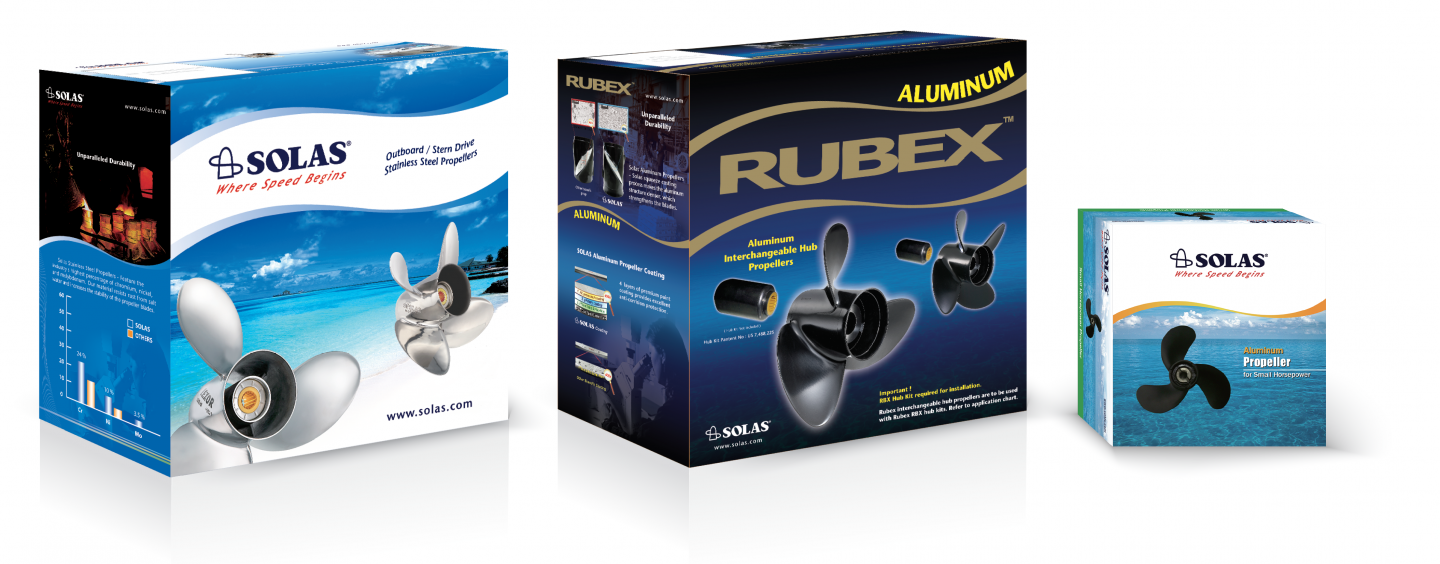
The brand is built on three core lineups:
-
Rubex: Features an interchangeable hub system to protect mid-to-high HP drivetrains.
-
Scorpion: A high-rake design built for bass boats needing aggressive bow lift.
-
Titan: Their heavy-duty, stainless steel answer to OEM offshore performance.
This strategy works. Browse Amazon or TinBoats forums, and you’ll see Solas holding strong with 4.5-star averages. The consensus is simple: they get you on plane just as well as your old Prop, but for half the dealer price.
But there is a well-known trade-off: surface finish.
Unlike Mercury’s flawlessly polished, razor-thin leading edges, Solas props can look a bit “pulled from the mold.” Buyers frequently report square-feeling edges and about 1mm of rough casting surface near the hub. This lack of final polishing costs about 1–2% in pure hydrodynamic efficiency. For a weekend fisherman, you’ll never notice the difference on the water. But that slightly rough finish is exactly how Solas keeps their price tag so low.
Content Framework: Solas Propellers Vs Alternatives — Brand Comparison Page
Here’s what this guide covers — and why each section matters to your buying decision.
What you’ll find inside:
-
Solas brand background — where it sits in the market, who it’s built for, and why boat owners keep coming back to it
-
Head-to-head comparison table — Solas vs. Mercury, Yamaha, Turning Point, Quicksilver, and VIF. We compare material quality, price range, engine compatibility, performance, and warranty side by side
-
Honest pros and cons — no brand is perfect. You’ll get the real trade-offs, not marketing spin
-
Buying recommendations by use case — racing, fishing, and casual cruising each need something different from an outboard motor propeller. Find out which fits your situation
-
FAQ section — covering propeller pitch and diameter, 3-blade vs 4-blade propeller choices, propeller cavitation, and more
-
Clear next steps — so you can move forward with confidence
Every section focuses on one goal: giving you a clear picture before you spend a dollar.
The Ultimate Propeller Brand Match-up
Reading through endless forum debates comparing Solas, Mercury, Yamaha, and Turning Point can make your head spin. To keep things simple, I’ve condensed decades of brand legacy, performance data, and price differences into one straightforward comparison table.
You’ll also notice we’ve mapped out exactly where high-performance alternatives like VIF fit into this landscape, so you can see your full range of options.
|
Brand |
Typical Price Point |
Build & Finish Quality |
Best Fit / Core Strength |
The Honest Take |
|---|---|---|---|---|
|
Mercury / Yamaha (OEM) |
$250 – $600+ |
Premium. Refined leading edges with excellent saltwater corrosion resistance. |
Heavy saltwater, high-horsepower (200+ HP), and OEM warranty compliance. |
Unmatched durability and factory support, but you definitely pay a hefty “legacy” tax. |
|
Solas |
$100 – $250 |
Functional, but variable cast finishes. Can feel a bit rough or “unfinished” up close. |
Entry-level setups, mostly freshwater, and engines under 150 HP. |
A solid choice for tight budgets, though some high-pitch 3-blade models struggle with cavitation. |
|
Turning Point |
$140+ (Aluminum) |
High consistency with automated CNC-level precision for aluminum lines. |
Single-engine setups needing universal, across-the-board performance. |
Their aluminum 4-blade is an excellent “one-and-done” upgrade that stops you from constantly swapping props. |
|
Spitfire |
$300 – $500+ (SS) |
OEM-style geometry. Aluminum versions are light but prone to bending on impact. |
Low-HP (20–40 HP) runs where a rapid holeshot is your top priority. |
Delivers fantastic acceleration on small boats, but the price spikes hard if you want stainless durability. |
|
VIF Propellers |
60–70% of OEM cost |
CNC balanced with clean, consistent blade geometry. True drop-in fit. |
115–300+ HP smart upgrades. Direct Mercury and Yamaha replacements. |
Delivers 90–95% of OEM thrust and speed without the massive brand markup. The practical sweet spot. |
Honestly, the propeller market splits pretty cleanly once you look at the real-world data. If money is absolutely no object and you’re running outboard rigs in punishing saltwater, bite the bullet and pay for Yamaha or Mercury OEM. If you just need a cheap, weekend-warrior spare to toss in the storage locker, Solas does the job perfectly fine.
But this is exactly why VIF quietly wins over experienced boaters. When you start running 115 to 300 horsepower, you want the CNC-machined balance that budget options sometimes lack, keeping your RPMs stable and your ride smooth. VIF gives you that precise engineering—effectively matching the top-speed baseline of a Solas Titan—but at a price point that makes sense. You aren’t paying for a massive marketing budget; you’re just paying for smart, efficient manufacturing. Before dropping $600+ on a piece of OEM stainless, VIF is seriously the smartest place to start your search.
VIF Propellers: A High-Performance Alternative Worth Considering
Most boaters find out about VIF after they’ve already paid the OEM price once. That’s worth avoiding.
VIF fills a clear gap in the market. The brand delivers 90–95% of OEM thrust and top speed at 60–70% of the cost. That’s not a marketing claim. Tested stainless alternatives consistently land there when you compare them against Mercury and Yamaha OEM pricing — which often tops $600+.
What VIF Offers
The VIF Laser II stainless steel propeller is the main model to know. CNC machining gives it balanced pitch across the blade — precise enough to work as a true drop-in replacement for Mercury and Yamaha outboards. Performance stays intact.
Key specs by engine class:
-
115–150 HP setups: Start with a 14×19 inch stainless for speed-focused use. Loading the boat and need stronger planing? Go 4-blade. You’ll gain 10–15% quicker planing over a 3-blade at the same pitch.
-
175–300+ HP rigs: Step up to 15–17 inch diameter, 19–25 inch pitch. Cleaver or high-rake blade shape keeps RPM in range at the top end.
Why Solas Titan Users Switch
Running a Solas Titan and wondering if something better exists at a lower price? VIF gives you a clear answer.
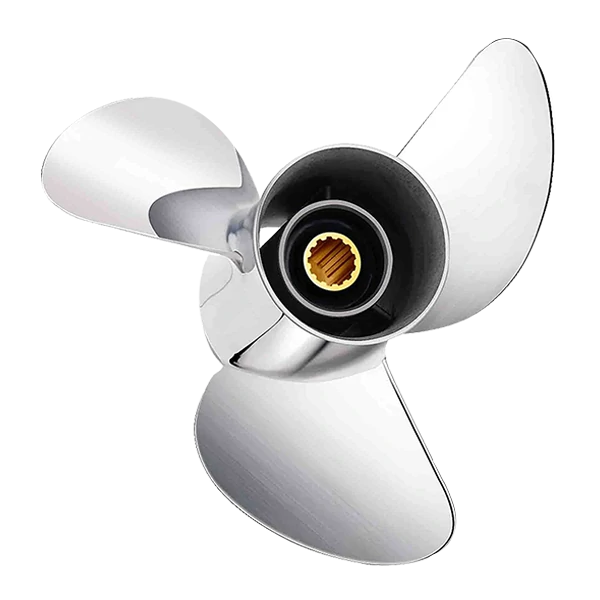
The thrust output is close. VIF stainless matches the Solas Titan’s 3-blade top-speed baseline at the same pitch and diameter. Heavy-loaded hull? The 4-blade VIF setup adds 10–20% more thrust over a 3-blade. More blade area drives that gain — and it’s a result you’ll see across the industry.
The hub system bolts on. No kit changes. No install surprises.
The Value Math
|
Factor |
Mercury OEM |
Solas Titan |
VIF |
|---|---|---|---|
|
Price Position |
$600+ |
$350–$450 |
More accessible |
|
Thrust/Speed Output |
100% baseline |
95–98% |
90–95% |
|
CNC Balancing |
Yes |
Partial |
Yes |
|
Fitment Coverage |
Mercury only |
90%+ brands |
Mercury, Yamaha, Honda, Volvo |
VIF fits Mercury, Yamaha, Honda, and Volvo outboards. Standard hub kits ship ready to install — no extra sourcing needed.
How to Find Your VIF Prop
The prop selector at vifpropellers.com filters by HP, engine brand, and use case. Enter your engine specs and you get a tested diameter and pitch match — not a generic starting point.
Running 115 to 300 HP and paying OEM prices? You’re likely overpaying for the same performance. VIF is the first place to check.
FAQ: Solas Propellers vs Alternatives — Common Questions Answered
Real questions from real boaters. Here are the answers that matter.
Are Solas and Rubex the same brand?
Yes — but they’re not the same product. Both share identical blade designs and similar diameter/pitch sizing. The difference is in the hub.
Solas uses pressed-in rubber hubs. They install straight onto your original engine hardware — no extra parts needed. Rubex uses interchangeable rubber hubs sold as a separate kit. Those hubs fit a wider range of outboards and stern drives.
Rubex hubs deflect up to 10% in either direction. That cuts vibration and improves shift dampening over competitors’ plastic hubs.
Quick guide:
– Solas — best for simple, straightforward installs
– Rubex — better for high-HP or high-performance setups
Is Solas aluminum good enough for saltwater?
Yes — with a few caveats.
Solas aluminum props come coated for saltwater protection. The price is much lower than stainless. That makes them a solid choice for freshwater or occasional saltwater use on a budget.
Running hard in tough marine conditions year after year? Stainless holds up longer and needs repairs less often. So for long-term durability, stainless is the smarter pick.
My prop got dinged towing tubes. Should I switch to Solas?
Yes, most likely.
The Solas Amita fits OEM specs and comes with thinner blades pressed to tight tolerances. That helps with planing performance. Boaters on iBoats and TinBoats forums report that Solas holds up better than Mercury OEM after impact damage — and that feedback shows up again and again.
One thing to check: make sure your pitch still keeps the engine inside its WOT RPM range after the swap.
Solas vs Mercury on high-HP stern drives — which wins?
On stern drives, the Rubex interchangeable hub system is a real edge.
Boaters running Solas against Mercury on Bravo 3 stern drives call Solas “WAY higher quality” — at a lower price point. For everyday recreational use, Solas holds its own against Mercury just fine.
Push past 150 HP? Go with the Rubex interchangeable kit. You get better hub performance and easier swaps mid-season.
How do I fix a poor holeshot without changing the whole prop?
Pitch is your main tool here.
Drop to a lower pitch and go with a larger blade. More blade surface grabs more water. You get on plane faster. It’s that straightforward.
Running a 4-stroke? You probably don’t need cavitation holes to improve acceleration. Those are built for specific setups.
High-pitch, small-blade combos are built for top-speed runs on light hulls with strong power-to-weight ratios — not for holeshot performance.
Start by matching pitch to your engine’s RPM range. Everything else falls into place from there.
Conclusion
Picking the right Boat Propeller is more than just a purchase. It’s a performance decision that shapes every hour on the water.
Solas brings solid reliability. Other brands each have their own strengths. But don’t let brand loyalty override performance data. Are you chasing tournament speeds? Trolling for bass at dawn? Cruising with family aboard? The prop that fits your engine, hull, and use case will outperform the one with the biggest name.
That’s where VIF Propellers stands out. You get precision-engineered specs, competitive pricing, and performance that goes well above its price range.
Don’t settle for “good enough.” The right prop can transform your time on the water.
Ready to find your perfect match? Explore VIF’s full propeller lineup and see why boaters switching from Solas never look back.