
What Is The Difference Between A Cleaver Prop And A Normal Prop?
Not all propellers are created equal. Swap a standard aluminum Prop for a high-performance cleaver-style blade, and you’ll feel the difference the second you hit the throttle. But let’s be honest, the marine terminology can get confusing fast, and no one wants to drop thousands of dollars on the wrong upgrade.
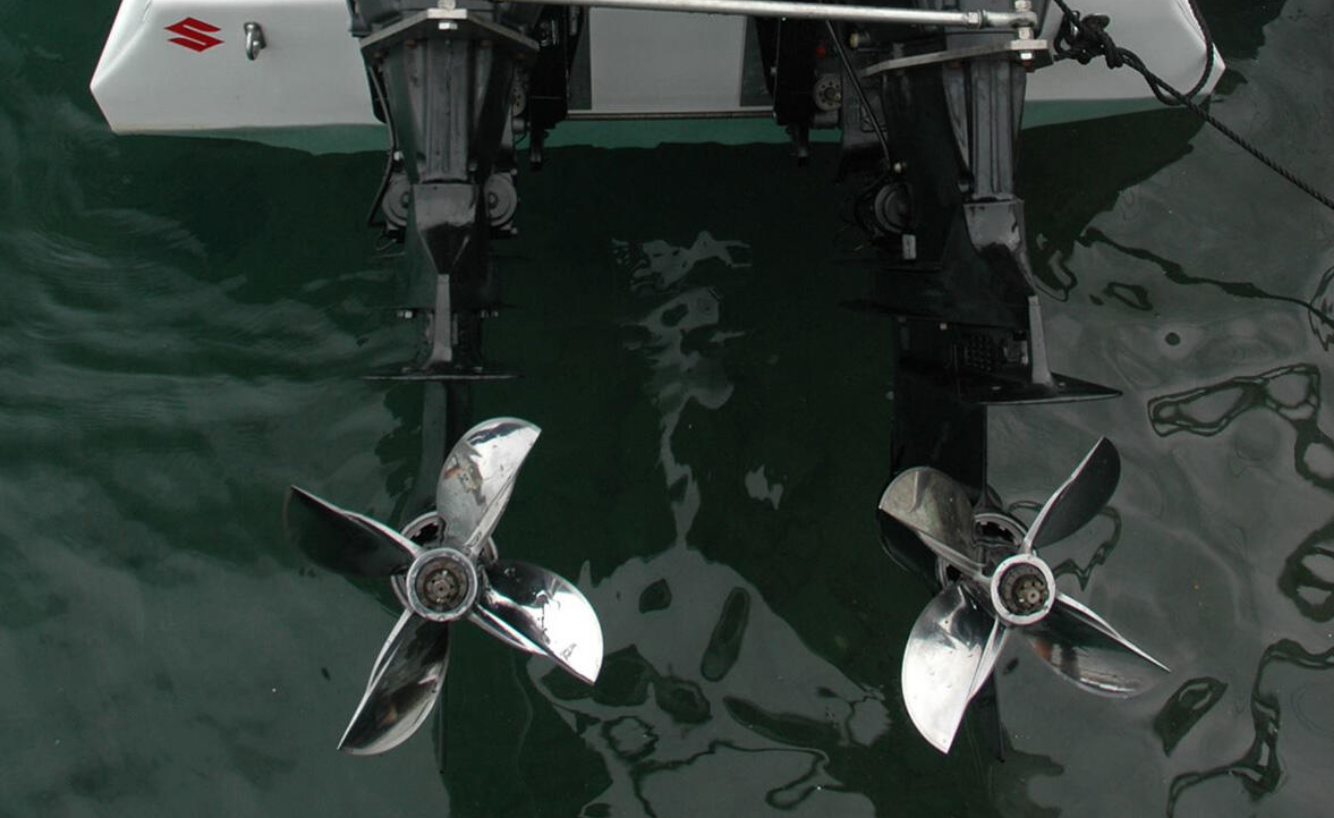
So, let’s cut completely through the noise. We are going to look closely at what a cleaver Prop actually is, how it stacks up against a normal prop in real-world conditions (speed, efficiency, handling), and—most importantly—which one actually belongs on your boat.
Core Concepts: Slicing vs. Scooping
Put the two blades side by side, and the design philosophies become incredibly obvious.
-
Cleaver Prop: Built with a wedge-shaped blade, a razor-thin leading edge, and a thick, straight-cut trailing edge. It looks like a butcher’s cleaver (hence the name). Its main objective? To slice through the water and intentionally trigger supercavitation at extreme speeds without adding drag.
-
Normal (Round Ear) Prop: This is your dependable, everyday workhorse. It features rounded contours, a gentle skew, and cupped tips. Instead of slicing, it’s designed to scoop and grip the water, delivering maximum thrust when fully submerged.
The cleaver was born on the racing circuits. Engineers designing high-speed tunnel boats needed a prop that could push past 100 mph while running half in the water and half in the air (a surfacing drive). A normal prop, on the other hand, is built to get you home safely, reliably, and efficiently at everyday speeds.
The Engineering Behind the Performance Gap
Geometry is everything when you push a hull past 60 mph. Your Propeller will either hold its line, or it will fall apart under the pressure.
Standard props rely on raked, cupped blade tips to grab water surface area at low speeds. That’s why they feel so powerful off the line. However, push them past 85 mph, and that same cup shape creates massive drag, and uncontrolled cavitation kicks in. You start burning fuel just to fight the water.
Cleaver blades are completely different. They are straight and uncambered. Instead of fighting cavitation, they harness it. The sharp leading edge creates a controlled air-and-vapor bubble (supercavitation) that covers 60–80% of the blade surface at high speeds. The blade literally flies through this low-resistance pocket instead of plowing through dense water, reducing drag by up to 25-40%.
To survive these stresses, over 95% of high-end cleavers (like Mercury Racing models) are CNC-machined from solid 17-4PH stainless steel billet, holding edge tolerances down to an insane 0.001 inches.
Head-to-Head Performance Comparison
Numbers don’t lie, even when they’re inconvenient. While the cleaver dominates the top end, it demands serious compromises everywhere else.
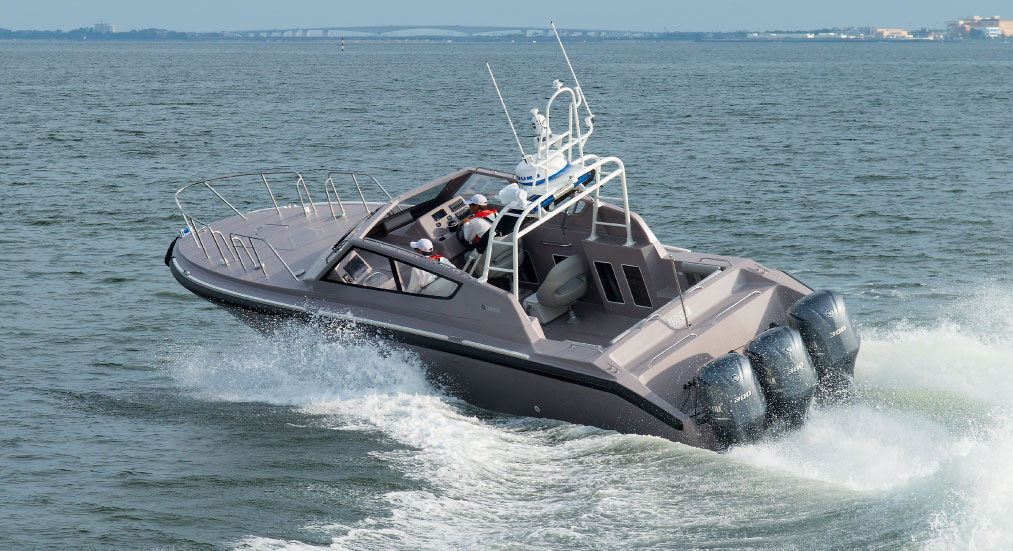
1. Top Speed (The Cleaver’s Domain)
On a 300 HP outboard running a 24–26″ pitch, a normal prop might hit 92–98 mph before its cupped blades max out. Bolt on a well-matched cleaver prop, and you’re looking at 98–105 mph. Because the cleaver reduces drag so effectively, it frees up an extra 500–800 RPM at wide-open throttle (WOT). If you are chasing triple digits, there is no substitute.
2. Hole Shot & Low-End Thrust (The Normal Prop Wins)
Off the line, the normal prop absolutely destroys the cleaver. Getting from 0–30 mph takes about 3.5 seconds with a standard cupped prop. A cleaver? You’re waiting around 4.2 seconds. Cleavers generate about 12% less static thrust at launch because they lack the cup to grab the water deeply.
3. Fuel Efficiency and Handling
This is the part that stings for cleaver owners. If you are cruising below 40 mph, a cleaver prop will burn 1.2 to 1.5 gallons per hour more than a standard prop. Its cruise efficiency is roughly 14% worse.
And reverse handling? Prepare yourself. A cleaver generates about 450 lbs of reverse thrust compared to a standard prop’s 750 lbs. That takes your stopping distance from 20 mph and adds an agonizing 25–35 feet to it. Parallel parking at a crowded marina with a cleaver is a stressful experience.
However, above 85 mph, the math flips. The cleaver becomes incredibly fuel-efficient at WOT because it’s no longer fighting the drag that chokes standard props.
Who Should Actually Use a Cleaver Prop?
I’ll be straightforward: 90% of boat owners out there have absolutely no business running a cleaver prop. They are notoriously picky. If your setup isn’t perfect, your boat will vibrate, slip, and burn fuel for no reason.
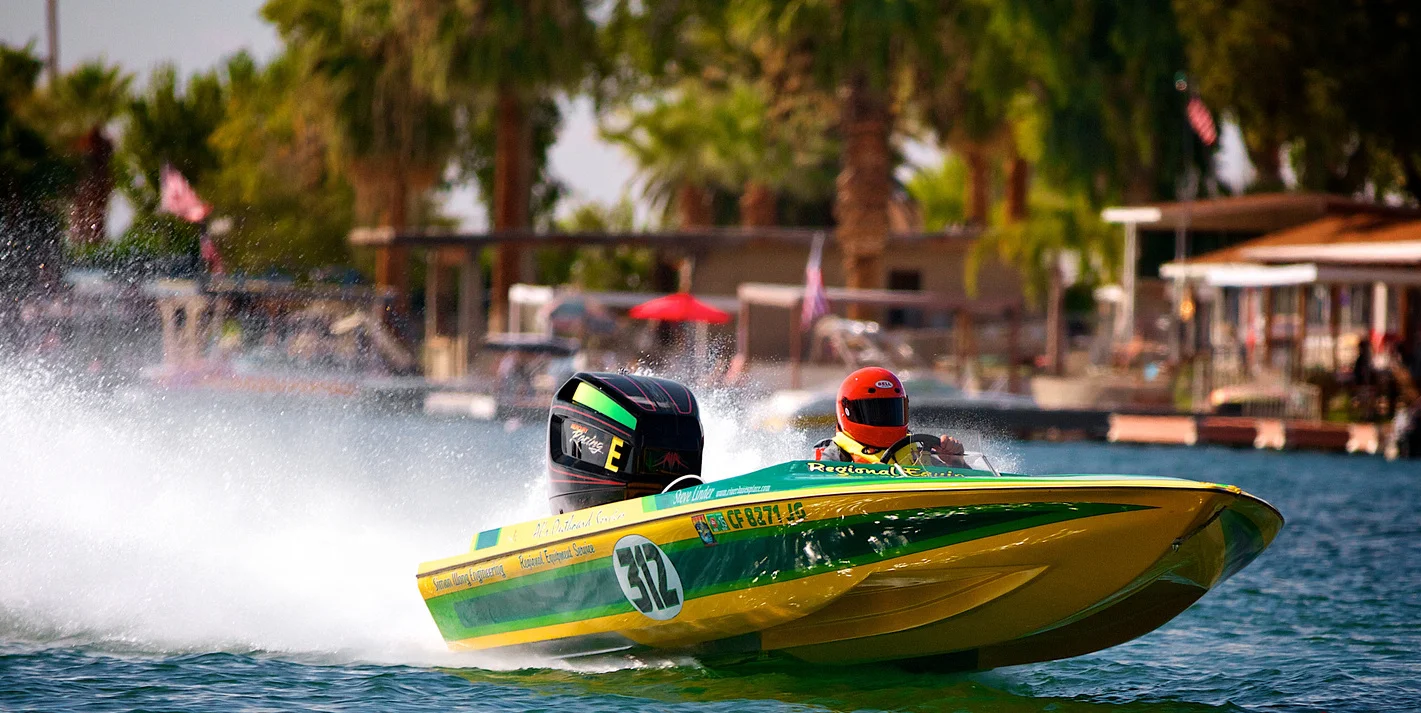
You need a cleaver prop ONLY if:
-
You consistently run speeds above 100 mph.
-
You use an elevated/surfacing drive (the prop is half-exposed to the air at speed).
-
You run powerful outboards like the Mercury Racing 300R, 400R, or 450R.
-
Your hull is a light, race-focused design (like a tunnel boat or Kevlar flats racer).
Stick with a normal prop if:
-
You own a pontoon, a bass boat, a family runabout, or a standard center console.
-
Your WOT speed is under 80 mph.
-
Your outboards are fully submerged.
A well-matched, high-quality stainless steel standard prop will handle 99% of your recreational needs. It will get you on plane faster, save you money at the fuel dock, and allow you to dock your boat without breaking a sweat.
Quick Comparison Table
|
Feature |
Cleaver Prop |
Normal (Standard) Prop |
|---|---|---|
|
Blade Design |
Straight, sharp leading edge, blunt trailing edge |
Rounded contour, raked, cupped tips |
|
Top Speed |
100+ mph (surfacing drives) |
Sub-85 mph (submerged drives) |
|
Hole Shot |
Sluggish / High slip |
Aggressive / Strong bite |
|
Cavitation |
Engineered supercavitation at high speeds |
Actively resists cavitation; fails abruptly at high RPM |
|
Handling in Reverse |
Terrible; lacks grip |
Confident & highly controllable |
|
Ideal Application |
Offshore racing, high-performance V-bottoms |
Pontoons, fishing rigs, leisure cruisers |
Conclusion: Is the Upgrade Worth It?
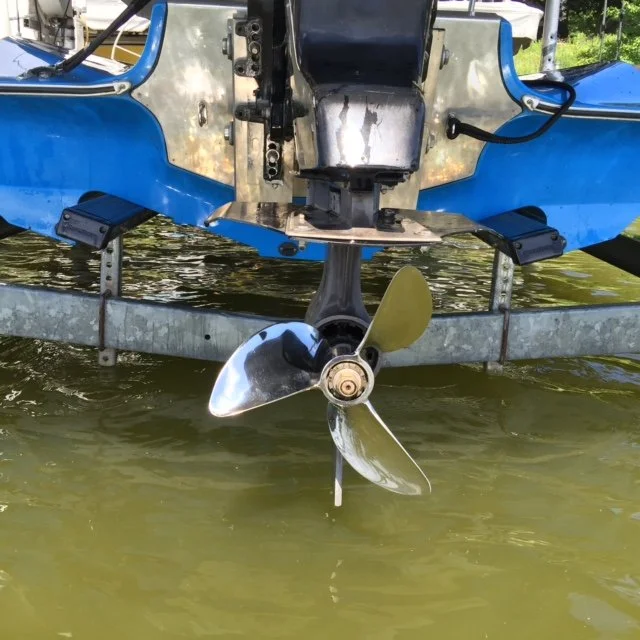
Your Propeller is arguably the hardest-working component on your boat. If you are chasing ultimate top-end speed on a partial-surface setup pushing past the century mark, a cleaver prop is a brilliant, necessary piece of engineering. It does one thing exceptionally well.
But for everyone else? A standard round-ear prop is the true hero. Don’t fall into the trap of buying race-tier equipment for a recreational boat—you’ll just end up with a slower hole shot and a higher fuel bill. Match your propeller to how you actually spend your weekends.
Considering a Normal Prop? Why VIF Is a Smart Move
So, you’ve done the math and realized that a dependable, standard round-ear prop is exactly what your boat actually needs. If you are going down that route, VIF Propellers is honestly one of the best choices you can make to upgrade your ride.
We know how frustrating it is to sift through endless marine catalogs trying to find the perfect match. That’s why at VIF, we focus heavily on what everyday boaters care about most. Whether you need a durable aluminum prop for your family pontoon or a high-grip stainless steel wheel for your fishing rig, our standard props are engineered specifically to deliver that aggressive hole shot and rock-solid fuel economy we talked about earlier. You won’t have to deal with the stress—or the massive price tag—of a finicky racing blade. Just bolt on a well-matched VIF propeller, get on plane faster, and enjoy a smooth, reliable day on the water without overthinking it.