
However, selecting the right Yamaha outboard Propeller is not a game you can afford to lose. Whatever the case – whether you have a bent blade dragging the boat home or if you’re hunting that last half knot of top end – your Yamaha Boat Propeller choice can affect your boat’s fuel efficiency, acceleration, and eventually even your lower unit’s lifespan. The reality, however, is that not all Yamaha props are equally built, and the higher price does not always translate to better durability.
The time has come to debunk all the marketing talk around Yamaha boat props. Below we take a deep dive into the best propellers compatible with Yamaha outboard engines based on materials, hub fitment, and real-life performance criteria.
Why Brand Reliability Actually Matters for Yaour Engine
The wrong propeller will not destroy your outboard immediately and spectacularly. What it will do is kill your outboard internally and slowly. Using substandard props with poor dimensional accuracy or with incorrect Yamaha outboard Prop pitch forces your engine to run outside the RPM window.
Excessive pitch – the engine works hard when loaded. Low pitch – over-revving above the red line. Both will subject internal parts to great stresses. Not only that but inferior quality aluminum blades, which have microcracks and unbalanced weights, will produce high-frequency vibration. You may not even notice anything wrong while driving the boat, but these vibrations will get transferred to the gear case and cause fretting of splines and seals.
This problem can easily be avoided by using only reliable manufacturers’ propellers. They will ensure dimensional accuracy and thus provide you with the maximum performance precisely at the RPM that the manufacturer intended.
The Top Contenders: Who Makes the Best Yamaha Propeller?
1. Yamaha OEM: The Undisputed Gold Standard
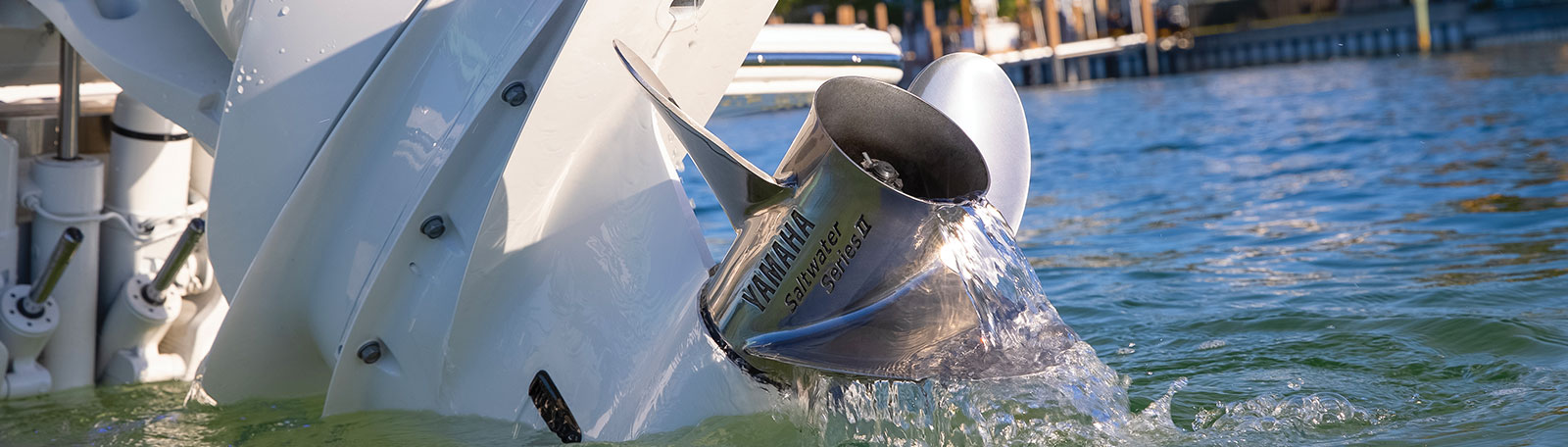
Yamaha’s premium stainless steel propellers, produced under their brand name and bearing the premium price tag, are based on similar engineering information. There are over 300 models in series including Reliance, Performance XL4-HP, and XTO OS available, ensuring there is a model that matches your RPM perfectly.
Let’s consider the Reliance Series (made for F115 to F200). It provides consistent 3-5 MPH faster speeds compared to the regular Aluminum propellers. Sure, the price range starts from $300 and ends at $800+. But in case you’re working with dual engine installations when the balance is critical, or your watersports involve riding through choppy offshore waves, the OEM propeller will not be an extra cost, but your safety measure.
2. Solas: The Best Aftermarket Value
In case the OEM propeller price tag is too high for you but you still want top-notch performance, then Solas is the answer. Their Rubex Hydro Stainless Steel series serves as a nearly perfect replacement of the Yamaha Reliance series on 150-300 HP outboards.
Real-world testing proves that this aftermarket product lasts for five times longer than any aluminum propeller. You also get improved acceleration and much better maneuverability. However, there’s one caveat – you should buy a separate hub kit. The Solas Propeller needs a unique Yamaha propeller hub kit (Flo-Torq II, Anti-Rattle Rubex Kit, etc.).
3. Michigan Wheel: The Trusted Century-Old Veteran
For more than a century, Michigan Wheel has produced marine propellers. Gaining business contracts with the U.S. Navy and Coast Guard does not come from compromising on the quality of materials. The recreational M-Series blades comply with the requirements set forth for ABS Type 2 Manganese Bronze and ABS Type 4 NiBrAl.
It is not a mere statement to make. This comes from independent verification of material grades. Want your blades strong and reliable, hand-polished and mechanically certified? Michigan Wheel is among the most dependable after-market propeller options.
4. VIF Propellers: The High-Speed Budget Alternative
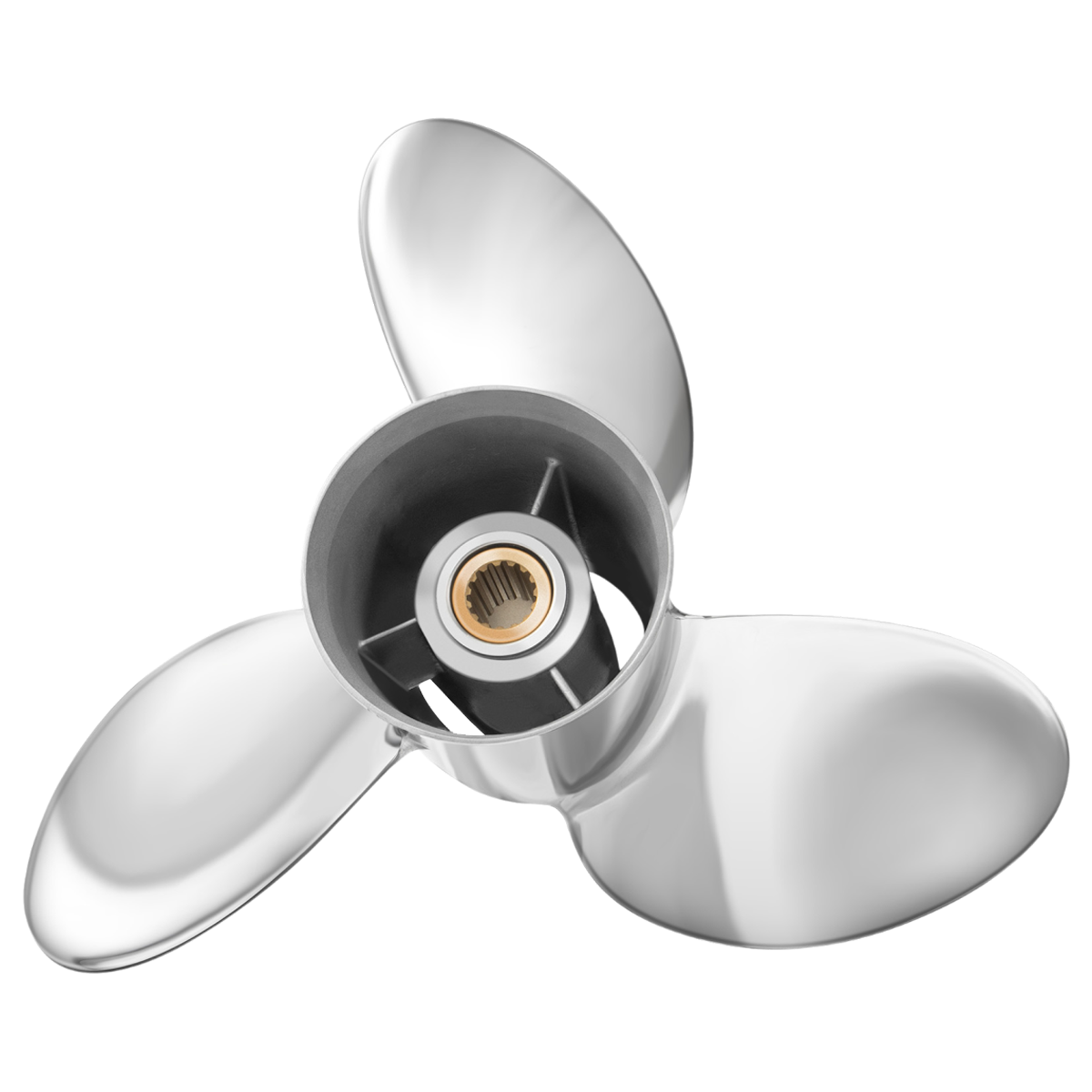
VIF Propellers have been taking on a particular market niche – the super-fast blades for budget-conscious consumers. According to independent trials, VIF’s stainless steel chopper blade managed an impressive 83.8 km/h performance with a stock engine – 98.5% as good as the OEM version but costing a fraction of its price.
If your craft uses a fishing boat that requires fast lift or a custom high-load pontoon, then the stainless chopper series (13-28 pitch) will work wonders for you. There simply isn’t much available data regarding performance tests with high horsepower (250HP+) Yamaha engines, making these models better suited for average-speed lovers.
How to Match Your Propeller by Yamaha HP Range
Slapping a 250HP prop on a 90HP engine is a recipe for disaster. Here is the straightforward logic for matching an upgrade to your engine size.
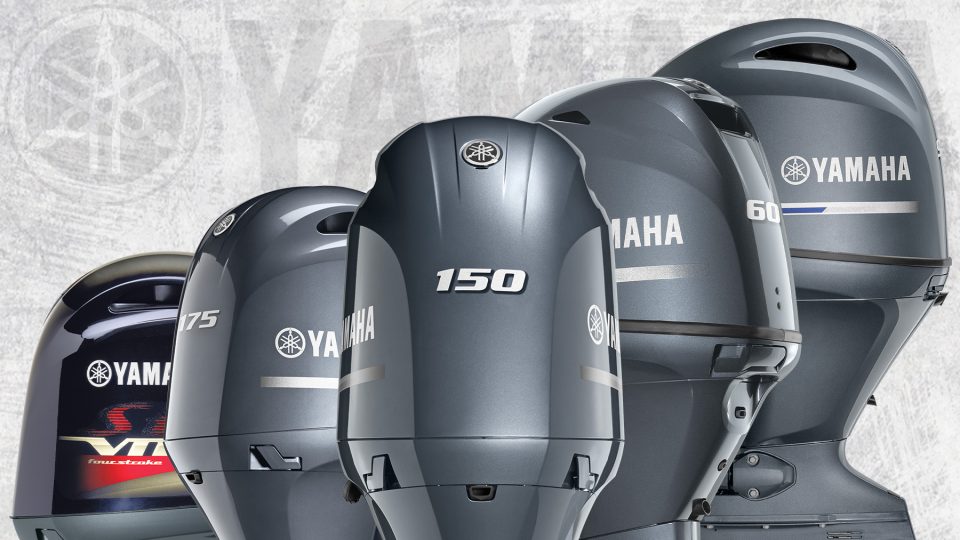
40–90 HP: Stick to Reliable Basics
In this class, safety is the top priority. Yamaha OEM aluminum propellers have a 95% fitment rate, with virtually no cases of structural defects reported. Upgrading from the standard aluminum propeller to a stainless one on a 60HP vessel offers an average of 2-3 MPH speed increase.
115–150 HP: The Stainless Sweet Spot
This is when it makes perfect sense to switch to the stainless steel propellers from the aluminum ones. For example, if you have a Turning Point Hustler or its equivalent Solas, you can benefit from an additional 5% of top speed increase (it goes to 42 MPH) and get 12% WOT reduction in the fuel usage per hour, which means two gallons.
175–300 HP: OEM vs. Premium Aftermarket
When dealing with high-horsepower engines of the V6 or V8 type, the only choice you have is making some tradeoffs. Your stock OEM Yamaha propellers, such as 15-5/8×24 SS, will keep your splines safe for up to 10 years without issues. In contrast, premium aftermarket alternatives from Michigan Wheel or Solas may not last as long but will give you extra thrust at take-off point (up to 15%) and faster speeds for heavy vessels (over 25-feet).
Warning Signs of Low-Quality Propellers
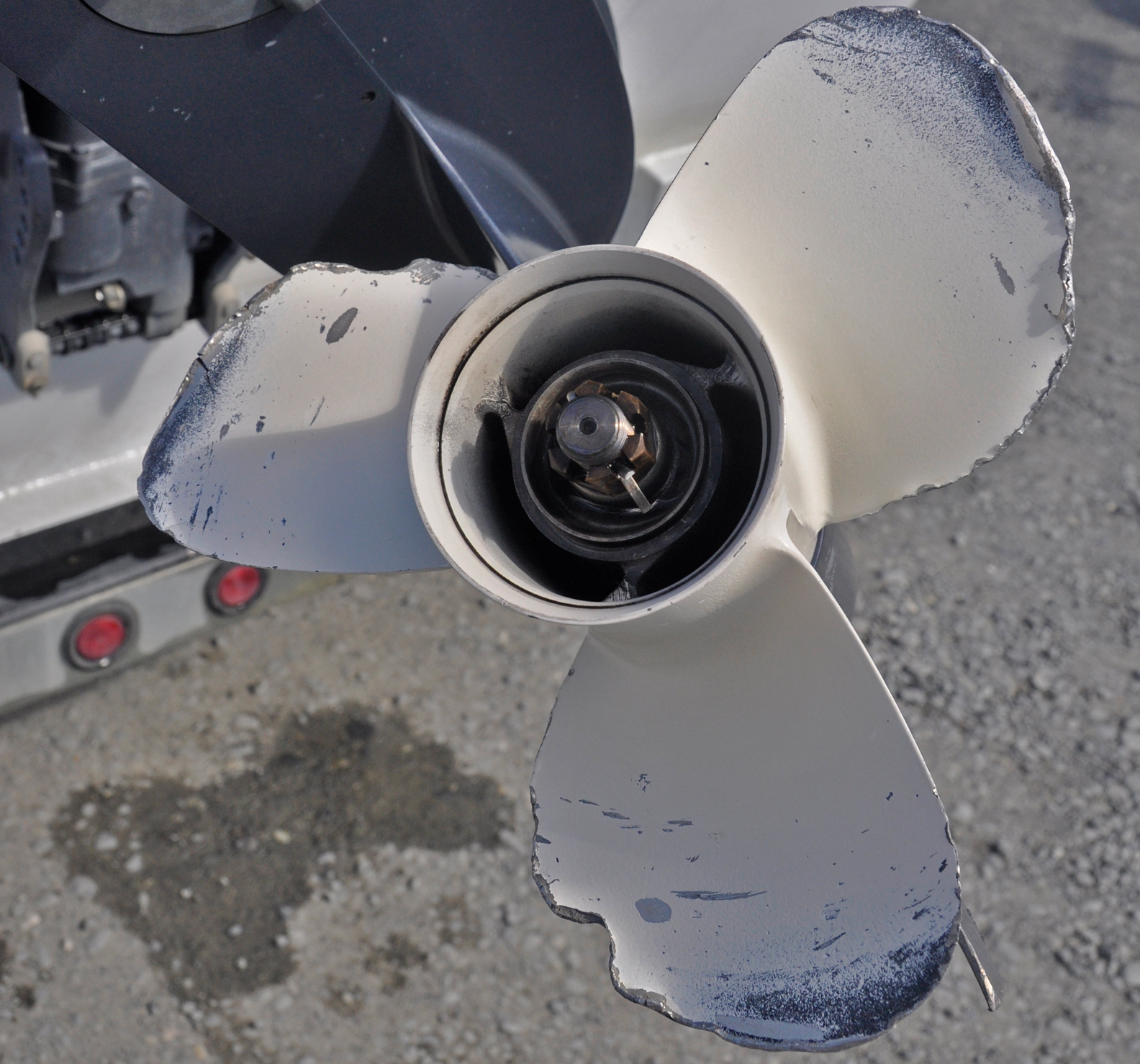
If you decide to venture outside these trusted brands, keep an eye out for the red flags of cheap Amazon or eBay generic props. The damage usually starts around the 100-hour mark.
-
Vibration at Wide Open Throttle: If the boat shudders when you pin the throttle, the prop is badly balanced. It will crack your engine mounts eventually.
-
Edge Degradation: Cheap Yamaha propeller material wears down like chalk in sandy shallows. You lose thrust without seeing massive dents.
-
Galvanic Corrosion: Without appropriate anode protection, incompatible metal will cause your propeller to simply disappear when immersed in salt water. Good manufacturers have anti-corrosive compounds built into their casting process.
Make sure to verify NMMA compliance, warranty coverage of spline breakage, and avoid companies that don’t share their dynamic balance information.
The Verdict: Which Brand Should You Buy?
|
Brand |
Yamaha Compatibility |
Avg. Price Range |
Best Use Case |
|---|---|---|---|
|
Yamaha OEM |
Optimal Fit (300+ Models |
$300 – $800+ |
Saltwater offshore applications, heavy-duty workloads |
|
Solas |
Excellent (Needs hub kit) |
$150 – $400 |
Pontoon replacements, superior value for money |
|
Economical performanceMichigan Wheel |
High (M-Series) |
$200 – $500 |
Industrial-grade operations, most durable |
|
VIF Marine |
Yamaha-specific fits |
$100 – $300 |
Economical performance |
Vibration while WOT: When vibration occurs during full speed conditions on the boat, this means that your prop is not balanced. Soon, the mounting systems for your engine will get broken by this vibration.
Edge Wear-Out: The cheaper propeller deteriorates as easily as chalk does in sandy water without breaking apart.
Galvanic Corrosion: In case your propeller isn’t protected with the proper amount of anodes, the salt water will eat it away in pieces. The best manufacturers incorporate protective coatings into the production process.
It is highly recommended to make sure that you deal with NMMA approval, warranty on spline breaking, and to avoid those who do not provide information on their balance testing procedure.
Frequently Asked Questions (FAQ) About Yamaha Propellers
Which Brand to Choose?
|
Brand name |
Fit with Yamaha Motor |
Price Range ($USD) |
Best Uses |
|---|---|---|---|
|
Original Yamaha| |
Optimal Fit (>300 Models) |
300-800+ |
Saltwater/offshore applications, heaviest workloads |
|
Solas Props |
Excellent Fit (Hub Kit) |
150-400 |
Replacement on pontoon boats |
|
Michigan Wheel |
High Fit |
200-500 |
Industry/Heavy duty applications |
|
VIF Propellers |
Only Fits Yamaha motors |
100-300 |
Economical performance |
Still have a few questions before making your choice? Here are quick answers to the most common scenarios boaters run into.
How do I determine whether the pitch is incorrect on my boat’s propeller?
You can test this by running your boat at full speed with the same amount of passengers. If you notice that your engine is over-revving, that means your propeller pitch is too low. If your engine struggles to reach the maximum RPMs (recommended around 5000-6000 RPM), then the pitch is too high.
What is the most cost-effective replacement for low to mid-range Yamahas?
If you are running a 40HP to 115HP outboard of Yamaha propeller , you really don’t need to drop $600 on an OEM replacement. This is exactly where VIF Propellers shine. For casual fishers, bay boats, and pontoon owners, VIF offers the ultimate bang for your buck. They deliver aggressive hole shots, smooth handling, and excellent fuel efficiency that rivals factory props, but at a fraction of the cost. If you want premium performance in that mid-range sweet spot without the premium price tag, VIF is incredibly hard to beat.
Conclusion
Finding the right propeller for your Yamaha doesn’t have to be a headache. It basically comes down to matching the brand to your specific boating style and engine size. If budget isn’t an issue and you demand flawless factory integration, you can never go wrong with Yamaha OEM. For extreme commercial durability or massive heavy-load pushing, Michigan Wheel and Solas are fantastic workhorses.
But let’s be realistic—most of us just want reliable, snappy performance without overpaying. For everyday boaters, especially those operating in the low-to-medium horsepower range, upgrading to a VIF propeller is undoubtedly the smartest move. You get the crisp handling, speed gains, and durability you’d expect from the most expensive names in the industry, leaving you with more cash for fuel and tackle. Take the time to get your pitch dialed in right, choose a trusted casting, and hit the water with confidence.