
Most RC boat setups don’t fail because of the motor, ESC, or battery.
They fail at the last step — the rc Boat Propeller.
That might sound exaggerated, but it’s not. The propeller is the only component that actually interacts with the water. It’s where electrical energy turns into thrust. If that conversion is inefficient, everything upstream is underperforming.
This is why two boats with identical electronics can show completely different results on the water — simply because they are running different propellers.
And yet, many hobbyists still choose an rc Boat Propeller based on:
-
Price
-
Size labels
-
Or worse — guesswork
The result? Overheating motors, unstable handling, poor top speed, and constant replacements.
So the real question is not:
“Which rc boat propeller is the best?”
But rather:
“Which brand delivers the best value for money in real on-water conditions?”
To answer that, we need to go deeper than marketing specs and look at what actually affects performance.
What “Value for Money” Really Means in an RC Boat Propeller
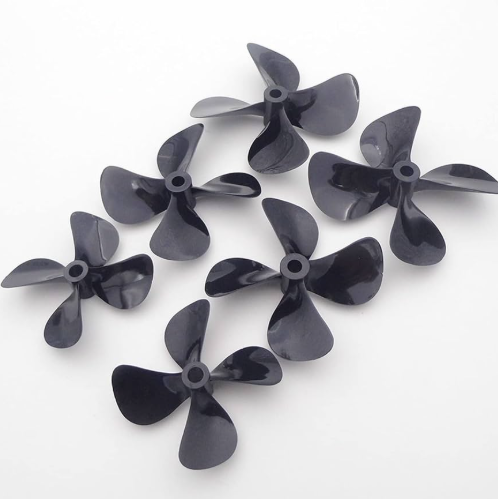
Value is one of the most misunderstood concepts in the rc boat propeller market.
A cheap Prop is not automatically good value.An expensive prop is not automatically high performance.
Real value comes from how the Prop behaves over time under real load.
Efficiency Under Load, Not Just Free Spin
Many propellers look good when tested without resistance. But once they are in the water at full throttle, everything changes.
A high-value rc boat propeller:
-
Maintains its pitch under pressure
-
Converts power into forward thrust efficiently
-
Keeps current draw under control
A low-quality prop may:
-
Flex under load
-
Lose effective pitch
-
Waste power as turbulence
This is why some boats feel fast at low throttle but struggle at high speed.
Durability That Matches Your Usage
If you are running a high-speed mono or catamaran, your propeller is under constant stress:
-
High RPM
-
Water resistance
-
Occasional debris impact
A prop that deforms slightly each run will gradually lose performance — even if it doesn’t visibly break.
True value means:
-
Holding shape over time
-
Resisting edge wear
-
Maintaining balance
Consistency Between Units
This is something beginners almost never consider.
With low-end rc boat propellers, two props with the same model number can perform differently. That inconsistency leads to:
-
Difficult tuning
-
Unpredictable results
-
Wasted testing time
Reliable brands eliminate this issue through tighter manufacturing control.
Why Cheap RC Boat Propellers Often Underperform in Real Conditions
Cheap rc boat propellers are not always bad — but they are often misunderstood.
They can feel impressive at first. But that performance rarely holds up.
Blade Flex: The Hidden Performance Killer
At high RPM, water pressure pushes hard against the blades.
In lower-quality props:
-
The material flexes
-
The effective pitch decreases
-
Thrust drops
This creates a situation where:
-
Your motor is working hard
-
But your boat is not gaining speed
It’s inefficient and frustrating.
Cavitation: When Your Prop Loses Grip
Cavitation happens when water flow becomes unstable around the blade.
This is often caused by:
-
Poor blade shape
-
Rough surface finish
-
Incorrect pitch design
When it happens, you’ll notice:
-
Sudden RPM spikes
-
Loss of forward push
-
Unstable top speed
A well-designed rc boat propeller minimizes this by maintaining smooth water flow.
Vibration and Long-Term Damage
Even a slight imbalance becomes a serious issue at high speed.
Cheap props often have:
-
Uneven blade weight
-
Inconsistent pitch angles
This leads to vibration that:
-
Wears bearings
-
Loosens components
-
Reduces efficiency
It’s not just a performance issue — it’s a durability issue for your entire setup.
What High-Value RC Boat Propellers Do Differently
A high-value rc boat propeller is not just “stronger” — it is engineered for stability under real conditions.
Precise Blade Geometry
The shape of the blade determines how water flows across it.
A well-designed blade:
-
Maintains consistent pressure
-
Reduces turbulence
-
Maximizes forward thrust
This is why two props with identical diameter and pitch can perform completely differently.
Material That Holds Its Shape
Materials like beryllium copper or high-grade aluminum are used because they:
-
Resist deformation
-
Maintain pitch accuracy
-
Provide consistent performance
This is critical at high RPM, where even small changes affect output.
Clean Edge Finish
A sharp, smooth edge:
-
Cuts water cleanly
-
Reduces drag
-
Improves efficiency
Rough edges increase resistance and disrupt flow.
Balance at High RPM
A quality rc boat propeller is easier to balance and stays stable at speed.
This leads to:
-
Smoother operation
-
Better efficiency
-
Longer component life
Top RC Boat Propeller Brands Ranked by Value
Now let’s get into what you actually care about — brands.
Octura — Best Overall Value
Octura is widely considered the standard in the rc boat propeller world.
Why?
Because it consistently delivers:
-
Strong thrust
-
Reliable pitch accuracy
-
Durable material (beryllium copper)
On the water, Octura props:
-
Accelerate cleanly
-
Hold speed well
-
Stay stable under load
They are also widely used because they are tunable. Advanced users can sharpen and balance them to push performance even further.
Best for:
-
Most RC boat users
-
Performance builds
-
Reliable long-term use
ABC Propeller — Best for High-Speed Performance
ABC propellers are built with performance in mind.
Compared to Octura, they offer:
-
More refined finishing
-
Higher efficiency at speed
-
Less need for manual tuning
They are commonly used in:
-
Racing setups
-
High-speed electric boats
The trade-off is price — they are more expensive.
Best for:
-
Competitive users
-
Speed-focused builds
Raboesch — Best for Durability and Stability
Raboesch focuses less on peak speed and more on:
-
Consistency
-
Build quality
-
Long lifespan
These rc boat propellers are ideal for:
-
Scale boats
-
Recreational use
-
Long sessions without tuning
They provide predictable, stable performance rather than aggressive speed.
Generic CNC Aluminum Props — Best Budget Option
These props are everywhere.
They offer:
-
Low price
-
Easy availability
But they come with risks:
-
Inconsistent pitch
-
Poor balance
-
Lower durability
They are best used for:
-
Testing setups
-
Beginners learning sizing
Material Comparison: What You Actually Feel on the Water
Plastic Props
-
Fast spin-up
-
Low cost
-
Poor durability
Best for testing, not performance.
Aluminum Props
-
Balanced performance
-
Moderate durability
-
Good upgrade step
Beryllium Copper Props
-
Strong and rigid
-
Excellent efficiency
-
Long lifespan
Best for serious setups.
Stainless Steel Props
-
Extremely durable
-
Heavy
-
Less common in RC racing
Blade Count: Speed vs Control
2-Blade
-
Highest speed potential
-
Lowest drag
-
Less grip
3-Blade
-
Best balance
-
Strong acceleration
-
Stable handling
4-Blade
-
Maximum grip
-
Better in rough water
-
More drag
How to Match an RC Boat Propeller to Your Setup
This is where most people go wrong.
Step 1: Check Motor KV
-
High KV → lower pitch
-
Low KV → higher pitch
Step 2: Start Conservative
Always start with a smaller pitch.
Why?
Because:
-
Over-pitching overheats motors
-
Under-pitching is easy to fix
Step 3: Monitor Temperature
After a run, check:
-
Motor temp
-
ESC temp
If they are too high, your prop is too aggressive.
Step 4: Adjust Gradually
Change one variable at a time:
-
Pitch
-
Diameter
-
Blade count
This is how experienced users tune performance.
Final Verdict: Which RC Boat Propeller Brand Is Best?
There is no single winner for everyone.
But based on value:
-
Best overall: Octura
-
Best performance: ABC
-
Most reliable: Raboesch
-
Best budget: CNC aluminum
The best rc boat propeller is the one that:
-
Matches your setup
-
Runs efficiently
-
Lasts over time
Conclusion
An rc boat propeller is not just another part — it is the final output of your entire system.
Choosing the right one means:
-
Better speed
-
Better efficiency
-
Longer component life
Choosing the wrong one means:
-
Wasted power
-
More heat
-
More cost over time
If you want real performance, stop guessing.
Match your prop to your setup, test properly, and choose brands that deliver consistency — not just marketing claims.
That’s where real value is.