
Few thrills on the water match the raw, gut-punch acceleration of a jet boat. But that same power makes these machines genuinely dangerous in the wrong hands. The excitement is real — and so is the risk.
Jet boats don’t work like traditional Propeller-driven vessels. They use a different propulsion system entirely. That difference brings a specific set of hazards most operators never think about — until something goes wrong.
The dangers come in layers. Shallow water can get sucked into the jet intake and cause serious damage. Release the throttle, and you lose steering — completely. These aren’t edge cases. They happen, and they catch people off guard.
Before you leave the dock, it’s worth knowing what you’re dealing with. What follows is a straight look at what creates risk on these machines — and what you can do to stay ahead of it.
Which Can Create A Hazard In Jet Propelled Boats
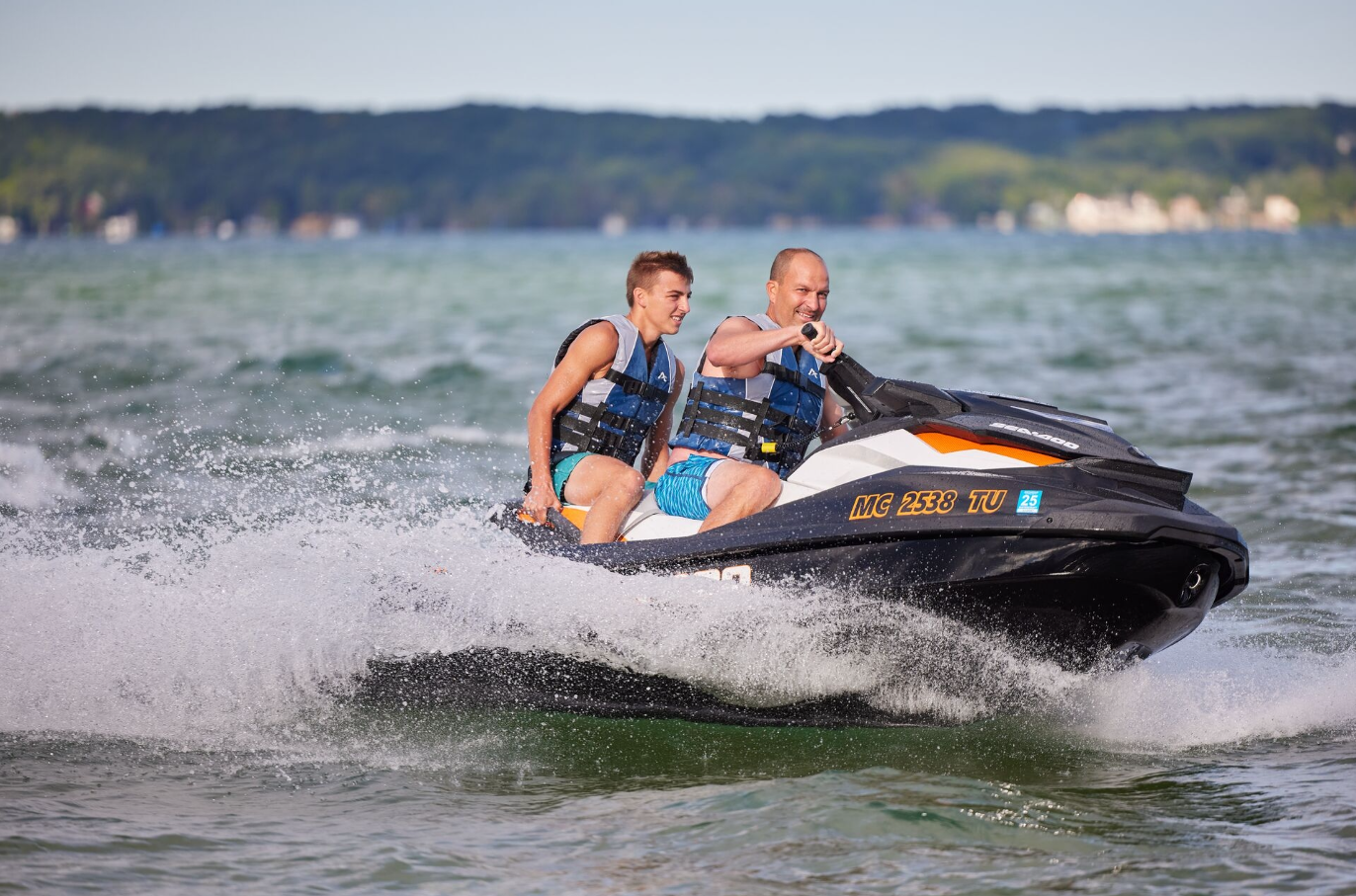
The numbers tell a story nobody posts on their boating highlight reel.
In 2024, jet-propelled and comparable vessels accounted for 3,887 incidents, 2,170 injuries, and $88 million in damage. The leading causes weren’t mechanical failure or freak accidents — they were human ones:
-
Operator inattention — 551 incidents, 42 deaths
-
Improper lookout — 464 incidents, 348 injuries
-
Operator inexperience — 436 incidents, 42 deaths
-
Excessive speed — 299 incidents, 26 deaths
Shallow-water collisions, high-speed instability, and impaired operation all add to the risk. A 2022 New Zealand crash shows exactly what that looks like. A jet boat struck a rocky outcrop at 50 mph. The driver was over the legal BAC limit. There were 23 passengers onboard. The outcome wasn’t a surprise — it was a predictable result of known hazards.
87% of drowning victims weren’t wearing a PFD. Three out of four fatal incidents involved boats where the operator had zero safety training.
These hazards aren’t hidden. You can see them coming.
🔍 Title & Intent Analysis
Search intent isn’t a soft concept. It’s the foundation behind every ranking decision Google makes.
Take a keyword like Jet Propeller boat hazards. The dominant SERP intent here is informational — users want clear, researched answers, not product pages. Top-ranking titles show this right away. They use phrasing like “which can create a hazard,” “dangers of,” or “safety risks explained.”
Here’s what that means in practice:
-
Format: guides and listicles outperform reviews
-
Tone: direct, authoritative, safety-focused
-
Depth: surface-level content doesn’t compete here
Users aren’t browsing casually. They want answers — fast — before something goes wrong.
Content Framework
Good coverage of Jet Propeller boat hazards goes beyond listing dangers. Readers come here for structure. They want to move from confusion to clarity, and fast.
This article is built around five core content pillars:
-
Mechanical hazards — intake risks, steering loss, shallow-water operation
-
Operator behavior — inattention, inexperience, impaired judgment
-
Environmental factors — conditions that amplify risk
-
Safety protocols — what works, what doesn’t, and why it matters
-
Regulatory context — what the law requires and where it falls short
Each pillar ties to a documented cause of a real incident. No filler. No padding.
The structure follows a clear sequence: lead with data, ground it in a real case, explain the mechanism, then give the reader something to act on. That rhythm repeats throughout. It’s by design. People scanning for safety information don’t want to dig for the point. They want it stated plainly and backed up with solid evidence.
Quality markers for every section:
– Original analysis, not repackaged boilerplate
– Specific numbers and sourced incidents over vague claims
– Language written for someone who boats, not someone who studies boats
The goal is a piece that ranks because it deserves to — by being more useful than what’s already out there.
What Makes Jet-Propelled Boats More Dangerous Than Traditional Boats
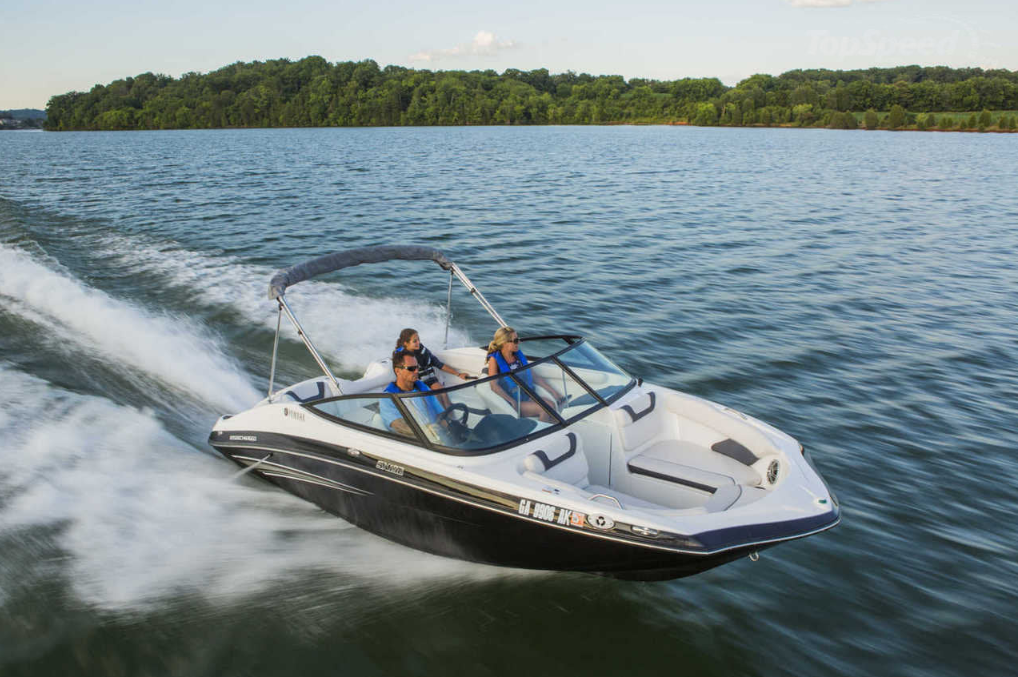
The propeller is gone. That one design change rewires almost everything about how risk works on a jet boat — and most operators don’t figure this out until something goes wrong.
Traditional prop-driven vessels killed or injured people through exposed blades: 28–47 propeller-strike deaths per year in the US, plus an estimated 2,000–3,000 unreported injuries each year. Jet boats removed that specific danger. But the same engineering that solved one problem quietly created several new ones.
Here’s what changes once the propeller disappears:
-
Intake entrapment replaces prop strikes. The jet system pulls thousands of gallons of water per minute through an intake grate. A swimmer near that opening doesn’t get cut — they get sucked in. The result is severe leg and foot injuries, or drowning. The mechanism is different. The outcome is just as serious.
-
Shallow water feels safer than it is. Jet boats can run in under 12 inches of water without grounding. That sounds like freedom. It’s not. There’s no propeller drag to slow forward momentum, so a throttle adjustment produces an immediate 180° pivot. That sudden spin causes collisions that traditional boats simply don’t make.
-
Throttling down is not the same as stopping. Drop to neutral and the boat still carries residual steerable thrust. Operators used to prop-boat behavior expect a full stop and a slow, gradual turn. Instead, the boat keeps moving and snaps through turns fast. At 50+ mph, that gap in expectation becomes a real ejection risk.
Only 19% of fatal incidents involved boats operated by certified captains. The jet-specific handling model does not come naturally. You have to learn it before you need it — not after.
High-Speed Rapid Acceleration as a Primary Hazard
Speed doesn’t just increase risk on a jet propeller boat — it multiplies it.
The physics are unforgiving. A 50% increase in speed doesn’t produce 50% more crash energy. It produces 125% more. That’s not a rounding error. Going from 40 to 60 mph on the water means your boat hits an object with more than double the destructive force. At those numbers, the margin for error drops to zero.
Jet boats accelerate fast — brutally fast. That’s the whole point of the design. But fast acceleration shrinks your reaction time. Your brain can’t process what’s ahead before the boat is already there. Add the jet system’s known steering limitations on top of that, and high speed stops being exciting. It becomes something you can’t control.
The data backs this up. Every extra 10 km/h of speed raises accident risk by 33%. On top of that, 51% of speeding drivers involved in fatal crashes were also unrestrained — a pattern that shows up on water just as much as on roads.
Fast is fun. Fast without skill is a documented hazard.
Foreign Object Ingestion and Shallow Water Operation Risks
The jet intake on a boat doesn’t discriminate. Weeds, rope, gravel, sand, plastic bags — anything floating or suspended near the surface gets pulled in the moment you power through it.
That intake works hard. It moves enormous volumes of water through a narrow grate to build thrust. The grate stops large objects. It doesn’t stop everything.
What gets pulled in and why it matters:
-
Aquatic vegetation wraps around the impeller. Thrust drops. Overheating follows.
-
Sand and grit grind away at internal components like slow sandpaper. The damage builds over time and stays hidden — until it isn’t.
-
Rope and fishing line are the worst offenders. They bind the impeller shaft and kill propulsion on the spot.
-
Plastic debris blocks water flow in patches. That creates uneven pressure and puts stress on the pump housing.
A blocked or damaged impeller doesn’t just slow you down. It kills your steering. On a jet propeller boat, thrust is steering. No thrust means no directional control — at any speed.
Shallow water makes every one of these risks worse.
Running in under 18 inches drags bottom sediment straight into the intake. Sand wears down the impeller fast. The damage doesn’t show up right away — it shows up when the pump quits mid-channel. Rocky shallows add hard debris to the mix. That can crack the impeller housing outright.
The shallow water trap works like this: the boat runs fine until it doesn’t. The wear builds slowly. The failure hits fast.
Slow down before you have to. Check the intake after every run through sketchy water. A three-minute look saves you a tow and a repair bill.
Reduced Directional Control and Limited Reverse Capability
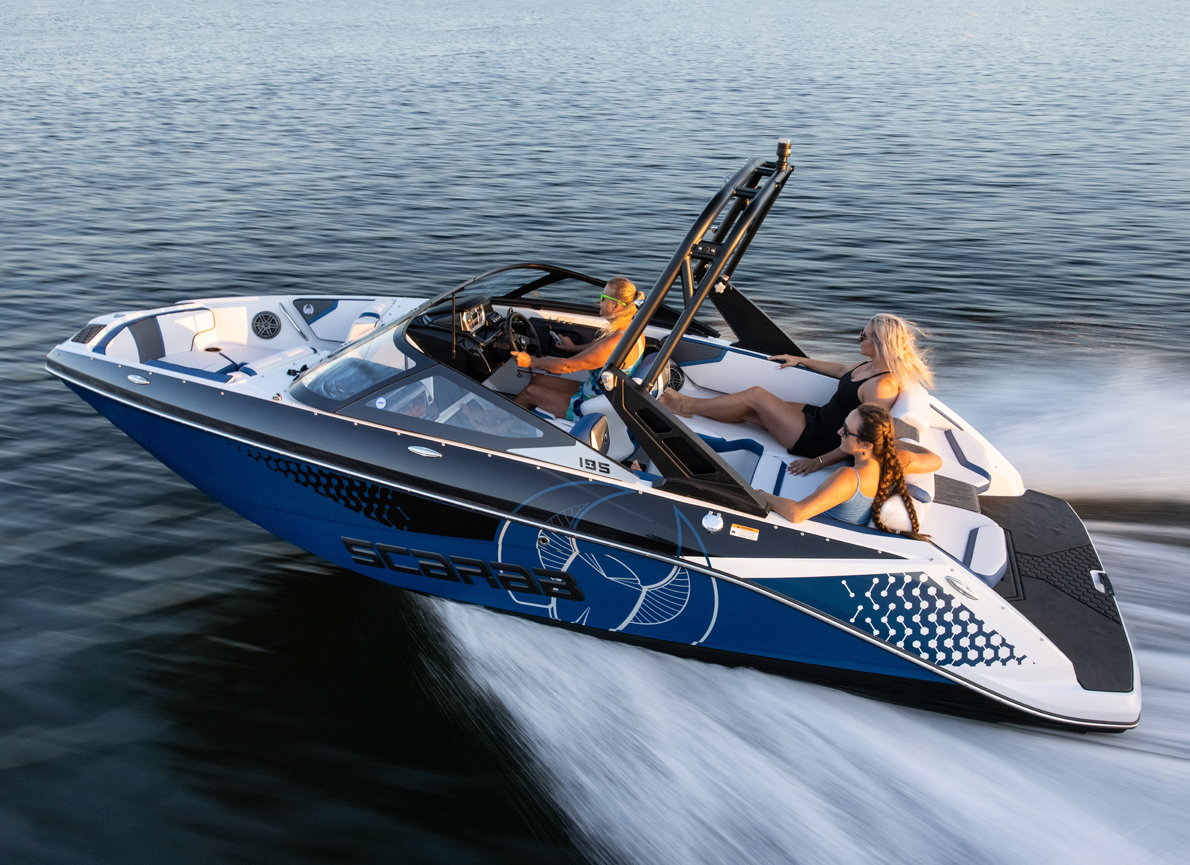
Cut the throttle on a jet boat and you lose steering right when you need it most. That’s not a bug — it’s how the system works.
Traditional prop-driven boats keep rudder control even with the engine at idle. Jet boats don’t work that way. Steering depends on thrust. No water moving through the nozzle means no directional control. No thrust, no turn. Simple — and brutal.
This shows up fast in real situations:
-
Docking approaches get dangerous. Slow down too soon and the helm goes dead. You’re not steering anymore — you’re drifting.
-
Emergency stops don’t stop the boat the way you’d expect. The boat keeps moving forward while steering fades at the same time. You’re locked into whatever direction you were already going.
-
Confined waterways expose this problem the most. Tight channels, marina slips, crowded launch ramps — these spots demand precise low-speed control. That’s where jet propulsion falls shortest.
Then there’s reverse. Most jet boats have it. Most operators expect more from it than it can deliver.
Reverse on a jet system uses a thrust deflector. It redirects water flow — it doesn’t reverse it with any real force. Stopping distances run much longer than on a comparable prop-driven boat. At speed, that’s not a small gap. It’s the difference between stopping clean and hitting something.
Learn this limitation now. Don’t wait for a situation to teach it to you.
Absence of Protective Barriers Around Riders
On a jet propeller boat, there is no cage. No crumple zone. No seatbelt. Just a rider, open water, and whatever the boat decides to do next.
That exposure turns minor incidents into serious ones. Get thrown at high speed — by a sharp turn, a wake hit, or a sudden stop — and nothing stands between you and the water’s surface. At 50 mph, water doesn’t give. It hits like pavement.
This isn’t a design flaw that can be patched. It’s built into the nature of the boat. Enclosed vessels wrap you in a shell. Jet boats don’t. There’s no barrier against ejection forces, flying debris, or collision impact. You’re out in the open, every ride.
What that means in practice:
-
An unexpected pivot throws an unseated rider clear of the boat
-
A rider struck by the hull during re-entry takes blunt trauma with nothing to absorb the hit
-
Nothing blocks a rider from striking a fixed object mid-flight
That’s why 87% of drowning victims weren’t wearing a PFD. The boat won’t protect you. That job falls on you, before you ever leave the dock.
Operator Inexperience and Reckless Behavior
The 2024 data is clear: operator inexperience led to 436 incidents and 42 deaths. That number doesn’t include crashes caused by people who knew better and chose wrong anyway.
There’s a real difference between the two. Inexperienced operators make mistakes while learning — genuine errors, not shortcuts. Reckless behavior is a different problem. It’s a conscious choice to ignore a known risk. Speeding through a no-wake zone. Running a jet propeller boat through crowded swim areas at full throttle. Both are dangerous. The second one is a decision.
What makes this combination so damaging on the water:
-
Inexperienced operators don’t have the muscle memory to handle the jet system’s steering loss at low throttle
-
Reckless operators know the risk is there — and push past it anyway
-
Three out of four fatal incidents involved operators with zero formal safety training
The fix isn’t complicated. It does require commitment before you’re on the water — not after something goes wrong.
Operator Impairment: Alcohol and Drug Use on the Water
A BAC above .10% makes a jet boat operator more than 10 times as likely to die than a sober one. That’s not a warning label. That’s a documented outcome.
Alcohol hits differently on the water. Motion, engine noise, sun, wind, and spray create what researchers call “boater’s hypnosis.” It’s a slow-building fatigue that speeds up impairment far faster than driving does. Four hours on the water produces exhaustion equal to legal intoxication — before a single drink.
The 2020 numbers are clear:
-
Alcohol was the primary factor in 115 boating fatalities
-
It accounted for 34% of fatal accidents involving vessel operation
-
With alcohol as the primary cause, the fatality rate hit 40% — more than triple the 12% rate for every other factor combined
Here’s the part that should bother you most. Impaired operators reported feeling more capable while intoxicated. The instruments told a different story.
Federal law sets the legal limit at .08% BAC. California commercial vessels cap at .04%. Go past either threshold on a jet boat and you’re facing:
-
A $1,000 base fine
-
Up to $5,000 in criminal penalties
-
A federal offense on your record
-
A suspended driver’s license in 13 states — on top of everything else
50% of all boating accidents involve drugs or alcohol. On a machine where steering vanishes the moment you ease off the throttle, that number isn’t just a statistic. It’s the whole story.
Overloading Beyond Maximum Weight Capacity
Every jet propeller boat has a capacity plate. It states a hard number — maximum persons, maximum gear, maximum weight. That number is not a suggestion.
Go past it and the physics change. The center of gravity rises and shifts. At speed, that turns into instability — porpoising, unpredictable swaying, and a hull that stops responding the way it was built to.
Here’s what overloading does:
-
Braking distance increases. More mass means the jet system needs far more distance to slow down. Crash data from overloaded heavy vehicles shows impaired braking in 75.28% of severe-outcome crashes — compared to 60.13% under normal load conditions.
-
Rollover risk climbs. Unbalanced cargo shifts the load mid-turn. On a jet boat moving at speed through a tight arc, that shift happens too fast to correct.
-
Mechanical strain builds up. The pump, the hull, the steering nozzle — all engineered to a specific spec. Push weight past that spec and every component works harder than it was designed to.
The warning signs appear before anything breaks. Sluggish acceleration. A bow that sits lower than usual. Handling that feels loose and slow. Most operators treat these as normal. They’re not. The boat is telling you something is off — before something actually fails.
Find the capacity plate. Read it. Load to it — not past it.
Mechanical Failure: Engine and Steering System Breakdown
Mechanical failure doesn’t announce itself. It waits.
On a jet propeller boat, the engine and steering system are linked in a way traditional prop boats aren’t. One fails, and the other often follows. The jet pump does two jobs at once — it drives the boat forward and controls where it goes. So a partial failure doesn’t just cost you speed. It can take away your steering right when you need it most.
Engine problems tend to get worse fast at speed. Overheating, impeller shaft stress, and pump housing wear all build up under normal use. You won’t notice them at first. Then they hit mid-channel.
What to watch before things break:
-
Unusual vibration through the hull
-
Sluggish throttle response at full power
-
Any steering lag that wasn’t there last week
These aren’t quirks or minor annoyances. The boat is flagging something wrong before it becomes a serious problem. Catch these signs early. A quick check now is far better than losing control on the water.
Inadequate Safety Equipment and Lack of Boating Safety Training
75% of fatal boating incidents involve operators who never took a single safety course. That’s not a gap — it’s a pattern.
On a jet propeller boat, missing gear and missing knowledge make each other worse. The USCG sets a clear minimum for every vessel under 40 feet:
-
One wearable PFD per person
-
A throwable device on boats 16 feet and longer
-
Fire extinguishers rated to your boat’s length
-
Three unexpired visual distress signals for coastal water
-
A working sound device
None of these are optional.
The PFD failure is the most lethal:
-
87% of drowning victims weren’t wearing one — consistent across 2020, 2023, and 2024 data
-
Four out of five drownings happen on vessels under 21 feet — right in the jet boat range
The training picture is just as alarming. NASBLA-approved courses are built for PWC and jet boat operators. They cover lanyards, ejection risk, PFD fit, and no-wake rules — the stuff that keeps you alive in a real situation. BoatUS Foundation offers one free course, online, and approved in most states. There’s no reason to skip it.
Check the equipment before you leave. Train before you need it.
Adverse Weather and Water Conditions
Weather doesn’t care about your plans. On a jet propeller boat, it has more ways to hurt you than most operators expect.
Rough water and poor visibility are obvious threats. The subtler ones are harder to spot. Flooding debris fields, dropping water levels, storm-churned shallows — these don’t look dangerous at first. By the time they do, you’re already in them.
What conditions create real risk:
-
Flooding events push massive debris loads into waterways. Submerged obstacles and floating material get sucked straight into the jet intake. Thrust dies. Steering goes with it.
-
Drought-driven low water pushes jet boats into shallow-water operation they’re not built for. The risks stack up fast — debris ingestion, sudden grounding, impeller damage from sediment contact.
-
High tide flooding is getting worse. US coastal areas now see 5 more flood days per year than in 2000 — a 200% increase. Projections put that number at 55–85 days per year by 2050.
Atmospheric river events hit every hazard at once. Water rises fast. Visibility drops to zero. Debris floats everywhere. Currents turn unpredictable. A jet propeller boat running in those conditions faces mechanical failures and navigation breakdowns at the same time — not one after the other.
Check conditions before you launch. Things shift fast out there — faster than you can react.
How to Prevent Jet Boat Hazards: Practical Safety Measures
Operator error drives over 90% of jet boat accidents. Not mechanical failure. Not freak weather. People — making preventable choices, or stepping onto the water without the knowledge to make good ones.
The same three causes appear again and again across 814 analyzed accidents: inattention (307 operators), inexperience (296 operators), and speed that didn’t match conditions (246 operators). Together, they account for 70% of incidents. Add improper lookout — cited in about one-fifth of all cases — and the picture is clear. These aren’t mysterious problems. They’re fixable ones.
Before you cast off, this list is non-negotiable:
-
Get certified. 75% of fatal accidents involved operators with zero formal safety instruction. Just 15% of deaths occurred on boats where the operator held a nationally-approved certificate. That gap is huge — and it’s yours to close.
-
Wear the life jacket. Drowning accounts for 75% of all boating fatalities. Of drowning victims with reported usage data, 87% had no life jacket on. Make sure it fits right. Make sure it’s fastened tight. Every single time.
-
Know the navigation rules. In 2024, rule violations played a role in 55% of all incidents, 34% of deaths, and 63% of injuries. The most common first event? Collisions and groundings — 56% of incidents, 53% of injuries.
On the water, the discipline that matters most:
-
Keep a real, constant lookout — not a glance, a full lookout
-
Match your speed to actual conditions, not to how calm things look
-
Keep passengers seated and secured during any maneuver — exclusion zones around operating jet boats exist for good reason; 169 propeller-adjacent incidents in 2024 produced 30 deaths and 158 injuries
-
Never operate impaired
One detail that deserves attention: most incidents happen in good visibility, calm water, and light wind. The safest-feeling conditions are exactly where operators go lax. Stick to your protocols. The water doesn’t care how cooperative it looks — complacency still costs lives.
Conclusion
Jet-propelled boats are thrilling because they’re unforgiving. That’s not a contradiction — it’s a warning.
The hazards covered here aren’t freak accidents that happen to other people. They’re predictable. They’re documented. And they’re preventable. Reckless speed, shallow water risks, impaired operators, overloaded hulls — each one has a paper trail of incidents that didn’t need to happen.
Take these points with you:
-
Know your vessel before you open the throttle
-
Respect water conditions — they change faster than you can react
-
Treat boating safety training as required, not optional — it’s not a suggestion buried in a pamphlet no one reads
Before your next run on a jet propeller boat, go through your checklist. Check the weather. Check your equipment. Check yourself.
The water will always be there. Make sure you are too.