
That sickening thunk when your propeller hits a submerged log in Galveston Bay. The vibration that tells you something’s wrong before you even pull the prop for inspection. The gut-wrenching moment when you calculate what a new stainless steel propeller will cost.
Most Houston boat owners miss this: professional boat propeller repair in Houston can restore your prop’s performance for 40-60% less than replacement. Same-day turnaround? Often available.
I’ve analyzed the top propeller repair specialists across the Houston area. Kemah to Clear Lake to the inner loop—I checked their repair capabilities, turnaround times, and real customer outcomes.
Got bent blades from a Harris County lake sandbar collision? Pitch issues killing your fuel economy? Damage from Houston ship channel debris? This guide shows you which repair shops deliver results. You’ll find out which ones get you back on the water fastest. No compromise on quality. No breaking the bank.
Understanding Boat Propeller Damage: When Repair Makes Sense
Not all propeller damage means you need to drop $800+ on a replacement. Here’s what most marine shops won’t tell you upfront: minor to moderate damage on stainless steel and bronze propellers has an 85%+ successful repair rate with certified technicians.
The key word? Minor to moderate.
Surface-level issues repair well. Slight bends in the blade tips. Small dings from gravel or debris. Even pitch problems that kill your fuel economy. These don’t require a new prop—they need precision correction.
But there’s a line you can’t cross.
The Material Math: What’s Worth Repairing
Your propeller material decides if repair makes sense:
Stainless steel props run about 50% of original cost to repair. A $600 stainless prop? Expect $250-300 for professional straightening and balancing. The metal holds its strength well. This makes it easy to restore to factory form.
Bronze and NiBrAl propellers are repair champions. You’ll pay a fraction of replacement cost—often just 30-40%. These materials handle re-pitching up to 3 inches. Technicians can fix cracks, straighten bends, even rebuild missing blade tips to ISO standards.
Sand-cast aluminum sits in the middle zone. Repairs cost one-third to half of new pricing. Less severe damage means a lower bill.
Die-cast aluminum? Skip the repair shop. Go straight to replacement. The casting process creates internal weak points. This makes reliable repairs almost impossible.
Here’s your quick cost filter: If your prop cost under $150 new and repair estimates exceed $75, just replace it. The math doesn’t work in your favor.
The Damage Spectrum: Repairable vs. Replacement Territory
Pull your prop and look close.
Repair makes sense for:
– Blade bends are minor with no metal loss
– Surface scratches or gouges don’t go deep
– Pitch variation affects performance but blades stay solid
– Balance issues cause vibration but no cracks exist
– Hub damage is cosmetic, not structural
You’ll restore factory performance. You’ll maintain proper balance. Your prop’s lifespan extends by years. Plus you’ll save 40-60% versus buying new.
Head straight to replacement for:
– Deep cracks spider across blade surfaces
– Large chunks of metal are missing from blade edges
– Blades are bent beyond 15-20 degrees from centerline
– Multiple blades show severe damage
– Previous repairs weakened the structure
Running a bad damaged prop isn’t just inefficient—it’s dangerous. The vibration hammers your lower unit bearings, transmission gears, and engine mounts. I’ve seen $400 in avoided propeller costs turn into $2,000+ in gearbox repairs.
The Hidden Risk in Bad Repairs
Not all propeller repair shops work at the same level.
Poor repairs create problems you won’t notice right away. Weak weld spots that crack under load. Thin spots from too much grinding. Wrong pitch that kills your top speed while burning extra fuel.
Professional shops use Prop CAD scanning technology to map your propeller’s geometry within 0.001 inches. They run MRI-style diagnostics to find internal stress fractures you can’t see. NDT dye penetrant testing reveals hairline cracks before they spread.
The assessment process matters:
-
Complete prop removal and cleaning
-
Scan against manufacturer specs
-
Visual check combined with technical measurements
-
Non-destructive testing for hidden problems
-
Shaft and coupling runout checks (bent shafts cause “propeller” vibration)
Sea trial data before and after repair proves the work quality. You should see restored RPM performance, zero vibration, and fuel use back to normal.
Can You DIY Minor Damage?
Maybe. But not the way you’re thinking.
Very minor blade bends—we’re talking 5 degrees or less—can handle careful at-home straightening. Use two adjustable wrenches: one on the bent area, one on an undamaged section for leverage. Use minimal force. Stop if you feel resistance.
That’s it. That’s your DIY limit.
Anything beyond surface bending needs professional gear. Pitch adjustment requires special jigs. Balancing demands computerized analysis. Welding aluminum or stainless requires specific alloys and controlled heat to prevent brittleness.
I’ve seen DIY repairs that looked acceptable create bad vibration issues. The blade angles were off by fractions of a degree—you can’t see it, but it’s terrible for your lower unit bearings.
Bottom line: Minor cosmetic fixes at home, everything else to certified technicians with proper diagnostic equipment.
The repair-versus-replace choice comes down to damage severity, material type, and cost math. Get a professional assessment before assuming you need a new prop. Houston’s top shops offer free inspections that give you the real answer—not just the profitable one.
Top 3 Boat Propeller Repair Specialists in Houston
Houston’s marine repair scene has three standouts that deliver results for damaged propellers. I’m ranking these based on repair capacity, technical skill, and proven track record—not paid placements or ads.
1. Baumann Propellers – The Four-Generation Standard
2311 SSGT Macario Garcia Dr., Houston, TX 77011
Phone: 713-926-6908 | Toll Free: 888-359-PROP (7767)
Hours: Monday-Friday, 8:00 AM – 5:00 PM
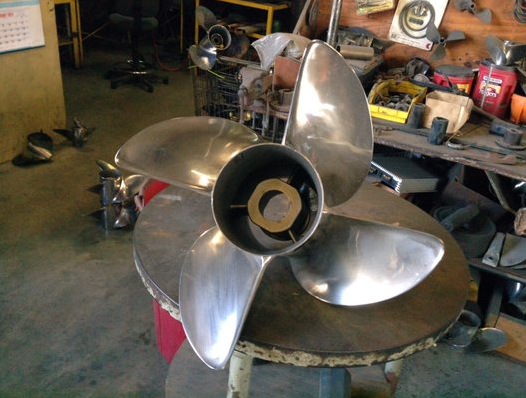
Sixty-six years in business tells you something competitors can’t fake: staying power through quality work.
Baumann Propellers started in 1958 under Louis P. Baumann. Four generations later—Louis J., Scott A., and now Cory L. Baumann—the family still runs the operation. This isn’t a corporate chain learning the Gulf Coast marine environment from a manual. These technicians grew up here. They know how Houston ship channel debris damages props different from Galveston Bay sandbars.
Their facility handles every propeller size—from 13-inch bass boat props to massive commercial vessel screws. The equipment investment alone separates them from smaller shops. They service the entire Gulf Coast region. This means they’ve seen damage patterns from saltwater corrosion, fishing line fouling, and underwater structure impacts that inland shops never see.
The experience depth matters most during tough repairs. Stainless steel propeller repair needing precision welding and heat treatment? They’ve done thousands. propeller pitch adjustment that restores your cruise RPM sweet spot? Standard procedure. Propeller balancing service using computerized analysis? Every repair includes it.
Walk in with a mangled prop on Monday morning. You’ll get same-week turnaround unless you’ve got severe structural damage needing complete rebuild work.
2. Mike Hood’s Marine Propellers – Maximum Capacity Specialist
6907 Telephone Rd., Houston, TX 77087
Phone: 713-649-7508 | Email: [email protected]
Mike Hood’s shop holds one capability no other Houston facility matches: propeller repairs up to 100-inch diameter.
That repair ceiling matters if you run larger sportfishing boats, commercial vessels, or performance cruisers. Most shops max out around 36-48 inches. Hood’s equipment and know-how extend well beyond recreational boating into commercial marine territory.
The inventory deserves attention too. They stock Houston’s largest selection of inboard and outboard propellers across all major makers. Need a replacement prop while yours gets repaired? They’ve got your exact model on the shelf. This cuts out the 3-5 day shipping delay that kills your weekend plans.
Their service range covers the full range: aluminum prop repair, stainless steel propeller repair, bronze reconditioning, plus lower unit welding and skeg replacement for prop damage that came with gearcase trauma. They’ll even make custom 3-blade and 4-blade stainless steel propellers if your performance needs beat stock options.
Overnight UPS shipping extends their service radius beyond Houston. Boat owners from Louisiana to the Panhandle send props to Hood’s shop for repair work their local shops can’t handle.
Response time runs fast here. Call before 10 AM with a straightforward aluminum or stainless steel repair. You might get same-day completion on simple blade straightening jobs.
3. Texas Prop Shop – The Performance Specialists
Location: Houston, TX (call for exact address)
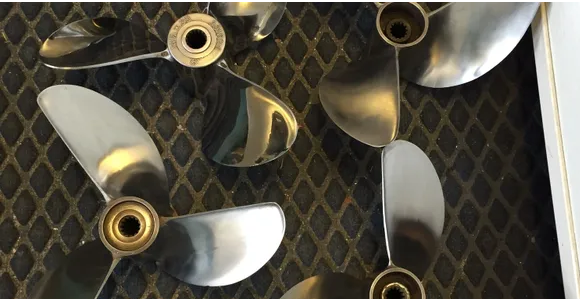
Texas Prop Shop built its reputation on propeller-focused know-how rather than being a general marine repair facility that handles props as a side service.
The focus shows in their turnaround promises. They prioritize quick service without cutting corners on repair quality. Most jobs complete within 24-48 hours unless you need extensive welding rebuild or custom work.
Their technician training centers on marine propeller reconditioning and boat performance optimization. This means they’re looking at not just the physical damage, but how your current prop setup affects boat handling, fuel use, and top-speed performance. Many customers find their “damaged” prop had incorrect pitch specs from the factory—something general mechanics miss.
Pontoon boat owners value their experience. Pontoon props face unique challenges from shallow-water grounding and weed fouling. Texas Prop Shop knows the repair techniques that work for pontoon applications versus deep-V hull setups.
Quality control runs tight here. Every repair includes post-service testing and documentation showing your prop meets or beats original maker specs.
Honorable mention: Coastal Propeller Service brings 50+ years of experience to the Houston market with a 90-day workmanship warranty and free damage estimates. Their half-century track record and warranty make them worth contacting for quote comparison, more so if the top three shops have scheduling backlogs during peak boating season.
The right choice among these specialists depends on your damage type, propeller size, and timeline. Call all three for estimates. Compare not just pricing, but how thorough the diagnosis is and how they explain repair methods. The shop that takes time explaining what they’ll do—and why—delivers the best long-term results.
Propeller Repair Process: What to Expect in Houston
Professional propeller repair follows a tested workflow. Bent, damaged blades get transformed back into high-performance parts. Houston’s certified shops use the same multi-step process. Doesn’t matter if you’re dropping off an aluminum fishing prop or a premium stainless steel performance screw.
Step 1: Intake and Damage Assessment
You hand over your prop at the service desk. The technician tags it with your name, contact details, and a tracking number. This tag stays with your propeller at every station.
Outboard propellers (under 13 inches) get desk quotes right away. The technician looks at visible damage and gives you pricing on the spot. Simple blade straightening? You’ll know the cost in five minutes.
Larger inboard propellers need deeper analysis. Shops mark these as “check and advise” jobs. The technician waits on pricing. They need to finish full diagnostic testing first.
Step 2: Deep Cleaning and Hidden Damage Detection
Your prop goes straight to the cleaning station. Glass bead blasting strips away paint, marine growth, grease, and rust. This shows cracks and stress breaks hidden under surface coatings.
The technician checks again after cleaning. Hairline cracks show up. Thin blade sections appear. Hub damage near the bore gets clear. Large cracks? Too much missing metal? Severe bends near the hub? They call you before starting any work.
Step 3: Precision Measurement and Diagnosis
Clean props move to the measurement station. Technicians use Hale MRI digital pitchometers to map blade shape. These tools measure within thousandths of an inch. They check:
-
Current pitch against maker specs
-
Rake angles on each blade
-
Blade tracking (do all blades follow the same path)
-
Balance points that affect vibration
Large inboard props get full diagnostic reports. The shop calls with findings, suggested repairs, and final pricing. You approve the work before they start. You get a copy of the MRI measurement report once the job finishes.
Step 4: Welding and Metal Restoration
Cracks get welded using matching filler material. Missing blade tips get rebuilt. The technician adds metal, then hand-grinds the weld smooth. This brings it back to original blade thickness and shape.
This step separates pros from amateurs. Poor welding creates weak spots. Too much grinding thins the blade. Houston’s top shops use certified welders. These welders know marine propeller metals.
Step 5: Reshaping to Factory Specs
Your prop mounts on a factory pitch block. This tool holds the hub while letting the technician adjust blades. The setup corrects:
-
Pitch variation (brings all blades to the same angle)
-
Rake angles (brings back the maker’s designed blade lean)
-
Blade tracking (makes each blade follow the same rotation path)
They don’t eyeball this. Every measurement matches the original maker specs from diagnosis.
Step 6: Balancing for Smooth Performance
Unbalanced props wreck lower unit bearings. Even small weight gaps between blades create harsh vibration at high RPM.
Technicians find the heavy blade. They remove tiny amounts of material from the back surface. All blades end up weighing the same. Computer balancing gear confirms the prop spins true without wobble.
Step 7: Finishing and Protection
Aluminum propellers get primer and marine-grade paint in your chosen color. The coating stops saltwater corrosion.
Stainless steel and NiBrAl props get hand-polished or matte finishes based on what you want. No paint needed. These materials fight off corrosion on their own.
Step 8: Final Quality Control and Customer Notification
The shop inspector runs through a checklist. Welds solid? Pitch measurements on-spec? Balance verified? Finish quality good? Front desk staff review the finished work order.
You get the call. Your prop’s ready. Payment happens at pickup. Or they ship if you’re outside Houston.
Typical turnaround: 24-48 hours for basic aluminum prop repair or stainless steel propeller repair. Complex welding or full marine propeller reconditioning takes 3-5 business days. Call ahead during spring and summer busy seasons. Backlogs can add wait time.
This standard process gives you steady results. You’re not taking chances on repair quality. You get factory-spec work that brings your damaged prop back to original performance.
Key Factors: Picking Your Houston Propeller Repair Shop
Five factors separate amateur shops from certified specialists who restore performance.
Technical Certification and Equipment Investment
Ask about certifications before you hand over your prop. Hale MRI pitchometer systems cost $15,000-25,000. Shops that own this gear mean business. They match factory specs within 0.001 inches—no guessing.
Look for technicians trained in marine-specific welding. AWS (American Welding Society) certification for aluminum and stainless steel matters. General welders create weak spots. Marine-certified welders know metallurgy for saltwater use.
Clear Diagnostic Process
Top Houston shops complete full diagnostics before quoting final pricing. Red flag: instant quotes without proper inspection.
Professional assessment includes:
– Glass bead cleaning to reveal hidden damage
– Digital pitch measurement across all blades
– Balance analysis using computer equipment
– Non-destructive testing for internal cracks
– Hub and bore inspection for structural integrity
You should get measurement reports showing before-and-after data. No reports? They skipped key steps.
Material-Specific Know-How
Not all shops handle all propeller types well. Stainless steel propeller repair needs different techniques than aluminum prop repair. Bronze and NiBrAl work needs special knowledge.
Ask direct questions:
– “How many stainless props do you repair monthly?”
– “Do you rebuild blade tips or just straighten existing metal?”
– “What’s your success rate on this damage type?”
Vague answers mean limited know-how. Specific numbers and detailed answers signal expertise.
Turnaround Time Without Quality Loss
Fast service means nothing if the repair fails after three trips. Quality shops balance speed with solid work.
Standard timelines:
– Simple blade straightening: 24-48 hours
– Propeller welding repair: 3-5 business days
– Complex marine propeller reconditioning: 5-7 business days
Rush fees for same-day service? Sometimes worth it. But don’t let urgency push you toward shops that skip balancing or proper heat treatment.
Warranty Coverage and Backing
Houston’s top facilities stand behind their work. 90-day workmanship warranties protect against repair failures. Shops confident in their process offer guarantees with no hesitation.
Get warranty terms in writing. What’s covered? What voids it? How do they handle re-repairs?
No warranty offered? Walk away. The shop doesn’t trust its own work—why should you?
Propeller Repair vs. Replacement: Cost-Benefit Analysis
The numbers don’t lie—repair costs vary based on the metal spinning behind your boat.
Aluminum props run $100-150 for professional repair work. New ones? $250-350. That math puts repair and replacement close to equal. Replacement can win when you add in labor time and warranty coverage on new parts.
Stainless steel changes everything. Repair bills land between $200-400. New stainless props? $400-700 for standard models. You pocket $200-500 in savings. High-performance stainless models push past $900 new—repair makes sense if the bill stays under 40-50% of replacement cost.
Duo-props (the counter-rotating setups on performance boats) cost $230-280 per propeller for repair. You’ve got two props to fix. That’s $460-560 total before you’re back on the water.
Here’s the cost multiplier Houston shops don’t advertise upfront: inboard stainless steel props carry a 50% surcharge over outboard pricing. Four-blade configurations? Add another 70% to the base repair cost. Your $250 outboard repair quote becomes $425 for an inboard 4-blade setup.
The 40-50% Rule and Age-Adjusted Thresholds
Smart boat owners use percentage math, not emotion, to decide.
Standard rule: Repair if the cost stays under 40-50% of new replacement within the first year. Cross that line? Buy new.
But props age like everything mechanical. The threshold drops:
-
6-8 years old: Repair makes sense under 30% of replacement cost
-
Over 8 years: Drop to 20% threshold before pulling the trigger on repair
Real example: You’ve got a 6-year-old stainless prop. Repair quote comes back at $280. New replacement costs $650. That’s 43% of replacement cost. Standard rule says repair. Age-adjusted threshold at 30% says replace. The prop has lived most of its useful life. Spending 43% to extend it another season or two doesn’t beat the value of 8+ years from a new prop.
Real Houston Boat Owner Decisions
Mike’s fishing boat scenario: Bent aluminum prop from Lake Conroe sandbar. Repair quote covered straightening, minor welding, and balancing—$145 total. Replacement cost $280. He repaired and got 3-4 more seasons. Saved $135 upfront. Plus, he avoided emergency replacement costs during peak fishing season.
Her sailboat case: Stainless steel prop with hub separation damage. Repair quoted at $485. New replacement ranged $650-720. That’s 75% of replacement cost—a “replace it” situation. But the prop was just 2 years old. She repaired to preserve the remaining useful life on fairly new metal.
Carlos and the duo-prop dilemma: His performance boat needed both props serviced. Total repair bill: $680. New replacement set: $890. He was at 76% of replacement cost. He chose new props. Not for the $210 difference, but because he wanted guaranteed performance for tournament fishing. No risk of repair failures mid-season.
Tom’s pragmatic math: Basic aluminum repair quoted $165. New prop $210. Just $45 separates the options. He replaced. The warranty and reliability beat squeezing extra life from damaged metal for minimal savings.
Long-Term Cost Projections
Run the numbers past the initial transaction.
Repair path: $165 repair cost + $40/year maintenance over 3 years = $285 total. If that repair fails and needs work again, add another $140 for re-repair. Total: $425 over 3 years.
Replacement path: $320 new prop + $30/year maintenance over 8-year lifespan = $560 total. You get $275 in initial savings by repairing. But the new prop delivers 5 extra years of service and lower annual maintenance costs.
That’s the hidden value: new props reduce your annual operating costs while extending the replacement cycle.
Special Considerations for Specialized Props
Extra service charges add up fast:
– Welding repairs: $5-50 depending on damage severity
– Pitch or cupping changes: $70 flat
Die-cast aluminum props: Skip the repair shop. Internal casting weaknesses make reliable repairs near impossible. These props go straight to replacement—no gray area.
Sand-cast aluminum: Repair costs run one-third to half of new pricing. These respond well to professional reconditioning work.
High-end commercial props flip the equation. Reconditioning a $20,000 commercial prop might cost $2,000. That’s 90% savings versus new. The repair-versus-replace math favors repair at this price point. Damage severity must allow for it.
Bottom line: Calculate the percentage, factor in age, then run the long-term cost projection. Emotional attachment to your current prop costs money. Cold math saves it.
Houston Boating Conditions: Propeller Damage Prevention
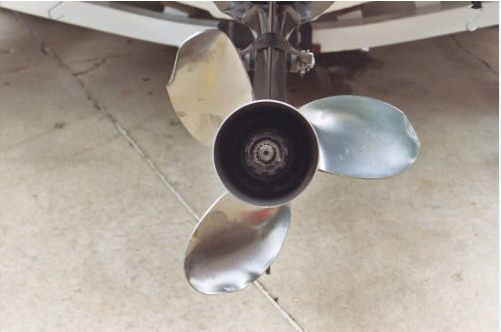
Houston’s waterways create perfect conditions for propeller damage. Galveston Bay has shallow flats. Lake Conroe hides submerged timber. The Houston Ship Channel collects debris. Each spot damages props differently.
Houston boaters face serious risks. Texas recorded 12 propeller strike incidents in 2024—9 injuries and 3 deaths. That ranks third among all boating accident types statewide. Your prop doesn’t just affect performance. It affects safety.
Here’s what matters most: most propeller damage can be prevented.
Know Your Water Depth—Always
Shallow-water grounding destroys more props in Houston than anything else. Galveston Bay’s sandbars shift after every storm. That channel you ran last month? It’s two feet shallower today.
Run these depth checks every trip:
– Check tide charts before launching—Houston area tides swing 1-3 feet
– Keep your depth finder running in new water
– Mark known hazards on your GPS after every trip
– Slow to idle speed crossing flats or approaching shore
– Trim your engine up in water under 4 feet deep
Lake Conroe and Lake Houston hide submerged timber from old forests. These obstacles sit just below the surface during low water. You won’t see them until impact.
Debris Field Awareness in High-Traffic Zones
The Houston Ship Channel and Clear Lake see non-stop commercial traffic. Pallets, shipping containers, and construction material end up in the water. Floating logs drift in from the San Jacinto River after heavy rain.
Scan ahead in these areas:
– Watch for floating debris 50-100 yards ahead
– Slow down in murky water—you can’t see what’s below
– Avoid running near storm drains after rainfall
– Stay clear of industrial docks and loading zones
– Never follow another boat’s wake through new water
A 1997 Texas lakes study found 13 propeller injuries at hospitals near Houston—only 1 got reported. That’s 92% underreporting. The real damage numbers exceed what anyone tracks.
Maintenance Checks That Stop Damage Before It Starts
Worn hub parts cause prop slippage. That slippage lets the prop spin loose against objects. Your lower unit takes the impact force instead.
Check these each month:
– Check for fishing line wrapped around the prop shaft
– Look for small blade nicks that grow into cracks
– Test hub engagement—should feel solid, no play
– Inspect the prop nut and cotter pin for tightness
– Verify your anode isn’t fully eroded
Saltwater corrosion weakens blade strength in Galveston Bay and Kemah. Fresh water from Lake Livingston creates different problems—algae buildup and mineral deposits. Both need regular cleaning.
Speed Control in Unknown Territory
Too much speed ranks fourth among Texas boating accident causes. You can’t react fast enough to avoid hazards at full throttle in tight channels.
Texas data shows operator distraction and poor lookout lead all incident factors. Translation: going too fast while not paying attention wrecks props and kills people.
Cut your speed by 50%:
– Running new water for the first time
– Visibility drops below 100 yards
– Other boats kick up mud (signals shallow bottom)
– You’re within 200 feet of shore or structure
– Water color changes (depth variation sign)
Your insurance won’t cover prop damage from operator error. Neither will your boat warranty. Prevention costs nothing. Replacement averages $400-700 for stainless steel props.
The 600,000 motorboats on Texas waters compete for space. Houston’s popular launch ramps get crowded on weekends. This creates collision risks. Other boats throw wakes that push you into shallow water. Mistakes multiply on crowded waterways.
Run defensive. Assume every other boater might make a mistake. Give yourself reaction time and room to move. Your propeller—and your passengers—will thank you.
Emergency Propeller Repair: Same-Day Service Options in Houston
Your hub just failed two hours before that fishing tournament. Or worse—clients arrive tomorrow for a charter trip and your prop’s bent beyond safe use.
Baumann Propellers handles most hub replacements while you wait. Their emergency service runs Monday through Friday, 8 AM to 5 PM. You’ll find them at their Houston facility on SSGT Macario Garcia Drive.
Here’s what same-day service means at Baumann:
Hub replacement gets priority treatment. Walk in during business hours with a standard outboard prop. The technician pulls your damaged hub. Then installs a new one. Runs static balancing to zero tolerance. You’re back on the water in hours, not days.
Standard blade repairs follow their full process. This includes pitch measurement, welding, grinding, cupping adjustment, and final balance check. These jobs complete same-day when their workload allows. Call ahead at 713-926-6908 before 9 AM. Ask about current turnaround time. Don’t assume they can fit you in.
The catch? No weekend or after-hours emergency service. Business hours are your window. Your prop fails Saturday afternoon? You’re waiting until Monday morning.
What Emergency Service Covers
Baumann’s emergency capability centers on outboard propellers and marine applications. They’ve spent 66 years servicing Houston’s commercial fishing fleet, tugboats, and yachts. Marine work comes before recreational.
The zero-tolerance balancing standard applies to every emergency repair. No shortcuts. Your prop gets measured using their own pitch gauges—built in-house over decades. They restore original diameter unless you ask for something different. Cupping gets reset to OEM specs or your custom preference.
Contact the right person for faster response:
– Outboard props: Kristen Gillis ([email protected])
– Commercial/yacht props: Cory Baumann ([email protected])
Upload damage photos through their online quote form before arriving. This qualifies your repair ahead of time. Speeds up intake at the door.
Critical limitation: Baumann’s published hours show Monday-Friday operation. Need true 24/7 marine emergency help outside business hours? You’ll need backup options. Look for mobile marine repair services that work weekends.
Customer Reviews Decoded: What Houston Boaters Say
Real customer feedback shows the difference. Good propeller repair shops protect your boat and budget. Bad ones drain both.
The honest truth: Houston’s marine service market has solid specialists and sketchy operators. Reviews reveal which is which—if you know how to read them.
The Red Flags Houston Boaters Report
One Houston-area jet ski rental operation shows the warning signs. Every boat owner should watch for these. TripAdvisor lists 26 reviews averaging 3.4 stars—that split rating tells the story.
57% rated it Excellent. The other 38% called it Terrible. Nothing in between. That’s your first red flag. Extreme splits mean inconsistent service quality.
The terrible reviews reveal patterns:
Location red flags appeared often. Multiple customers booked online. Then they discovered the “shop” operated from a motel parking lot. Others found an office building address nowhere near water. One boater called it a “fishy one-man operation.”
Good propeller repair shops don’t hide their locations. They own dedicated facilities. They show you their equipment. Baumann Propellers has operated from the same Houston address since 1958. Mike Hood’s runs from a permanent Telephone Road facility. These aren’t office buildings or parking lots.
Financial complaints dominated negative feedback. Unauthorized charges hit credit cards after service. One customer paid $100 online. Right away, they got called claiming the business “closed at 2 PM.” Then they watched $200 extra disappear as an unauthorized deposit. Total loss: $350. Zero response to refund requests.
The fraud pattern is simple. Charge upfront. Deliver nothing. Ignore complaints.
No-show issues appeared across multiple reviews. Customers completed online waivers. They drove to meet locations. Nobody showed up. Calls went to voicemail. Parking lots sat empty.
Houston’s established propeller shops don’t operate this way. They answer phones during business hours. They maintain physical shops with posted hours. They don’t collect payment before you see the damage or get a real diagnosis.
What Legitimate Positive Reviews Say
The excellent reviews from the same operation mentioned “great prices, great service, super fast jet skis.” These came from single-visit customers rating the rental experience. Not ongoing service relationships. Not repair quality.
Here’s what matters: One-time positive experiences don’t predict repair shop reliability. You need reviews showing:
-
Multiple visits over months or years
-
Specific repair outcomes described
-
Before/after performance comparisons
-
Warranty follow-through on problems
-
Communication quality during diagnosis
The Houston boating community runs small. Solid repair shops build reputations through repeat business. Fishing guides come back. Charter operators come back. Weekend warriors come back season after season.
The Real Cost of Choosing Wrong
Texas boat owners face brutal service economics in 2026. Marine center labor rates hit $180/hour. Typical repairs take 3-5 days. Service queues stretch for weeks. One Houston area boater reported a 9-week wait for throttle work.
300-horsepower outboard repairs on 2-year-old boats run $8,000 in parts and labor. Warranty denials for corrosion or maintenance issues leave owners stuck with full bills.
Monthly boat ownership extras average $300. That’s for insurance, storage, and maintenance before you add repair costs.
Choose the wrong propeller repair shop? You’re paying twice. Once for the bad repair. Again for the real fix.
One Texas cruiser owner bought at $95,000. After $22,000 in repairs over two years, the trade-in offer came back at $40,000. That’s a 58% value loss. Poor service choices sped up the drop.
Questions That Expose Shop Quality
Ask these before handing over your prop:
“How long have you operated from this specific location?” Legitimate shops give you exact years at their current address. Vague answers signal instability. So do frequent moves.
“What diagnostic equipment do you use for pitch measurement?” Professional shops name specific tools. Hale MRI pitchometers. Computerized balancing systems. Generic “we check everything” responses mean eyeball guessing.
“Can I see examples of similar repairs you’ve completed?” Quality shops show you photo documentation. They walk you through their process. They explain what they’ll do and why.
“What’s your warranty on this specific repair type?” Shops confident in their work offer written warranties. Usually 90 days minimum. No warranty means they don’t trust their own repairs.
Houston’s propeller repair market rewards careful vetting. The price difference between shops seldom exceeds $50-100. The quality difference determines whether your prop performs for years or fails in weeks.
Common Questions: Houston Boat Propeller Repair
Boat owners ask the same questions before committing to propeller repair. These answers cut through the marketing noise. You get the real information you need to make smart decisions.
How much does boat propeller repair cost in Houston compared to buying new?
Repair saves you 50-75% versus buying new across most propeller types.
Aluminum props: Repair costs $100-150. New ones run $250-350. You pocket $100-200 in savings.
Stainless steel props: Professional repair ranges $200-400. New stainless costs $400-900. Performance level affects the price. You keep $200-500 in your account.
Special repairs: Welding work adds $5-50 to your base repair cost. Pitch or cupping adjustments add a flat $70 charge.
The cost gap widens for high-performance or commercial propellers. A $20,000 commercial prop might cost $2,000 to recondition. That’s 90% savings.
How long does propeller repair take in Houston?
Texas Prop Shop completes repairs in 5-7 days from receipt. This includes full reconditioning, balancing, and finishing work.
Standard turnaround across Houston facilities:
– Simple blade straightening: 24-48 hours
– Welding repairs: 3-5 business days
– Complex reconditioning: 5-7 business days
Baumann Propellers offers same-day service for hub replacements. Business hours are Monday-Friday, 8 AM-5 PM. Walk in before 9 AM with a standard outboard prop. You might leave the same day.
Spring and summer create backlogs. Call ahead during peak boating season. Wait times can extend 3-5 days beyond normal schedules.
What types of propellers can Houston shops repair?
Houston’s certified facilities handle every common propeller material.
Metals serviced:
– Aluminum (sand-cast and die-cast)
– Stainless steel
– Bronze
– Nibral (nickel-bronze-aluminum alloy)
Types repaired:
– 3-blade propellers
– 4-blade propellers
– Duo-prop systems (counter-rotating)
– Outboard props (13 inches to 36+ inches)
– Inboard props (up to 100-inch diameter at Mike Hood’s Marine)
Uses covered:
– Recreational boats
– Commercial fishing vessels
– Tugboats and offshore vessels
– High-performance yachts
– Pontoon boats
Die-cast aluminum is the exception. Internal casting weaknesses make reliable repairs almost impossible. These props need replacement.
Do Houston repair shops ship nationwide or require drop-off?
Both major Houston facilities accept shipped propellers from across the country.
Texas Prop Shop (Montgomery, TX):
– Ships via UPS ground service
– Shipping cost included in repair pricing
– Call (936) 247-3500 to arrange service
– Email photos to [email protected] for first assessment
Baumann Propellers (Houston):
– Accepts nationwide shipping
– Primary market: Houston and Gulf Coast region
– Upload damage photos through online quote form before shipping
– Toll-free: 888-359-PROP (7767)
Local drop-off: Texas Prop Shop requires appointment scheduling. Don’t show up unannounced. Call first to arrange drop-off time.
Shipping cuts out the 3-5 day delay of ordering parts from distant suppliers. You get your repaired prop back faster than waiting for replacement parts.
What repair standards and equipment do professional shops use?
Baumann Propellers uses the Hale MRI (Measurement Recording Instrument) system. This is the most advanced propeller measurement tool available. This equipment maps blade geometry within 0.001 inches.
Texas Prop Shop restores all propellers to original maker specs using factory pitch blocks. Every repair gets checked on pitch and rake indicators before leaving the shop.
Welding standards: TIG welding only. No brazing rods. This creates maximum strength welds. They match base metal properties.
Balancing: Computer balancing confirms zero-tolerance rotation. Unbalanced props destroy lower unit bearings. Professionals won’t skip this step.
Finishing quality:
– Stainless steel: High-polish finish using vibratory finishers (no extra charge)
– Aluminum: Marine-grade paint in black or white
– All props: Polished and ready for installation
Both facilities complete all work in-house. No outsourcing to unknown third parties. No quality control gaps.
Should I repair or replace my damaged propeller?
Contact a repair facility for assessment before deciding. Technicians look at damage extent, cost comparison, and expected performance results.
Repair makes sense:
– Damage is minor to moderate (small bends, surface dings, pitch issues)
– Repair cost stays under 40-50% of new propeller price
– Propeller is less than 6 years old
– Material is stainless steel, bronze, or Nibral
– You need quick turnaround to get back on water
Replace instead of repairing:
– Deep cracks spider across blade surfaces
– Large chunks of metal are missing
– Multiple blades show severe damage
– Propeller age exceeds 8 years
– Repair cost exceeds 50% of replacement (or 30% for props over 6 years old)
– Material is die-cast aluminum
The age-adjusted threshold matters. A 6-year-old prop should cost under 30% of replacement to justify repair. Over 8 years? Drop to 20% threshold.
Can Houston shops find hard-to-find replacement propellers?
Texas Prop Shop keeps a changing stock of reconditioned propellers for quick sale. They’ll also search for discontinued or hard-to-find models upon request.
Mike Hood’s Marine Propellers stocks Houston’s largest selection of inboard and outboard propellers across all major makers. Need a replacement while yours gets repaired? They probably have your exact model on the shelf.
This cuts out the 3-5 day shipping delay that kills weekend boating plans. You get back on the water faster.
Do repairs come with warranties?
Baumann Propellers and established Houston facilities offer 90-day workmanship warranties on completed repairs. This covers repair failures from technician error or faulty work.
Warranty doesn’t cover:
– New damage from later impacts
– Corrosion from lack of maintenance
– Hub failures from wrong installation
– Performance issues not related to repair work
Get warranty terms in writing before authorizing work. Know what’s covered and what voids protection.
Shops that refuse warranty guarantees don’t trust their own repairs. That’s your signal to walk away.
Conclusion
Your boat deserves better than downtime and costly replacements. Houston’s marine community gets access to top-tier boat propeller repair Houston services. These get you back on the water fast—without draining your wallet.
Here’s what matters: pick a repair shop with certified technicians. Look for clear pricing. Check their track record with stainless steel propeller repair and aluminum work. VIF Propellers delivers all this. They offer same-day service and repairs that cost 40-60% less than buying new.
Stop letting a damaged prop keep you off Lake Conroe or Galveston Bay. Top repair shops offer free inspections and honest reviews. They’ll tell you straight—repair or replacement—what makes sense for your situation.
Your next move? Call for that free inspection today. Houston’s boating season is in full swing. No reason to wait. Get an expert check, a clear quote, and pro service that brings back your boat’s performance. Your propeller—and your budget—will thank you.
A well-repaired propeller performs just as well as new. That’s not marketing talk. That’s marine engineering fact.