
You’re staring at two bottles on the shelf. One says ‘2-cycle oil,’ the other says ‘2-stroke oil.’ Are they the same thing? Yes, they are. But for your Boat Engine, that’s only part of what you need to know. At VIF, we’ve seen what happens when boat owners stop reading at that ‘yes.’ We’ve shipped replacement propellers to customers whose engines failed not from impact damage, but from the slow, cumulative effects of wrong oil choices. This guide is built from those hard-learned lessons.
Marine use adds real complexity. You’ll need to think about:
-
TC-W3 certification
-
Ashless formulas
-
Pre-mix vs. injection systems
-
Water-cooled vs. air-cooled designs
These factors turn a simple naming question into a real buying decision. Pick the right oil, and your outboard runs clean for years. Pick the wrong one, and you’re dealing with fouled pistons, a voided warranty, and a costly repair bill before the season ends.
Why the Label Doesn’t Tell You Enough
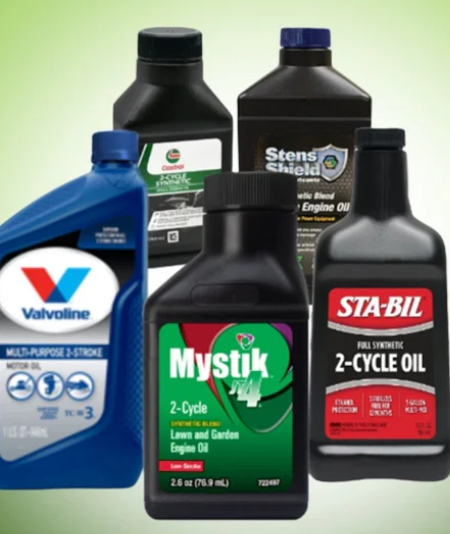
Pick up a bottle marked “2-cycle oil” at a hardware store. That product is formulated for air-cooled equipment — chainsaws, trimmers, backpack blowers. It meets JASO or API TC specs. It uses low-ash detergent chemistry built to handle the high cylinder temperatures those engines produce.
That’s a completely different product from NMMA-certified TC-W3 marine engine oil. TC-W3 is ashless by design. It was built for water-cooled outboards and personal watercraft. Those engines run cooler, exhaust underwater, and face real problems from ash deposits and aquatic toxicity.
Putting a standard air-cooled 2-stroke oil in your outboard isn’t a neutral swap. It’s a risk.
How 2-Stroke Engines Work and Why They Need Special Oil
A 2-stroke engine fires every single revolution. One full rotation of the crankshaft. One power stroke. That’s it — and then it does it again.
A 4-stroke engine needs two full revolutions to complete the same cycle. That means a 2-stroke produces power twice as often at the same RPM and displacement. More power events per second. More heat. More friction. More demand on every component inside that engine — including the oil.
That mechanical intensity is the exact reason these engines need a different type of lubrication. Not similar oil. Not a close substitute. A different category of product.
There Is No Oil Reservoir. The Fuel Carries Everything.
This is the core difference that changes everything about how 2-stroke oil works.
A 4-stroke engine has a dedicated oil sump. A pump moves that oil through passages, up to bearings, across cylinder walls, and back down to the pan. The oil stays inside the engine and keeps doing its job, cycle after cycle.
A 2-stroke engine has none of that. No sump. No oil pump. No return passages. The crankcase acts as the intake compression chamber — it pulls in the air-fuel mixture, pre-compresses it, and pushes it up into the cylinder. Fill it with liquid oil and the whole intake process collapses.
So the oil travels with the fuel. It enters the engine dissolved in gasoline, coats every surface it touches along the way, and then burns with the rest of the mixture. Every drop does its job once — and that’s it.
That single-pass system puts extreme demands on the oil’s chemistry.
Three Jobs. Zero Margin for Error.
The oil moves through the engine and burns. Along the way, it has to handle three jobs in a very short window:
1. Lubrication
Small air-cooled 2-stroke engines — the kind on chainsaws and trimmers — run at 7,000–12,000 RPM. high-performance racing engines push past 14,000 RPM. At those speeds, the oil has to atomize through a carburetor, then form a film on crankshaft bearings, piston skirts, connecting rod ends, and cylinder walls — all before it reaches the combustion chamber.
Mix ratio matters here. Older air-cooled tools run as rich as 25:1 or 32:1 (one part oil to 25–32 parts gasoline by volume). Modern full-synthetic oils can handle 40:1 to 50:1, with some race-spec products rated at 60:1.
2. Sealing
The oil film between the piston rings and cylinder wall does more than cut friction. It acts as a liquid seal, filling microscopic gaps in the metal and holding compression pressure. It also seals the crankcase — the chamber that pumps intake charge up into the cylinder on every cycle.
Run the oil ratio too lean and you don’t just get more wear. You get compression loss, hard starts, and rough idle — all at once.
3. Cooling
The oil film flows across the piston skirt and through the bearings. As it moves, it picks up heat and carries it away. In air-cooled engines — where there’s no water jacket doing any of that work — this oil-based heat transfer handles some brutal temperatures at the piston crown and exhaust port. The oil then takes that heat straight into the combustion chamber and burns off. It’s a one-shot cooling loop. Effective, but unforgiving if the formula is off.
Why Regular Motor Oil Destroys a 2-Stroke Engine
This isn’t a caution. It’s a mechanical certainty.
Standard 4-stroke motor oil — SAE 10W-30, 10W-40 — is built for a closed circulation system. Its detergent additives contain calcium and magnesium compounds. Those compounds don’t burn clean. Inside a 2-stroke engine, they combust and leave behind hard carbon deposits and ash that pack into exhaust ports, foul spark plugs, and lock piston rings in their grooves.
Clog an exhaust port enough and the effective exhaust area drops by 20–30%. Power drops fast. The engine overheats. The piston follows.
Beyond the ash problem, the viscosity is wrong. 4-stroke oil is thick by design — built to hold pressure under a pump, not to atomize through a carburetor. It doesn’t mix well in gasoline. You get oil pooling in intake passages, uneven lubrication, and dry spots on bearing surfaces that should have been coated.
Dedicated 2-stroke oil fixes both problems. It’s low-viscosity by design — built for proper atomization and clean fuel-oil blending. Plus, it’s ashless or very low-ash — JASO FD and ISO-L-EGD grade oils require ash content below 0.1–0.2% by mass. A good 2T oil burns off and leaves almost nothing behind except exhaust gases.
For marine use, that ashless requirement gets even more specific — and that’s where TC-W3 certification enters the picture.
Can You Use Regular 2-Stroke Oil in an Outboard? (And Other FAQs Marine Owners Ask)
Marine owners ask these questions all the time — and get conflicting answers from forums, hardware store clerks, and well-meaning dock neighbors. Here’s the straight answer to each one.
A note from VIF Propellers:
We manufacture and sell marine propellers. We don’t sell oil. This guide reflects our technical team’s independent assessment of 2-stroke lubrication requirements — information we’ve accumulated over 25 years of working with outboard engines and the boat owners who depend on them. Our product recommendation at the end is separate from this technical content.
Q: Can I use regular 2-stroke oil — chainsaw oil, trimmer oil, the stuff from the hardware shelf — in my outboard?
In a genuine emergency, once, in a basic carbureted premix engine? It won’t destroy the motor on the spot. But that’s a very low bar.
Here’s the actual problem. Land-use oils — API TC, JASO FB through FD — are built for air-cooled engines that run screaming hot. Different combustion temperatures. Different deposit behavior. Higher ash content. Put that chemistry into a water-cooled outboard running at lower cylinder temps. You get carbon building up in exhaust ports. Plugs foul faster. Rings stick in their grooves over time. Not a sudden catastrophic failure. A slow, cumulative one.
Oil experts on BobIsTheOilGuy will tell you a quality JASO FD oil functions in a premix outboard. That’s true. But “functions” and “is specified for” are two different things. OEM manuals and marine mechanics draw a hard line: TC-W3 marine oil for outboards, not garden-tool formulas. For oil-injected or direct-injected engines, that line isn’t negotiable.
The practical rule: chainsaw oil as an emergency short-term fill in a simple premix outboard — acceptable. As a planned substitute — no.
Q: What if I already used the wrong oil for one tank?
Stop using it. Then fix it:
-
Premix engines: Run the tank low. Refill with TC-W3 at your manufacturer’s specified ratio (50:1, 40:1, 24:1 — whatever your manual says).
-
Oil-injection engines: Siphon out as much of the reservoir as possible. Refill with TC-W3. Run the engine so fresh oil pushes the old oil out.
-
Check the plugs. After that next tank, pull them and look for fouling. Clean or replace as needed.
-
Older engines with unknown history: Run a commercial decarbonizing treatment through the fuel. This clears deposit buildup before it turns into a ring or port problem.
One tank of quality JASO FC or FD at the correct ratio? Short-term risk is low. Repeated long-term use? Ring sticking, piston scuffing, and blocked ports start showing up.
Q: Can I mix different brands of TC-W3 oil?
Yes. TC-W3 is a performance certification, not a brand formula. Any bottle carrying a valid NMMA TC-W3 certification number meets the same standard. Pennzoil, Yamalube, Mercury, store-brand aftermarket — all TC-W3 oils work together without issue.
Your tank has Brand A and you only have Brand B? Top it off and keep running. No drain required. The one thing to avoid: mixing TC-W3 with non-TC-W3 air-cooled oils in an injection reservoir. Additive differences can build up deposits over time.
Q: My engine’s manual says TC-W or TC-W2. Can I use TC-W3?
Yes — and you should. TC-W3 works with both older standards and outperforms them across every measured category: piston cleanliness, ring-sticking resistance, corrosion protection, and spark plug fouling. TC-W and TC-W2 are outdated specs. Nearly all modern marine oils carry the TC-W3 label.
Use TC-W3 at your engine’s original specified mix ratio. The better oil formula gives you stronger protection at the same ratio — it doesn’t mean you can run leaner.
Q: Is old premix fuel still safe to use?
Unstabilized premix has a short shelf life: 30 to 60 days. After that, oxidation, volatility loss, and ethanol phase separation become real problems. Past 90 days, lean running and deposit risk climb fast. Add a marine fuel stabilizer at the correct treat rate, and that window stretches to 6 to 12 months under cool, sealed storage.
Past that window? Don’t run it straight in your outboard. Blend it at no more than 10–20% into fresh fuel for a lower-stakes engine. Or dispose of it through your local hazardous waste program. No other option? Dilute with fresh fuel at a minimum 3:1 fresh-to-old ratio. Skip sustained wide-open throttle. Replace the plugs afterward.

Conclusion
Here’s the short version: “2 cycle oil” and “2 stroke oil” are the same thing with different name tags. The terminology changes — the chemistry doesn’t.
What does change is whether that oil is built for your marine engine. TC-W3 certified, NMMA-approved, ashless formulation — these aren’t just marketing badges. They’re the difference between an outboard that runs clean for a decade and one that destroys itself every time you twist the throttle.
Your engine manual isn’t a suggestion. The two stroke engine oil mix ratio on the label isn’t flexible. The cheap stuff from the hardware store is not a safe swap when you’re 12 miles offshore.
Browse our guides on outboard maintenance. Or check out VIF’s full lineup of marine propellers. Proper lubrication and the right prop work together — that’s how you run a boat that performs.
Protect the engine. Enjoy the water.