
Picking between a 2-stroke and 4-stroke outboard motor seems simple at first. Then you’re standing at the dealer. You’re staring at two engines with very different price tags, weight specs, and fuel requirements. Suddenly, you’re wondering which one won’t drain your wallet five years down the road.
Here’s the truth: neither engine is the better choice for everyone. The right pick comes down to how you boat, where you boat, and what you’re willing to give up — raw power, fuel efficiency, or low maintenance costs.
This guide gives you real-world performance data, honest cost breakdowns, and clear use-case recommendations. So you can walk away confident in a decision you’ll be happy with out on the water. This guide simplifies choosing a compatible outboard boat propeller.
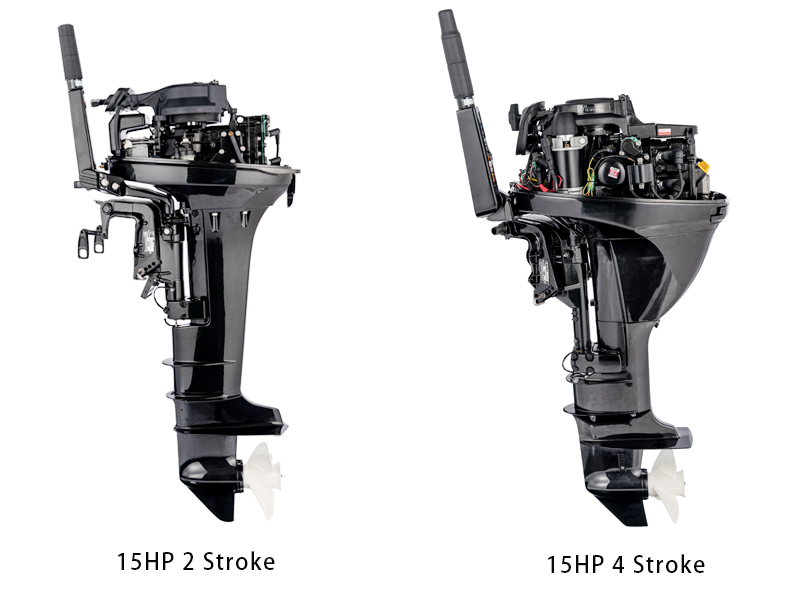
What Really Separates These Two Engines
The mechanical difference is simple. A 2-stroke engine fires once per crankshaft revolution. It combines compression and power into just two piston strokes. A 4-stroke engine takes twice as long. It runs through four steps: intake, compression, power, exhaust.
That one design difference affects everything else — weight, fuel use, service intervals, and emissions.
Here’s how they compare across the key factors:
-
Power-to-weight: 2-strokes come out ahead, delivering up to 25% more torque
-
Fuel efficiency: 4-strokes use about half the fuel under standard conditions
-
Maintenance cost: Modern 2-strokes (E-TEC) cost 50% less to service
-
Emissions: Direct-injection 2-strokes now hit the same cleanliness levels as 4-strokes
How a 2-Stroke Outboard Motor Works (And Why It Matters for Buyers)
Every power stroke counts. A 2-stroke engine fires once per crankshaft revolution. At 2,000 RPM, you get 2,000 power pulses per cylinder. A 4-stroke delivers just 1,000. That raw mechanical edge is built straight into the design.
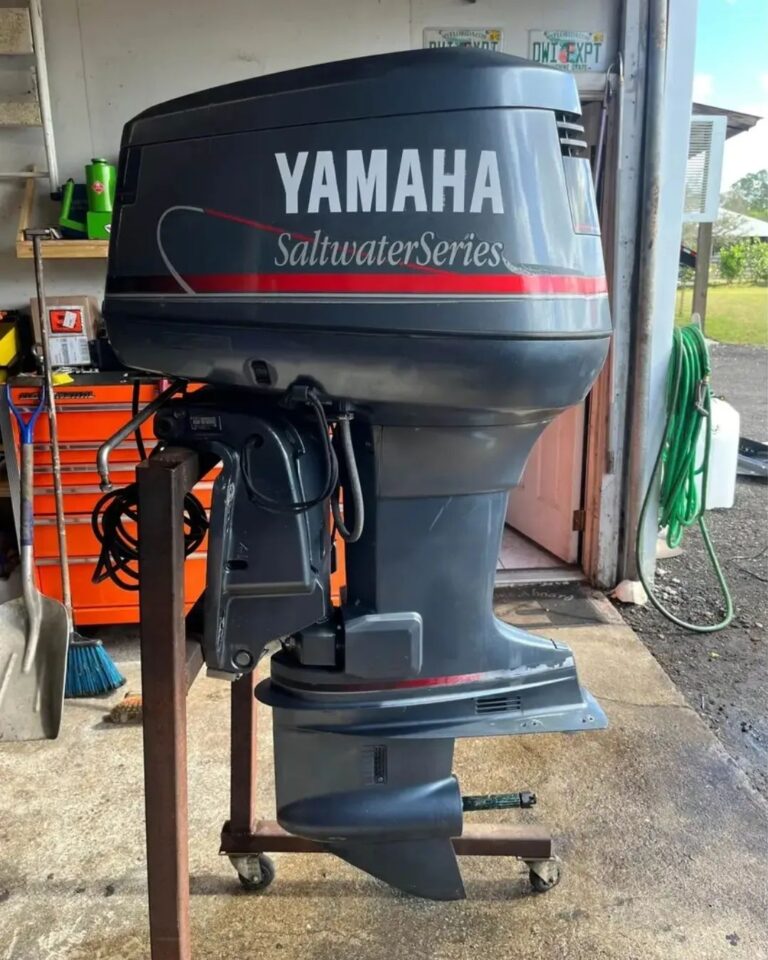
The cycle is refreshingly straightforward — two piston strokes replace four. On the upstroke, the air/fuel mix compresses. On the downstroke, ignition fires. Exhaust exits through cylinder wall ports. Fresh mix floods in at the same moment. No camshafts. No valve springs. No timing gears — just ports controlled by piston position.
That simplicity translates into real buying advantages:
-
Weight: A 115 HP 2-stroke runs ~300 lbs versus ~400 lbs for its 4-stroke equivalent
-
Price: $1,000–$2,000 cheaper upfront per comparable horsepower
-
Throttle response: Faster power delivery suits small hulls and high-speed applications
Modern direct-injection 2-strokes (like E-TEC) fixed the old carbureted system’s biggest flaw. The original design let up to 30% of unburnt fuel escape through exhaust ports. DI injects fuel after exhaust exits. That cuts emissions by 90%+ and brings real fuel savings to your tank.
The tradeoff? Plan for a full rebuild around 500–1,000 hours. Weekend boaters who log light hours will stretch that timeline out much further — so the clock moves slower than you’d expect.
How a 4-Stroke Outboard Motor Works (And What the Extra Steps Do)
Four strokes. One power pulse. That’s the trade-off at the heart of every 4-stroke outboard.
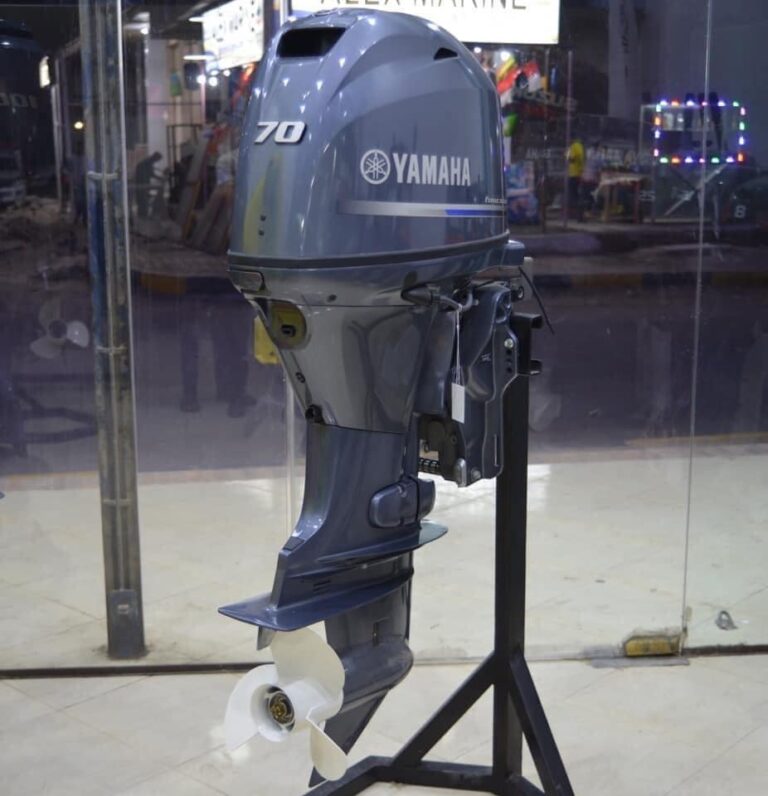
The cycle runs like this: intake, compression, power, exhaust — four separate phases, two full crankshaft rotations. A 2-stroke gets it done in one rotation. The piston moves up and down twice just to produce a single power stroke. Everything else is prep work.
That prep work is what makes 4-strokes so fuel-efficient and clean. Each phase gets its own dedicated moment:
-
Intake draws in a full, uncontaminated air-fuel charge
-
Compression squeezes it to ratios between 8:1 and 12:1
-
Power fires once — sharp and complete
-
Exhaust clears spent gases before the next charge enters
The flywheel stores momentum and carries the engine through the three non-power strokes. So you get smooth rotation even without constant firing. Plus, a separate oil circuit keeps the engine lubricated at all times. No mixing oil into the fuel. No guessing ratios.
The trade-off? A heavier valve train. You’re looking at a camshaft, pushrods, rocker arms, and dual valve systems. More parts add weight — but they also push the engine’s lifespan longer and keep emissions lower.
Performance & Power Delivery: Which Engine Feels Faster on the Water
Raw horsepower numbers on a spec sheet will lie to you. What matters on the water is torque — what’s happening between 3,000 and 4,000 RPM. That’s the range where your boat is planing, surfing, and doing real work.
This is where 2-strokes earn their reputation.
A 2-stroke fires on every crankshaft revolution. That means it produces power pulses twice as often as a 4-stroke at the same RPM. The result? Sharper, more immediate throttle response. You feel that acceleration in your chest the moment you push the lever forward. Modern direct-injection 2-strokes take this even further. They push fuel into the combustion chamber at the exact moment it’s needed. That eliminates the hesitation you used to get with older carbureted designs.
4-strokes offer something different: consistency. The torque curve is smoother and wider. That means less strain at cruise speeds. Less strain also means better fuel efficiency. A motor that isn’t working hard feels more confident, more planted, more in control.
Here’s the honest split:
-
2-stroke advantage: Explosive low-end punch, lighter weight, faster hole shot
-
4-stroke advantage: Smooth mid-range power, quieter operation, less fatigue on long runs
Both camps tend to overlook one thing. Hull design and drag will override engine type every single time. A catamaran hull paired with a mid-range 4-stroke will outrun a V-hull running a high-output 2-stroke. Why? A smaller wetted surface area cuts hydrodynamic resistance at the source. Pick your hull carefully before you even start debating engine cycles.
The bottom line: a 2-stroke wins on raw feel and launch power. A 4-stroke wins on smooth, relaxed cruising.
Fuel Efficiency Comparison: Real-World MPG Data You Can Use
Fuel costs will eat your boating budget alive with the wrong engine. Most comparison guides skip the hard numbers. Here they are.
So let’s use real data.
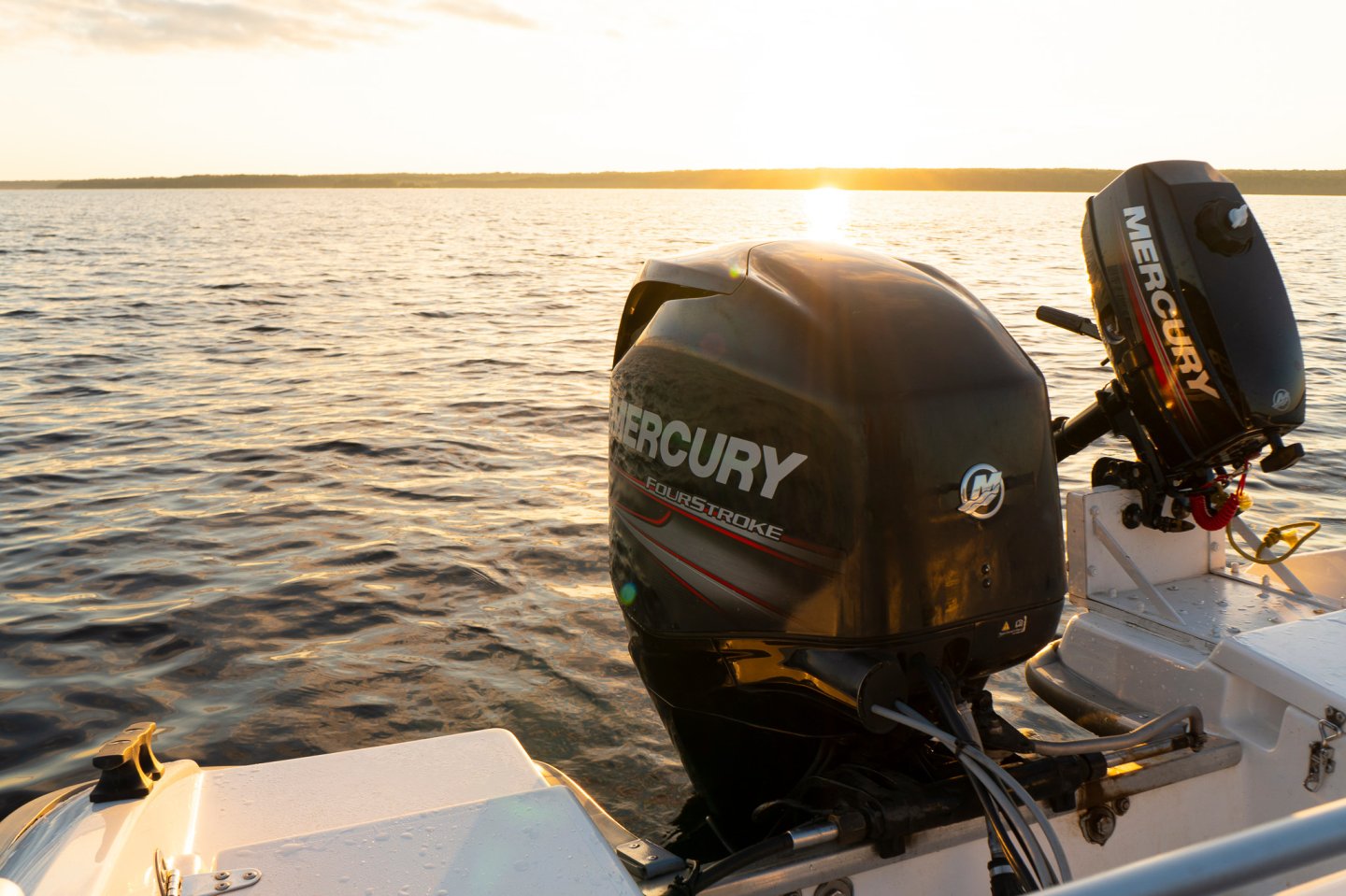
At cruise RPM (3,500 rpm), a Yamaha 90 hp 4-stroke burns 11.7 L/hr. Run it 100 hours a year and you’re spending $1,755 in fuel per year. Step up to the 115 hp version and that climbs to $1,980/year.
Here’s the number that should stop you cold:
A Yamaha 70 hp carbureted 2-stroke at the same cruise RPM burns 12.5 L/hr. That’s close to the same consumption as the 115 hp 4-stroke — but with 45 fewer horsepower. That works out to 0.179 L/hr per hp versus the 115’s 0.115 L/hr per hp. You’re burning 55% more fuel for every unit of power you get.
Traditional carbureted 2-strokes lose this comparison. Full stop. But direct injection changes everything.
Where Modern 2-Strokes Close the Gap
The Evinrude E-TEC G2 was developed with the University of Wisconsin and released in 2014. It shifted the efficiency conversation. BoatTEST.com tested 30 E-TEC G2 engines across 30 different boats — center consoles, pontoons, sportboats. Their results confirmed what Evinrude claimed: at low RPM ranges, the E-TEC G2 doesn’t just match modern 4-strokes. It beats them.
The efficiency gap that defined 2-stroke vs. 4-stroke debates for decades? For direct-injection platforms, that gap is mostly gone.
The Efficiency Sweet Spot Nobody Talks About
Here’s a data point most people miss: larger 4-strokes get more efficient per horsepower, not less. The Yamaha 300 hp V6 at cruise delivers 0.083 L/hr per hp — the best ratio in Yamaha’s lineup.
Stack that against the 70 hp 2-stroke’s 0.179, and the bigger engine holds a 53% efficiency edge on a per-horsepower basis. That’s a big gap.
The bottom line breaks down simply:
-
Engine size and injection technology matter more than stroke count for real-world fuel efficiency
-
A carbureted 2-stroke costs you a real, measurable fuel penalty — around $100–$200 extra per season at modest usage
-
A modern DI 2-stroke? Stop stressing about fuel economy. Focus on where you’re going this weekend.
Note: All figures assume ~$1.50/L fuel price and 100 hours/year at cruise RPM. Real-world consumption shifts with propeller pitch, hull weight, and water conditions.
Maintenance Cost Breakdown: 2-Stroke vs 4-Stroke Over 5 Years
Five years of ownership can cost you more than the purchase price. Pick the wrong engine, and that gap gets painful fast.
The maintenance difference between these two engine types is bigger than most dealers admit. At the 150–300 HP range, a 4-stroke service runs $700 every 100 hours. Oil changes, synthetic fluid, filters — it adds up fast. Hit 1,000 hours and you’ve spent $7,000 in service costs alone.
A modern 2-stroke DFI service? $180–$350 every 300 hours. Same mileage, same water time — but just 3–4 service visits instead of 10. Total bill: $800–$1,400. That’s 50–70% less out of pocket for the same hours on the water.
The rebuild numbers tell an even starker story.
A 2-stroke top-end failure costs $630 all-in — head, piston, and labor. The same job on a 4-stroke? Piston plus valves plus labor lands at $1,500. Two-stroke parts cost about one-third the price of 4-stroke parts. That’s a real difference every time something needs fixing.
Stretch that out across a full 5-year ownership cycle. The gap adds up to $1,200+ in real savings on the 2-stroke side. That holds true even with more frequent top-end service factored in.
The bottom line is simple: 4-strokes cost less per visit, but you visit far more often. Modern DFI 2-strokes flip that math completely. Fewer visits, lower bills, more time on the water.
Emissions & Environmental Regulations: What Boaters Need to Know in 2026
Let’s be honest, the days of running whatever engine you want on any lake are pretty much over. Lake Tahoe started the wave back in 2008 by banning pre-2001 2-strokes. Fast forward to 2026, and we’re looking at hundreds of US lakes, entire national park systems, and heavily regulated European waters that will gladly hand you a fine for running older, dirty outboards.
Here is what actually matters when you’re deciding where to put your money today.
The real target for regulators isn’t the 2-stroke design itself—it’s the old carbureted technology. Modern direct-injection (DFI) engines, like the late-model Evinrude E-TEC G2s you’ll find on the used market, completely bypass this problem. In fact, during previous Australian testing, the E-TEC actually pumped out fewer emissions than several comparable 4-strokes on the market. Better yet, you’re dragging about 25 kg less weight on your transom.
But as we navigate the rules in 2026, the regulatory net is only getting tighter. Here is how the map looks right now:
-
United States (EPA & CARB): EPA Phase 3 is the absolute baseline (HC+NOx ≤ 5–16 g/kW-hr). However, if you boat in California or states adopting CARB standards, the push for “3-Star Ultra Low Emission” and new localized restrictions on sensitive lakes means only modern DFI 2-strokes and ultra-clean 4-strokes make the cut. Old carb models? Don’t even try bringing them to a state park.
-
Europe (Stage V): The EU doesn’t play around. Stage V limits enforce incredibly strict particulate matter (PM) caps at ≤ 0.40 g/kW-hr. While certified DFI 2-strokes still hold their ground legally, legacy carbureted units are practically boat anchors anywhere across European inland waters.
-
Australia: After years of relatively loose rules, Australia has finally cracked down hard on emissions. While modern DFI engines and 4-strokes easily meet their current national standards, the country is actively squeezing high-emission legacy outboards out of the picture.
Before you buy anything this season, do a little homework. First, check the local waterway authority where you actually plan to launch—do they have new 2026 restrictions? Second, look at the emissions sticker on the engine cowl. Running an EPA Phase 3 or EU Stage V certified engine keeps you clear in almost every jurisdiction globally. But if you’re eyeing a cheap, used carbureted 2-stroke because the price is tempting? Walk away. Chances are, it’ll turn into a very expensive paperweight sitting in your driveway because you legally can’t put it in the water.
Noise & Vibration Levels: Side-by-Side on the Water
Run at wide-open throttle for three hours. The engine under your feet stops being background noise. It becomes the whole experience.
4-strokes win this one, no real debate needed. The four-cycle firing sequence produces smoother, more consistent power pulses. Fewer mechanical events per revolution mean less vibration through the hull, the throttle grip, and your lower back.
Traditional carbureted 2-strokes fire harder and more often. That punch creates a rougher idle, more chassis buzz at cruise speeds, and real fatigue on long runs.
Modern DFI 2-strokes close the gap by a good margin. Evinrude marketed the E-TEC as much quieter than its carbureted predecessors. Real-world user feedback backs that claim — though independent dB testing is still thin on the ground.
The practical reality:
-
Fishing and leisure cruising: 4-stroke wins — quieter conversations, calmer fish, less ear fatigue

-
High-speed performance runs: Noise is expected; 2-stroke character becomes part of the appeal
-
Pontoons and family boats: 4-stroke is the clear choice — nobody wants a chainsaw soundtrack at the sandbar
Weight & Portability: Does the Size Gap Still Matter?
The short answer: yes — and it shows up the moment you’re backing down the ramp alone.
A comparable 115 HP 2-stroke outboard motor runs around 300 lbs. Its 4-stroke equivalent tips the scales at 400 lbs. That 100-lb difference isn’t just a spec sheet footnote. It adds real transom stress. It increases trailer tongue weight. And it puts real strain on your mounting bracket over time.
On smaller aluminum tinnies, jon boats, or inflatables, that weight gap hits hull trim and handling stability hard at speed. A lighter 2-stroke sits higher, runs cleaner, and asks less of the hull.
On larger fiberglass hulls, 4-stroke weight is less of a problem. The added mass disappears into the hull — you won’t notice it much at all.
The practical split:
-
Portable/tiller applications under 30 HP: 2-strokes are much lighter. Easier to carry, store, and transport.
-
Mid-range 50–115 HP: The weight difference is real, but proper mounting hardware keeps it manageable.
-
High-horsepower 150 HP+: Both types need dedicated rigging. Portability stops being a factor at this level.
Trailering, car-topping, or storing your motor off the boat? Outboard motor weight difference matters more than most buyers expect going in. Don’t overlook it until after the purchase.
2-Stroke vs 4-Stroke: Head-to-Head Comparison Table
Every data point from the sections above, pulled into one place.
|
Dimension |
2-Stroke |
4-Stroke |
Winner |
|---|---|---|---|
|
Power Output |
Punchy acceleration, fires every revolution |
Smooth, consistent power at cruise |
2-Stroke |
|
Fuel Efficiency |
Higher consumption (carbureted) |
Lower consumption, longer range |
4-Stroke |
|
Weight |
~100 lbs lighter at equivalent HP |
Heavier valve train adds mass |
2-Stroke |
|
Maintenance Cost |
Lower rebuild costs, fewer parts |
More expensive, more frequent service |
2-Stroke |
|
Emissions |
Higher (carbureted) / matched (DFI) |
Cleaner, EPA-compliant |
4-Stroke |
|
Noise & Vibration |
Louder, more character |
Quieter, smoother idle |
4-Stroke |
|
Upfront Price |
Lower initial cost |
Higher due to complexity |
2-Stroke |
|
Best For |
Small hulls, performance, portability |
Family boats, long runs, regulated waters |
Depends on use |
One exception to keep in mind: Modern DFI 2-strokes like the E-TEC G2 close the emissions and efficiency gaps. Stroke count matters less than the engine technology itself.
Which Outboard Motor Is Right for You? (Decision Guide by Use Case)
Your boat type, your water conditions, and your annual hours on the water have already made this decision for you. You just haven’t seen it that way yet.
Match your use case to the right engine below. Stop second-guessing the spec sheets.
By Activity
Waterskiing, racing, or any performance application — go 2-stroke. The lighter weight and explosive throttle response (think Evinrude E-TEC) give you the hole shot and handling 4-strokes can’t match at the same HP rating.
Long-distance cruising or fuel-sensitive trips — go 4-stroke. Yamaha’s F-series earns its reputation here. It runs quieter, burns less fuel at sustained cruise RPM, and goes much easier on your fuel budget across a full season.
Remote areas with limited service access — 2-stroke wins again. No oil changes. Fewer parts. It’s a simpler system you can troubleshoot far from the nearest marina.
Eco-sensitive or regulated waterways — 4-stroke is your best real option. EPA-compliant emissions, no restrictions at the boat ramp.
By Boat Size
|
Boat Length |
Recommended HP |
Engine Type |
Top Picks |
|---|---|---|---|
|
10–14 ft |
5–25 HP |
Either |
Yamaha F9.9, Mercury 15 |
|
15–18 ft |
40–90 HP |
Either |
Honda BF60, Suzuki DF70 |
|
19–24 ft |
115–200 HP |
4-stroke preferred |
Yamaha F150, Mercury 150 FourStroke |
|
25+ ft |
225–600 HP |
4-stroke |
Suzuki DF300, Mercury Verado 400 |
A quick rule of thumb: 5 HP per ton of boat weight. Add a buffer for headwinds or rough water. On smaller boats, run 75–80% of your hull’s max HP rating to get the best planing thrust.
The Budget Reality
Plan to spend $100 per horsepower upfront. Stepping from a 350 HP to a 400 HP unit adds $5,000 to the purchase price — before rigging.
Over five years, that math shifts. A 4-stroke’s fuel efficiency builds up savings every season. At 150 HP running moderate RPM, fuel consumption can match a lower-output engine. You also get more power on hand for the moments you need it. High annual hours? The 4-stroke pays for its premium price over time.
One last thing most buyers miss: your propeller. The wrong Prop hurts any engine. Wrong pitch kills efficiency, adds load, and shortens motor life. Match your prop to your engine’s HP and hull design before you leave the dealer’s lot.
How Your Engine Choice Affects Propeller Selection
The engine on your transom does more than move your boat. It determines which propeller will actually work on it.
2-stroke and 4-stroke outboards deliver power in different ways. That difference has a direct impact on propeller selection. A 2-stroke runs a punchy, high-RPM power curve. It pairs best with lower-pitch propellers that convert rapid power pulses into clean thrust. This keeps the drivetrain from getting overloaded. A 4-stroke has a broader, smoother torque band. It handles higher-pitch props well, pulling through each stroke with less strain.
Get the match wrong and you’ll pay for it:
-
Too much pitch on a 2-stroke: RPM drops below the power band, efficiency collapses
-
Too little pitch on a 4-stroke: the engine over-revs, torque goes to waste
-
Wrong diameter: load mismatch causes overheating and premature wear
Before picking a propeller, confirm your engine’s manufacturer-specified WOT RPM range. That number is your starting point. Everything else builds from there.
Bottom line: Match your prop pitch and diameter to your engine’s RPM range and torque characteristics. The right propeller improves performance. It also protects the engine you just put money into.
Frequently Asked Questions
Dealers won’t always give you straight answers. These are the questions that matter most when you’re standing at the transom trying to make a call.
Q: Is a 2-stroke outboard motor still legal to use?
It depends on where you boat. Carbureted 2-strokes are banned or restricted on over 100 US lakes, several national parks, and most EU waterways. Modern direct-injection engines like the Evinrude E-TEC G2 meet EPA Phase 3 and EU Stage V standards. They’re legal on nearly all waterways. Check your local waterway regulations before buying used.
Q: Which outboard motor has better fuel efficiency — 2-stroke or 4-stroke?
For carbureted engines, 4-stroke wins by a wide margin. A carbureted 2-stroke burns about 55% more fuel per horsepower than a comparable 4-stroke. Switch to direct injection, and that gap closes fast. Technology matters more than stroke count here.
Q: How often does a 2-stroke outboard need servicing?
Modern DFI 2-strokes need service every 300 hours at a cost of $180–$350. A 4-stroke needs attention every 100 hours at $700 per visit. Same hours on the water — but about 70% less out of pocket on the 2-stroke side.
Q: Does outboard motor weight affect performance?
More than most buyers expect. A 115 HP 2-stroke runs about 100 lbs lighter than its 4-stroke equivalent. On smaller hulls — jon boats, aluminum tinnies, inflatables — that weight difference hits your trim, handling, and planing speed in a real way.
Q: Will the wrong propeller damage my outboard motor?
Yes. Wrong pitch pushes your engine outside its best RPM range. That builds excess heat and speeds up wear. Check your engine’s manufacturer-specified WOT RPM range before you pick a prop.
Conclusion
The engine debate isn’t complicated. Two-stroke motors deliver raw power and light weight. They’re the right pick for anglers who need portability and punch. Four-stroke engines offer better fuel efficiency, quieter operation, and long-term reliability. For serious boaters putting in real hours on the water, that’s the smarter investment.
But most comparison articles miss one thing: picking the right outboard motor is half the battle. The other half lives below the waterline.
Your propeller needs to match how your engine delivers power. Miss that match, and you lose performance — no matter which motor you run. A 2-stroke’s aggressive power band calls for a different pitch and blade shape than a 4-stroke’s smooth torque curve. These aren’t small details. They directly affect how your boat performs on the water.
That’s where VIF Propellers comes in. Browse our marine propeller catalog and find the right match for your outboard setup. The right propeller doesn’t just move your boat. It changes how it feels, responds, and performs on every run.