
You hooked the big one — then watched it get away while you fought your trolling motor just to hold position. Sound familiar? The problem is not the motor. It’s the Propeller on the end of it.
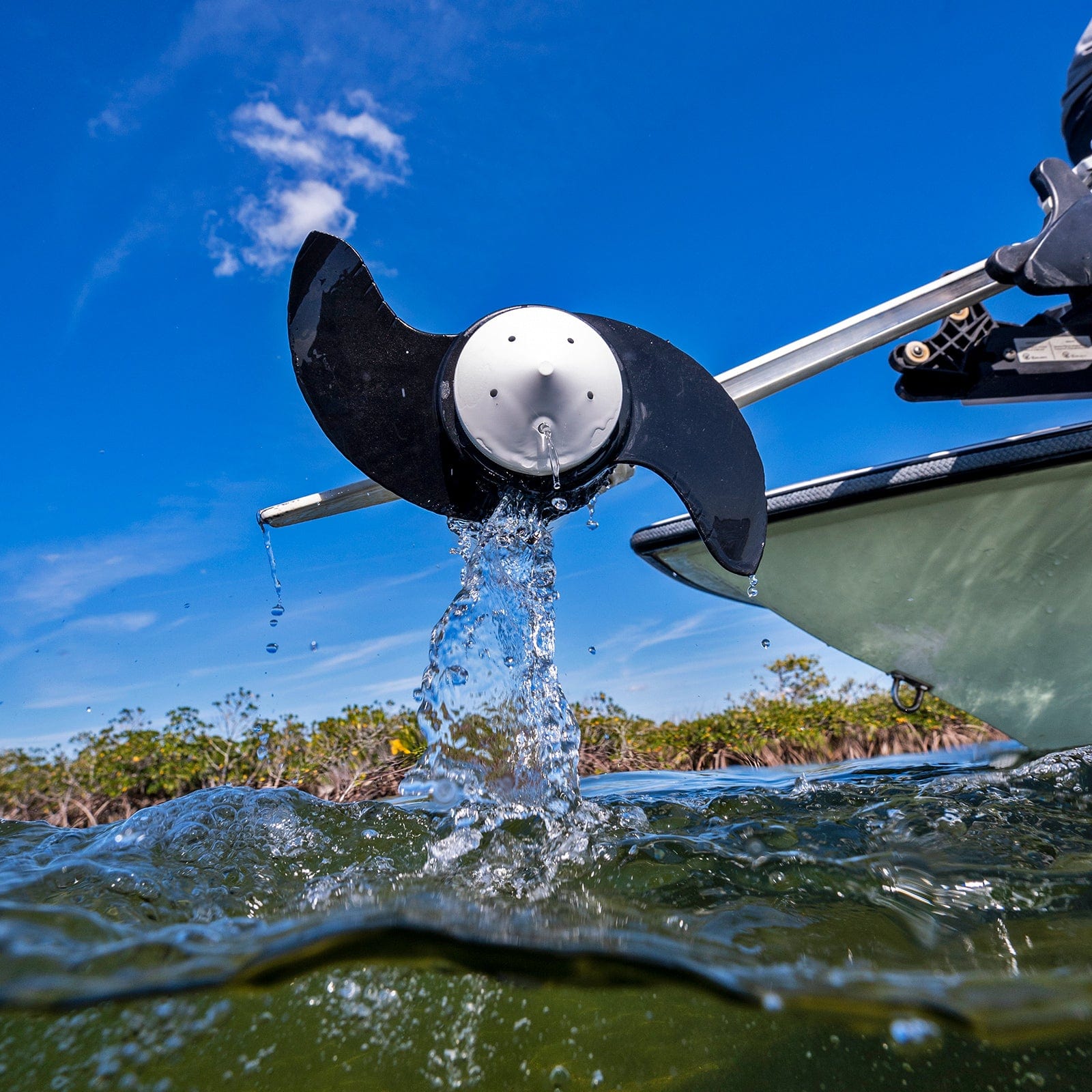
The right trolling motor Propeller changes everything. It controls how silent your approach is to a school of bass. It decides how long your battery holds up through a full day on the water. It also determines how much control you hold when the current gets strong.
Replacing a busted blade? Chasing better thrust? Trying to decode all those pitch and diameter numbers? This guide breaks it all down. You’ll get clear, straight answers to make a confident, informed choice.
Content Framework: Choosing The Best Trolling Motor Propeller For Fishing Boats
This guide covers five core areas every angler needs before buying:
-
Blade count — 2-blade vs. 3-Blade performance trade-offs
-
Materials — composite, aluminum, and stainless steel compared
-
Key specs — diameter, pitch, and what those numbers do
-
Specialized designs — weedless props, high-thrust options, and where each one fits
-
Brand compatibility — Minn Kota and MotorGuide fitment, plus real replacement steps
Running a kayak through lily pads is a different job than holding a johnboat steady against a river current. Each situation calls for a different Prop. No single propeller wins every time.
This guide gives you a clear framework. Use it to spot your exact situation. Then match it to the right blade, the right material, and the right spec — no second-guessing the product page.
What Makes a Trolling Motor Propeller Different From Regular Boat Props
Bolt a regular Boat Prop onto a trolling motor. You’ll feel the difference fast — and not in a good way.
Regular boat propellers are built for one thing: speed. They move fast, spin well at high RPM, and cut drag so your hull can plane across the water. A trolling motor prop solves a different problem. It needs to move slowly, push hard, and stay quiet — all at once.
That’s a different engineering job from the ground up.
The core design gap comes down to low-speed thrust:
-
Blade diameter runs broader on trolling props. This is especially true for 2-blade designs. More surface area moves more water per rotation. That extra water movement turns into real pushing power at low RPM.
-
Pitch runs higher on trolling props to maximize “bite” at slow speeds — not top-end velocity.
-
Blade count plays a different role here than on regular props. A 2-blade trolling prop like the MotorGuide Power Prop puts out more thrust at lower motor settings than a 3-blade version. That extra thrust helps you hold position in current or push through wind without burning out your motor.
Material choices split in a clear direction too. Regular props use aluminum or stainless steel to handle high-speed stress. Trolling props use glass-filled composite plastic — not because it’s cheap, but because it soaks up vibration and runs quieter. On a still morning over a bass flat, that quiet matters a lot.
|
Trolling Motor Prop |
Regular Boat Prop |
|
|---|---|---|
|
Priority |
Low-RPM thrust |
High-speed efficiency |
|
Blade diameter |
Broader |
Optimized for reduced drag |
|
Typical material |
Glass-filled composite |
Aluminum or stainless steel |
|
Noise profile |
Engineered for stealth |
Not a design factor |
These are purpose-built tools for opposite ends of the speed spectrum. Understanding that gap is the starting point for every prop decision you make next.
How Diameter and Pitch Determine Your Trolling Performance

Two numbers on every trolling motor propeller spec sheet shape more of your on-water performance than anything else. Get them right, and your motor works with you. Get them wrong, and you’re burning battery fighting a problem you created without realizing it.
Here’s how to read those numbers. A spec like 11 1/8 x 13 means 11.1-inch diameter and 13-inch pitch. Diameter is the blade-tip-to-tip measurement — nothing more. Pitch is the distance the prop would travel forward in one full revolution through solid water. Real-world slip runs 10–20% less than that number.
What Diameter Does
Diameter controls how much water your prop moves per rotation.
-
Larger diameter = more blade surface = more water pushed = more thrust. Heavy boats need this — pontoons, loaded fishing rigs, anything pushing against current under weight.
-
Smaller diameter = less resistance = higher RPM = better for light, fast-moving hulls where low-end grunt matters less.
A 16-inch prop sweeps a noticeably larger circle than a 14-inch. That extra sweep turns into low-speed pushing power. That’s the range where trolling motors do their work.
What Pitch Does
Pitch controls the trade-off between acceleration and top-end speed.
-
Lower pitch raises WOT RPM by 300–400, improves hole-shot, and keeps loaded boats moving. Drop pitch 2 inches on a loaded pontoon, and it goes from struggling to plane to riding up on step.
-
Higher pitch delivers more speed at cruise. One real-world test on a 30’6″ RIB showed a jump from 26 to 30 knots by moving from 18.5″ to 21.5″ pitch. The trade-off: slower acceleration and real risk of bogging a lower-HP motor.
A solid rule of thumb: every 1-inch pitch change shifts WOT RPM by 150–200 in the opposite direction.
The Trolling Sweet Spot
For slow-speed fishing work, the setup that delivers the best results is low pitch paired with larger diameter. That combo gives you strong grip and thrust right in the RPM range where trolling motors run. A useful benchmark: keep your pitch-to-diameter ratio between 0.8 and 1.8. A 14-inch diameter with 21-inch pitch (ratio: 1.5) and a 16-inch diameter with 19-inch pitch (ratio: 1.19) both land in that productive zone.
Watch for these two failure patterns:
– Overpitched prop — your motor sounds strained, RPM stays low, efficiency drops fast under load.
– Underpitched prop — RPM climbs high, speed stays flat, battery drains without results.
Either pattern points to a spec change, not a motor upgrade.
3-Blade vs 4-Blade Trolling Motor Propeller: Which One Fits Your Fishing Style
Blade count looks simple on paper. On the water, it gets complicated fast.
The short version: 3-blade props run faster and leaner. 4-blade props push harder and grip better. Neither one wins across the board. Your fishing style breaks the tie.
What Each Configuration Does
A 3-blade trolling motor propeller carries less rotational mass. Less mass means less drag. Less drag lets the prop hit higher RPM with less effort — giving you a 1–5% top speed edge over a 4-blade setup, with better battery runtime on open-water runs. Solo anglers on bass boats in clear freshwater tend to run this configuration. Light load, clean water, solid efficiency.
A 4-blade prop trades that speed advantage for low-RPM grip — more useful in heavy conditions. Four blades move more water per revolution. That gives you 30–40% faster planing on loaded boats. Prop slip drops from 15% to around 10% in choppy water. The motor holds plane at about 3,000 RPM, compared to 3,500+ RPM a 3-blade needs under weight. On a loaded fishing rig, pontoon, or any hull pushing against current, that gap matters.
Matching Blade Count to Fishing Scenario
|
Scenario |
Best Choice |
Why |
|---|---|---|
|
Open freshwater, solo angler |
3-Blade |
Higher RPM efficiency, less drag, quieter on light hulls |
|
Heavy load, pontoon, or loaded rig |
4-Blade |
Stronger hole shot, holds plane at lower RPM |
|
Dense weeds, shallow water |
4-Blade |
Anti-cavitation grip, less stalling through vegetation |
|
Speed-focused bass runs |
3-Blade |
1–5% speed edge, extended battery at cruise |
|
Rough water / choppy conditions |
4-Blade |
10% lower prop slip, smoother balance |
Battery Life and Noise — The Part Nobody Talks About
Blade count affects both vibration and runtime. You won’t see that on a spec sheet.
3-blade props produce less vibration on light hulls — useful for sneaking up on a school at dawn. They run clean at speed, which stretches your battery on faster open-water legs. The trade-off shows up in dense weeds. They’re prone to cavitation there, which generates more noise and burns extra power.
4-blade props run smoother at low speeds — less throttle correction, steadier hold on position. In real-world chop and heavy-gear conditions, users report 10–20% better runtime compared to 3-blade setups. The reason: lower prop slip means the motor doesn’t keep hunting for grip. In thick vegetation, a 4-blade runs quieter than a cavitating 3-blade.
Quick Decision Rule
Start with your OEM 3-blade. Motor can’t reach plane below 3,500 RPM under load? Fishing heavy weed cover on a regular basis? Those are clear signals to move to a 4-blade electric trolling motor prop. The swap costs less than a lost day on the water fighting the wrong setup.
Best Trolling Motor Propeller by Fishing Scenario: A Practical Match Guide
Every fishing scenario puts a different demand on your prop. Match the hardware to the environment, and the motor disappears — you stop thinking about it and start fishing.
Here’s how the scenarios break down.
Freshwater Open Water
The 3-blade aluminum prop with medium pitch is the go-to choice for open lakes and reservoirs with clean water. You get balanced speed, control, and efficiency without breaking the bank. Battery life a top priority? A 2-blade alternative pushes efficiency up by 20–30% on straight open-water runs. Less drag, more runtime, and easier to clean.
Saltwater and Offshore
Aluminum corrodes 5–10x faster in saltwater. Within one or two seasons, you’ll see pitting. Replacement and cleaning costs run 2–3x higher than freshwater setups. Stainless steel is the practical choice here. A stainless trolling motor propeller lasts 5+ years with minimal upkeep. The upfront cost is higher, but the long-term math works in its favor.
Dense Weeds and Shallow Cover
Prop selection pays off most in this scenario. A 4-blade large-diameter, low-pitch weedless design — think MotorGuide’s glass-filled tapered hub or a Hydrilla Hacker-style build — gives you 15–25% more thrust and control compared to a 2-blade in grass beds. Cupped blades cut cavitation by 30–40% in heavy vegetation. At 2–3 mph through lily pads or hydrilla, a proper weedless 3-blade trolling motor propeller keeps you moving without constant tangles.
Heavy-Load Boats and Low-Speed Trolling
Loaded rigs — 500 to 1,000+ lbs — need a large-diameter, low-pitch, 4-blade combination. Minn Kota motors in the 100–115 lb thrust range pair well with 10–11 inch diameter props. You get 15–20% better low-end push than a 3-blade under the same load. Drop below 2 mph, and the 4-blade’s thrust advantage climbs to 20–30%.
Kayaks and Lightweight Hulls
Speed and efficiency rule here. A 3-blade high-pitch prop outperforms a 4-blade by 0.5–1 mph on lightweight hulls. Plus, you pick up 10–20% better battery savings. The MotorGuide 3-inch hub Power Prop for 30–55 lb motors hits 4–5 mph in clean open water. For kayak anglers who want more range per charge, it’s a solid upgrade.
|
Scenario |
Recommended Prop |
Key Benefit |
|---|---|---|
|
Freshwater open water |
3-blade aluminum, medium pitch |
Balanced efficiency |
|
Saltwater/offshore |
Stainless steel |
Corrosion resistance, 5+ year lifespan |
|
Dense weeds / shallow |
4-blade weedless, low pitch |
15–25% more thrust, 30–40% less cavitation |
|
Heavy-load, low speed |
4-blade, large diameter, low pitch |
20–30% thrust gain under load |
|
Kayak / lightweight hull |
3-blade high pitch |
0.5–1 mph faster, 10–20% battery savings |
How to Match a Trolling Motor Propeller to Your Motor Specs (Minn Kota & MotorGuide)
Motor brand matters more than most anglers realize. Minn Kota and MotorGuide follow different engineering priorities. That gap decides which prop fits, which one performs, and which one damages your motor over time.
How Minn Kota and MotorGuide Differ at the Shaft Level
Start with the hardware. A Minn Kota 55/65/70 lb thrust motor runs a 3.625-inch OD motor shaft. MotorGuide transom motors sit at 3.5 inches. That 1/8-inch difference can be bridged with aftermarket hub drilling. Skip that step and you get vibration, thrust loss, or a prop that won’t seat right.
The design philosophy splits further from there:
-
Minn Kota runs higher pitch, more blade area, lower RPMs — built for slow, powerful push
-
MotorGuide runs lower pitch, less blade area, higher RPMs — a faster, lighter-spinning setup
Putting a high-pitch Minn Kota-style prop on a MotorGuide motor risks overloading it. That motor wasn’t built to carry that load.
Finding the Right Prop for Your Specific Model
Minn Kota offers two main prop families:
– Power Prop — inline blade geometry built for torque in rough water. Quest series motors use model numbers like MKP-39 or MKP-40, which have domed edges. Brushed motors use flat-top props. These two are not interchangeable.
– Weedless Wedge — 2-blade or 3-blade designs for vegetation. Standard pitch across Minn Kota props is 4 inches.
Go to minnkota.com’s prop selection guide. Enter your model number. It confirms the correct Power Prop or Weedless Wedge, plus the pin and nut kit you need.
MotorGuide keeps things simpler on the surface. The R3 30-lb transom motor takes a 2-blade Power Prop with a 3-inch hub. Pull up MotorGuide’s compatibility chart. Match your hub and shaft specs. Cross-brand fits don’t always work — check before you buy.
The WOT RPM Test: Verify Before You Commit
Install the new prop, then run your motor at Wide Open Throttle. Measure RPM. You’re looking for 4,500–6,000 RPM. Land outside that range and the prop spec is wrong — not the motor.
RPM drops below 4,500? You’re over-propped and lugging the motor. It screams past 6,000? You’re under-propped, leaving thrust on the table, and wearing out the motor faster.
OEM vs. Aftermarket: The Honest Trade-Off
|
OEM |
Aftermarket |
|
|---|---|---|
|
Performance |
Thrust and RPM optimized for your motor |
Viable if physical specs align |
|
Compatibility |
Exact hub and shaft fit, guaranteed |
May need hub drilling or shear pin modification |
|
Cost |
Higher — Quest-specific props like MKP-39/40 reflect that |
Lower upfront cost, higher risk if specs are misread |
Aftermarket props can work well. The shaft ID, hub diameter, and shear pin location all need to match. Get one wrong and you’re back-ordering parts or running an unbalanced prop that drains your battery faster than it should.
5 Warning Signs Your Trolling Motor Propeller Needs Replacement
Most prop problems don’t show up all at once. They creep in — a bit more vibration here, a bit less thrust there — until the motor is working twice as hard and you’re barely making headway.
Here are five signals that your trolling motor propeller is done doing its job.
1. Unusual Vibration
A prop that wobbles during operation is already compromised. Try the quick fix first: remove the prop, rotate it 180°, and reinstall. Props and shafts aren’t always balanced the same on both sides, so flipping the prop can cut down on vibration. Still wobbling after the flip? The blade is bent or out of balance. Every minute it stays on, it chews through your bearings faster.
2. Noticeable Thrust Drop
The boat feels sluggish. Holding position takes more throttle than it used to. Worn blades can’t grip the water the way they should. That’s not a motor problem — it’s a prop problem.
3. Increased Motor Noise
Chipped or bent blades create turbulence. Turbulence creates noise. Your motor sounds different than it did last season? Inspect the blades first, before checking anything else.
4. Visible Physical Damage
Pull the prop and look straight at it. Check for:
– Chipped or flattened blade tips
– Chunks missing from blade edges
– Cracks, nicks, or gashes along the blade surface
– Any visible bending or deformation
Even small chips alter the blade shape enough to hurt performance and trigger cavitation. Don’t brush off minor damage — it adds up fast.
5. Corrosion and Thinning Blades
Blades that look thinner than they used to have lost real structural material. Salt water is especially harsh — corrosion eats the blade from the inside out. Steering gets harder and less predictable long before the blade actually breaks. By the time you see the failure, the damage is already deep.
The maintenance habit that catches all five early: Remove your prop after every outing. Clear debris, fishing line, and weeds from the hub. Check for rust. That one step stops hidden damage from building into a full replacement situation you never saw coming.
Reinstalling? Torque the prop nut to 25–35 inch-lbs — about a quarter turn past snug. Over-tightening wrecks the prop and shear pin just as fast as running a bent blade does.
Trolling Motor Propeller Maintenance: Extend Lifespan and Protect Performance
Fishing line wrapped behind a prop is the number-one cause of lower unit seal failure. Not rocks. Not weeds. Line — the thing you’re out there to use. That single fact should reshape how you think about maintenance.
The habit is simple: pull the prop after every outing. Clear line, weeds, and debris from the shaft with pliers or a knife. Spin it by hand and check for wobble. Do this every time. It stops 80% of avoidable damage before it starts.
Clean It, Grease It, Cover It
After saltwater use, rinse the entire motor — prop, shaft, mount — with fresh water. Use mild soap, wipe it dry, then apply marine-grade waterproof grease to the prop shaft. Add a light coat of water-based silicone spray to composite shafts. Skip this step and corrosion takes over. It works fast and you won’t notice until damage is done.
For storage, remove the prop. Grease the shaft with a thin layer. Store the blade in a marked bag — this protects the edges from nicks. UV exposure breaks down composite blades faster than most anglers expect. A fitted motor cover blocks sunlight and dust. It’s a small addition that adds real protection over time.
Inspection Schedule That Gets Results
|
Frequency |
What to Check |
|---|---|
|
Every trip |
Blades for dings, cracks, line behind hub |
|
Every 3–5 outings |
Shaft seal integrity, debris behind prop seal |
|
Pre-trip |
Prop straightness, secure mounting |
|
End of season |
Full removal, full inspection, full re-grease |
Keep operating RPM below your motor’s rated maximum. Debris wrapped around the shaft forces the motor to over-rev. That puts 2–3x more stress on the blades and wears them out fast. Keep a spare prop, nut, and drive pin on board. They take up almost no space. A blade hits something hard — you swap it out and the day isn’t ruined.
FAQ: Trolling Motor Propeller Questions Answered
Anglers ask the same questions over and over — and the answers are shorter than most product pages make them sound.
How do I find my prop size?
Read the markings on the hub itself. You’ll see two numbers: diameter x pitch. A 3-inch hub on an R3 30-lb motor tells you the right fit. Confirm it by running full throttle and checking RPM. Minn Kota motors land between 2,000–3,000 RPM. A tachometer removes the guesswork.
Should I upgrade to a 4-blade?
Your situation decides it. Weedy lakes, lily pads, shallow-water positioning — that’s where a 4-blade earns its keep. You get 20–30% more low-speed grip in those conditions. In clear, open water, a 4-blade costs you 10–15% top-end performance. It also pulls an extra 5–10A at full throttle. No weeds, no upgrade needed.
Will an aftermarket prop work on my motor?
Most of the time, yes — but check the hub diameter, shaft size (1/2″ or 9/16″), and drive pin alignment before buying. Run it with an amp meter after installation. Non-stock props can push past your motor’s rated amperage. The control board fails first, not the motor. That’s a $200+ repair worth avoiding.
Weedless or standard?
Fishing water shallower than 10 feet with grass, milfoil, or pads? Go weedless. The MKP-32 Weedless Wedge 2 clears 80–90% more vegetation than a standard prop. It also gives you 15% better hole shot in mud. Standard props perform better in clean, deep water. The choice is straightforward.
What should I spend?
Match your budget to how you fish:
– $20–50 — casual angler, 10–20 days/year, open water
– $50–100 — frequent use, light weeds, 3-blade aftermarket
– $100–300 — daily fishing, thick vegetation, premium 4-blade weedless
How do I replace the prop?
Start by disconnecting your positive battery lead. Loosen the nut with a 1/2″ or 9/16″ wrench. Remove the washer and nut, then pull the old prop off. Line up the new prop with the drive pin — keep it level. Reinstall the washer with the lip facing the nut, away from the prop. Torque to 25–35 inch-lbs — about a quarter turn past snug. Go too tight and you’ll bend the pin.
Conclusion
The right trolling motor propeller isn’t a minor accessory. It’s the difference between a frustrating day of fighting drag and a quiet, efficient drift straight to where the fish are holding.
Here’s what matters most:
-
Match your prop diameter and pitch to your motor’s thrust rating
-
Choose your blade count based on how and where you fish
-
Don’t skip the material — composite handles everyday abuse well; stainless steel holds up when conditions get tough
A chipped or cavitating prop isn’t a small issue. It makes your motor work harder than it needs to. That drains battery life, kills performance, and costs you fish. Fix it before it becomes a bigger problem.
Learn more about our propellers — built for Minn Kota and MotorGuide motors. Find your fit and get back on the water.
The gear should disappear. The fishing should not.