
Every year, thousands of boat dealers, marina operators, and marine equipment entrepreneurs leave serious money on the table. The demand is there. The problem is they never took control of their own Propeller supply chain.
The global recreational boating market keeps growing. Replacement propellers sell on repeat. Yet the Boat Propeller dealer space stays fragmented and underserved. That’s not a warning — that’s an opening.
Are you an existing marine parts business looking to add a high-margin product line? Or an entrepreneur making your first move into marine parts distribution? Either way, this guide covers every stage. You’ll go from validating your local market and locking in the right supplier partnerships, all the way to running a distribution operation that generates consistent profit.
Content Framework: “How To Become A Marine Propeller Distributor?”

Here’s what this guide covers — matched to where you are in the process:
-
Business Setup — LLC or corporation formation, licensing, and the real costs of getting operational
-
Supplier Partnerships — How to evaluate and lock in the right OEM marine propeller supplier. This covers trade show networking and negotiating solid dealer terms
-
Dealer Application Process — Real program breakdowns, step by step. You’ll see minimum purchase thresholds (some as low as $1,000 annually) and standard approval timelines
-
Target Market Selection — Commercial shipping, recreational boating, fishing, and tourism each need a different product mix. Each also calls for a different sales approach
-
Distribution Logistics — Inventory management, storage location strategy, and shipping infrastructure
-
Marketing Execution — Trade shows, segmented email campaigns, loyalty programs, and industry sponsorships that move propeller inventory
Pursuing an aluminum propeller wholesale deal or building a full stainless steel propeller distributor operation? This framework gives you a clear decision path at every stage.
What Does a Marine Propeller Distributor Actually Do?
Cut the jargon, and the role is straightforward: you sit between manufacturers and the marine industry. Your job is getting the right propeller to the right vessel at the right time.
That sounds simple. The execution isn’t.
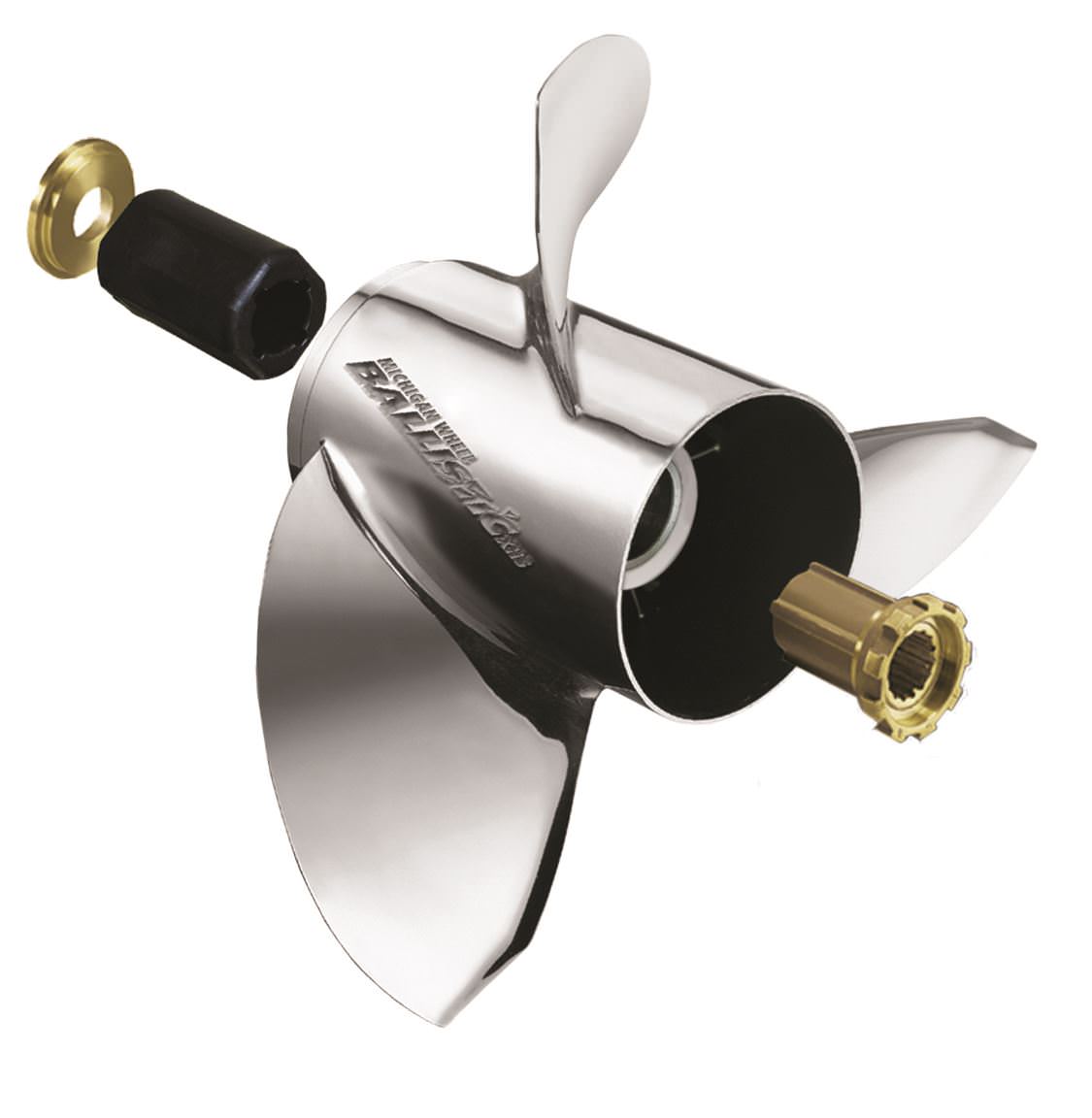
A marine parts distribution business runs on three core functions:
-
Supply chain control — You stock region-specific inventory. River-heavy markets need jet propellers. Coastal marinas move inboard props. Your inventory reflects your geography — not a generic catalog pulled off a shelf.
-
Technical advisory — This is what separates serious Boat Propeller dealers from box-movers. propeller pitch, diameter, and material all affect a specific engine’s fuel efficiency, speed, and lifespan. Get that match wrong, and customers feel it. Get it right, and they keep coming back.
-
Customer segmentation — Recreational boaters, commercial operators, and propeller repair shops all buy on different terms. You serve each group. Most of it runs wholesale — retailer to retailer, not direct to consumer.
You’re not just moving aluminum and stainless steel. Every propeller you ship affects how a vessel performs on the water — and that matters to the people running those boats every day.
Step 1: Validate Your Market Before Investing a Dollar
Most distributors fail before they place their first order. Not because the product was wrong — because the market research never happened.
Lock in a supplier agreement or commit to minimum order quantities only after you have proof that demand exists in your geography. Not national trends. Not industry averages. Your specific backyard.
Here’s how to validate fast:
Map your local marine activity
– Count the marinas, boat ramps, fishing charters, and boat repair shops within a 50–100 mile radius
– Identify what vessel types dominate — saltwater fishing boats, pontoons, personal watercraft, or commercial workboats each have distinct propeller needs
– Check seasonal boating patterns — a market with 8+ active boating months holds far more value than one with only 4
Talk to the people already in the room
Walk into three local marine shops this week. Ask what propeller brands they carry. Find out what they keep running out of and who their current supplier is. Ten minutes of that conversation is worth more than ten hours of spreadsheet analysis.
Look for the gap, not the competition
A market with existing propeller sellers isn’t a red flag — it’s proof of demand. Your job is spotting where service falls apart. Think slow fulfillment, limited SKU selection, or no technical support from current suppliers.
The gap exists? You have a business. It doesn’t? You’ve dodged a painful mistake before spending a single dollar.
Step 2: Meet the Legal and Business Registration Requirements
Every OEM marine propeller supplier will ask you one question before signing a dealer agreement: are you a legitimate business entity? Skip this step and you don’t just face legal risk — you lose supplier relationships before they even begin.
Here’s what you need to get up and running:
Choose Your Business Structure
– LLC: The go-to choice for most new distributors. You get personal asset protection, tax flexibility, and credibility with wholesale partners.
– Corporation: A better fit if you plan to scale fast or bring on investors.
– Sole Proprietorship: Easy to start, but it offers zero liability protection. That’s a serious risk in a product-liability industry like marine hardware.
Core Registration Checklist
– File formation documents with your Secretary of State
– Obtain an EIN from the IRS (required for employee payroll and sales tax collection)
– Register for a state sales tax ID through your Department of Revenue
– Secure local business licenses, zoning permits, and any relevant signage approvals
Non-compliance brings penalties — or a forced shutdown. Neither outcome helps you build a marine parts distribution business from scratch.
One thing worth knowing before you file: formation documents become public record. Your business name and address will show up in state business registries. Think through what information you want visible, and plan your filing details ahead of time.
Step 3: Build a Realistic Business Plan and Budget
Numbers don’t lie. In the marine parts distribution business, the figures you ignore at the start are the ones that sink you later.
Get your financial model in order before you approach a single OEM marine propeller supplier. Do it before you negotiate your first dealer terms too. Base it on reality — not optimism.
Break Your Budget Into Three Expense Buckets
Every boat propeller dealer operation runs on the same core cost structure:
-
Fixed costs — Warehouse rent, insurance, staff salaries, software subscriptions. These hit your account every month, no matter how many propellers you move.
-
Variable costs — Inventory purchases, outbound shipping, sales commissions, packaging. These rise and fall with your sales volume. More units moved means higher variable spend.
-
Capital expenditures — Racking systems, forklifts, inventory management software. These are one-time investments. They set the upper limit of what your operation can handle.
Build Your Financial Projections in Two Phases
Year 1: Run monthly or quarterly income statements, balance sheet snapshots, and cash flow projections. Propeller sales are highly seasonal — your spring numbers will look nothing like your November numbers. Factor that into every projection you build.
Years 2–5: Shift to annual projections. Track whether you’re running a surplus or deficit each period. A surplus funds your next inventory buy or marketing push. A deficit signals you to cut variable costs or renegotiate supplier terms.
The Profit-First Calculation
Start from your target margin and work backwards. Set your desired profit figure first. Then subtract fixed and variable costs to find the minimum revenue you must hit. The math either closes or it doesn’t. Cut costs or raise projected volume — those are your two options.
For funding gaps, SBA loans are a real path forward. Just know that lenders want to see a full five-year projection. A rough estimate won’t cut it.
Step 4: Identify and Vet Reputable Marine Propeller Suppliers
Your supplier is your business. Pick the wrong one, and no amount of marketing or hustle fixes the damage.
The marine propeller supply chain runs on two main tracks: established global manufacturers and China-based OEM producers. Each track has real advantages — and real risks.
Global brands worth knowing:
– Wärtsilä (Finland) — one of the largest market shares in commercial marine propulsion
– MAN Energy Solutions (Germany) — 250+ years in the industry, strong in diesel and dual-fuel systems
– Rolls-Royce Marine — premium positioning, diesel, electric, and hybrid configurations
– ABB — Azipod electric propulsion, dominant in cruise and icebreaker segments
– Caterpillar — a proven name in commercial and offshore diesel/hybrid applications
For most new outboard motor propeller dealers and aluminum propeller wholesale operations, China OEM manufacturers are the most practical starting point. Lower unit costs mean stronger propeller dealer margins from day one. The tradeoff is real — quality varies, and the gap between suppliers can be wide.
How to Vet Any OEM Marine Propeller Supplier
Put every OEM marine propeller supplier you consider through this checklist before placing a single purchase order:
-
Certifications first — Require ISO 9001 at minimum. For serious stainless steel propeller distributor operations, push for ABS, DNV, or Bureau Veritas (BV) certification. NMMA certification covers ISO, EPA, and USCG standards in one credential — that cuts your regulatory exposure across the board.
-
Request physical samples — Performance claims on a spec sheet mean nothing. Test the actual product against ISO 484 Class S tolerance standards before you negotiate terms.
-
Verify export qualifications — Confirm CE marking and relevant international certifications. This matters the moment you want to grow beyond your home market.
-
Assess the factory in person — A video call shows you a camera angle. A factory visit shows you everything else. Look at production quality, workforce size, and equipment condition. These tell you whether a supplier can genuinely deliver at scale.
-
Check the reputation trail — Positive reviews alone aren’t enough. Look for patterns: consistent lead times, responsive after-sales support, and how they handle product defects.
One benchmark worth knowing: Fountom’s copper alloy FPP/CPP propellers carry ABS, DNV, and BV certifications and deliver 5% fuel savings over comparable competitors. That’s a real selling point for your customers — and a clear example of what solid supplier vetting can uncover.
The propeller brand partnership you sign shapes everything that follows — your margins, your product reliability, and your reputation with every customer you serve.
Step 5: Apply to a Dealer or Distributor Program
Most serious candidates stall at the paperwork phase. It’s not that the process is hard. They just walk in unprepared.
Marine parts distribution dealer applications follow a predictable structure. You’ll need to submit proof of business registration, a reseller or seller’s permit, location documents, and background verification. Some states require background checks for the initial license. California’s DMV dealer process goes further — it adds a 6-hour pre-license training plus a written test. You need 28 correct answers out of 40 to pass.
What to have ready before you submit:
-
Business formation documents (LLC, Corp, or Partnership filing)
-
State reseller/seller’s permit — this lets you make tax-free wholesale purchases, which protects your propeller dealer margins
-
Location photos and zoning compliance documents
-
Any brand-specific Letter of Authorization for propeller brand partnership programs
OEM marine propeller supplier programs tend to have lighter applications than government licensing. That said, brand partners still want proof your business is up and running. Plan for 1–4 weeks of processing time after you submit.
Fail the dealer test? Most programs give you three attempts before a full training restart is required. Factor that buffer into your timeline now, not later.
Step 6: Set Up Your Inventory, Storage, and Logistics System
Propellers aren’t small-ticket items you can stack in a corner and forget about. They’re heavy, awkward to store, and come in enough SKUs to cause real confusion without a solid system behind them.
Here’s the reality: poor warehouse organization doesn’t just slow down fulfillment — it cuts straight into your propeller dealer margins. Studies on warehouse optimization show that clean location marking, fast-mover placement, and grouped SKUs can improve fulfillment speed by 20–30%. That’s not a small operational win. That’s a real competitive edge.
Build Your Warehouse Workflow Around Five Core Functions
Every strong marine parts distribution business organizes its warehouse around the same five functions:
-
Receiving — Scan, label, weigh, and record dimensions on every incoming shipment right away
-
Putaway — Stage items and assign fixed locations before anything touches a shelf
-
Picking — Plan picker routes to cut walking distance per order
-
Packing and Shipping — Run a QC scan before sealing, then attach tracking numbers at the point of packing
-
Inventory Control — Run cycle counts on a rolling basis rather than shutting down for full annual counts
Target 99%+ inventory accuracy. Drop below that, and fulfillment errors pile up fast. Your boat parts dealership customers notice — and they won’t forget it.
Keep Stock Moving, Not Sitting
For your aluminum propeller wholesale and stainless steel propeller distributor inventory, stick to one clear rule: fast movers stay within easy reach, slow movers go deep into storage. Group similar propeller SKUs together — outboard props in one zone, inboard in another. Use labeled bins and shelving for smaller hardware and accessories.
Real-time inventory tracking is non-negotiable here. A basic WMS or a more advanced system both work — as long as you can see exact stock levels at any given moment. Last week’s spreadsheet estimate won’t cut it.
Step 7: Launch Your Marketing to Attract Boat Dealers and Marina Clients
Inventory sitting in a warehouse makes you nothing. You need to get in front of the right boat dealers and marina operators. In this industry, the channels you pick determine your results.
The marine B2B space rewards face-to-face credibility over digital noise. That reality shapes your entire channel strategy.
Prioritize the Channels That Convert
Not all lead sources are equal. Here’s what the data shows:
-
Boat trade shows (NMEA, IBEX, Miami International Boat Show) deliver 3–5x higher lead conversion than digital channels alone. Booths with live demos or interactive displays see a 50% boost in lead generation. Plus, 70% of attendees recall brands that ran workshops.
-
Industry association directories (NMPA, MRAA) give you 200–300 pre-qualified contacts at a 2:1 ROI. Cold email those lists and expect a 20% conversion rate.
-
LinkedIn outreach targeting “boat dealer manager” and “marina owner” profiles gives you a pool of 10,000+ prospects. A personalized InMail produces a 25–35% response rate and a 15% meeting book rate.
Your Outreach Script for the Meeting
Face to face with a marina operator or boat parts dealership buyer? Lead with the VBE framework — Value, Benefit, Evidence:
-
Value: “Partner with us for exclusive wholesale propellers — 30% profit over retail across 100+ SKUs”
-
Benefit: “OEM-certified supply plus 24-hour shipping cuts client downtime by 50%. That drives 20% repeat business gains“
-
Evidence: “One local dealer added $50k in revenue year-to-date with 95% on-time delivery. Here’s the testimonial”
Close with a low-risk entry point. Offer a trial order of 10 units at introductory pricing with full support included.
Fill the Off-Season Pipeline
Your spring numbers will always outrun November. The fix is staying active while the boats sit docked.
Personalized email campaigns pull a 28% open rate in the marine segment. Virtual webinars capture leads at 15%. Referral incentive programs bring in new clients at 20% acquisition efficiency.
Sponsor a local fishing tournament or regional boat show. The numbers move fast — a typical return runs 4:1, meaning 100 leads convert to 25 deals.
That’s not a marketing expense. That’s a marine accessories reseller pipeline producing deals all year long.
Step 8: Provide the Technical Support That Keeps Clients Coming Back
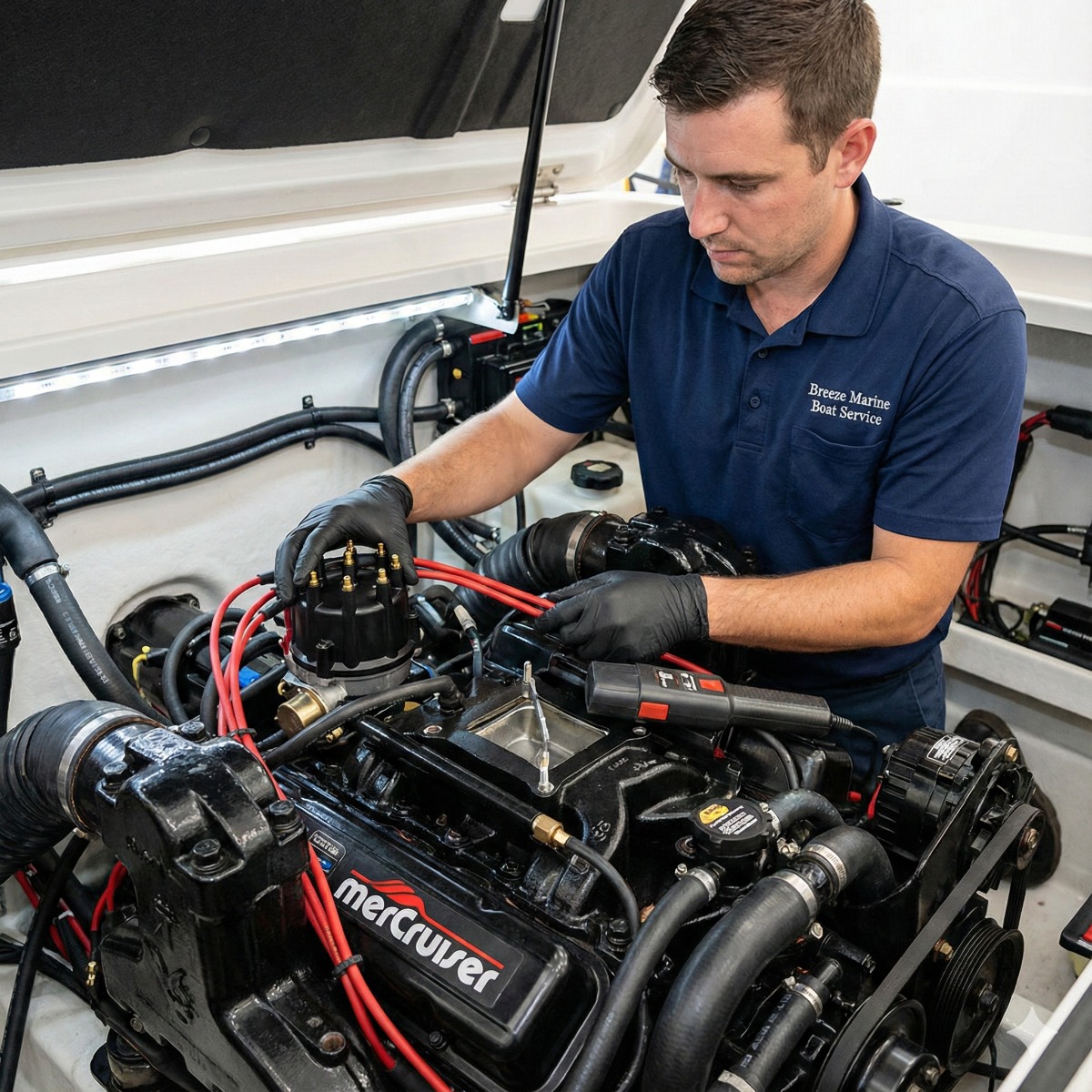
Good technical support is what separates distributors who build loyal dealer networks from those who keep chasing new customers to replace the ones they lost.
Boat dealers and marina operators don’t just buy propellers. They buy confidence. Confidence that a customer shows up with a mismatch problem or a performance question — and you have the answer ready.
Here’s how to build a support system that keeps clients coming back:
Set response time standards and hold them
– Emails answered within 1 business day
– Live chat resolved same-day
– Got delayed? Say so — then deliver on the new commitment
Get ahead of problems before they escalate
Send a short post-delivery check-in. Include a 60-second walkthrough video or a one-page spec guide. Think about what questions your clients will ask — then answer them first. Post that content on your product pages and order confirmations.
Make self-service fast and accessible
A clear, well-organized FAQ page cuts your inbound support volume by a large margin. Add a chatbot that handles common queries — product specs, return policies, lead times — 24 hours a day, 7 days a week.
Issues do come up. Follow this response sequence:
1. Acknowledge right away: “Thanks for reaching out — we’re on it”
2. Use the client’s name. Drop the jargon
3. Restate the issue and ask one clarifying question to confirm you’ve got it right
4. Resolve or escalate — aim for first-contact resolution
5. Invite follow-up before closing: “Anything else I can help with?”
The service recovery paradox is real. A complaint handled well builds more loyalty than a smooth transaction that never had a problem.
Track the metrics that show whether clients are staying or drifting:
– Retention rate — what percentage of dealers reorder within a set period
– CSAT and NPS — post-interaction surveys sent out via email or SMS
– Top churn reasons — sort them by category: price, fulfillment speed, product fit, support quality
That data shows you where to fix the business before clients walk out the door.
Common Mistakes New Marine Propeller Distributors Make (And How to Avoid Them)
Most new distributors don’t fail because the market dried up. They fail because they repeat the same five mistakes — and don’t see the damage until it’s already done.
Mistake 1: Buying Inventory Blind
Chinese suppliers price 30–50% below Western manufacturers. That gap pulls new distributors into bulk orders before they’ve confirmed local demand.
The result: dead capital locked up in the wrong SKUs.
Here’s what you need to understand before placing any order:- Aluminum propellers — suited for engines under ~100 hp; lower cost, acts as a buffer on impact- stainless steel propellers — recommended for 150+ hp; 2–3x more expensive but 5x stronger
Get that mix wrong and you’ll overstock one segment while running short on the other.
MOQ reality check: large suppliers like Dalian Ruici require 100+ unit minimums with 8–12 week lead times. Smaller suppliers accept 1–5 units with 4–6 week lead times. Committing capital to high-MOQ orders before you know your local demand is how new distributors hit a wall by month three.
The fix: Start your stock around 3-Blade propellers. They’re the dominant SKU in the pleasure boat segment — good balance of speed, vibration, and fuel use. Reorder based on actual sales data, not supplier pricing offers. Track customer reorder frequency from day one. Top Chinese suppliers see 28–50% reorder rates. Your own data will show you which SKUs matter faster than any catalog will.
Mistake 2: Pricing Without a Full Cost Stack
New distributors either cut prices to grab their first customers — or ignore MAP (Minimum Advertised Price) policies and damage their supplier relationships.
Both moves crush margins to a point that doesn’t hold up.
Reference pricing by supplier tier:
– Small foundry / low-volume: $800–$1,500/unit
– Mid-sized manufacturer: $600–$1,200/unit
– Large industrial bulk: $450–$900/unit
None of those figures include shipping, import duties, warranty handling, or after-sales support. Price too close to landed cost and you absorb all those extra expenses quietly — until the numbers stop adding up.
MAP violations create a second problem. Suppliers with strong market presence — some running $1.2M+ in annual revenue with lean teams — depend on consistent channel pricing. Break that discipline and you risk losing your supply agreement.
The fix: Before setting any retail price, calculate: landed cost + import duties + warehousing + a 1–2% warranty reserve + your target margin. Never use a competitor’s street price as your floor.
Mistake 3: Skipping Technical Depth
A pure logistics middleman is replaceable. Any cheaper online source can ship a box. What they can’t offer is a distributor who genuinely knows propellers.
Propeller selection has variables most customers can’t figure out on their own:
-
pitch — every 1-inch change shifts engine RPM; the right pitch hits the manufacturer’s max recommended RPM, with a 10–15% slip factor built in
-
Diameter — limited by space under the anti-cavitation plate; a larger diameter adds thrust but puts more stress on the engine
-
Blade count — 3-blade for top speed and efficiency; 4–5 blade for faster acceleration and less vibration, but higher fuel use
-
Material — aluminum for sub-100 hp, stainless steel for 150+ hp, NiAl bronze or manganese bronze for commercial/offshore use where corrosion resistance is critical
Distributors who walk customers through that selection process keep them. Those who can’t, hand them off to someone who will.
The data backs this up. Suppliers with expert-backed selection support see reorder rates of 40–50%, compared to commodity distributors stuck in a cycle of one-time buyers.
The fix: Keep CFD and hydrodynamic spec sheets from your suppliers on hand. Know which manufacturers offer 5-axis CNC machining and balance testing. Learn to read a mill test report (MTR) and an NDT certification. That knowledge is your real competitive advantage.
Mistake 4: Vetting Suppliers on Price Alone
Low unit cost means nothing if the product breaks in the field. One bad batch — wrong tolerances, uncertified material, poor balance — hits your reputation with every dealer who installed it.
Certifications to check before signing any supplier agreement:
– ISO 9001 — quality management baseline
– ISO 14001 — environmental compliance
– DNV-GL, ABS, Lloyd’s Register — class society approvals for commercial-grade product
Past certifications, ask for mill test reports (MTRs) per batch. Confirm third-party inspection through SGS or Bureau Veritas.
Supplier reliability benchmarks from verified data:
– On-time delivery rates among top-tier Chinese suppliers: 95.1–100%
– Response time under ≤2 hours is a strong signal for how fast they handle problems
– Review scores: top suppliers sit at 4.8–5.0/5 — anything below 4.5 deserves a closer look
– Annual online revenue below $23,000 with under 2 years in business shows a thin track record; established suppliers run $91,000–$1.7M+ in annual revenue
The fix: Build a supplier scorecard. Score certifications, lead time consistency, response speed, and defect rate with equal weight. Don’t let price take over the whole evaluation.
Mistake 5: Running Operations on Spreadsheets
Manual tracking misses patterns. Slow-moving SKUs sit on shelves too long. Purchases go through without proper oversight. Reorder cycles slip.
The fix: Pull at least 12–24 months of transaction data before making any SKU decisions. From day one, track four core metrics:
-
Reorder rate by SKU
-
On-time delivery rate by supplier
-
Warranty claim rate by product line
-
Average days-to-reorder per customer segment
Run a monthly check to catch dead SKUs fast. Do a deeper review each quarter for category changes and supplier renegotiation. Revisit MOQ commitments each year based on real demand — not the optimistic numbers from your first year in business.
Duplicate SKUs are a common trap: aluminum and stainless versions of the same diameter, pitch, and blade count sitting as separate entries with no demand data tied to them. That’s capital stuck in slow movers. Data breaks that cycle. Spreadsheets just keep it hidden.
Is Becoming a Marine Propeller Distributor Worth It? (ROI Reality Check)
The numbers make a clear case. The global marine propeller market sits at USD 4.48 billion in 2025. It’s heading toward USD 9.24 billion by 2034 — a 7.29% CAGR. That’s not a niche. That’s a structural growth market with a decade of momentum behind it.

Distributor ROI benchmarks from comparable marine trade businesses land at 15–25% within 6–12 months. Retrofit demand is growing at 8.70% CAGR through 2031. That growth comes from IMO EEXI and CII regulations. Vessel operators must upgrade propulsion efficiency — or face operational penalties.
This opportunity fits a specific profile:
– Marine or vehicle trade professionals with active dealer networks
– Marina operators already set up to cross-sell hardware upgrades
– Businesses with retrofit or OEM exposure — segments holding 73.2% and 51.5% market share, in that order
No marine network? No retrofit exposure? The margins compress fast. This one’s not for you.
For everyone else, the entry path is clear. Start by assessing local retrofit demand. Lead with fixed-pitch propellers — they carry a 30–40% cost advantage over controllable-pitch models. You’re also entering a market growing at 6%+ per year. The timing is right. The demand is proven.
Conclusion
The marine propeller distribution business isn’t complicated. But it does reward those who treat it like a real business from day one.
Three things matter most: validate your market, structure your operation, and partner with a supplier who supports your growth. These three moves separate distributors building profitable dealerships from those sitting on unsold inventory six months in.
The demand is real. Boat ownership keeps rising across markets. Replacement propellers are a recurring need — not a one-time sale. The right boat propeller dealer with solid supplier backing can carve out serious market share, even in year one.
Ready to move from research to action? Start here:
-
Explore a marine parts distribution partnership with an established OEM manufacturer like VIF Propellers
-
Request their dealer program terms
-
Run the numbers against your local market
The opportunity stays open. The best territory positions don’t.