
The wrong propeller does more than slow the Boat. It drains fuel. It strains the outboard motor. One bad hit on a submerged rock leaves the boat stranded.
Running a jon boat through a shallow, snag-filled river demands specific gear. Pushing a bass boat across open water needs different equipment. The choice between an aluminum propeller and a stainless steel propeller matters. Both materials have real strengths. Both have flaws you must consider.

Freshwater Propeller Guide: Aluminum Vs Stainless Steel For Rivers & Lakes
Material decides performance. Aluminum and stainless steel do different jobs. You cannot swap them without changing how the boat handles.
What the Materials Do Differently
Aluminum blades flex under load. This flex makes the Prop feel lively from a dead stop. The engine spins easier. Smaller setups get a fast hole shot. Wide-open throttle (Wot) changes things. That same flex hurts performance. The blade loses shape. Top speed drops. Fuel efficiency suffers.
Stainless steel stays firm. These stiff blades push hard at high RPMS. We see clear results in field tests with 90–150 hp outboards. Upgrading from aluminum brings +1–3 mph gains. Fuel savings hit 5–10% at cruise RPM.
Price Reality
|
Engine Class |
aluminum Prop |
stainless Prop |
|---|---|---|
|
40–90 hp |
$120–$220 |
$350–$700 |
|
115–250 hp |
$160–$260 |
$450–$900 |
Price ranges based on U.S. retail listings for common 3-blade props, May 2026. Actual pricing varies by brand, pitch, and dealer.
Stainless options carry a higher price tag. Expect to pay 2–4× more. This single fact drives most buying decisions.
Strike Behavior: The River Factor
Many anglers run rocky rivers, stump-filled reservoirs, or shallow western waters. In these spots, aluminum makes sense. Aluminum bends. A $150 prop takes the damage during a rock strike. This protects the expensive lower unit.
Stainless handles that same rock another way. Tough blades do not yield. Unforgiving impacts send force into the prop shaft and gearcase. A minor scrape bends shafts or cracks gears. Repairs start at $500 and climb fast. River anglers in shallow water must treat aluminum props as replaceable gear.
Smart add-ons save money. Try pairing any propeller with a VIF Interchangeable Hub Kit (Rubex style). It adds a huge advantage. A stump strike breaks the hub instead of the gears. You skip the repair shop. Swap the hub right at the dock in about 15 minutes. A hydraulic press is not required.
Head-to-Head Comparison: Aluminum vs Stainless Steel Across Key Metrics
|
Metric |
Aluminum |
Stainless Steel |
|---|---|---|
|
Tensile Strength |
~276 MPa |
~505 MPa |
|
Hardness (Mohs) |
~2.2 (Dents easily) |
~5.5–6.3 (Resists impacts) |
|
Weight |
Baseline (Lighter) |
~3× heavier |
Weight, Strength, and Hardness in Real Life
An aluminum prop runs about two-thirds lighter. This weight drop makes lower-HP engines feel quick off idle. Stainless steel features higher tensile strength (up to 4× higher). That strength creates top-end performance. The blade holds its shape at 5000 RPM.
Hardness (Mohs 5.5-6.3 vs 2.2) presents a trade-off. Harder metals dominate open water. Rocky rivers demand softer metals. The prop gives way so the gearcase survives.
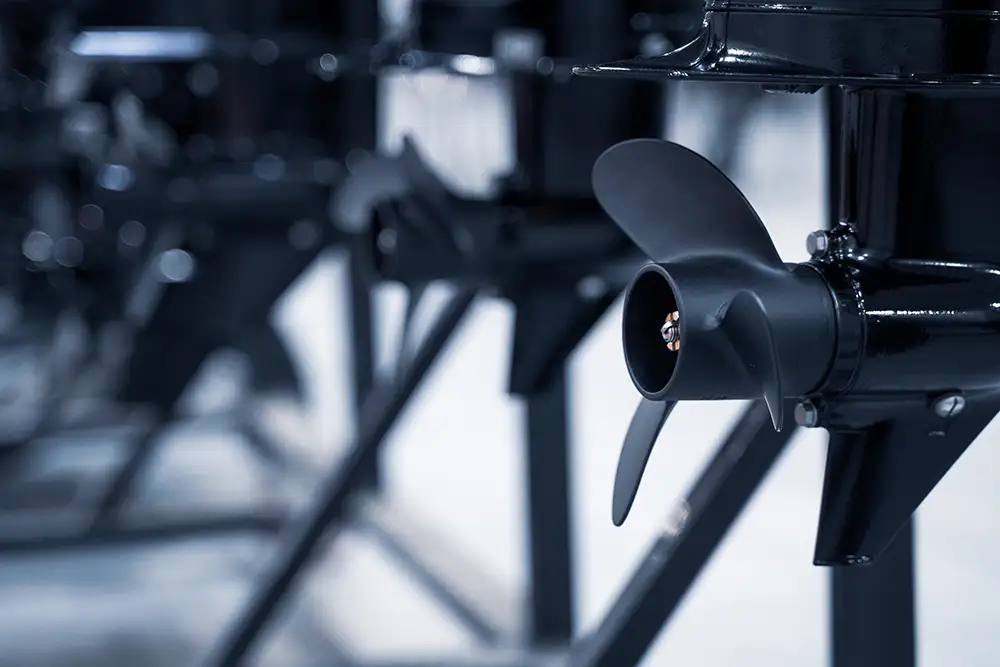
River Conditions: Aluminum vs. Stainless Steel Props
Shallow, Rocky Water: Aluminum Is the Obvious Choice
Consider a 16-foot jon boat on a late summer river. Gravel and stumps block the path. Aluminum fits a scenario like this perfectly. A $180 prop absorbs the impact. The boat survives the strike. Anglers fix bent aluminum props two or three times. Repairs run $60–$80 each. Let cheap metal take the beating during hard collisions.
We recommend the VIF Aluminum Series or Polastorm Aluminum for harsh environments. Cheap die-cast alternatives break easily. VIF uses a squeeze-casting process. This step removes internal air pockets. The metal becomes stronger. It holds together after a bottom scrape.
Deeper Channels and Strong Current: Where Stainless Earns Its Price
A 115 hp bass boat needs a different setup in deep main channels. Strong currents require a rigid hold. Stainless repays the cost here. Top speed jumps 2–5 mph. Fuel economy increases 5–10%. Grip improves across the board. Slip rates fall from 15–20% down to 8–15%. Stiff blades bite hard during acceleration.
The Decision Threshold
Tracking bottom strikes simplifies the choice.
Multiple hits every ten trips push buyers toward aluminum. Occasional strikes in deep channels point toward stainless. The frequency of impacts dictates the perfect material.
Lake Conditions: Matching Propeller Material to Open-Water Demands
High-Speed Cruising: Where Stainless Pulls Away
Lakes offer room to run flat out. Open space favors rigid metals. An aluminum blade bends away from the water at 30–40 mph. Stainless holds its shape firmly. Unbending blades turn hub pitch into raw speed. Higher-HP motors see a 3–4 mph gain. Miles per gallon increase by 8%.
Top-end performance requires the right gear. Check out high-performance 3-blade options. The VIF VENGEANCE, ybs, CHOPPER, or RAKER 3-Blade series lead the pack. Rigid duplex stainless steel blocks blade flex at wide-open speeds. You get serious bite and maximum efficiency on open water.
Matching Lake Type to the Right Prop
Small lakes (30–70 hp): Aluminum handles casual cruising perfectly. Speeds under 25 mph and weekend fishing trips do not require $500 stainless upgrades.
Large lakes (150–250 hp): Big engines demand stainless props. Long rollers on big water create heavy pressure. You need the grip of a 4-blade stainless setup with high rake to reduce slipping.
Towing and Heavy-Load Scenarios
Towing wakeboarders behind a 150+ hp engine requires heavy torque. A stainless 4-blade prop dropped 2″ in pitch from the factory setup does the job. This swap cuts 0–20 mph times by up to 25%. The engine stays in a healthy RPM range.
We favor the VIF RAKER 4-Blade or VENGEANCE 4-Blade props for stern lift and quick starts. Extra blade surface area holds massive water pressure. The boat stays locked in during sharp turns. Skis pull right out of the hole without washing out.
Propeller Selection by Engine Power, Boat Type & Use Case
Engine Power: Three Tiers
Under 30 hp: Stick to aluminum. Small blocks produce minimal torque. The blades will not flex. Shallow water operation is highly common for these sizes.
30–70 hp: Aluminum covers standard duties here. Upgrading to stainless makes sense for overloaded boats or heavy inland towing.
75 hp and above: Stainless stands as the basic rule. High torque from huge outboards twists soft metals. Deformed blades steal speed and burn extra fuel.
Boat Type Changes the Equation
Jon boats (10–18 ft): Backwater hazards destroy gear fast. Keep an eye out for a reliable aluminum option like the VIF Aluminum 3-Blade on lower-horsepower motors. Pack a spare prop onboard.
Bass/Walleye boats (17–21 ft, 90–250 hp): Stainless runs the show. Pick a 3-blade option for top speed. Grab a 4-blade profile for faster take-offs.
Pontoons (18–26 ft): Square hulls create intense drag. Larger diameter, lower pitch props build vital mid-range torque. (e.g., 13–14″ diameter, 13–17″ pitch).
Freshwater Propeller FAQs
Does basic freshwater justify a stainless upgrade?
Yes, heavy horsepower demands stiff metal. Buyers skip it for corrosion resistance. The real benefits come from rigid blades, higher speeds, and peak fuel efficiency.
How do I spot a ruined aluminum prop?
Watch for a crack at the blade root. Check for vibration at cruising throttle. Bends past 5mm ruin the pitch. A deep through-crack sends the unit straight to the scrap pile.
Does a metal swap require a pitch change?
Yes. Firm blades force the engine to push harder. Wide-open RPM drops by 200–400 points. Reduce pitch by 1–2 inches from the aluminum baseline. This balances the load.
Can thick blades break lower units?
A 25 mph strike on an unseen rock causes terror. Stainless blades carry sheer force into inner gears. Minor bumps at 5 mph pose no threat. The rubber hub bushing absorbs small shocks. Run a VIF Interchangeable Hub Kit for extra gearbone defense. A bad impact shatters the inner hub instead of the casing. Swap the broken piece dockside in 15 minutes. Save the trip to a repair mechanic.
Quick Selection Matrix
|
Water Type |
Under 70 hp |
70–150 hp |
150 hp+ |
|---|---|---|---|
|
Shallow / Rocky |
Aluminum |
Aluminum |
Aluminum (mostly) |
|
Deep / Clear Lakes |
Aluminum |
Either |
Stainless |
|
Heavy Towing |
Aluminum |
Stainless |
Stainless (4-blade) |
Behind the Blade: VIF Marine Manufacturing & Technology
Our product notes highlight VIF Marine propellers quite a few times. Their manufacturing methods maintain strict standards. A heavily automated production line cuts guesswork out of the shop. Advanced tools include 5-axis mold machines and automatic vacuum casters. The team uses 6-axis robotic arms. Quality checks stay tight.
The Aluminum Advantage: Squeeze Casting
Budget aluminum parts use basic die-casting. The poured metal forms microscopic air bubbles. Weak spots cause blade snapping. VIF solves this structural flaw. They feed high-density aluminum alloy into a precise squeeze casting process. High pressure crushes out internal gaps. You get a dense structure. It outperforms traditional aluminum block limits. Robotic arms supply heavy powder coating for outside endurance.
High-Performance Duplex Stainless Steel
VIF casts their performance line with Duplex stainless steel. The shop enriches this specialized alloy with raw copper. Acid resistance jumps up. High chromium amounts fight rust. A solid heat treatment hardens the shape bare. The finished blades run aggressive profiles. Look for sharp cups on trailing edges. Built-in spiral exhausting tunnels smooth out turbulent water trails.
(A quick maintenance detail: Duplex structural strength relies on an iron alloy mix. Minor surface rust spots appear over time. Pigment fading happens too. This behavior matches all authentic marine steel profiles. Hull speed remains unaffected. The change does not warrant a replacement.)

Relentless Quality Control
Factory checkups define premium marine gear. Every single VIF Propeller passes a 3D laser scanning stage. Automatic pitch detection verifies actual blade angles. The hub numbers match real-world thrust measurements. Workers test batches with spectrum metal analyzers. Mechanical property exams measure raw tensile limits and yield points. Shear fatigue stands trial against heavy salt spray exposure. Testing guarantees readiness on the lake.
Conclusion
Prop selection defines boat handling. Shallow river fishermen benefit from base metal brackets. Aluminum replacements carry cheap tabs. Soft strikes shield engine blocks against expensive crack-ups. Deep channel runners face different trials. High horsepower profiles demand firm hold. Stainless steel pays its debt through raw efficiency, harsh top speeds, and fewer fuel stops.
Match the metal block to local water hazards. Pick a reliable VIF hub system for extra safety margins. A smart setup prepares a rig for a serious day on the throttle.