
Finding the right price for a Johnson 15 HP outboard is harder than it looks. These motors cover decades of production and two different engine technologies. The used market runs from hidden gems to expensive mistakes — sometimes listed just a few hundred dollars apart.
Are you budgeting for your first small Boat? Weighing a vintage 2-stroke against a modern replacement? Trying to figure out if that Craigslist listing is a real deal? The price you’re looking for depends on far more than the sticker price.
Here’s what the Johnson 15 HP outboard market looks like right now — and what you need to know before you spend a dime.

Johnson 15 HP Outboard Price by Year: What to Expect
The decade matters more than condition when pricing a used Johnson 15 HP. A spotless 1978 unit with a fresh impeller is still a 1978 unit — and the market prices it that way.
Here’s the breakdown, era by era:
|
Era |
Typical Price Range |
What That Gets You |
|---|---|---|
|
1970s |
$300–$500 |
Running, shifts clean; tune-up will likely be needed |
|
1980s |
$500–$800 |
Clean running examples in usable shape |
|
1990s |
$700–$1,000+ |
Low-hour, serviced motors with extras |
|
2000–2007 |
$800–$1,200 |
Strongest used-market value; most complete packages |
These aren’t wishful numbers. They’re what forum buyers report paying — real transactions, not asking prices.
A 1999 electric-start unit with low hours, a new impeller, two gas tanks, and a stand sold for $900. That’s solid fair value for the decade. A 2005 model in comparable condition runs around $1,200. A 15 HP Johnson priced at $1,250? Experienced buyers call that steep. The package has to earn that number.

Johnson 15 HP vs. New 15 HP Outboards: Is the Price Difference Worth It?
The gap between a used Johnson 15 HP and a new four-stroke isn’t just a number — it’s a real decision you have to make.
A new 15 HP four-stroke at any marine dealer today runs between $2,730 (Tohatsu MFS15) and $3,125 (Mercury 15MH). Honda sits in the middle at $2,964. These are real 2024–2025 retail prices — no inflated sticker shock here.
Now check Craigslist. A running Johnson 15 HP with decent compression and a tiller? $450–$1,200, depending on age and what comes with it.
That’s a $1,500–$2,675 difference. In cash. Today.
What the Numbers Look Like
|
Used Johnson Price |
vs. Tohatsu $2,730 |
vs. Honda $2,964 |
vs. Mercury $3,125 |
|---|---|---|---|
|
$450 |
Save $2,280 |
Save $2,514 |
Save $2,675 |
|
$800 |
Save $1,930 |
Save $2,164 |
Save $2,325 |
|
$1,200 |
Save $1,530 |
Save $1,764 |
Save $1,925 |
Every row looks like a clear win for the Johnson. But the upfront savings don’t tell the full story.
The Fuel Math Most People Skip
The Johnson 15 HP 2-stroke burns 1.3 gallons per hour at 75% throttle. A modern four-stroke handles the same workload on about 0.95 gph.
At $4.00/gallon, that’s $5.20/hr vs. $3.80/hr — a $1.40/hr gap.
To recover a $2,000 price difference through fuel savings alone: $2,000 ÷ $1.40 = 1,430 hours of runtime.
Run 50 hours a year? That math takes close to three decades to break even. The fuel case for buying new falls apart at low usage.
Heavy users — 200+ hours per year — close that gap in 5–7 years. Different usage, different answer.
Maintenance Reality
The Johnson’s age adds a cost that new motors skip: catch-up maintenance.
Set aside $150–$300 in year one for the basics — impeller, gear oil, plugs, carb kit, fuel lines. Add a $200–$400 buffer for ignition or lower-unit surprises. On an $800 purchase, expect to spend $350–$600 in the first two years just to get the motor up to speed on deferred service.
New four-strokes come with 3–5 year warranties. They don’t throw surprises at you before the warranty runs out. DIY annual service stays under $100 in parts. That peace-of-mind has real value.
Who Should Buy the Johnson
Buy the used Johnson if:
– Your annual runtime stays under 50 hours
– That $1,500–$2,500 in upfront savings makes a real difference to your budget
– You’re comfortable doing compression checks, cleaning carbs, and tracking down 30-year-old parts
– The motor serves as a backup kicker — not your primary way home
Buy new if:
– You run offshore, in saltwater, or any place where a breakdown has real consequences
– Your hours top 150–200 per season
– Local rules ban 2-strokes outright
– You want the motor to start clean every spring without carb fiddling after a long winter off
The price difference is real. Whether it’s worth it comes down to one thing — which row of that table matches how you actually use your boat.
What Propeller Fits a Johnson 15 HP Outboard — And How It Affects Performance
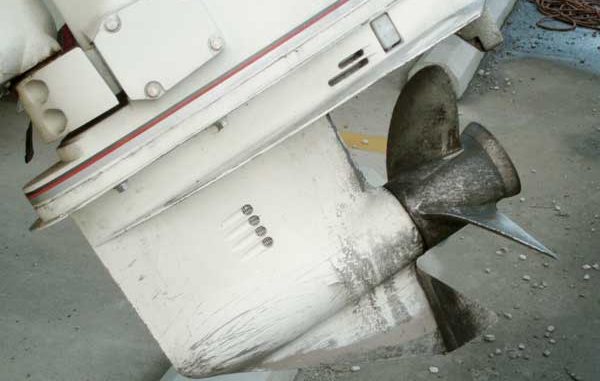
The Propeller is the last connection between your engine and the water. On a Johnson 15 HP, the wrong choice costs you speed, fuel, and sometimes the motor itself.
Most 1974–2005 Johnson 15 HP 2-strokes share a common gearcase spec: 13-tooth spline, 2.5″ gearcase, through-hub exhaust. The factory Prop on these motors was a 9.5″ × 10″ aluminum 3-blade with a rubber hub bushing. It works across most load conditions — but it’s not the best choice for any specific one.
Match Pitch to Your Actual Load
pitch is where most buyers go wrong. Here’s a straight breakdown:
-
Light 12–14′ jon boat, one adult, ~400–450 lb total load → 10–12″ pitch, 9.25–9.5″ diameter
-
Heavier 14–16′ hull or 600–800 lb loaded rig → 8–10″ pitch, same diameter
-
Work applications, strong current, pushing heavy gear → 4-blade high-thrust, 7–9″ pitch
The target WOT RPM for most Johnson 15 HP 2-strokes is 5,000–6,000 RPM. That number is your calibration tool.
Real data from a TinBoats user running a 1992 Johnson 15 HP on a 1436 Lowe jon at ~610 lb shows how pitch shifts performance:
|
prop pitch |
WOT RPM |
Top Speed (GPS) |
|---|---|---|
|
10″ |
6,250 RPM |
~20 mph |
|
8″ |
6,800 RPM |
~18.5 mph |
Dropping 2″ of pitch added 550 RPM but gave up 1.5 mph. The rule holds: every 1″ of pitch change moves RPM by 150–200 on a loaded small outboard.
What a Wrong or Worn Prop Costs You
A motor running below 5,000–5,200 RPM at WOT is lugging — too much pitch for the load. One spinning above 6,200–6,500 RPM is over-revving — too little pitch. On a 2-stroke, that shortens engine life fast.
Damaged blades make things worse. Bent or nicked aluminum increases prop slip by 5–15%. That means 1–4 mph lost at top speed and 5–10% higher fuel burn at cruise. Repair shops see this on small-craft fuel-flow comparisons — it’s a real, measured loss.
Here’s something most buyers miss: a used Johnson 15 HP that turns just 4,800–5,000 RPM and tops out at 14–15 mph on a 14-foot tin boat may need nothing more than an $80–$120 prop swap. Fix the prop and you’re back to 18–20+ mph in the correct RPM band. Buyers cut $200–$400 off the asking price on these rigs, not seeing that the powerhead is fine — the prop is the only problem. Run a compression test and a WOT RPM check. Those two numbers tell you whether you’re dealing with a prop issue or a powerhead issue. The repair bills are very different.
Propeller Options That Fit the Johnson 15 HP
Compatible props use the 13-spline, 2.5″ gearcase, through-hub exhaust fitment. A few solid starting points:
-
Solas Amita 3 (aluminum, 3-blade, E/J 8–15 HP) — available in 9.25″ diameter at 8″, 9″, 10″, 11″, 12″ pitch. Price: $70–$90
-
Solas High-Thrust 4-blade (9.5–15 HP) — better low-speed bite, pitch range 7–9″. Price: $80–$110
-
Michigan Wheel / Quicksilver equivalents — same 13-spline fitment, 9.25–9.5″ diameter, 8–13″ pitch. Price: $75–$120
Starting point by scenario:
-
14′ tin boat, 2 adults + gear (~600–650 lb): 9.25–9.5″ × 10″ aluminum 3-blade
-
Heavy load or strong current: 9.25″ × 8″ or a 4-blade high-thrust 8–9″
-
Light solo, chasing top speed on a 12′ jon: 9.25″ × 11–12″ — check that WOT RPM stays in range
To confirm fitment, cross-reference a Johnson/Evinrude 15 HP 2-stroke (13-spline) compatibility chart. VIF Propellers groups props by gearcase size and spline count. They list compatible diameters and pitches across the full 1974–2005 production run. That’s a faster, more reliable way to confirm the right fit than sorting by model year alone.
Conclusion
Here’s the bottom line: a Johnson 15 HP outboard isn’t just a vintage curiosity. It’s a proven workhorse that still delivers real value — as long as you know what you’re paying for.
Hunting a clean used motor on Craigslist for $400? Or weighing whether a reconditioned 2-stroke is worth $1,200? The price you should pay comes down to three things: year, condition, and stroke type. You now have the framework to make that call with confidence. No more getting burned by a suspiciously low listing price.
One thing most buyers overlook until after the purchase? The Propeller. The right Johnson outboard propeller has a direct impact on fuel efficiency, throttle response, and how well that 15 HP Boat Motor performs on water. Don’t spend weeks researching the engine and five minutes on the prop.
Ready to match your Johnson 15 HP with the right propeller? Browse compatible options at vifpropellers.com — because a great engine deserves hardware that keeps up.