
2026 Suzuki 225 Outboard Price Guide: What You’ll Actually Pay
Budgeting for a new 225 hp outboard is never as simple as glancing at a sticker price. Ring up a local dealer, and you’ll see exactly what I mean within three minutes.
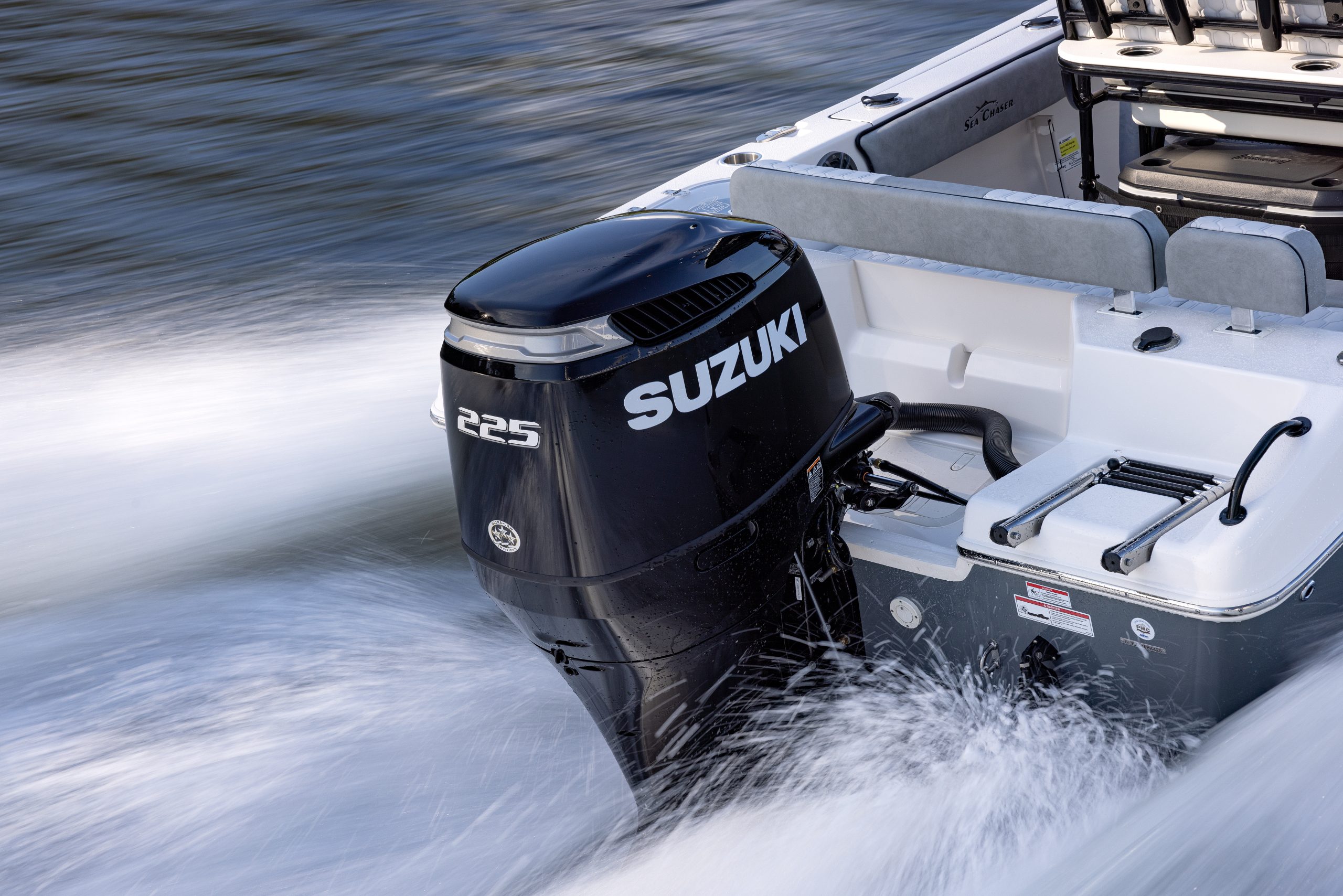
In the eyes of veteran boaters, the Suzuki DF225 sits in an incredibly competitive sweet spot. But let’s be real—between MSRP gymnastics, regional dealer markups, the labor to actually hang it on your transom, and finding the right Prop, that number on the tag is borderline useless. It tells you almost nothing about what’s going to leave your bank account.
I put this 2026 price guide together to tear down what a Suzuki 225 will actually cost you, stripped of all the sales fluff. We’re looking at the real-world model pricing, the hidden ownership costs that bite people every season, and a blunt, straight-up comparison against Yamaha and Mercury.
The Short Answer: The Real Market Numbers
Let’s cut to the chase. A 2026 Suzuki DF225 is going to run you somewhere between $17,200 and $22,900. It all comes down to the exact configuration you need. The official MSRP currently sits at a lofty $26,649—but honestly, if you’re writing a check for that amount, you need to find a new dealer.
|
Model |
Shaft Length |
Color |
Street Price |
|---|---|---|---|
|
DF225A |
25″ |
Standard |
$17,200–$17,400 |
|
DF225TX5 |
25″ |
Black |
$17,900 |
|
DF225TXW5 |
25″ |
White |
$18,400 |
|
DF225T X |
20″/25″ |
Black |
$22,000 |
|
DF225T X |
20″/25″ |
White |
$22,900 |
Take note, though, none of those numbers will have any kind of taxes, dealer preparation fees, shipping fees, or even the hourly rate that the mechanic takes to put it in for you. That’s because these add-ons will really start piling up, and that very difference is why customers get taken aback.
Why Is the Price Gap So Massive?
Now, I’m sure you are wondering how it is possible that one of the base DF225A models costs approximately $17,200 while one of the Minnesota dealers asks over $26,000 for DF225TXW despite the fact that both models belong to the same series?
-
Hardware options: You may need either a 20″ or 25″ shaft. Will the engine have a Cool White finish? Would you like gauges and propellers included in the package?
-
ZIP code: There is a well-known fact in the marine industry that southern dealers sell more products at a cheaper price than Midwest/Northeastern markets do.
-
Time: You may find yourself lucky enough to get into a rebate cycle or a model-year transition period, which can shave between 20% and 30% off the price.
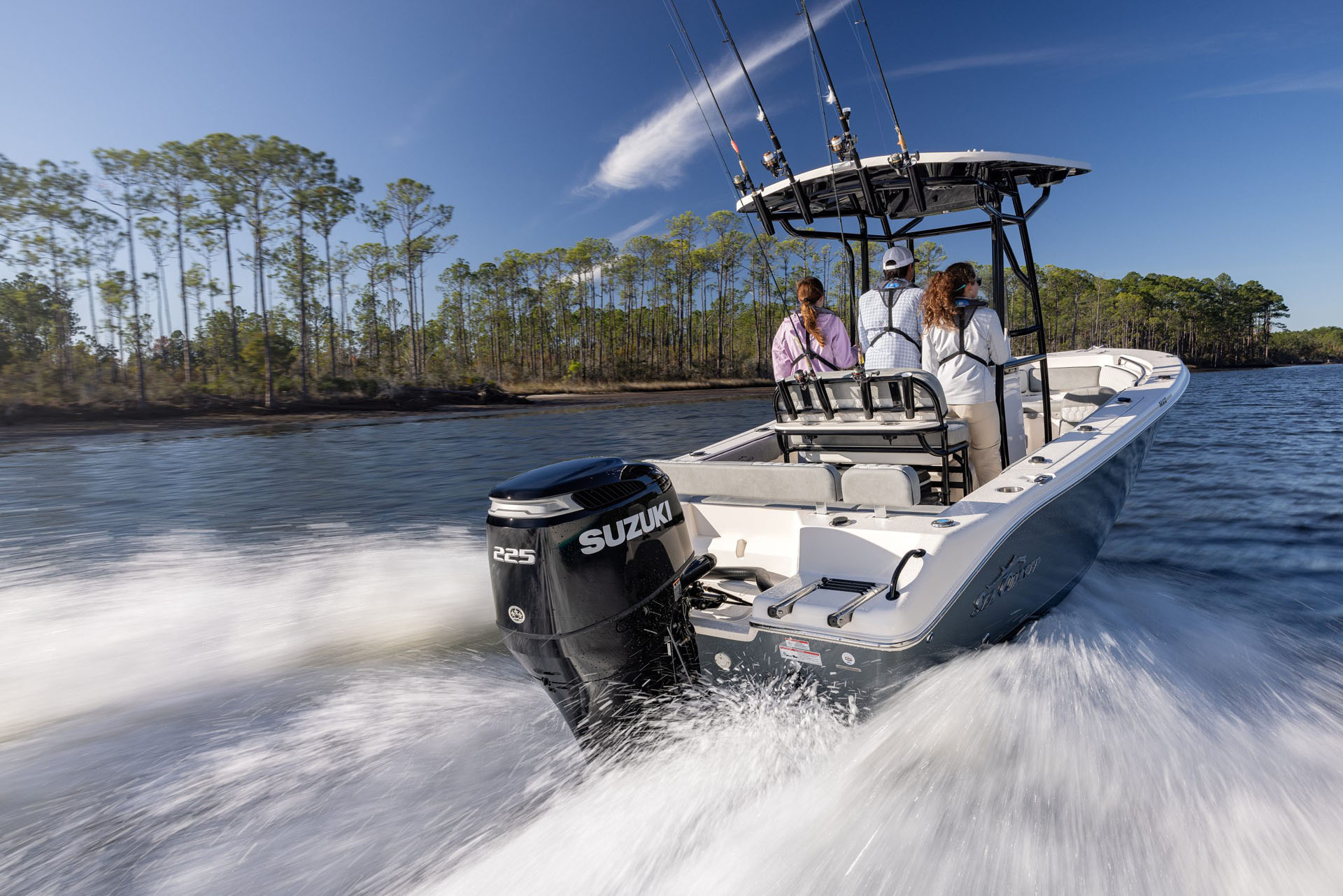
Inside the 2026 DF225 Lineup
Before you even step foot in a showroom, you need to know what you’re actually looking at under the cowling. Every Suzuki DF225 relies on the same core muscle: a DOHC 24-valve V6 displacing a massive 3,614 cc, pushing 225 HP right in that 5,000–6,000 RPM sweet spot.
Take the DF225T X package, for instance. It kicks off around $22,000 for the black motor (tack on $900 if you want white). What dealers sometimes gloss over is that this package often includes an SMG4 digital gauge and a stainless steel Prop. That’s easily over a grand in value already baked into the price.
Then there’s the new Stealth Line for 2026. Suzuki basically gave this variant a CARB 3-Star Ultra-Low Emission rating and designed it to run happily on 89 octane. If environmental compliance is a daily headache in your local marina, this is the one you want to zero in on.
The Hidden Invoice: Total Cost of Ownership
I see guys lock onto that $17,200 base figure and start doing the math in their heads, assuming they’ve got thousands left over for electronics. Then the final invoice hits the desk.
The hanging of the motor and its rigging is not for free either. Installation through dealers normally costs around $500-$1,500 depending on the complexity of the hull. Fuel lines, wiring harnesses, and shift cables require an additional $300-$800.
And then there is the cost of the binnacle and helm controls. An entire package for the steering of a single engine will generally cost somewhere between $600-$1,200. Make sure to set aside $400-$700 every year for regular maintenance. Ignore a simple gear oil and impeller replacement for marine engines and prepare yourself for a costly bill from the sea.
|
The Real Costs |
What You’ll Likely Pay |
|---|---|
|
Bare Engine (DF225A) |
$17,200–$22,900 |
|
Labor, Rigging & Installation |
$800–$2,300 |
|
Helm Controls & Gauges |
$600–$1,200 |
|
Proper Stainless Propeller |
$250–$600 |
|
True Out-the-Door Price |
$18,850–$27,000 |
Propping It Right (Don’t Mess This Up)
Fact of the matter is, a bad Propeller will take that $20,000 powerhouse and make it a slow, inefficient dog. Believe it or not, some people don’t realize this and end up spending countless hours wondering why they’re getting such poor performance when getting on plane.
For the DF225, the requirement is a 15-tooth spline. That’s a given. After that, pitch rules the roost. In terms of mid-sized hulls, a 14.25” x 24P will get the motor right where it needs to be – 5,600-5,700 RPM loaded. If you’re light in the boat and looking to maximize speed potential, cranking the pitch up for 5,900 RPM is incredibly exciting.
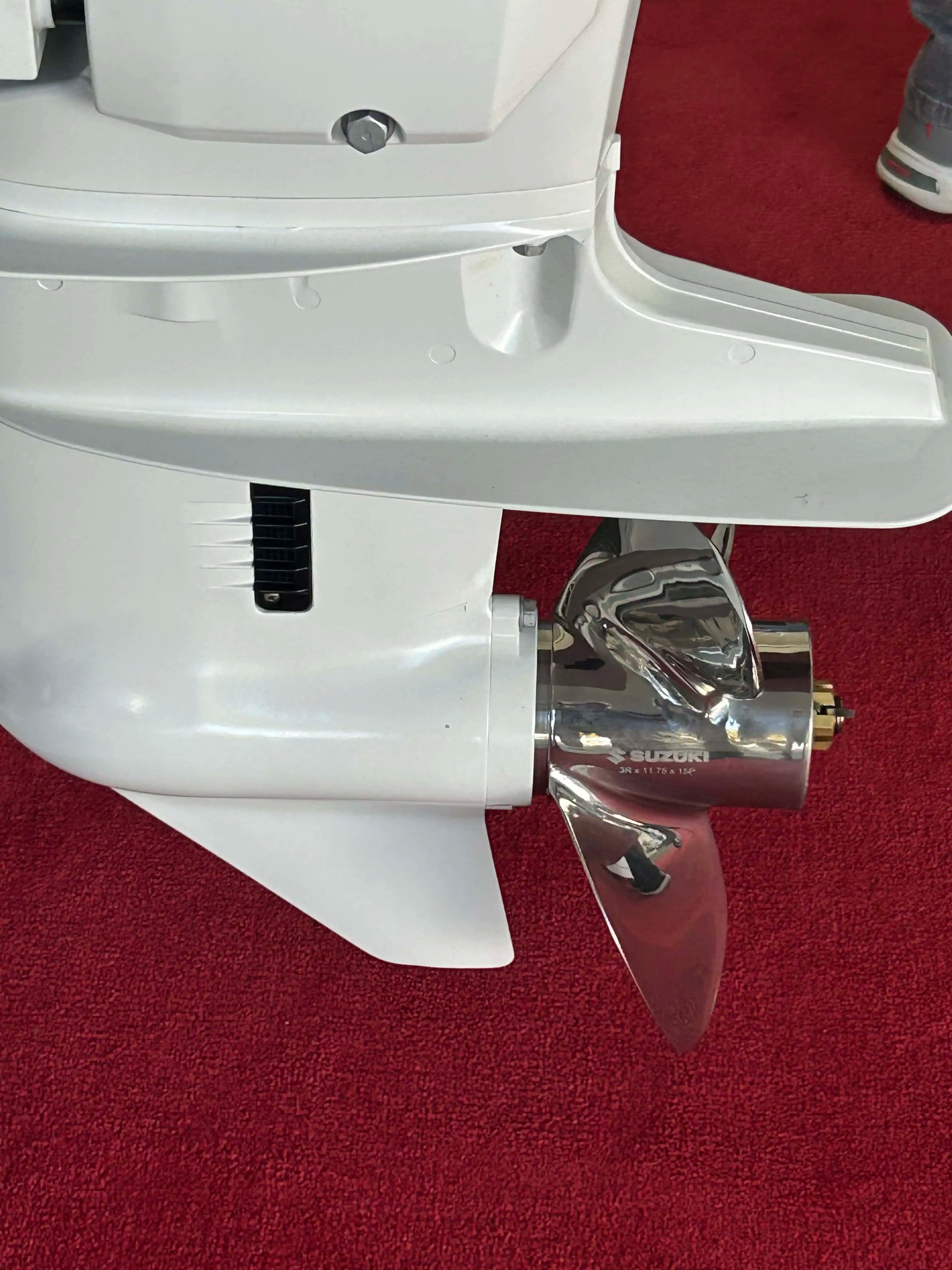
And skip the aluminum unless it’s an emergency spare. Aluminum flexes under massive V6 torque, bleeding your efficiency right into the water. Stainless steel holds its edge and fights off salt. If you’re feeling lost in the weeds on pitch and diameter, checking out the Suzuki DF225-compatible options at VIF Propellers is a phenomenal way to bypass the guesswork. Even better? Ask your dealer exactly which prop they bolted on during your boat’s pre-delivery sea trial.
Suzuki vs. Yamaha vs. Mercury
Three engines. Same horsepower. Completely different personalities.
The price gap is far from a rounding error. Spec for spec, the Suzuki usually undercuts both the Yamaha F225 and the Mercury 225 Pro XS by roughly $1,000 to $2,000. That’s enough cash left in your pocket to cover a top-tier stainless prop and two solid years of maintenance.
But it’s not simply about being cheaper. Suzuki owns the fuel economy conversation. Their Lean Burn technology genuinely beats Yamaha’s VTS system across the mid-range RPMs. If you log serious hours trolling offshore, you’re going to feel that difference in your wallet every single month.
Craving raw, violent hole shots and top-end speed? Look at the Mercury. That 4.6L V8 and its 6,600 RPM ceiling is an absolute beast for performance hulls. What about Yamaha? You’re paying a premium—and honestly, it’s a steep one—for their famously slick digital steering integration and a multi-decade reputation in saltwater.
Is the Suzuki DF225 Worth It?
Six hundred pounds of Japanese engineering shouldn’t come cheap. But pop the cowl, and you see where the money went.

Suzuki ditched the standard rubber timing belt for a self-adjusting timing chain. That alone is a massive win for guys who want to keep their rig for twenty years. Throw in a 54A alternator that pushes out a steady 38 amps even when you’re idling at 1,000 RPM—an absolute lifesaver if you run multiple fish finders, livewells, and radar simultaneously.
It was never designed to be the dirt-cheapest 225 hp outboard on the water. You’re buying a highly capable, ridiculously fuel-efficient motor that doesn’t force you to pay for features you’ll never touch.
So, does the price fit the budget? If it does, buy with confidence. Grab at least two quotes from authorized dealers, squeeze them on end-of-season rebates, don’t forget to budget for the rigging, and head over to VIF Propellers to secure a piece of stainless that will actually let this engine breathe.
Buy it smart. Rig it right. Then go burn some gas.