
You know, making the wrong call on a boat engine doesn’t just dent your wallet—it essentially turns what should be a relaxing weekend into an expensive, frustrating headache. Both sterndrive and outboard systems have incredibly loyal followings, strong opinions backing them, and very real tradeoffs. Honestly, most buyers don’t even figure out which of those tradeoffs actually matter until they’re already stuck at the dock regretting their purchase.
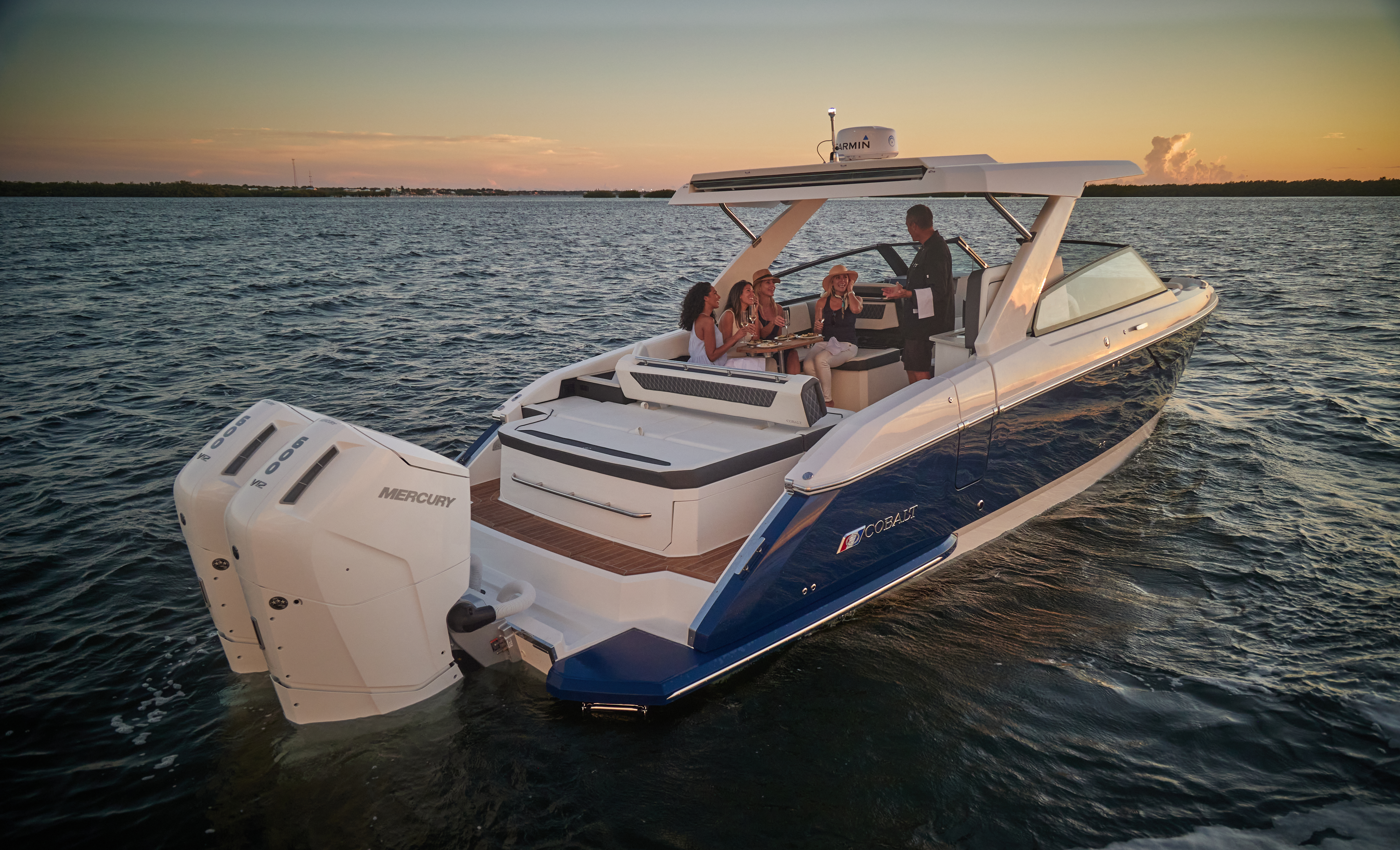
Here’s the thing—the one provides an absolutely stunning rear deck area, totally clean and sleek in appearance, and delivers an impressive ride at lower speeds. What can be said about the latter? It almost effortlessly takes the cake in terms of ease of maintenance, durability in extreme conditions such as contact with salty water, and not overly expensive maintenance costs throughout the years to come. Out of these two options, which one would make more sense to get for your particular boat and within your budget? Most of the comparisons tend to conveniently skip right by that issue, and we won’t do that.
So let’s take a closer look at fuel economy, propulsion characteristics, and Propeller requirements in general terms.
The Data Breakdown: Sterndrive Vs Outboard

A closer examination of the data makes for a relatively clear narrative. Sterndrives have a superior ratio of power-to-weight by an average of 14% (0.058 vs. 0.05), and they are likely to consume 10% less fuel while idling. In return, outboards make it to 25 mph approximately 2.5 seconds sooner. The reality is, outboards saw a remarkable increase in demand from 127,981 in 2012 to 165,435 in 2016 for a reason.
Let us consider the key variables that are bound to affect your experience:
-
Performance: Acceleration capabilities, horsepower at top speed, and fuel consumption at 3,500 RPM
-
Cost: Upfront price (sterndrive engines are 6–9% less expensive initially) and costly maintenance down the road
-
Use Case: Outboard engines work better in saltwater, are ideal for shallow water and recreational wakeboarding, while sterndrives are better for leisurely rides
-
Propeller Compatibility: Your choice affects your options when it comes to selecting the right Prop.
What Exactly Is a Sterndrive (I/O) System?
Say you want the hidden power of a traditional inboard, but the steering flexibility of an outboard. A sterndrive basically mashes those two concepts into one hybrid package. You’ve got an automotive-style engine sitting tucked away inside the hull, while the propulsion part (the drive leg) punches through the transom and hangs off the back. That’s precisely why old-timers still call it an inboard/outboard (I/O).

Here is roughly how that power travels from the engine block to the water:
-
The engine links up to a driveshaft that punches right through the transom of the boat.
-
A 90° bevel gearbox inside the upper outdrive takes that power and shoves it downwards.
-
Another 90° gearbox down in the lower unit finally spins the horizontal propeller shaft.
-
Flexible rubber bellows seal the messy joints, accommodate the steering pivot, and route your exhaust underwater.
You don’t need a standalone rudder here. The whole external drive unit turns to steer the boat, and you can trim it up when it’s time to put the boat back on the trailer.
Realistically, MerCruiser and Volvo Penta absolutely dominate this space. If you’re looking at an 18–28 foot bowrider or a chunky 30-foot cabin cruiser, you’re probably looking at a MerCruiser setup pushing anywhere from 200 to 400 horsepower from a marinized block. Volvo Penta’s Aquamatic systems can push the envelope even further—sometimes up to 600 hp in twin configurations on 50-foot yachts.
The Duo-Prop Gimmick? Not Actually a Gimmick.
Volvo Penta’s duo-Prop system runs two counter-rotating propellers on the exact same shaft. Sounds complicated, right? But the payoff is actually massive. You almost eliminate annoying torque steer, your hole-shot gets a serious kick in the pants, and overall efficiency bumps up by about 10–20% compared to a standard single-prop setup.
Some builders are even playing around with Forward Drive configurations, where the props face the front of the boat instead of the rear. It pulls your draft up by a good 6 to 12 inches, which is honestly a lifesaver if you enjoy beaching your boat on sandbars or hate the idea of a prop strike in shallow surf.
How Does an Outboard Motor Differ?
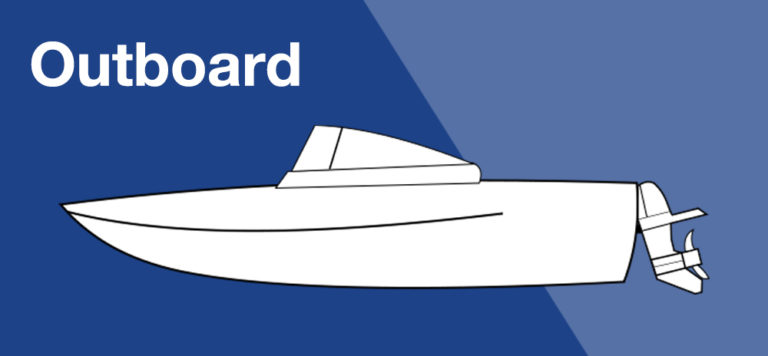
An outboard motor is essentially a giant, self-contained pod of horsepower. Everything required to push the boat forward is bolted directly to the outside of the transom. It’s clean, it’s brutally efficient, and it’s right there in plain sight.
The whole unit is chopped into three heavy-duty sections:
-
Powerhead (Top): This hides the engine block, pistons, and crankshaft. You’re typically choosing between modern 4-strokes or gutsy 2-strokes.
-
Midsection: This acts as the structural spine, carrying the driveshaft downward, handling the tilt mechanism, and managing the aggressive flow of cooling water.
-
Lower Unit: Down in the water, a tough little gearbox steps the screaming 5,000–6,000 engine RPM down to a much more usable 2,000–3,000 RPM for the prop. There’s also a skeg down there to keep you tracking relatively straight.
Why do so many people swear by this design? For one, the whole block pivots to steer—no complicated internal steering arms fighting for space in your bilge. It tilts completely out of the water, preventing a lot of nasty biological growth. Most importantly, you don’t have to pull the hull apart to work on it. It’s completely exposed for maintenance.
Companies like Yamaha, Mercury, Suzuki, and Honda build these things in massive ranges—from a cute 9.9 hp kicker up to monstrous 600 hp V12s. Want to go uncomfortably fast? You can literally just bolt three or four of them across the back of an offshore center console.
Performance Face-Off: Taking It to the Throttle
Numbers on a brochure are cute, but what happens when you actually push the throttle down? The reality might surprise people who aren’t used to testing both.
If you line up an outboard-powered boat and a sterndrive boat—both with the exact same rated horsepower and similar hulls—the outboard usually leaps to 25 mph in about 7.5 seconds. The sterndrive? It lumbers behind, taking closer to 10 seconds. That 2.5-second gap doesn’t sound huge on paper, but trust me, when you’re trying to outrun a wake-zone or pull up a heavy skier, you feel every millisecond of that delay.
Why Hanging Weight Changes Everything
In most scenarios, this lag boils down to simple physics: weight distribution and power-to-weight ratios.
A typical sterndrive system hauls around nearly 1,000 lbs more dead weight than an equivalent outboard rig. You aren’t just carrying that weight; your engine has to fight it at every single RPM. That bulk drags down almost everything:
-
0–25 mph sprints feel sluggish, slowing down by 20–30%.
-
Fuel gauges drop faster, rising 25–40% at cruising speeds (losing roughly 0.4–0.6 mpg).
-
Top speed usually taps out 5–10% lower than the outboard.
At a comfortable 30 mph cruise, you might be throwing away 2.5 mpg in pure efficiency. Over a lively summer of boating, that’s a lot of extra trips to the fuel dock.
But Wait, Where the Sterndrive Actually Fights Back
It’s not entirely a one-sided slaughter. All that heavy cast iron sitting low in the bilge actually works to your advantage when the wind kicks up and the water gets angry.
Because an inboard engine anchors the boat’s center of gravity deep in the hull, you often get:
-
10–20% less annoying heel (leaning) when you’re bouncing through a sloppy 4-foot chop.
-
A much more planted, stable feel when you decide to whip the wheel at 30 mph.
-
An overall flatter, highly predictable turning radius.
Outboards try to fight back with massive trim adjustability. If a sketchy crosswind blows your lightweight outboard hull sideways into a 45° yaw, you can usually correct and recover in about 8 seconds. A heavier sterndrive rig takes closer to 12 seconds to shake it off. If you do a lot of hairy offshore running, that snappy recovery time really matters.
The Real Bottom Line on Performance
It really just depends on what kind of captain you are:
|
Performance Factor |
Outboard Edge |
Sterndrive Edge |
|---|---|---|
|
0–25 mph Acceleration |
✅ Snappier (2.5 sec faster) |
— |
|
Top Speed (equal HP) |
✅ Roughly 5–10% higher |
— |
|
Fuel Efficiency at Cruise |
✅ Saves about 2.5 mpg |
— |
|
Rough Water Stability |
— |
✅ 10–20% less leaning |
|
High-Speed Cornering |
— |
✅ Flat, 25% more stable |
|
Crosswind Recovery |
✅ 30% quicker response |
— |
If you crave raw speed, fewer trips to the pump, and snappy handling, outboard is the obvious choice. But if you hate getting tossed around in choppy bays and prefer your boat to handle like a heavy, planted luxury car? The sterndrive’s low center of gravity easily justifies its weight penalty.
The Deep Dive on Maintenance and Your Wallet
Let’s be real for a second: the sticker price at the boat show is arguably the least painful check you’ll write. What really bleeds your bank account happens in the service bay.
Sterndrives are mechanically complex. You’re combining a car-style engine with a vulnerable, underwater gearbox. Twice the systems usually translate to twice the potential failure points.
What Sterndrives Actually Cost to Keep Alive

Just for a basic annual checkup by a pro, you’re usually starting around $630 per drive leg. And that’s if absolutely nothing is broken. A typical service covers:
-
Bellows inspection: If these rubber accordion tubes fail, raw water floods your U-joints, rips apart the gimbal bearing, and potentially sinks the boat. Replacing them isn’t a quick DIY swap—it hurts.
-
Milky gear lube? That means water breached the seals. Ignore this, and you’re buying a whole new drive.
-
Gimbal bearing checks: To even check engine alignment or grease the U-joints, the heavy outdrive has to physically come off the boat.
Toss your boat in a slip for the summer? You’ll likely need a mid-season haul-out. Barnacles and aggressive algae love to clog up those intricate intake ports, leading straight to agonizing overheat alarms.
Why the Outboard Usually Wins the Mechanic War
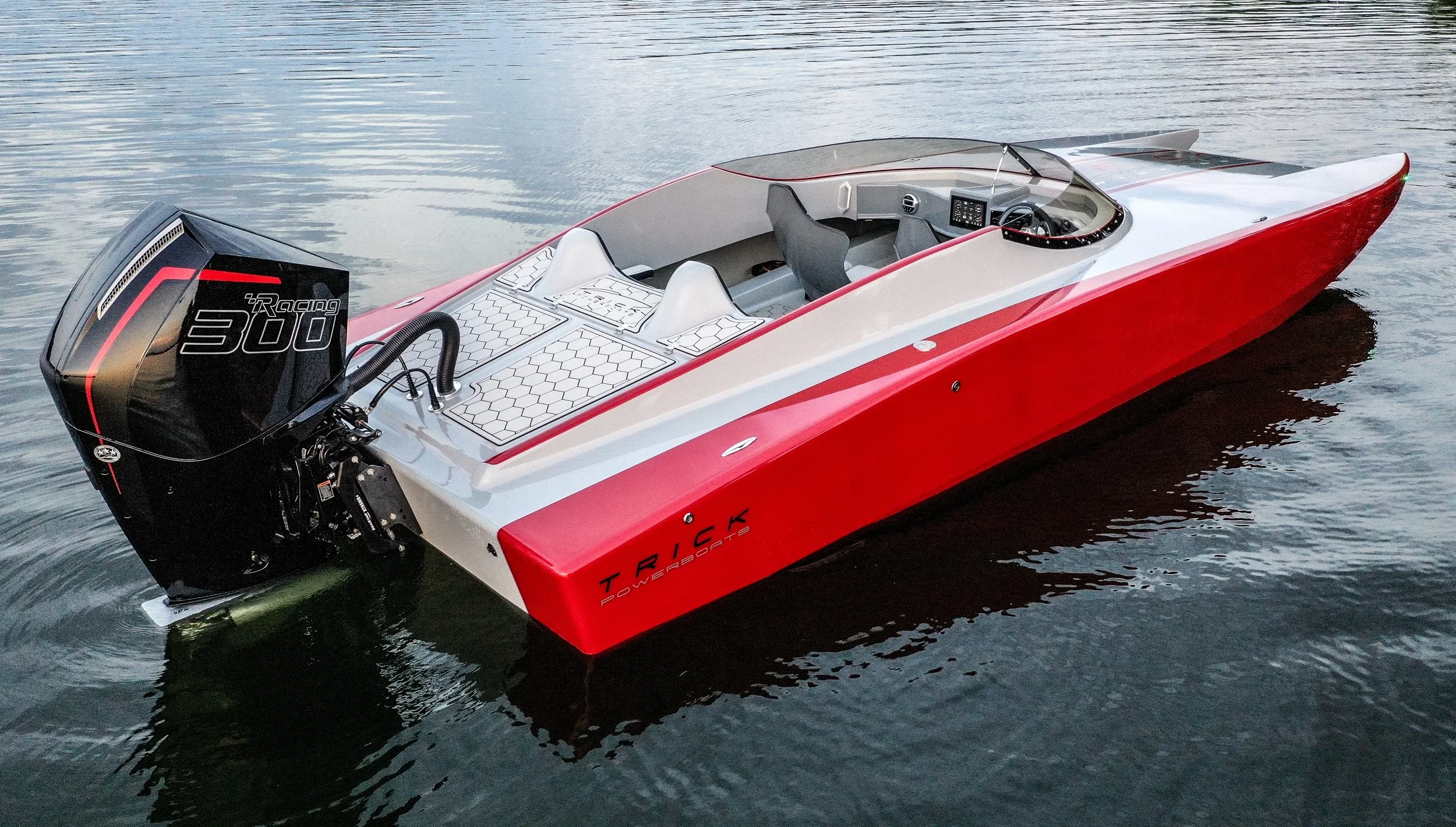
Outboards bypass a huge chunk of this nonsense simply by living completely outside the boat. You don’t have bellows. There are no gimbal bearings. You don’t have a giant hole cut entirely through the transom below the waterline.
Yearly service? It often hovers around $300–$500. It’s mostly just draining oil, swapping a couple of easy-to-reach filters, and greasing some zerks. Heck, you can honestly do half of it in your driveway with a decent wrench set.
Do the math over a 10-year ownership stint. Outboard owners frequently end up keeping $5,000 to $8,000 in their pockets compared to the sterndrive guys. That’s not a rounding error—that’s enough cash to completely refit your navigation electronics or pay for a couple years of premium slip fees.
The Transom Aesthetic: Space vs Function
Did you know your engine choice completely dominates the layout of your boat’s rear end?
This is precisely where the sterndrive steals the show. Raw performance stats don’t measure the sheer joy of hanging out on an unobstructed swim platform. Because the engine is hidden under a sunpad, your entire stern is wide open. You can sit on the edge with your feet in the water, stage wakeboards effortlessly, and load up the family dog without dodging giant metal motor cowlings.
Now, try stuffing twin 300 hp outboards on that exact same transom. Your massive swim platform instantly shrinks to a narrow 20-inch walkway.
If you’re a hardcore fisherman, though? You probably don’t care. That tight outboard setup leaves plenty of room for rod holders, bait prep stations, and leaning out over the gunwales to gaff a fish. Personally, I think the tradeoff is highly subjective. Sterndrives win the “floating patio” contest. Outboards win the “working deck” contest.
The Saltwater Survival Test
Draft depth is one of those boring specs you completely ignore—right up until the moment you hear your lower unit grinding across a sandbar.
An outboard usually draws about 12–18 inches while running. Hit a button to tilt it up, and you’re skimming in just 8–12 inches of water. You can creep into skinny mangroves and sketchy shallows that would terrify a sterndrive owner.
A sterndrive’s drive unit is rigid and hangs incredibly low. You basically need a hard 24–30 inches of clearance, continuously. Shallow water simply stops a sterndrive cold.
The Brutal Reality of Corrosion
And then there’s the salt. Saltwater is merciless, and how your engine deals with it is a major financial factor.
An outboard spends maybe 20% of its life actually submerged if you tilt it up at the dock. With regular flushing, the corrosion rate is a microscopic 0.05–0.1 mm per year.
A sterndrive? Parts of it live underwater 24/7. Moving saltwater creates an electrolytic nightmare, pushing corrosion rates up to 5x faster (0.2–0.5 mm/year). Yes, you can slather on epoxy paints and hang zinc anodes everywhere, but it’s a relentless, stressful battle.
The quick verdict here? If your boat lives in a coastal slip, an outboard is arguably the smartest financial play you can make. If you exclusively run in deep, pristine freshwater lakes, either system works perfectly fine.
The Ultimate Side-by-Side Breakdown
Let’s cut to the chase and put them head-to-head on the specs.
|
Dimension |
Outboard |
Sterndrive |
The Victor |
|---|---|---|---|
|
Power-to-Weight Ratio |
Mercury Verado 250: 600 lbs |
Volvo Penta V6-250: 903 lbs |
✅ Outboard (300+ lbs lighter) |
|
Fuel Economy |
6.9 gal/hr @ 3,500 RPM |
6.6 gal/hr @ 3,500 RPM |
✅ Sterndrive (Just a bit thriftier) |
|
Headache Factor (Maintenance) |
Cheap, fast, easy to reach |
Pricy, involves complex bellows |
✅ Outboard |
|
Rear Swim Platform Space |
Motors completely hog the center |
A massive, wide-open party deck |
✅ Sterndrive |
|
Hole Shot / Acceleration |
Lightweight = instantly on plane |
Takes a bit to get its heavy self moving |
✅ Outboard |
|
Ploughing Through Ugly Waves |
Tends to ride higher over waves |
Heavy torque smashes right through chop |
✅ Sterndrive |
So, the outboard technically “wins” by the numbers, but pure math rarely buys a boat. One massive caveat to keep in mind: if you keep your boat on a trailer in your driveway, the sterndrive’s maintenance nightmare pretty much vanishes. The dreaded “sterndrive tax” mostly targets owners who leave their boats in the water year-round.
Which Rig ACTUALLY Fits Your Life?
Five guys could walk into a dealership with the same exact budget, and all five could walk out with different engines for perfectly valid reasons. There really is no absolute “best” engine—only the one that fits how you live on the water.
Are you basically hosting floating weekend parties?
Go with the sterndrive. The gorgeous swim platform and the quiet, silky low-speed cruising make life on the hook incredibly pleasant. You aren’t buying a boat; you’re buying a mobile patio.
Are you chasing fish at 5 AM?
Outboard, maybe throwing a couple of them on the back. You desperately need that shallow water access, the rock-solid reliability, and the open cockpit space for rods and tackle.
Is your boat going to sit in a saltwater marina?
Save your sanity: get the outboard. Tilting the motor completely out of the corrosive brine will easily double the lifespan of your gearcase and save you thousands over the next few seasons.
Are you handy with a wrench and hate paying mechanics?
Again, the outboard. Popping the cowl off an outboard gives you access to almost everything. To do the same work on a sterndrive, you might find yourself hanging upside down in a cramped, sweaty bilge.
Don’t Strangle Your Engine With the Wrong Propeller
You can spend $30,000 on the absolute perfect propulsion system and completely ruin the experience by slapping the wrong piece of metal on the prop shaft.
Whether you went outboard or sterndrive, the logic remains roughly the same:
-
3-Blade Props: These are your speed demons. They give you a sharp hole shot and great top-end speed, making them perfect for your standard runabouts.
-
4-Blade Props: Need to drag a heavy tube, push a crowded pontoon, or plane out at lower speeds? The fourth blade acts like extra tire grip on wet asphalt. It sacrifices a dash of top speed for incredible low-end muscularity.
As a somewhat general rule, you always want to match your pitch and diameter so your engine comfortably hits the sweet spot of its Wide Open Throttle (WOT) range—usually somewhere between 5,000 and 6,000 RPM. Think of it like bicycle gears: too much pitch, and your engine bogs down and strains. Too little pitch, and it screams past the redline, begging for mercy.
If you’re stuck trying to decipher spline counts and pitch angles, you honestly don’t have to guess. Run your engine specs through the matching tools over at VIFpropellers.com. Picking the right VIF propeller essentially guarantees you’re actually putting all that expensive horsepower into the water, exactly the way the boat builders intended.