
Let’s be completely honest—sticker shock hits hard when you’re repowering a boat. You spend hours researching the Yamaha 150 outboard price online, get comfortable with a number, and then the local dealer hands you a quote that looks absolutely nothing like your initial estimate. That gap between expectation and reality is incredibly frustrating, but it happens to almost every buyer.
The Yamaha F150 four-stroke is arguably one of the most trusted 150 hp motors sitting on the water today. However, throwing a blanket price on it is impossible. Model variants, shaft lengths, regional markups, and those sneaky hidden installation costs can quickly push your final number way past what you budgeted for. Because most people just don’t see those extra line items coming, they walk into negotiations completely blind.
复制链接
This updated 2026 buyers guide cuts out the noise and completely removes the guesswork. We are going to break down the real cost of ownership, look at how Yamaha actually stacks up against its biggest rivals, and show you how to get the performance you paid for.
2026 Yamaha F150 MSRP: Breaking Down the Variants
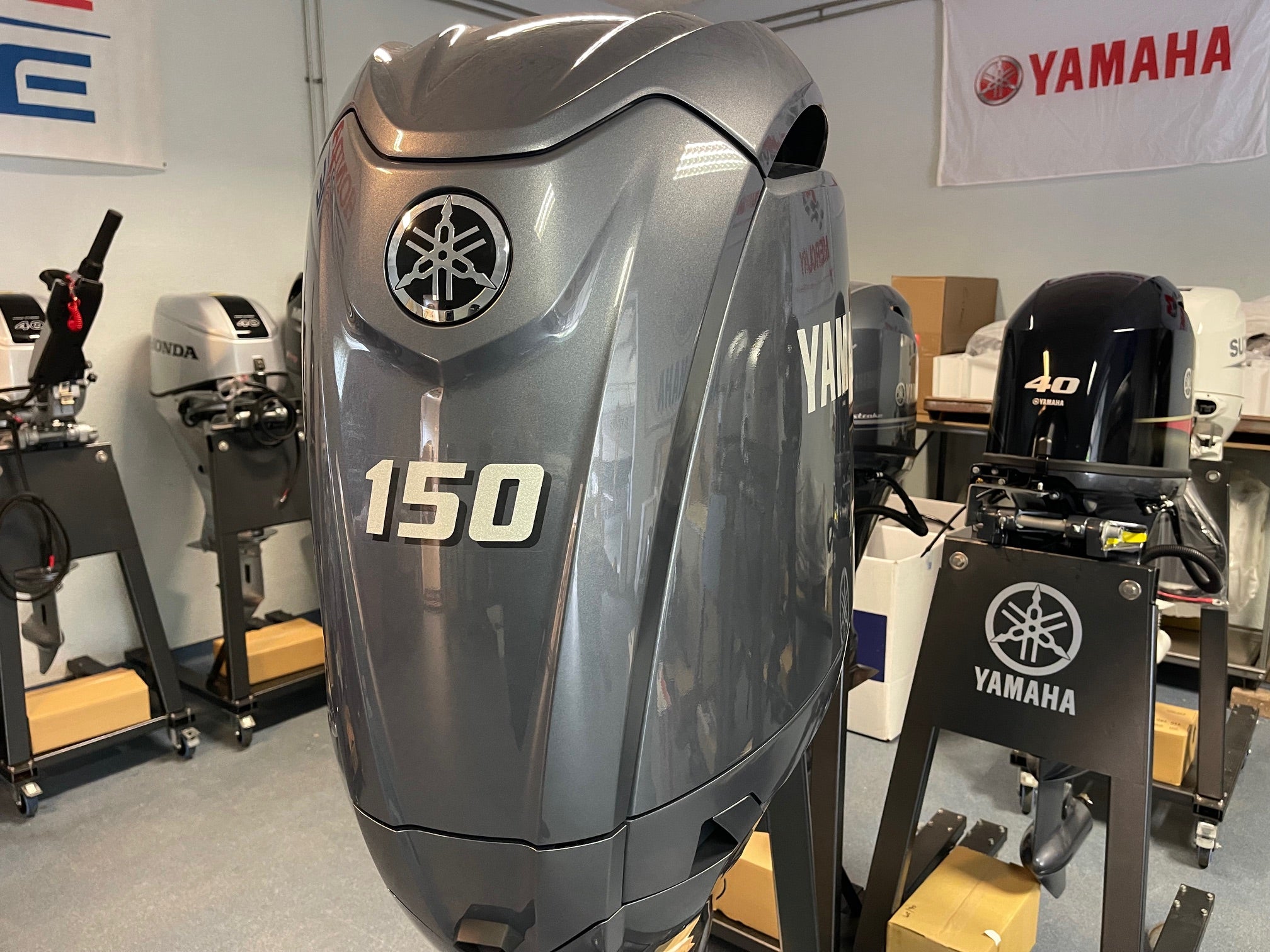
Right now, you are looking at six distinct configurations for the F150. Based on manufacturer suggested retail price (MSRP), these models swing from roughly $17,900 all the way up to $22,320. That is a massive $4,400 price gap just within the exact same horsepower class.
If you don’t understand why that gap exists, a dealer might easily upsell you on features your boat doesn’t even need. Here is a clean look at the 2026 lineup before you step onto the lot:
|
Model |
Shaft Length |
Control System |
Color Code |
2026 MSRP |
|---|---|---|---|---|
|
F150LD |
20″ |
Mechanical |
Gray |
$17,900 |
|
F150XD |
25″ |
Mechanical |
Gray |
$18,175 |
|
F150XSA |
25″ |
DEC Digital |
Gray |
$20,725 |
|
F150XSA2 |
25″ |
DEC Digital |
Pearl White |
$21,490 |
|
LF150XSA4 |
25″ |
DEC Digital |
Classic White (CR) |
$22,320 |
So, what exactly is driving these price differences? It really boils down to three specific upgrades.
First, upgrading from traditional mechanical controls to Digital Electronic Control (DEC) adds about $2,000 to the sticker price. If you run a twin-engine setup or want that buttery-smooth Helm Master precision, DEC is totally worth the money. But if you have a simple center console? The mechanical version will save you thousands and run just as reliably.
Second, shaft length matters. Pumping up from a standard 20-inch shaft to a 25-inch shaft adds around $300 to the base price. Getting this wrong isn’t just a financial mistake—it ruins how your boat handles. Always measure your transom before picking a model.
Finally, aesthetics cost money. Choosing Pearl White over standard Yamaha Gray will tack an extra $765 onto your bill. Counter-rotation models, built specifically for balancing out twin-engine setups, also carry their own premium.

What You Should Actually Pay: MSRP vs. Street Price
Here is a secret that the boating industry doesn’t want you to focus on: MSRP is just a starting point. If you quote the manufacturer’s spec sheet price at the dealership, you are instantly leaving money on the table before the conversation even begins.
The gap between what Yamaha suggests and what dealers actually close deals at is where smart buyers find their leverage. Looking closely at recent 2026 sales data, an entry-level mechanical F150XD (which lists for $18,175) closed at $15,495 at a dealership in Waco, Texas. That’s a very real $2,700 discount. Up in Bremerton, WA, a motivated dealer let a standard mechanical unit out the door for just $13,999.
However, you need to watch your back for the mandatory $490 dealer prep fee. This covers unpacking, standard rigging, a test run, and computer diagnostics. You really can’t negotiate this away, but knowing it exists means it won’t blindside your final budget.
If you want to negotiate like a pro, hunt for aging inventory. Motors that have been sitting in the showroom for over 90 days are a liability for the dealer. This gives you massive negotiating power, especially late in the season. You can also ask for bundle deals; rolling the motor, installation, and a new Propeller into one single out-the-door invoice usually forces the dealer to give you a heavier discount than buying everything piecemeal.
How Does the F150 Compare to Mercury, Honda, and Suzuki?
It’s incredibly common to cross-shop when you’re preparing to spend twenty grand. The 150 HP class is incredibly competitive, with four major brands dominating the local marinas.
|
Brand / Model |
Average MSRP Range |
Dry Weight |
Defining Advantage |
|---|---|---|---|
|
Yamaha F150 |
$17,900 – $22,320 |
485 lbs |
Massive dealer network, unbeatable resale value. |
|
Mercury 150 |
$15,000 – $17,000 |
455 lbs |
Lightest in class, lowest upfront purchase price. |
|
Honda BF150 |
$16,000 – $18,000 |
485 lbs |
Legendary long-term mechanical reliability. |
|
Suzuki DF150 |
$15,500 – $17,500 |
485 lbs |
Strong focus on fuel efficiency and low RPM torque. |
On paper, Mercury looks like the obvious winner. It generally runs about $1,500 to $2,000 cheaper than a comparable Yamaha, and it sheds about 30 pounds of weight off your transom. But buying a boat motor is about long-term math, not just Day One savings.
Where Yamaha easily justifies its premium price tag is in the secondary market. Because Yamaha offers a highly desirable transferable extended warranty, secondhand buyers actively hunt for used F150s. This means when you decide to sell your boat five years from now, that Yamaha block will hold significantly more cash value than the Suzuki or Mercury. Furthermore, finding a certified Yamaha mechanic at a random marina when something goes wrong is generally much easier.
The Hidden Envelope: Your Exact Year One Costs
I constantly see guys buy the block and completely forget to budget for getting it onto the boat. The motor itself is just the foundation. If you want a realistic look at your bank account after Year One, you need to calculate these hidden costs.
First, installation isn’t optional on a new engine if you want to keep the warranty valid. Expect to pay between $1,000 and $2,500 just for professional rigging. Removing an old engine and modifying wiring harnesses takes a lot of billable hours.
Then, you have to buy a Propeller, which can easily range from $500 for a basic setup to $1,500 for high-end stainless steel. Add in about $300 to $600 for your annual maintenance (think oil changes, winterization, and water pump impellers) and roughly $1,500 for fuel over a 100-hour boating season.
When you wrap it all together, the true out-the-door cost for year one of owning your new F150 sits comfortably between $17,000 and $26,000 depending on the model and how heavily you use it.
Do Not Strangle Your New Engine with the Wrong Propeller
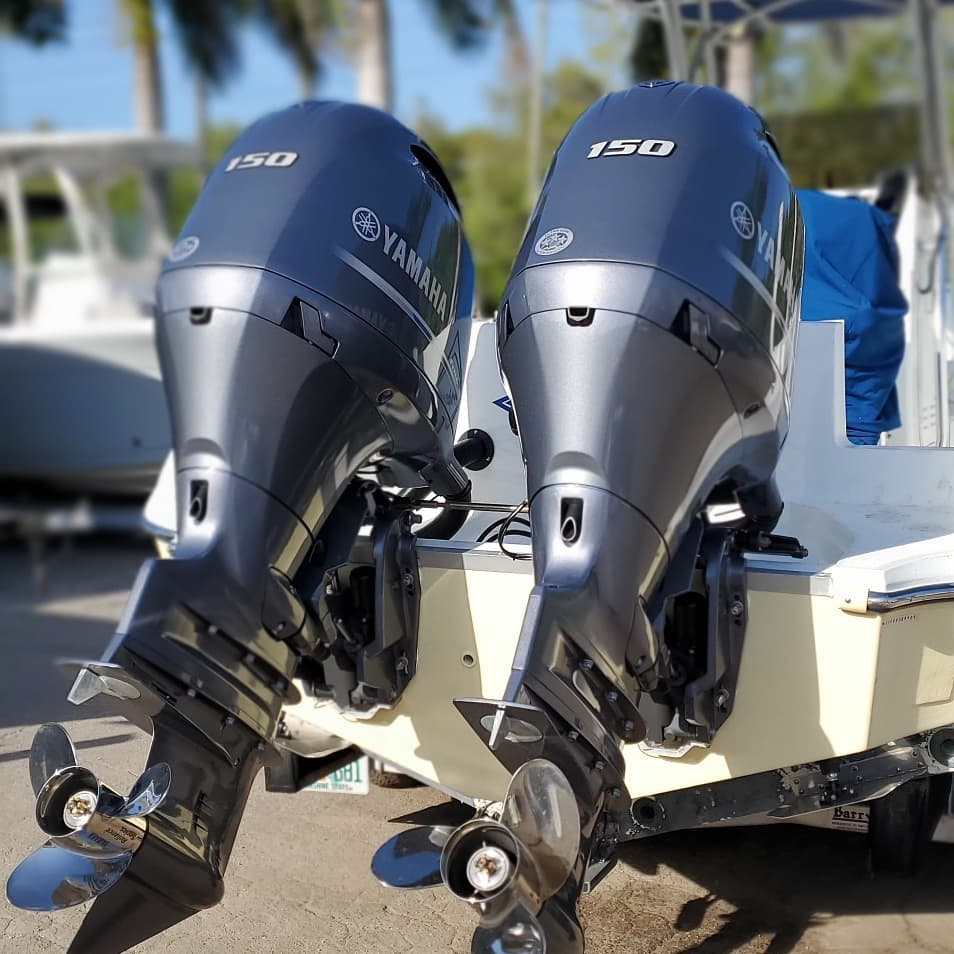
We need to talk about props, because slapping a cheap aluminum wheel on a premium $20,000 engine is like putting bicycle tires on a Ferrari. You are literally burning extra fuel and losing top-end speed on every single trip.
Your Yamaha F150 is designed to hit a wide-open throttle (WOT) target right between 5,000 and 6,000 RPM. If you push the throttle down and you’re maxing out at 4,800 RPM, your engine is lugging. You need to step down your propeller pitch by 1 or 2 inches. Remember this rule of thumb: one inch of pitch will adjust your engine speed by about 150 RPM.
Material makes a massive difference here, too. Upgrading from aluminum to a highly durable stainless steel Prop adds roughly 3 to 5 MPH to your ultimate top speed. Even better, because stainless steel doesn’t flex under heavy torque, it improves your fuel economy by 10% to 15%.
For most standard recreational setups, a 13×19 or 14×17 three-blade stainless Prop matched specifically to the F150’s 15-spline hub hits the absolute sweet spot. If you want verified OEM-level fitment without paying those crazy dealership markups, VIFpropellers.com carries highly rated, performance-matched stainless options engineered specifically for this Yamaha line.
Answering Your Pre-Purchase Questions
Is there a 2-stroke Yamaha 150 I can buy brand new?
No, there isn’t. Yamaha completely discontinued its 2-stroke F150 line years ago. Every brand-new unit sitting in a showroom right now is heavily regulated 4-stroke technology. While you might find a cheap used 2-stroke on Craigslist, beware. They carry much higher maintenance costs, worse fuel economy, and practically zero manufacturer support.
Can I finance the motor directly?
Yes, you absolutely can. Yamaha Financial Services usually runs financing terms anywhere from 12 to 240 months. Depending on your credit score, APR ranges often sit around 4.99% to 7.99%. Just be cautious with those long 15-year terms; the interest can easily add thousands of dollars to your true cost of ownership.
What is the sweet spot for the best deal?
Timing is everything. If you can wait until the winter off-season and target a dealer who is paying interest on aged inventory, you hold the cards. Alternatively, shopping the lightly used market for a clean 2022 model with under 500 hours can instantly knock $5,000 to $8,000 off the retail price tag while still feeling brand new.
Final Thoughts
At the end of the day, buying a Yamaha F150 four-stroke outboard is a long-term investment. Yes, it requires a hefty upfront check, but it delivers unmatched reliability on the water and holds its financial value better than almost any competitor.
Now that you know the exact MSRPs, the real-world street prices, and the hidden installation fees, you are in a much stronger position to negotiate. Just remember that buying the engine block is only half of the performance equation. Matching your new motor with the correct controls, the right transom shaft length, and a premium stainless propeller is what guarantees your boat will run flawlessly for the next two decades.