
Choosing between an inboard motor and an outboard is more than a technical decision — it’s a personal one. The right engine shapes how your boat handles on open water. It also affects how much you’ll spend over the next decade, and how much you’ll enjoy being out there.
Most boaters make this call based on gut feeling or a dealer’s pitch. They never see a clear, side-by-side breakdown. That’s what this guide delivers.
Buying your first boat? Upgrading your current setup? Hunting for the right Propeller to match your existing system? Everything you need to make a confident, informed decision is right here.
What This Guide Covers — and How to Use It
Three engine types dominate the market: inboard motors, Outboard Motors, and stern drive systems (I/O). Each one fits a different kind of boater, a different kind of water, and a different kind of life on the boat.
Here’s what this guide covers:
-
Performance & Power — real horsepower differences, including why a 250 HP inboard Boat Engine doesn’t deliver 250 HP to your Propeller
-
Maintenance & Accessibility — what ownership looks like week to week
-
Fuel Efficiency — where modern outboard motor technology has closed the gap on rivals
-
Space & Layout — how your marine engine type shapes life aboard
-
Best Use Cases — fishing boats, cruisers, watersports, shallow water
-
Propeller Compatibility — matching the right Prop to your specific system
Skim the comparison table. Read the section that fits your situation. Leave with a decision you can trust.
Inboard vs Outboard: Head-to-Head Performance Comparison
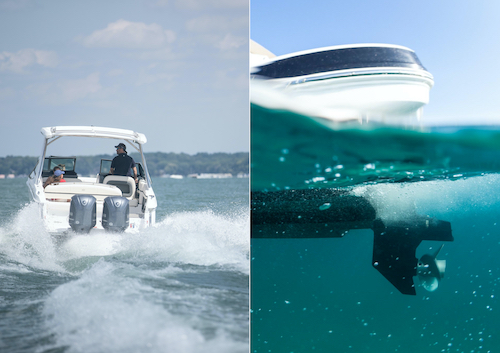
Inboard motors are built into the hull — near the center or stern. Power runs through a drive shaft to a propeller tucked under the boat. That propeller stays submerged and doesn’t pivot. Steering works through a rudder, or on sterndrive systems, through a moveable drive unit on the transom.
Outboard Motors are a different animal. The engine, gearbox, and propeller combine into one self-contained unit. It bolts to the stern. It pivots to steer. It tilts clear of the water when you’re done. No engine compartment to crawl into — ever.
Performance numbers lie. Read them off a spec sheet without context, and they tell you nothing useful at the water line.
Here’s what most dealers won’t spell out: a 250 HP inboard boat engine doesn’t deliver 250 HP to your propeller. It delivers somewhere between 200 and 215 HP. That’s after losing 15–20% through the drivetrain, the shaft, and the mechanical transfer from crankshaft to Prop. A 200 HP outboard motor delivers its full rated power straight to the prop. So those numbers on paper? You’re not comparing the same thing.
That gap matters more than most buyers realize.
Speed, Acceleration, and What “HP” Really Delivers
Outboards win on top speed and mid-range punch. A 200 HP outboard regularly matches — or beats — a 250 HP sterndrive in real-world acceleration. Raw horsepower ratings don’t tell the whole story. Think of it like a sharp knife cutting faster than a dull one twice its size.
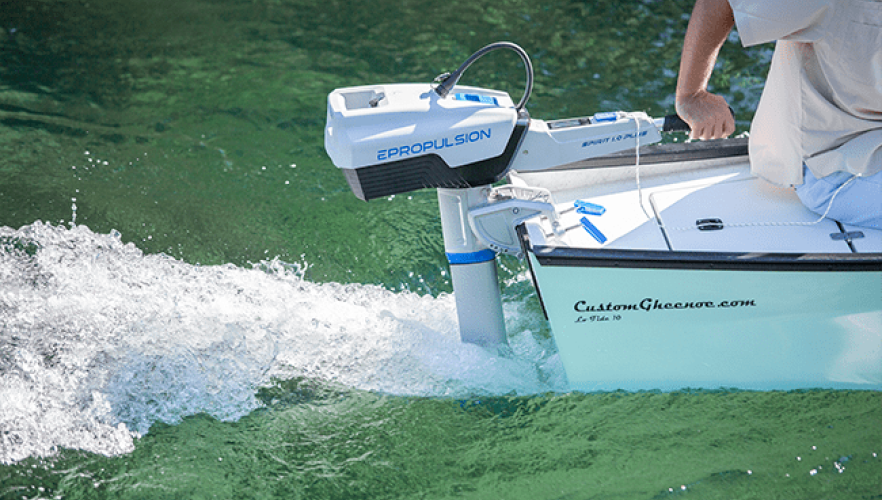
Outboards are also lighter. Less weight means faster acceleration and better fuel efficiency. It also shifts the boat’s center of gravity in ways that help handling. In shallow water or tight marina turns, outboard trim control lets you adjust propeller depth on the spot. You can raise or lower the prop to match conditions — something no fixed-shaft inboard can do.
Inboards can’t match that. Fixed shaft. No trim. You get what you get.
Where Inboards Pull Ahead
Load performance is where inboard and I/O systems earn their reputation. The bottom-end torque is real. Put six adults aboard with a cooler full of ice, and an I/O gets up on plane faster and with more control than an outboard at the same rated power.

For watersports, inboards hold a structural edge that no horsepower figure captures. The engine sits inside the hull. The propeller tucks underneath — away from the transom. That setup gives wake boats cleaner, higher-quality wakes. No prop interference. Better weight distribution across the hull. Forward-facing dual-prop setups like the Mercruiser Bravo III push that advantage even further.
That’s why dedicated wakeboard and ski boats almost all run inboard engines.
The 2020s Shift: Outboards Are Closing the Gap
Something has changed in the last five years. Outboard motor horsepower has grown fast. Single units now reach 600 HP. Multi-engine setups on large cabin cruisers are replacing sterndrive configurations that once seemed untouchable. Boats that belonged to inboard-only territory a decade ago now run twin or triple outboards — with strong results.
|
Performance Metric |
Inboard / I/O |
Outboard |
|---|---|---|
|
HP Rating Basis |
Crankshaft (15–20% drivetrain loss) |
Prop-direct (full rated output) |
|
Effective Output at Prop |
250 HP → ~200–215 HP |
Full rated HP delivered |
|
Weight Impact |
Heavier; reduces payload capacity |
Lighter; boosts acceleration |
|
Low-Speed Handling |
Limited (no trim adjustment) |
Excellent (trim + pivot steering) |
|
Heavy Load / Planing |
Superior bottom-end torque |
Stronger mid-range |
|
Watersports Wake Quality |
Superior (centered weight, no transom prop) |
Capable but less refined |
|
Top Speed Trend (2020s) |
Competitive at high HP |
Increasingly dominant |
The bottom line is straightforward. Raw agility, easy handling, and efficient power delivery are your priorities? A modern outboard motor system is tough to beat. Towing skiers, shaping wakes, or running heavy loads on long passages — especially with diesel inboard engines — the torque and stability of an inboard boat engine still makes a strong case for itself.
Cost Breakdown: Inboard Motor vs Outboard Motor (Purchase, Maintenance & Long-Term)
Numbers don’t tell the whole story — but they’re a good place to start.
The sticker price on an outboard motor runs lower than a comparable inboard or sterndrive setup. That gap has closed as outboard technology improved, but inboard boat engines still carry a higher upfront cost. Budget-first buyers will lean toward outboards.
What happens after the purchase is where things get interesting.
Maintenance: Frequency, Access, and Real-World Cost
Outboard motors need servicing every 750 hours. Inboard motors go about 2,000 hours between services — close to three times longer. On paper, that looks like a clear win for inboards.
In practice, it gets messy. Inboard engine maintenance is hard work. The engine sits inside a cramped bilge hatch. Reaching it takes professional hands — and professional invoices. Water exposure during service adds more problems on top of that. Outboard maintenance is different. The engine hangs on the outside of the boat. You can see it, reach it, and in many cases handle the work yourself. No tight spaces, no specialist required.
The Costs You Might Not Anticipate
-
Insurance: Inboard motor owners pay higher premiums. Plan for that in your annual budget.
-
Fuel: Inboards are built on automotive engine designs and burn fuel more cleanly. That adds up on long trips or larger boats.
-
Winterization: Outboards tilt out of the water. Storage is simple. Inboards need full boat winterization each season — that’s an added cost every year.
-
Replacement: Pulling out an inboard engine is a specialist job with a matching price tag. An outboard unbolts and a new one goes on. You can upgrade without buying a new boat.
The Full Picture
|
Factor |
Outboard |
Inboard |
|---|---|---|
|
Initial Purchase |
Lower |
Higher |
|
Service Interval |
Every 750 hrs |
Every 2,000 hrs |
|
Maintenance Cost |
Lower (DIY possible) |
Higher (professional required) |
|
Insurance Premiums |
Lower |
Higher |
|
Fuel Efficiency |
Lower |
Higher |
|
Replacement Ease |
Simple, low-cost |
Complex, expensive |
|
Winterization |
Simpler |
Full boat prep required |
|
Lifespan |
Shorter |
Longer |
Neither system is cheaper across the board — that’s the honest answer. Outboards cost less to buy, maintain, and replace. Inboards burn less fuel, last longer, and need service less often. Your total cost depends on how many hours you run, where you store the boat, and how long you plan to keep it.
Space, Layout & Aesthetics: How Each Motor Affects Your Boat Experience
Walk onto two different boats of the same length, and one feels airy and generous. The other feels like someone forgot to finish building it. Nine times out of ten, the difference is under the hood — or rather, whether there is a hood at all.
Inboard motors claim real estate. The engine room carves 10–20% out of your cabin footprint. Storage disappears. Seating arrangements never quite work. Circulation paths feel squeezed. Flip to the stern, though, and you get a real payoff. No motor hanging off the back means a swim platform that’s 15–25% more spacious. That’s extra room for lounging, gear storage, and easy in-and-out access on a good afternoon swim.
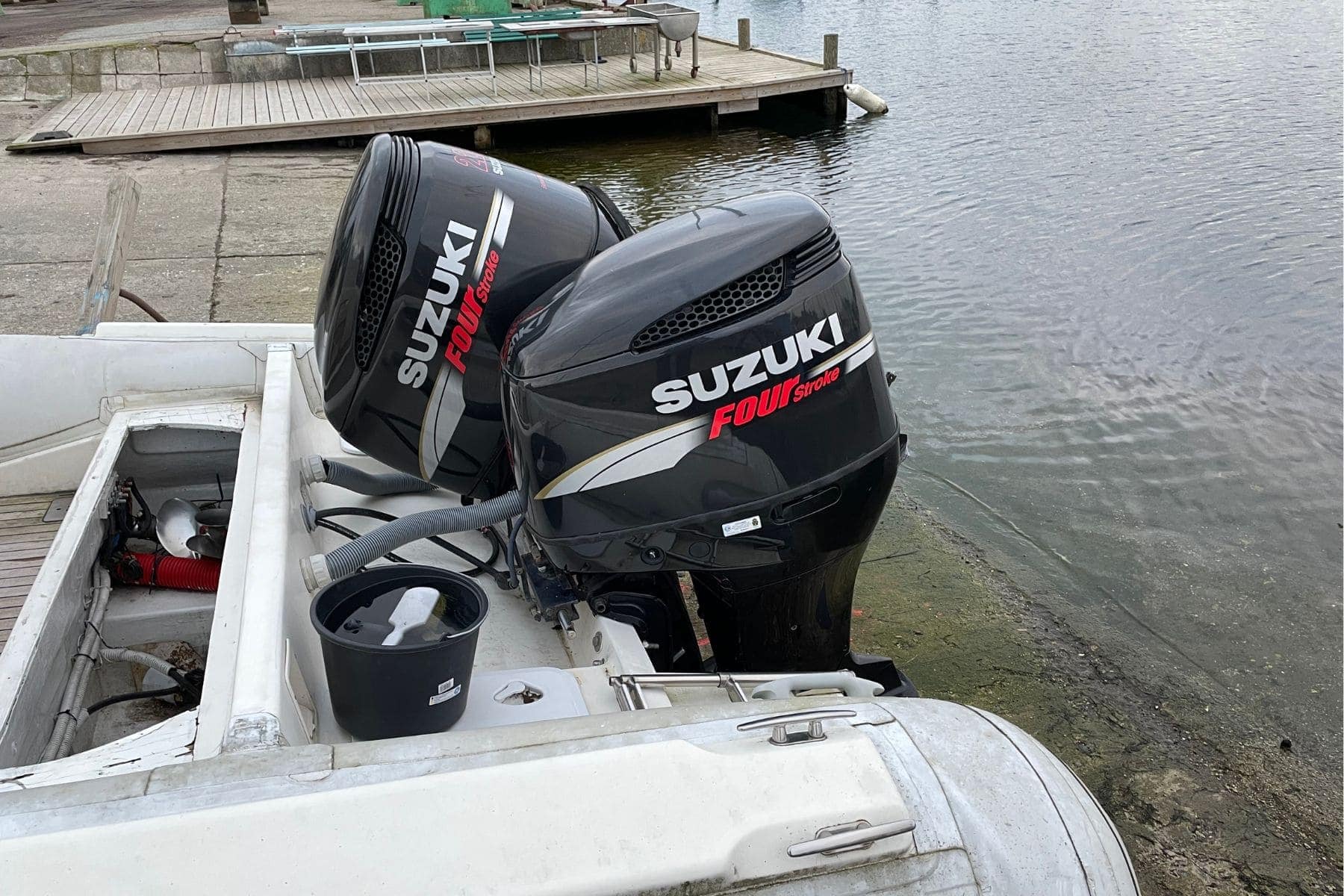
Outboards give you the interior back. Cockpit, saloon, and galley flow together without interruption. Passengers move without squeezing past obstacles. On fishing boats, modular seating layouts open up fast — you get 30–40% more flexibility for rearranging benches around four to six anglers. No engine box eating into the middle of everything.
Aesthetics follow function here. Inboard-powered yachts carry a cleaner silhouette — streamlined sterns, no visible motor bulk, a fully integrated look. That’s why around 70% of luxury buyers lean toward them. Outboards are bolder. The motors are there, visible and unapologetic. Hull designers try to offset this with elongated profiles, though that adds 10–15% more bulk to the overall shape.
Noise matters too. At cruising speeds above 30 knots, inboards run 5–10 dB quieter than outboards. That’s a real gap. Try holding a conversation at the stern, or just sit with a drink without shouting over the engine — you’ll feel the difference fast.
The quiet boat always feels more expensive than it is.
Maintenance & Reliability: Which Motor Is Easier to Own?
Talk to any longtime boat owner about engine maintenance, and watch their face change. Years of crawling into a bilge hatch with a flashlight and a prayer leave a mark. You can see it.
Outboards and inboards don’t just perform at different levels — they ask different things of you as an owner.
Outboards: Built for Real People
An outboard motor hangs on the outside of the boat. That’s the whole advantage, right there in plain sight. You can see it. You can reach it. On a Saturday morning, before the coffee’s even finished, you can handle basic servicing yourself — no calls, no appointments.
Outboard motors need service every 750 hours. That sounds frequent — and it is — but the open access makes each visit faster and cheaper. No specialist required. No tight spaces. No shop rate for someone to squeeze into a compartment the size of a carry-on bag.
Inboards: Less Often, But More Involved
Inboard engines run 2,000 hours between scheduled services. That’s close to three times longer than an outboard. On paper, it looks like a clear win.
But inboard maintenance isn’t simple weekend work. The engine sits deep inside the hull. Getting to it takes professional hands — and professional invoices to match. Something breaks, and the repair bill reflects just how hard that engine is to reach.
A few things inboard owners often underestimate:
-
Winterization adds a seasonal cost every year. Outboard owners skip most of it — outboards tilt up and store without full boat prep
-
Replacement is a major job for an inboard. An outboard unbolts, and a new one goes straight on
-
Insurance premiums run higher for inboard-powered boats
No motor is maintenance-free. But one of them lets you stay in the loop.
Best Use Cases: Inboard vs Outboard Motor
The engine that’s perfect for one boater is flat-out wrong for another. That’s not a dodge — it’s just how it works.
Go with an inboard if your time on the water looks like this:
-
You’re into watersports. Wakeboarding, waterskiing, wake surfing — these all depend on wake quality, not raw power alone. Inboard engines sit centered in the hull, away from the transom. That placement shapes cleaner, more consistent waves. The Cobalt Surf Series is built around this advantage.
-
You run a larger vessel (25+ ft). Long-haul cruising with six people and a full weekend of gear needs serious bottom-end torque and stability. Inboard systems deliver both, trip after trip.
-
You need commercial-grade durability. Diesel inboard engines handle extended, heavy-duty use without breaking a sweat.
Go with an outboard if your situation looks more like this:
-
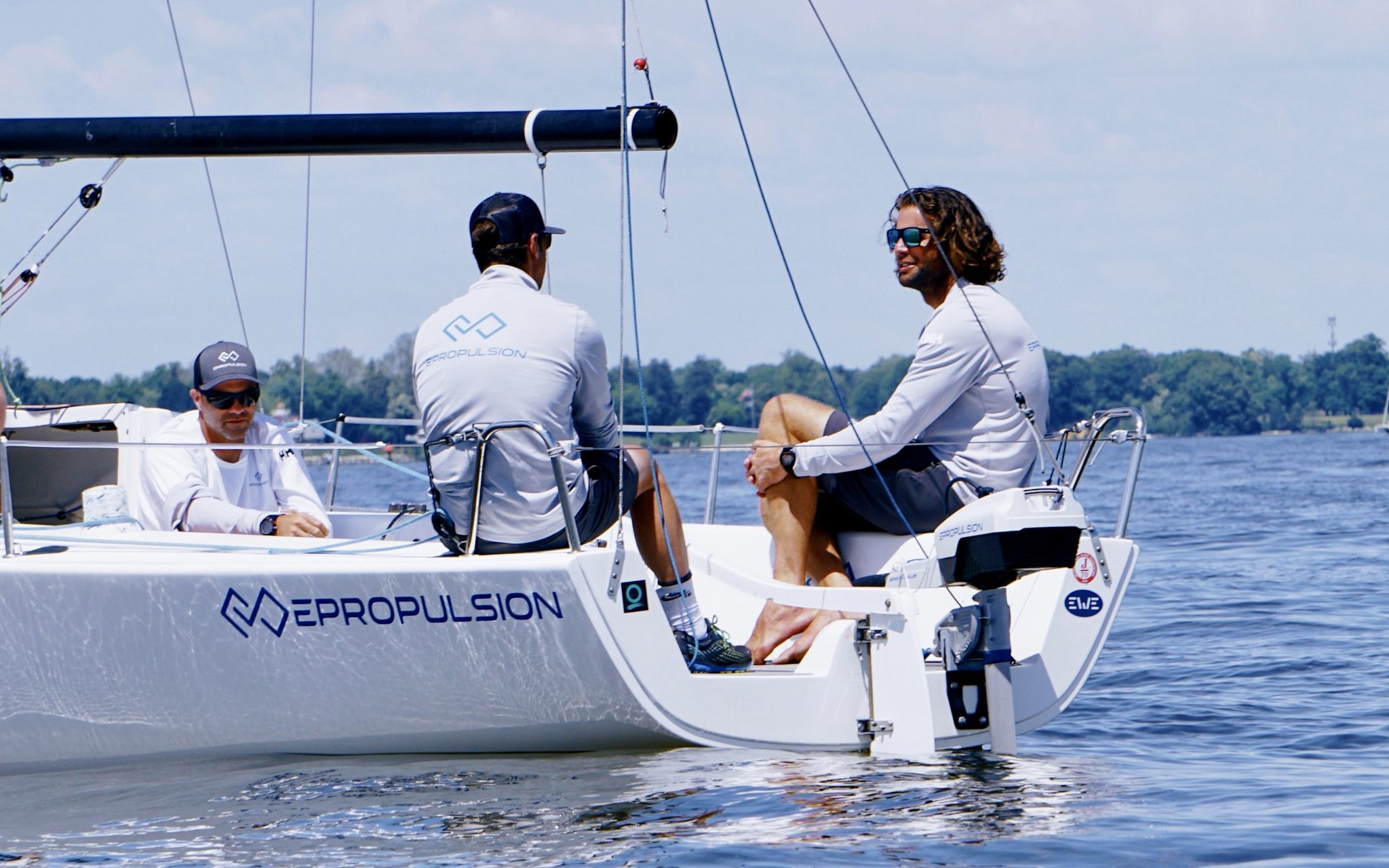
You fish in shallow water. Tilt the motor up, slide into skinny water, reposition fast. No inboard can do that.
-
You trailer often. Outboards detach for workshop service, winterize with far less effort, and repower without turning into a major project.
-
You’re newer to boating. Basic maintenance — oil changes, impeller checks — you can handle dockside, on your own, no help needed.
-
You want your interior space back. Pontoons and family day boats run outboards for a reason: open space wins. It’s that simple.
Stuck in the 20–25 ft middle ground? A sterndrive (I/O) deserves a serious look. It pairs inboard-style power with easier external serviceability. Think of it as a true hybrid — solid watersports capability without the full weight of inboard complexity.
Inboard vs Outboard: Propeller Compatibility & Selection Guide
Your engine choice does more than shape how your boat moves. It decides which propeller you can bolt on — full stop.
Outboards and inboards are built around completely different systems. Prop compatibility doesn’t cross over between them. Swapping is not an option.
Outboard props use hub and bore configurations tied to a specific engine. Inboard and sterndrive props run on tapered or splined shafts — standard bore sizes are 1″, 1-1/8″, or 1-1/4″. Get this wrong, and nothing fits. It’s that simple.
Blade Count: The Practical Choice
-
3-blade — best for top speed and fuel efficiency in light conditions
-
4-blade — better for heavy loads, towing, and faster planing (expect -50–100 RPM versus an equal 3-blade pitch)
-
5-blade — maximum thrust for commercial or high-performance use
Pitch: Tuning Your RPM
Each 1″ of pitch change moves your WOT RPM by 150–200. Say you’re running at 4,800 RPM but your target is 5,600. That’s an 800 RPM gap. Drop four inches of pitch to close it.
Material matters too. Aluminum covers everyday use well. Stainless steel holds up under performance loads. Bronze suits large, heavy-duty inboard vessels where strength is the main priority.
Sterndrive systems like Volvo Penta DuoProp need counter-rotating paired props. No substitutions work here.
Not sure which prop fits your setup? VIF Propellers‘ prop finder tool matches by make, model, year, and boat style — done in under five minutes.
Quick Decision Guide: Inboard or Outboard — Answer These 5 Questions
Five questions. That’s all it takes.
1. How long is your boat? Under 26 feet covers 94% of recreational boats in the US. For that group, outboards make more sense. They’re lighter, they plane faster, and you get more cockpit space. Above 26 feet, or heading offshore? Inboard power earns its place.
2. What do you do out there? Fishing shallow flats → outboard (tilt and go). Towing wakeboarders → inboard or sterndrive. Long-range cruising → inboard wins on fuel efficiency over miles.
3. What’s your real budget? Outboards cost less upfront. Inboards can run 6,000+ hours with proper maintenance. A $340,000 Cummins-powered cruiser starts making sense once you run the long-term numbers.
4. Do you trailer or stay docked? Trailering favors outboards. They’re portable and easy to move around. Fixed marina slips suit inboards better. The centered weight makes drift-docking more forgiving and less stressful.
5. How handy are you? Outboards are beginner-friendly. Winterization is simple, and there’s no engine box to crawl into. Inboards take more patience. They’re complex to maintain, but they’re built to last.
Still on the fence? In the 20–26 ft range running mixed duties? A sterndrive splits the difference well.
FAQ: Inboard Motor vs Outboard — Most Asked Questions
These questions come up again and again — at boat shows, on forums, in the comments section at 11pm when someone is deep in a research spiral.
Is an inboard motor more expensive than an outboard?
Yes, upfront. Inboards carry a higher purchase price. That gap gets wider once you add outdrive or v-drive systems. Over a full ownership cycle, outboards cost less. Service intervals are shorter, and maintenance is easier and cheaper.
Which delivers better fuel economy?
Inboards have the edge on raw efficiency. Modern outboards have closed that gap, though. A 200 HP outboard can match a 250 HP sterndrive in real-world performance. It runs lighter and transfers power more cleanly — that’s where the gain comes from.
Which is easier to maneuver?
Outboards. No contest. They pivot. Inboards use fixed rudders. That makes slow-speed docking much less forgiving, especially in tight spaces.
Can I service an outboard myself?
For basic maintenance — yes, you can. Fluid checks, spark plugs, lower unit oil. Inboard work is a different story. It almost always needs a professional.
What boats use inboards?
Towboats and dedicated ski boats. Every single one. Those hulls are built around inboard power — there’s no outboard version. On the other side, 99% of pontoon boats run outboards, and that’s no accident.
Conclusion
Choosing between an inboard motor and an outboard isn’t a technical decision — it’s a personal one. It comes down to how you use your boat, what you’re willing to spend, and how much time you want on the water versus stuck at a marina.
You’ve read this far, so you already know there’s no single right answer. Outboards win on accessibility, easy maintenance, and flexibility. Inboard engine boats earn their place when you want raw power, a refined ride, and a cleaner deck underfoot. Neither is better across the board — but one is clearly better for you.
So here’s your next step: once you’ve settled on your engine type, don’t overlook the propeller. It’s the one component that shapes everything about how your boat performs on the water. Pitch, diameter, blade count — these details change how your engine responds, how fuel burns, and how the whole ride feels.
Browse VIF Propellers’ full compatibility guide to find the right match for your setup. The right prop isn’t a minor detail. It’s the whole difference.