
Look, swapping propellers on your Mercruiser Alpha One isn’t exactly a casual Saturday morning decision. And if you’ve been running the same prop for three seasons, there’s a good chance you’re leaving performance on the table — or burning fuel you don’t need to. Let’s be honest—get this wrong, and you’ll find yourself dealing with sluggish hole shots that leave your wakeboarders sinking, blown fuel budgets from an engine working too hard, or worst of all, being forced to buy yet another Prop before the season is even half over.
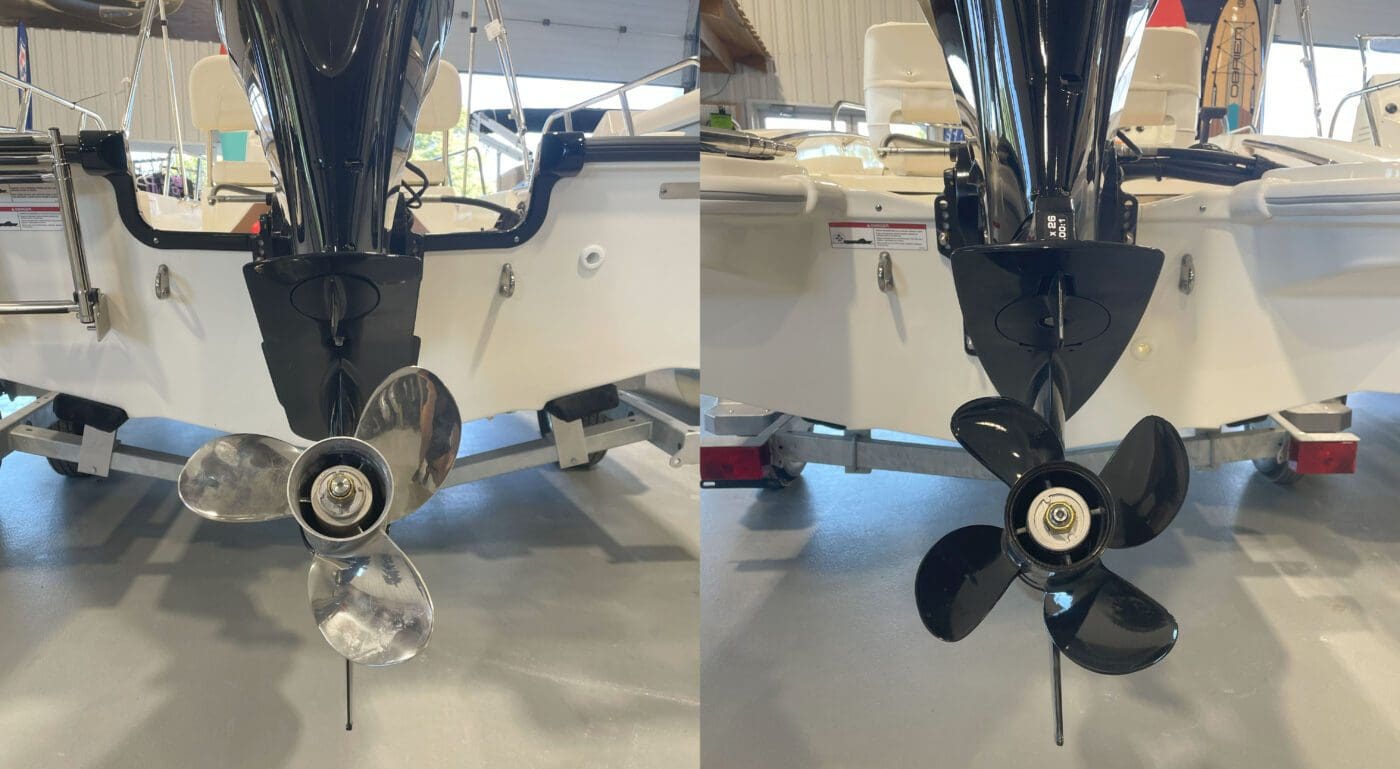
If you spend any time on boating forums, you’ve probably seen the 3-blade vs. 4-blade debate raging on endlessly. The problem? People often oversimplify it into “4-blades are better” or “3-blades are faster.” The reality is much more nuanced, and it entirely depends on how you actually plan to use your Boat. Here is what legitimately matters when you’re out on the water:
-
Chasing better bow lift for water sports? A higher blade count is going to be your absolute best friend.
-
Want maximum top-end speed for flat-water runs? Sticking to traditional setups gets you there.
-
Looking for a smoother, quieter weekend cruise with the family? That takes a completely different approach to your pitch and blade configuration.
Let’s cut through the forum noise and guesswork. Below is a comprehensive, data-driven breakdown explicitly built for Mercruiser Alpha One setups (specifically running 4.3L to 5.0L engines). We’re going to dive into the details so you can choose the right Propeller the very first time.
The Alpha One Propeller Ecosystem: What You Really Need to Know
The Alpha One drive is a legendary workhorse, but it doesn’t forgive bad propeller choices. Its specific mechanical architecture—featuring a 4.75″ large gearcase, a 15-spline Prop shaft, and a through-hub exhaust system—locks your blade count, pitch, and engine RPM into a very tight, uncompromising relationship. You change one factor, and the others shift dramatically.
The Baseline Factory Standard: To understand upgrades, we have to know where we start. A typical Alpha One runabout leaves the factory floor equipped with a 14″ × 19″ 3-blade aluminum prop. This setup targets a Wide Open Throttle (Wot) operating range of 4,400–4,800 RPM. Every single comparison and performance metric we discuss below anchors directly back to this specific factory baseline.

1. The Gear Ratio Factor (Why Pitch Matters More Here)
Unlike many modern outboards, the Alpha One utilizes gear ratios that are relatively “tall” (ranging from 1.47:1 on the V8 models up to 1.98:1 on the 4-cylinder blocks). What does this mean for you? It means a mere 2-inch change in pitch can violently swing your Wot by 300 to 400 RPM.
Here’s the catch most people miss: if you switch from a 3-blade to a 4-blade propeller while keeping the exact same pitch, the added drag and surface area of that fourth blade will naturally drop your top RPM by 100 to 200 RPM. Consequently, you will almost always scrub off 1–3 mph of top-end speed. You have to compensate for this when choosing your size.
2. The Fitment Trap: Gen 1 vs. Gen 2 Hubs
This is where I see boaters waste a lot of money. Both Generation 1 and Generation 2 Alpha One drives use a 15-spline shaft, which tricks people into buying the wrong parts. They actually use entirely different thrust washers and hub shoulder geometry.
If you accidentally put a Gen 2 hub kit on an older Gen 1 drive, the propeller won’t seat properly. It will block your exhaust ventilation, create massive drag, and completely ruin your Wot RPM—often making the Boat feel like it’s towing an anchor. Always, always verify your drive’s generation before clicking order on your hub kit.
Head-to-Head Performance: 3-Blade vs. 4-Blade
Opinions are great, but numbers end arguments. Let’s look at how a same-pitch 4-blade aluminum prop actually performs when measured directly against our factory 3-blade baseline on the water.
|
Performance Dimension |
3-Blade (The Baseline) |
4-Blade (The Upgrade) |
|---|---|---|
|
Top Speed (WOT) |
100% (Baseline target speed) |
1–3 mph slower (Drops to roughly 94–97% of baseline due to drag) |
|
Hole Shot / Planing Time |
Standard ~5–6 seconds |
4–5 seconds (Delivers noticeably aggressive, snappy acceleration) |
|
Cruising Fuel Efficiency |
Baseline standard at 3000 RPM |
Up to 10% better (Maintains plane at much lower RPMs, saving gas) |
|
Low-Speed Handling & Docking |
Average / Standard |
Superior (Extra blade area provides tremendous bite and reversing control) |
|
Heavy Load / Towing Response |
Often struggles when fully loaded |
Excellent (Powers through heavy stern loads and crew weight seamlessly) |
When you lay it out like this, the pattern is impossible to ignore: 3-blades are absolutely built for maximizing top speed, while 4-blades are designed for pulling muscle, grip, and stability.
Real-World Testing Scenarios
Theory is fine, but let’s apply this to how you actually use your Boat. Keep the golden rule of prop swapping in mind: When moving from 3 blades to 4, you usually need to drop 1 to 2 inches in pitch to keep your engine operating in its healthy, intended RPM band.
-
Scenario A (The Weekend Cruiser): 4.3L V6, 18ft Boat, Light Load. In this setup, the factory 3-blade hits an impressive 48 mph right at 4,800 RPM. Swapping to a 4-blade drops top speed down to about 46 mph and doesn’t offer much benefit since the hull is light. Verdict: If you usually cruise with just a person or two and like going fast, save your money. Keep the 3-blade. You simply don’t need the extra traction.
-
Scenario B (The Dedicated Tow Rig): 5.0L V8, 20ft Boat, 4 people + wakeboards. With a heavy load, the stock 3-blade takes a grueling 6 seconds to drag the boat onto a plane, leaving the bow pointing at the sky. Switching to a 4-blade (and properly dropping one pitch size) cuts that planing time to 4 seconds flat. Better yet, it levels out the hull’s ride through choppy wakes. Verdict: The 4-blade is an absolute must-have here. The sacrifice of 2 mph at the top end is a cheap price to pay for a night-and-day difference in towing performance.
Which Brand Should You Actually Buy?
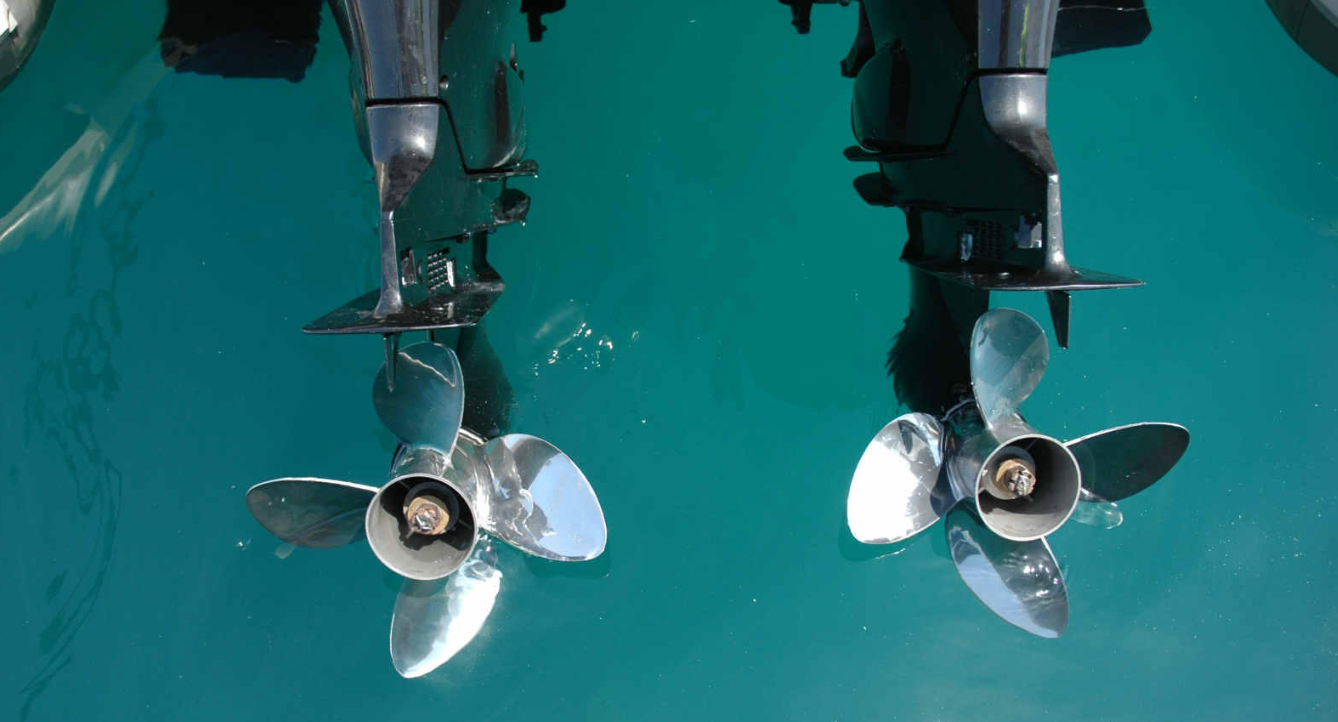
The aftermarket for Alpha One drives is crowded, but there are really only five major players you should look at. Picking the right brand comes down to your budget and whether you want raw, unyielding durability or precision performance.
|
Brand |
Defining Characteristic (Best For) |
Price vs OEM Strategy |
|---|---|---|
|
Mercury / Quicksilver |
Offers 100% factory spec accuracy. This is your safe, reliable baseline benchmark. |
Baseline (Most Expensive) |
|
Solas / Rubex |
Incredible aftermarket overall performance with a brilliantly designed interchangeable hub system. |
-10% to -25% vs OEM |
|
Turning Point |
Famous for aggressive mid-range pull; their Hustler series absolutely dominates the cheap aluminum market. |
-10% to -30% vs OEM |
|
Michigan Wheel |
Built for pure durability. Independent marine repair shops love throwing these on for replacements. |
-5% to -15% vs OEM |
|
VIF |
Precision OEM matching with factory-direct value. Unlike generic budget props, VIF uses squeeze-cast aluminum with CNC-verified pitch and dynamic balancing — the same manufacturing standards as premium OEM suppliers, but sold direct to cut out the middleman. The result: OEM-comparable quality at a price that leaves room in your budget for a spare. |
-25% to -40% vs OEM |
The Final Verdict: Making Your Choice
So, does it make sense to drop the money on a 4-blade upgrade? It becomes a remarkably easy decision if you classify your boating style honestly.
You Should Switch to a 4-Blade If…
You find yourself regularly towing skiers, tubes, or thick wakeboards. You frequently run around the lake with a packed boat of five or more passengers. You deal with rough, choppy water conditions and absolutely hate watching your bow bounce around on the way back to the dock. Additionally, if your current engine WOT sits comfortably high (right around the 4,800 RPM mark), the inherent RPM drop from a 4-blade won’t lug your engine or hurt its lifespan.
You Should Stay with a 3-Blade If…
You usually run light with just a couple of friends on perfectly flat lake water. You care deeply about maintaining every single last drop of top-end speed for bragging rights. And critically, if your current boat is already lugging near the bottom of its recommended WOT range (around 4,400 RPM or lower), adding the extra physical drag of a 4-blade prop—without severe down-pitching adjustments—will noticeably hurt your boat’s performance and potentially strain your sterndrive.
At the end of the day, don’t play guessing games with your sterndrive’s health. Take a few minutes to head over to vifpropellers.com to browse a full lineup of Alpha One-compatible props. You can filter them exactly by your engine’s horsepower, your specific hull size, and your daily usage profile.
At roughly 30-40% less than the equivalent Mercury Black Max, you can grab a VIF and still have enough left over for a spare hub kit. On an Alpha One drive — where prop strikes are a question of when, not if — that math works in your favor every season.
Pick it once, pick it right, and get back to enjoying your time on the water.