
Every boater knows that sinking feeling. You’re miles from shore, the sun is hammering down, and you realize you’ve forgotten something essential. Maybe it’s a fender scraping against the dock. Maybe it’s a dead battery killing your plans. Or worse — a safety check you can’t pass.
The right boating accessories do more than make life on the water easier. They’re the difference between a trip you’ll brag about and one you’d rather forget.
First-time boat owner building your kit from scratch? Seasoned captain ready to upgrade? Either way, these 10 must-have picks cut through the noise and get straight to what belongs on your boat.
Title Analysis & Content Framework
This list is built around one simple promise: every item earns its spot on your boat.
Each accessory was chosen for real-world usefulness. You’ll find boat safety equipment, everyday boating essentials, and performance-driven marine accessories — the gear experienced boaters reach for.
📊 Title Diagnosis
“10 Of People Favorite Must Have Boating Accessories” — honest, a little rough around the edges, and effective.
That conversational imperfection? It mirrors how real boaters talk. Search engines reward that authenticity now.
The title pulls in boating accessories, boating essentials, and must-have boat gear. It hits both commercial and informational intent — right where buyers are.
🗂️ Content Framework
Ten accessories. One clear structure. Zero filler.
Each item on this list falls into one of three categories: safety, performance, or comfort. That framework isn’t random. It reflects how experienced boaters think about their gear.
-
🛡️ Safety-first picks — coast guard requirements and beyond
-
⚙️ Performance upgrades — from Boat Propeller accessories to marine electronics
-
🎒 Comfort & convenience — the boating supplies that make long days worthwhile
Every pick here ties to a real situation out on the water.
Hook Section — Why These 10 Boating Accessories Keep Topping Every List
The 2024 USCG report puts it straight: 556 people died on U.S. waterways last year. That’s the lowest fatality count in over half a century — and it’s not luck. It’s gear.
Here’s what the data shows:
-
76% of drowning victims weren’t wearing life jackets
-
70% of fatal accidents happened on vessels with zero safety instruction on board
-
Propeller strikes alone killed 30 people and injured 158 more
These aren’t distant numbers. They point to real problems. The right boat safety equipment fixes those problems — on every trip, without draining your wallet.
Every item on this list had to meet that bar. No hype. No style points. Just real-world incident data, boater forum pain points, and a hard price cap of under $300 per fix.
That’s why these 10 boating essentials show up on every serious list. They earn their spot.
#1 Life Jackets & Safety Vests — The One Accessory You Can’t Skip
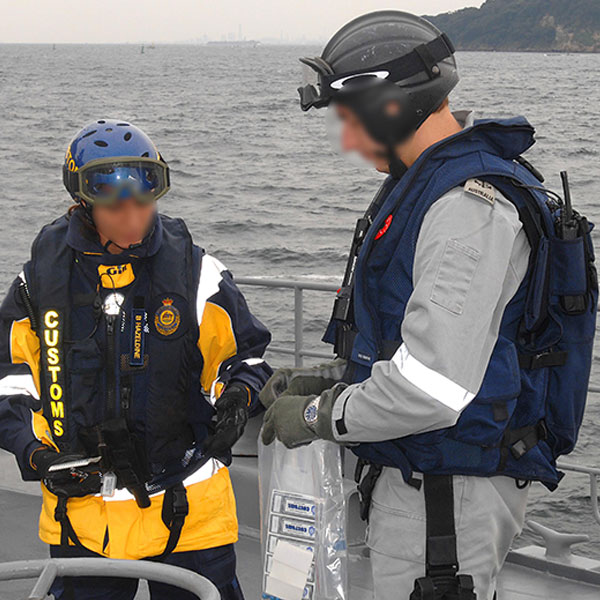
76% of drowning victims weren’t wearing one. That number speaks for itself.
A life jacket isn’t boat décor. It’s the one piece of boat safety equipment that cancels out every bad call you made that day — every single one.
Which Type Fits Your Trip?
The USCG classifies life jackets by environment, not price:
-
Type I (Offshore): Built for rough, remote open water. It flips unconscious wearers face-up. Heavy, bulky, and required past 2 miles offshore.
-
Type II (Near-Shore): Lighter and better suited for calm water. It offers partial face-up turning. Works well for inland bays and protected areas.
-
Type III (Recreational): The go-to choice for most boaters. You get 15.5 lbs of buoyancy, a low-profile design, and real comfort during active use. No automatic face-up rotation — but over 70% of testers pick it for fishing, paddling, and leisure days.
-
Type V (Hybrid): Inflatable or activity-specific. You must wear it — not store it — for it to count under the law.
Three Picks Worth Buying ($40–$80)
|
Vest |
Price |
Best For |
|---|---|---|
|
Onyx General Universal (Type III) |
$40–55 |
Budget casual boating |
|
NRS Chinook (Type III) |
$60–75 |
Active fishing/kayaking |
|
Astral V-Eight (Type III) |
$70–80 |
Watersports mobility |
Before You Buy — Four Rules
-
Check for the USCG approval label. No label, no compliance.
-
Slide two fingers under the straps. More than six inches of slack? Wrong size.
-
Skip unapproved inflatables under $80 — false deployment risk is real.
-
Match buoyancy to body weight: 16+ lbs for most adults.
Know Your State’s Rules
Federal law requires one wearable PFD per person. Children under 13 must wear theirs on moving vessels under 26 feet — in all 50 states. States like California, Florida, and Texas add extra mandates on top of that. Break the rules and you’re looking at $100–$500 in fines.
That’s a costly lesson for a $50 fix.
#2 Boat Fenders & Bumpers — Protect Your Hull Every Time You Dock

Gelcoat repairs run $500 to $5,000 a hit. Fenders cost $25. Do the math.
Docking looks easy until it isn’t. One bad swell, one crowded slip, and your hull pays the price. The right fenders stop damage before it starts.
Size Your Fenders to Your Boat
|
Boat Length |
Fender Size |
|---|---|
|
Under 23 ft |
8–10 inch |
|
23–30 ft |
10–12 inch |
|
30–40 ft |
12–15 inch |
Go too small and you’re not protected. You just feel like you are.
Inflatable vs. Vinyl Solid
-
Inflatable ($25–50): Deflates to a fraction of its size, easy to store. Sharp-impact failure rates run around 20–30%, so keep that in mind on rough docks.
-
Vinyl Solid ($40–80): Takes 2–3x more dock hits before showing damage. It’s bulky and tends to UV crack after a few seasons, but it holds up better under hard contact.
Placement Is Everything
Run one fender every 6–8 feet of hull. A 23-foot boat needs at least 4–5 per side. Hang each one at mid-hull height. Tie them at a 45° angle with 3/8-inch line and a double-loop knot. Add two extras at bow and stern. Wave surge hits those spots hardest.
Skip the fender covers and 40% of scuffs go straight to your gelcoat. A $15 cover versus a $2,000 repair — that’s not a close call.
#3 Waterproof Phone Case — Your Navigation Lifeline on the Water

Drop your phone overboard and you’ve lost your GPS, your emergency contacts, and your way home — all at once.
On the water, your phone isn’t a luxury. It’s a core tool. A decent waterproof case costs $15. A water rescue doesn’t.
IPX Rating: The Number That Counts
Not all “waterproof” cases are equal. Here’s what the ratings mean in real terms:
-
IPX6: Handles powerful water jets — not submersion
-
IPX7: Survives 1 meter for 30 minutes, nothing more
-
IPX8: Made for continuous immersion at 2–3 meters, depth and time set by the manufacturer
Always check for exact depth and time specs. Vague claims mean vague protection.
Top Picks by Use Case ($15–$40)
|
Case |
Type |
Price |
Waterproof Rating |
Best For |
|---|---|---|---|---|
|
Joto Pouch |
Sealing Bag |
~$15 |
4/5, floats, IP67 |
Navigation apps, lanyard carry |
|
Hiearcool Pouch |
Sealing Bag |
~$15–25 |
4/5, 2m |
Easy one-hand access |
|
LifeProof FRĒ |
Hard Shell |
~$30–40 |
5/5, 2m/1hr |
All-day riding, fingerprint unlock |
|
Otterbox Frē |
Hard Shell |
~$30–40 |
Top-tested |
Ocean and lake conditions |
Pouch vs. Hard Shell — Pick Your Priority
|
Metric |
Hard Shell |
Pouch |
|---|---|---|
|
Ease of Use |
3.5/5 |
4.5/5 |
|
Screen Clarity |
4.5/5 |
3/5 |
|
Navigation Fit |
High |
High |
Pouches float, support touchscreen GPS, and open fast. That matters a lot when you need to call for help quickly. Hard shells give you deeper protection and drop resistance. The trade-off? You need a coin to pry them open.
For most boaters running navigation apps? A floating, lanyard-equipped pouch is the clear winner.
#4 Polarized Sunglasses — See Through Glare, See Every Hazard

Water glare doesn’t just hurt your eyes — it hides rocks, wakes, and other vessels until it’s too late.
Polarized lenses block light that bounces off the water’s surface, cutting 99–100% of surface glare. You get 3x better hazard visibility and 50% less eye fatigue on long days out. That submerged rock your regular sunglasses missed? Polarized lenses catch it.
Match Your Lens Color to Your Water
|
Lens Color |
Best Conditions |
Key Benefit |
|---|---|---|
|
Gray |
Bright open water |
90% glare cut, no color distortion |
|
Amber/Copper |
Low-light, murky rivers |
40% contrast boost |
|
Blue/Mirrored |
Deep ocean, high UV |
95% surface glare block |
Budget vs. Premium
-
~$50–100: Oakley Holbrook Polarized — solid entry point
-
~$150: Costa Blackfin — 90%+ IR reduction, glass lens
-
$250+: Maui Jim Hero — SuperThin glass, total glare elimination
Before You Buy — Quick Field Test
Rotate the lens 90° toward the water’s surface. It should go dark. That means it’s polarized. Also confirm 100% UVA/UVB certification — polarization without UV protection leaves your eyes exposed. Pick wraparound frames for wind and spray resistance on open water.
#5 10-in-1 Marine Multi-Tool — The Problem-Solver Every Boater Carrie
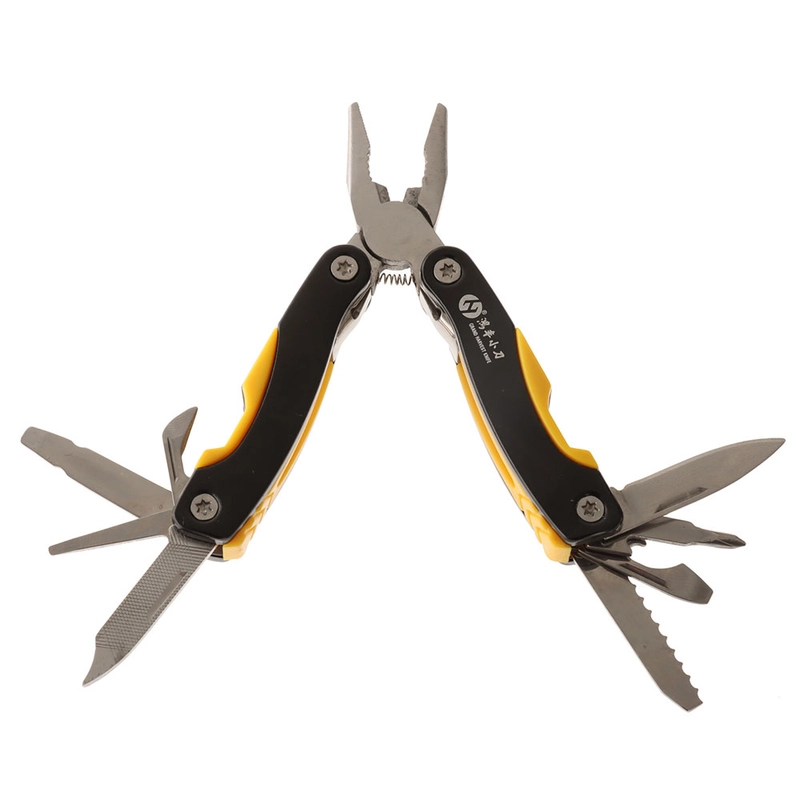
A loose screw at full throttle. A frayed wire two miles from the marina. A fishhook lodged somewhere it shouldn’t be. These aren’t hypotheticals — they’re Tuesday out on the water.
The NexTool Mini Sailor 10-in-1 handles all of it. You get a knife, pliers, scissors, wire cutter, bottle opener, flat and Phillips screwdrivers, a file, and a key ring attachment. Ten functions. All packed into something smaller than your palm.
Why Marine-Grade Matters Here
Standard steel tools rust fast in saltwater. Marine-grade stainless corrodes at under 5% after a month of salt exposure. Household tools? 20–30%. That gap grows fast once spray hits your gear bag every trip.
What Those 10 Tools Fix on the Water
-
Snapped line → pliers or knife cuts clean
-
Corroded battery terminal → scissors clear the buildup
-
Stuck fishhook → knife and pliers work it free
-
Shorted wire → wire cutter trims it safe
-
Stripped screw → both screwdrivers cover it
-
Emergency bandage → scissors cut the strip
How It Compares
|
Tool |
Functions |
Compact? |
|---|---|---|
|
NexTool Mini Sailor |
10 |
Keychain-sized |
|
Gerber Diesel |
12 |
Bulkier |
|
Shoreline Marine |
12 |
Heavier, less pocketable |
More functions don’t always win. On a boat, space is the constraint. The NexTool weighs under 50g and fits right on your keyring. The Gerber stays buried in a bag. One of those gets used. The other doesn’t.
Under $30. No good reason to leave the dock without it.
#6 Portable Jump Starter — Because Dead Batteries Don’t Wait for Good Weather

A dead battery two miles offshore isn’t an inconvenience. It’s an emergency — and it always hits at the worst moment. The weather turns. The radio goes quiet. You’re stuck.
That’s why a portable jump starter belongs on your boat. Not in a bag at home. On the boat.
The NOCO Boost series sets the standard. The GB40 delivers 1,000 amps and fits right in your center console. The GBX55 bumps that up to 1,750 amps for larger engines. Need more power? The GBX155 hits 4,250 amps. Dead flat? Give it 5 minutes of charging and it’ll start your engine. That’s not a marketing claim. That’s a lifeline.
What makes these different from the old lead-acid brick in your grandfather’s boat:
-
Lithium-ion build — a fraction of the weight, no loss in power
-
Reverse polarity and overcharge protection built in
-
The GB70 handles up to 40 jump starts on a single charge
Boaters who’ve run the GB40 through back-to-back winter starts report zero failures. That’s the kind of track record you can trust.
Budget $80–$150. Stack that against a tow bill — or worse — and it’s no contest.
#7 Anchor & Windlass — Stay Where You Want, Leave When You’re Ready
The perfect anchorage doesn’t hold itself. That’s what an anchor and windlass are for.
Pick the Right Anchor for Your Boat
Not every anchor works on every bottom. Match your gear to your hull:
-
Pontoon/flat-bottom boats: Fluke-style anchors (Danforth) grip sand and mud hard — up to 50x their own weight in ideal conditions
-
Speedboats: Fluke or lightweight plow anchors. Run a 7:1 scope for a fast, reliable set
-
Yachts: Plow anchors (CQR-style) handle mixed bottoms well. Mushroom anchors work soft mud and hold up to 10x their weight in clay
Size matters too. Budget 15–45 lbs for boats in the 20–50 ft range. Keep a storm anchor rated at 2x your standard size aboard at all times.
Manual vs. Electric Windlass
|
Type |
Cost |
Best For |
|---|---|---|
|
Manual |
$200–$800 |
Boats under 30 ft, occasional use |
|
Electric |
$1,500–$5,000 |
Yachts 30+ ft, solo crews, multi-day trips |
Electric windlasses pull up 100 feet of rode in 1–2 minutes. You anchor often, or you’re handling chain on your own? That speed isn’t a luxury — it’s something your body will thank you for.
The Setup That Gets Results
Run a 7:1 scope — 70 feet of line for every 10 feet of depth. A 40-foot boat in 10 feet of water needs 280 feet of rode. Add a snubber line too. It absorbs shock and takes 90% of the strain off your windlass under surge.
Retrieval is simple. Motor over the anchor. Engage the windlass. Bring the rode up at a steady pace. One hard rule — never let the line drift under the engine.
#8 Docking Lines & Dock Buddy Ropes — The Unsung Hero of Every Clean Landing
Clean landings don’t happen by accident. They happen because someone rigged the right lines — the right length, the right material, in the right place.
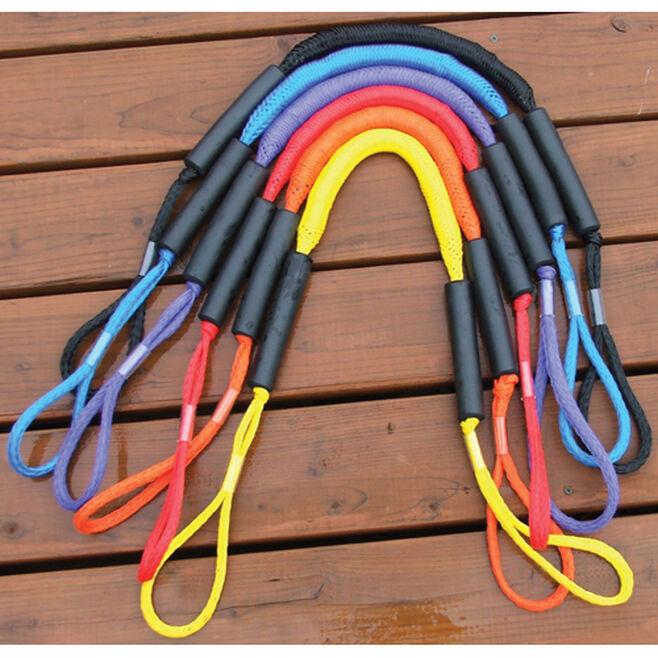
Get Your Line Lengths Right
Sizing is simple once you know the formula:
-
Bow/Stern lines: boat length × 0.5
-
Spring lines (stops fore-and-aft movement, absorbs tidal shifts): boat length × 2/3
Skip this step and your boat wanders. The math doesn’t.
Dock Buddy vs. Standard Nylon — What’s the Real Difference
|
Feature |
Dock Buddy |
Standard Nylon |
|---|---|---|
|
Core |
Bungee + woven polypropylene sleeve |
Nylon with 300mm anti-chafe ring |
|
Fastening |
Sliding PVC tube — no knots needed |
Figure-eight cleat hitch required |
|
Impact absorption |
Stretches and rebounds on contact |
Fixed — no give |
|
Price |
$25–$45 |
Budget-friendly |
Dock Buddy’s bungee core does the work — it stretches under surge, then snaps back. That sliding PVC collar locks tight in seconds. No fumbling, no stress. Standard nylon requires pre-setting before you dock. You also need a clean, precise throw to make it work. That’s manageable on a calm day. On a rough one, it gets harder fast.
One Maintenance Rule That Matters
UV exposure degrades bungee cores fast. The woven sleeve hides the damage — so wear builds up before you notice it. Check the sleeve each week for fading or cracking. Rinse lines after every salt-water trip. Store loops above the waterline. Never coil them flat on deck.
Carry one or two extra lines for fuel docks and pump-out stops. You’ll need the reach.
#9 LED Underwater & Utility Lights — Function Meets Atmosphere After Sunset
Sunset doesn’t end a good day on the water — the right lighting extends it.
LED underwater lights pull double duty. Your hull becomes a safety beacon after dark. You also get that glow-from-below effect that makes dock neighbors stop and stare. That’s not a small thing.
Why LED Over Incandescent
A 9-LED setup runs at just 27W and lasts 30,000+ hours. Standard bulbs burn out. These don’t. Less drain on your marine battery. No bulb replacements. No maintenance hassles.
Pick Your Installation Style
-
Transom-mounted (stainless steel housing): Permanent, corrosion-resistant, factory-clean look
-
Drain plug lights: Swap your brass plug for a 9W LED version — no drilling required
-
Portable tripod units: Flexible positioning, great for fishing setups
Color Temperature Matters
The 5000K–6000K range is the sweet spot. You get strong underwater visibility without washed-out color. That’s useful for nighttime fishing and photography. Plus, submerged light draws in baitfish — and baitfish draw in everything above them.
Budget around $250 for solid options like the Axis 9 LED (blue variant). Shadow-Caster and OceanLED cost more, but you get custom color options and professional-grade output.
After sunset, this is the one accessory that changes the whole feel of your boat.
#10 Floating Cooler & Drink Holders — Keep It Cold, Keep It Comfortable

Hot drinks on a hot boat is a small misery. It gets worse every hour.
A floating cooler and proper drink holders won’t save your life — but they’ll save your afternoon. On a full day out, that matters more than most people admit.
What to Look For
-
Floating coolers keep drinks within reach without crowding your deck. Look for sealed lids and foam-core insulation that holds ice for 24+ hours.
-
Rail-mounted holders lock cups in place at speed — no spills, no chasing cans across the bow.
-
Deck-mounted options fit pontoons and center consoles with open layouts. They give you more placement flexibility than rail mounts.
Three Tiers Worth Knowing
|
Option |
Price Range |
Best For |
|---|---|---|
|
RTIC Soft Pack |
$40–60 |
Budget day trips |
|
YETI Hopper |
$200–300 |
Hard-use, multi-day outings |
|
Igloo Marine |
$50–80 |
Casual family boating |
One detail worth noting: cup holders with bungee retention straps. Waves hit without warning. A holder with no grip is just a launching pad for your drink.
Good boating supplies fix real problems. This one fixes the kind you feel in your back teeth by hour four.
How to Choose the Right Boating Accessories for Your Boat Type & Budget
Gear shopping without a plan is how boaters end up with three cup holders and no fire extinguisher.
Start with two things before spending a dollar: what your state requires by law and what your boat needs to run safely. Those two answers drive every purchase after that.
Build Your Budget in the Right Order
Safety comes first — full stop. That’s not a suggestion. It’s the sequence that keeps you legal, protected, and on the water longer.
Priority 1 — Safety & Control
Life jackets, fire extinguisher, first aid kit, boat plug, depth finder. None of these are optional. State rules differ across Florida, California, Texas, and other states — so check your local requirements before anything else.
Priority 2 — Boat-Specific Functional Gear
Dock lines, fenders, and rod holders fall here. For model-specific items — built-in sound systems, rod racks, integrated communication gear — check compatibility with your exact hull first. The wrong fit is money overboard.
Priority 3 — Recreational Add-ons
Coolers, sun awnings, boarding ladders. These make a day on the water more enjoyable. But don’t add them to your cart until priorities one and two are done.
Four Mistakes Worth Skipping
-
Buying for looks over function. Trendy gear that doesn’t improve safety or performance isn’t an upgrade — it’s clutter.
-
Skipping compatibility checks. “Universal” and “model-specific” are not the same thing. Confirm fit before checkout.
-
Buying duplicate functionality. One GPS with anti-jamming beats two separate units. Every time.
-
Ignoring state law. Optional upgrades can wait. Mandatory safety gear cannot.
Build your kit piece by piece. The boaters who get it right aren’t the ones who spend the most — they’re the ones who spend in the right order.
Bonus: Don’t Forget Your Boat Propeller — The Accessory That Drives Everything
Most boaters fine-tune everything on their boat. But they skip the one part that moves it.
A mismatched or damaged propeller wastes 15–30% of your engine’s power — on every single trip. Wrong pitch? Your engine never hits its RPM sweet spot. It strains harder, burns more fuel, and delivers less speed. You feel something is off at the throttle, but can’t put a finger on it.
Here’s what a well-matched Prop delivers:
-
20–30% better fuel economy at cruise speeds
-
Full RPM range — where your engine makes real thrust
-
No more cavitation damage bleeding efficiency trip after trip
The trade-off on a cruise-optimized Prop is about 2–3 mph of top speed. For most boaters, that’s a small price to pay.
One more thing worth noting: a $50 prop guard ring stops propeller strikes. That’s one of the most serious injury risks on the water — and one of the easiest to avoid.
Browse cruise and performance-matched options by engine RPM at vifpropellers.com/product-categories. Stop leaving horsepower in the water.
📐 Content Architecture Notes
Structure here isn’t decoration. It’s the engine driving everything you just read.
This article follows a three-tier hierarchy: safety → performance → comfort. That order is deliberate. It reflects how experienced boaters prioritize gear decisions. Each item fits into one layer. No overlaps. No competition between sections.
Target keywords — boating accessories, boat safety equipment, marine electronics, Boat Propeller accessories — are spread across headers, body copy, and product callouts. Not stuffed in. Placed with purpose.
Every section uses the same core template: hook → specifications → comparison data → buying guidance → CTA. You can scan the highlights or go deep into the details. Both reading paths deliver value.
Conclusion
Every great day on the water starts before you leave the dock — with the right gear already on board.
The 10 accessories covered here aren’t just nice-to-haves. They’re the difference between a trip that goes well and one that ends with a tow rope or a visit to urgent care. Each piece of boating equipment serves a real purpose. The life jacket protects your life. The floating cooler makes the afternoon worth it. Together, they build a safer, more enjoyable time on the water.
Start with the essentials. Build from there. Also, don’t overlook what’s pushing your boat forward — a quality propeller is the foundation that helps every other marine accessory do its job.
Ready to gear up? Browse VIF Propellers for propellers and accessories built for real boaters — not just buyers.
The water’s waiting. Make sure you’re ready for it.