
Spending hours trying to get your Suzuki DF140 to plane, constantly seeing your RPMs fall short, or burning through far too much fuel on a long cruise… The fix often isn’t a tune-up, a different mounting hole, or any other major adjustment.
It’s the number stamped on your Propeller hub.
Most owners run the wrong Prop pitch. Get it right, and everything changes. Better acceleration, lower fuel burn at cruise, and an engine that finally reaches its recommended wide-open-throttle (Wot) range. Get it wrong, and you’re just burning money on gas and leaving real performance on the table.
This guide cuts through the noise. No fluff, no guesswork. You’ll learn the exact pitch range for the DF140, real-world data from similar boats, and how to test your own setup.
1. The Non‑Negotiable: DF140 WOT Range
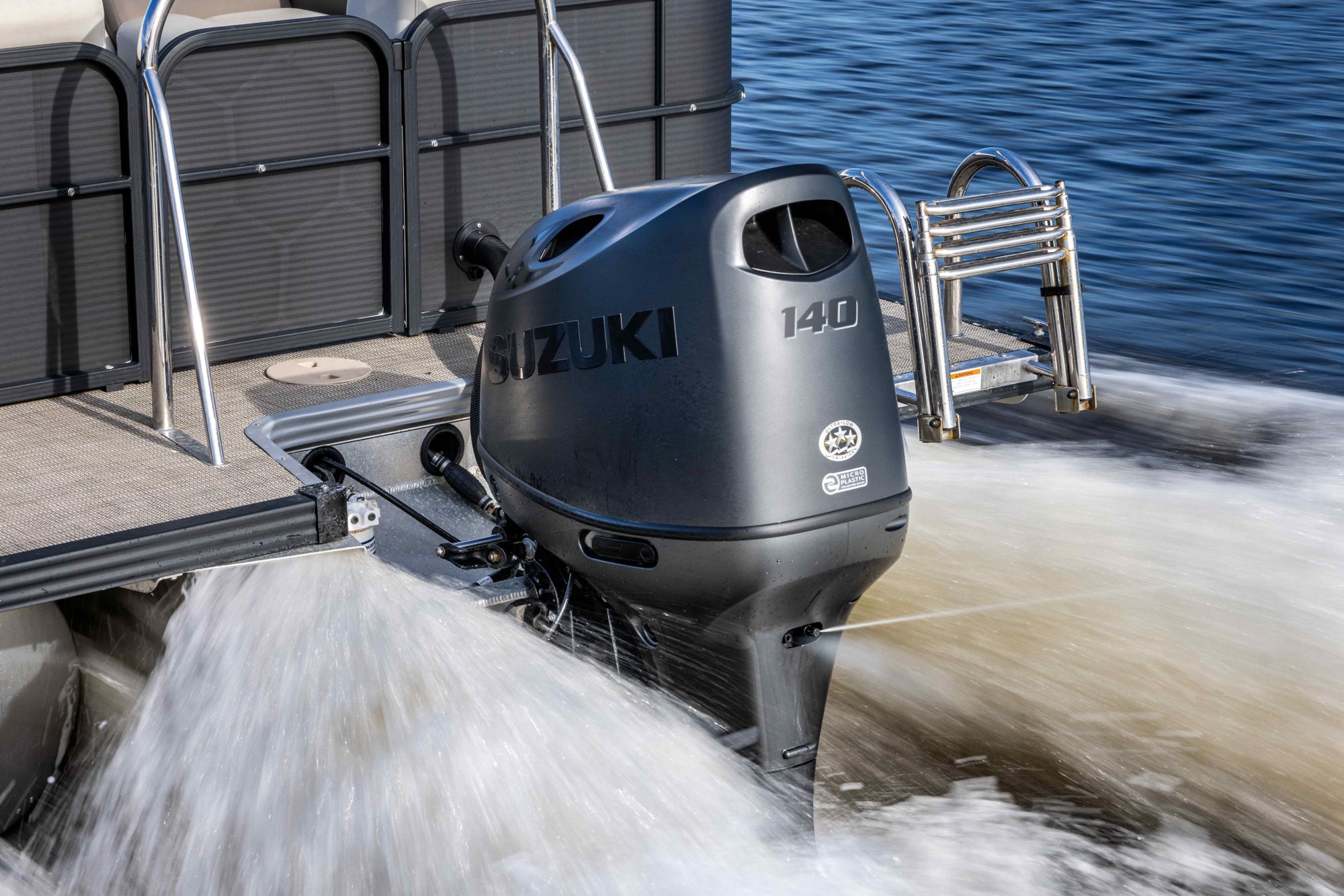
Before you even think about ordering a new propeller, you need to know one number: your engine‘s recommended full throttle operating range.
For the Suzuki DF140, that‘s 5600 – 6200 RPM. Some later DF140A models share the same spec. This number matters because it’s the single, universal rule for correct propeller sizing.
If your WOT RPM falls below 5600, you‘re over‑propped (pitch too high). The engine lugs, hole shot suffers, and you’re not getting full power from the engine.
If your WOT RPM goes above 6200, you’re under‑propped (pitch too low). The engine over‑revs, which risks internal damage and wastes fuel with minimal speed gain.
The sweet spot: Aim for 5800–6100 RPM at full throttle under normal load.
The DF140 has a unique 2.59:1 gear ratio, which is lower than many comparable engines. This allows it to turn a larger‑diameter prop, typically 14 inches, with less slip. According to owners, that‘s a real advantage in efficiency.

2. From Paper to Water: Real-World Pitch Testing
4. Diagnosing Pitch‑Related Issues
Here are common owner scenarios with specific steps to address them.
* Scenario A: Low WOT RPM, poor hole shot. You‘re likely over‑propped. Solution: Drop 2 inches of pitch and re‑test. Confirm your RPM climbs into the 5600–6200 range.
* Scenario B: High WOT RPM, speed feels low. The engine is revving but not translating RPM into forward speed. You may be under‑propped. Solution: Add 1–2 inches of pitch. If RPM remains high and speed doesn’t improve, check for a spun hub (rubber slipping inside the prop).
* Scenario C: Good WOT RPM but poor economy at cruise. Your top‑end RPM is fine, but mid‑range feel sluggish. Solution: Monitor your prop slip. Ideal slip is under 10–15%. Calculate slip using an online calculator. High slip suggests you may benefit from a different prop design.
* Scenario D: Switching from aluminum to a different material. Re‑test after any material change. Some owners find that a new propeller significantly changes RPM response.
For diagnostic‑specific propellers (used only for testing), you can often find used or budget options locally or through online marketplaces.
The right pitch depends entirely on your specific boat weight, hull design, and typical load. There is no universal, magic formula. However, looking at real-world data from DF140 owners who have already put in the testing hours gives you a massive head start.
🎣 General Use / All-Around (The 19–20 Pitch Range)
For most DF140 owners, this is the ultimate sweet spot. Consider this your primary starting point.
-
1775 Lund Pro V: A 19-pitch aluminum prop delivered 6,000 RPM and a 43 mph top end. The owner reported a “dramatic improvement in hole shot” compared to their old 21-pitch.
-
Arima 19: A 19-pitch hit 6,050 RPM and pushed 38 mph, holding strong even in windy conditions.
-
Nautic Star 1910: A 20-pitch stainless steel prop yielded a 45 mph top end, providing excellent all-around balance.
🏋️ Heavy Loads / Towing (Drop to 17–18 Pitch)
If you regularly carry several passengers, load up heavy gear, or tow water skiers, you need less pitch to maintain a healthy RPM and strong thrust.
-
Action Craft 1720: A 19-pitch maxed out at only 5,600 RPM. Dropping to a 17 or 18-pitch would quickly wake this boat up.
-
Heavy Utility Hull: Spinning a Solas 4-blade 13.75 x 17 prop ran over 6,000 RPM at 38 mph. The lower pitch provided the crucial torque needed to plane effortlessly with extra weight.
🏁 Speed Focus (21–22 Pitch for Light Hulls)
For lightly loaded, fast fiberglass hulls, stepping up to a 21 or 22 pitch can deliver impressive top-end speed—just confirm you can still break that 5,600 RPM barrier.
-
21-foot Skiff (~2,300 lbs): A 21-pitch easily hit 6,200 RPM, cruising in the low-40s mph range.
-
Light Setup: A 22-pitch Suzuki stainless steel prop delivered a blistering 52 mph at 6,200 RPM with only a 4% slip. An exceptionally efficient setup.
-
18-foot Hewes Bonefisher: A 22-pitch ran 53 mph. Note: Newer DF140A models with a 2.59:1 gear ratio often need to drop pitch slightly compared to the older models to hit these numbers.
How to Test Your Own Setup
The best way to select a propeller isn’t guessing; it’s a simple on-water test. All you need is your tachometer (usually on your gauge cluster) and a GPS speed source (your phone works perfectly).
-
Document your current numbers: Load your boat exactly as you usually run it (typical fuel, passengers, coolers). Get on plane and run at full throttle (WOT) for at least one minute in calm water. Record your maximum RPM, your top GPS speed, and note your engine mounting height.
-
Compare to the target band (5,600–6,200 RPM):
• If your WOT RPM is under 5,600, you need less pitch.
• If it’s over 6,200, you need more pitch. -
Make a calculated change: Use the golden rule of Suzuki props: 1 inch of pitch change = roughly 150 to 200 RPM change in the opposite direction. Drop 1 to 2 inches of pitch if you are over-propped, or add 1 to 2 inches if you are under-propped.
-
Re-test and refine: Swap the propeller and run the exact same course. Pay close attention to how quickly the boat jumps out of the hole, your mid-range fuel economy, and if there are any new vibrations. (If adjusting pitch still doesn’t fix your RPM, check your engine mounting height, throttle cable, or ensure you don’t have a spun hub.)
5. FAQ: Questions Owners Ask
Q: What‘s the most common pitch for a DF140?
A: 20 inches. An OEM Suzuki 14″ x 20″ stainless steel propeller is well‑matched to the DF115/140 in most conditions. It serves as an excellent starting point for many boats.
Q: How do I read the numbers on a propeller?
A: For most DF140 propellers, the size is printed on the hub as Diameter x Pitch (e.g., 14 x 20). Diameter is the distance across the circle the blades make, in inches. Pitch is the theoretical distance the propeller travels forward in one full revolution, also in inches. The DF140 standard diameter is 14 inches.
Q: Where can I find OE cross‑references?
A: To confirm your replacement prop matches the fitment and performance of the original, look up the OE part number. For example, OE number 58100-87L30-019 is used on various Suzuki outboards, including the DF140. VIF marine propellers can cross to this OE number.
Q: What about different gear ratios?
A: Newer DF140A models use a 2.59:1 ratio, while older DF140s used 2.38:1. This can affect prop selection. Some owners with the newer gear ratio have found they needed to go up in pitch to prevent over‑revving.
Q: How should I maintain my propeller?
A: Annual inspection is crucial. Check for bent blades, nicks, and corrosion. Lubricate the propeller shaft splines with marine grease before each installation to prevent seizing.
Choosing the right Propeller pitch isn‘t about guessing—it’s about testing. Use a GPS and your tachometer, compare your WOT RPM to the 5600–6200 range, and adjust in 1–2‑inch increments.
A well‑matched propeller transforms the Suzuki DF140 from a good engine to a great one. Better fuel economy, quicker planning, a smoother ride, and less strain on the engine all come from a few inches of pitch.
If you‘re replacing a worn prop and want a reliable, factory‑spec alternative, VIF Marine offers propellers that cross‑reference directly with Suzuki OE numbers like 58100-87L30-019, built to deliver the performance your DF140 was designed for.
—
Please note: WOT tests should be conducted in safe, calm water with proper safety gear. If you are unsure, always consult a local Suzuki dealer or marine technician. VIF Marine is an independent aftermarket manufacturer and is not affiliated with Suzuki Motor Corporation.
Ready to Unlock Your DF140’s Full Potential?
Still scratching your head over whether a 19P or 21P is the right call for your specific hull? You honestly don’t have to figure it out alone.
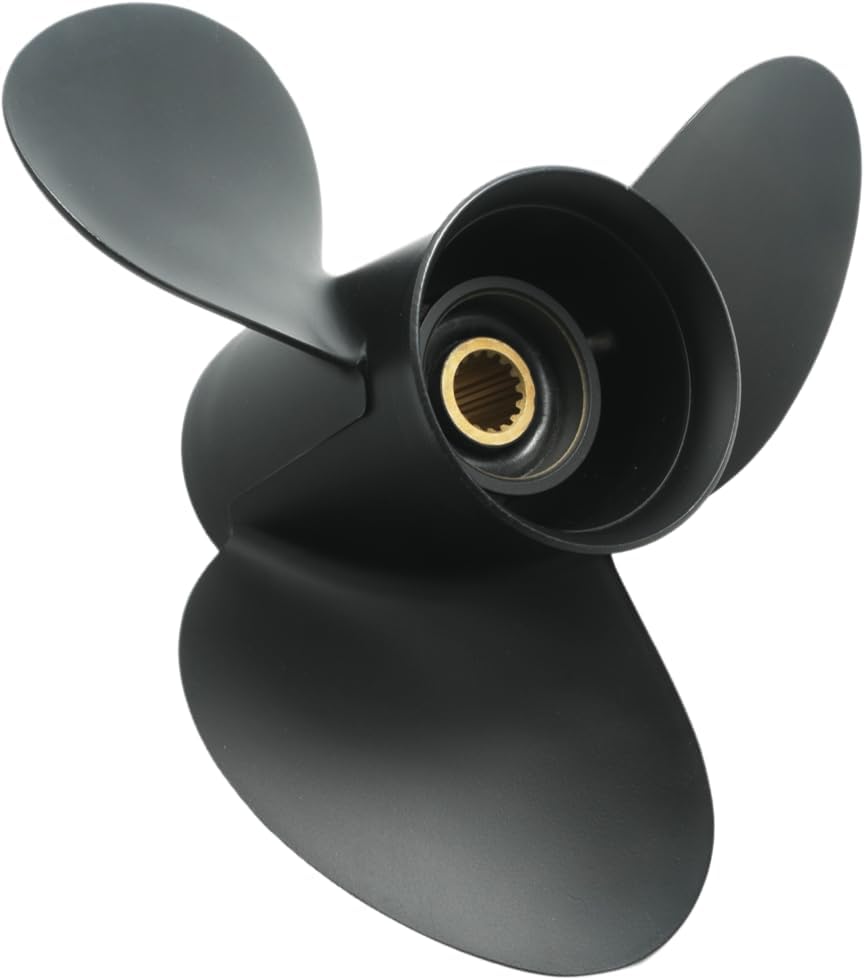
Whether you’re ready to upgrade to a high-performance stainless steel prop or simply need a reliable VIF Marine replacement without the heavy dealer markup, we’ve got almost every scenario covered.
-
Know exactly what you need? Browse our Suzuki DF140 Propeller Lineup to find your perfect match—spec’d to factory standards and ready to ship.
-
Need a second opinion? Contact our propeller specialists. Just shoot us a quick message with your boat length, typical load, and current WOT RPM. We’ll give you a personalized pitch recommendation for free!