
One moment, the water is glassy and calm. The next, a heavy, dark cloud unleashes a spiraling funnel — and if you’re out on a Boat, you probably have less than five minutes to make the right call.
Waterspouts aren’t just dramatic weather events for your social media feed. Even the “fair-weather” kinds carry winds strong enough to capsize small boats, shatter windshields, and hurl debris. Whether you’re a seasoned sailor, a weekend angler, or just renting a pontoon, knowing how to read the sky before a spout fully forms is critical. Let’s cut through the noise and look at exactly what you need to watch for, and how to survive it.
As an experienced Propeller manufacturer, the team here at VIF has analyzed our fair share of rough situations out on the water. We don’t just understand how a Prop performs—we know exactly what happens when unpredictable marine weather hits fast. We put this guide together because preparation is everything. Even if you never actually face down a waterspout (and hopefully you won’t!), keeping these practical survival strategies in your mental toolkit will absolutely make you a sharper, more confident boater.
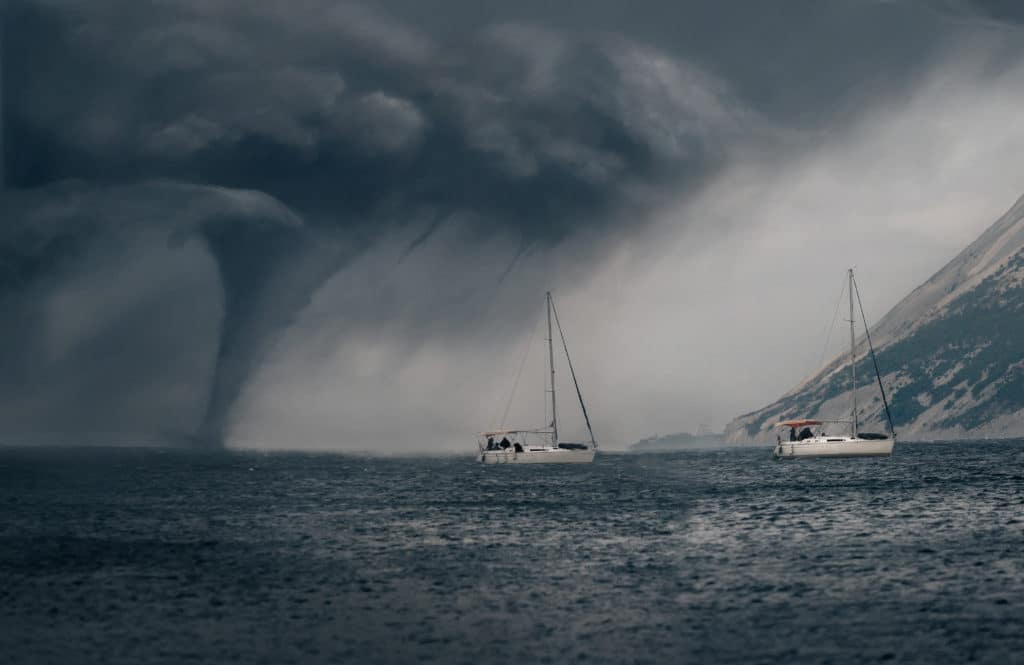
What Exactly Is a Waterspout? (And Why You Should Care)
Simply put, a waterspout is a whirling column of air and water mist. It’s not a magical tube of seawater sucking up into the clouds—what you’re seeing is mostly condensation and surface spray churned up by intense wind. But here is the catch: not all waterspouts are created equal. You need to know which one you’re dealing with.
The Two Types of Waterspouts
-
Tornadic Waterspouts: These are literal tornadoes over water. They drop from severe thunderstorms, packing high winds, hail, and frequent lightning. If you see one, the storm cell itself is already a massive threat. You need to clear the area fast.
-
Fair-Weather Waterspouts: Far more common, these form along the dark, flat bases of cumulus clouds on seemingly calm, humid days. Surprising to many, they actually build from the water up. By the time you spot the classic funnel connecting cloud to sea, it’s already near full strength.
Crucial Rule: A waterspout that moves onshore is immediately reclassified as a tornado by the National Weather Service. Treat it with the exact same respect.
The 4 Stages of a Waterspout: Recognizing the Warning Signs
Most waterspouts don’t just appear out of nowhere. The problem is, most people don’t know what they are looking at until the funnel is complete. By then, your window to escape is almost gone. Here is your cheat sheet for identifying them early.
|
Stage |
What You See on the Water |
Action Required |
|---|---|---|
|
Stage 1: The Dark Spot |
A distinct, circular dark patch appears on the surface, moving with a dark, flat cloud base overhead. |
Develop an exit plan. Don’t wait. |
|
Stage 2: Spiral Bands |
Curved bands of dark and light water ripple outward. You might feel a sudden temperature drop or wind shift. |
Change course now. 90 degrees to its path. |
|
Stage 3: The Spray Ring |
A violent, circular ring of churning white spray rises from the water, spinning fast and growing in intensity. |
Evade immediately. Max safe speed. |
|
Stage 4: Full Funnel |
A solid column connects the cloud to the ocean. You are now at maximum danger. |
Brace for impact if you can’t escape. |
Other Subtle Clues You Shouldn’t Ignore
Your eyes aren’t your only tool out there. If you feel a sudden, localized wind shift (a swing of 30–60 degrees) or a jump in wind speed, pay attention. Chaotic, choppy waves that clash with the primary swell and make the water look like it’s “boiling” are a dead giveaway that a vortex is forming just above. Oh, and if you hear thunder within 10–15 seconds of a lightning flash near an isolated cloud? That updraft is strong enough to birth a waterspout.
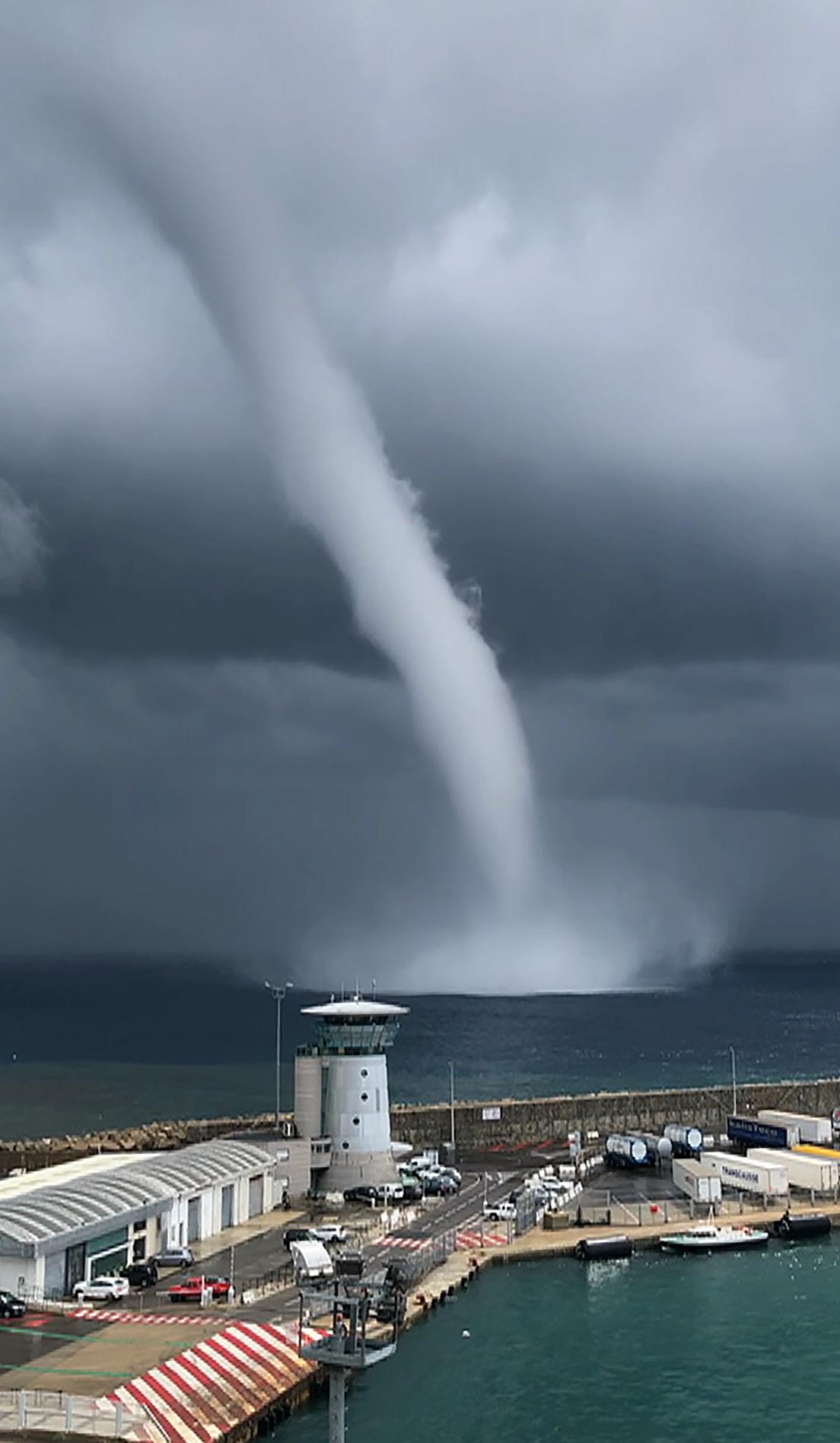
What to Do When a Waterspout is Coming Right at You
Alright, you see it. The clock is ticking. What you do in the following moments decides what happens next. Here is the step-by-step response.
-
Figure out its trajectory immediately (30 Seconds). Watch it against a fixed part of your Boat. Is it drifting right across your bow? Turn 90 degrees left. If it isn’t moving left or right, but just getting bigger—it’s coming straight for you. Pick a side and move. Don’t pause to rethink it.
-
Execute the 90-Degree Escape. This is the golden rule endorsed by NOAA. Do not try to outrun it in a straight line. They travel at 30–35 knots. You probably can’t beat it in a drag race. Turn completely perpendicular to its path, stabilize your steering, and push the throttle to your maximum safe cruising speed.
-
Lock everything down. While the helmsman drives, someone needs to make sure everyone is wearing a Coast Guard-approved life jacket right away. Dog the hatches, clear the deck of loose gear (fishing rods, buckets), and if you’re sailing, drop or reef your sails instantly. An exposed sail in a waterspout is a capsize waiting to happen.
What if you just can’t get away? It happens. If impact is unavoidable, point the bow directly into the primary wave direction to minimize the risk of a rollover. Throttle down and match the sea’s rhythm. Get everyone below deck or as low as possible, and if you think a capsize is imminent, broadcast a Mayday on VHF Channel 16 immediately.
When Every Second Counts, Your Propulsion Matters
Let’s be real for a second. When you’re making that 90-degree escape turn and jamming the throttle forward to get out of a funnel’s path, your boat’s acceleration is literally your lifeline. If your propeller slips, cavitates over the choppy, confused waves, or just lacks the immediate “bite” you need, those precious seconds slip away.
That’s exactly why we build VIF propellers the way we do. We don’t just design them for smooth, sunny days on the lake; we engineer them to deliver instant, aggressive thrust when the water gets ugly and you need to move now. If your current prop is heavily dinged, slipping, or struggling to get your boat on plane quickly, it might be time for an upgrade. Because out here, reliable gear isn’t just a basic upgrade—it’s part of your survival plan.
The Smart Boater’s Pre-Launch Checklist
To be completely honest, surviving marine hazards happens before you ever leave the dock. Once conditions deteriorate, your options shrink fast. Please, make this a habit before heading out in waterspout-prone areas:
-
✅ Respect the Forecast: Always check the NWS coastal marine forecast. If you see “waterspout likely” or active thunderstorm warnings, just stay put. The fish will be there tomorrow.
-
✅ Gear Check: Verify you have at least one properly sized, USCG-approved PFD for every single person aboard. Radios matter too—ensure your fixed and handheld VHFs are fully charged and tuned to Channel 16.
-
✅ The One-Third Rule for Fuel: One-third out, one-third back, and one-third in reserve just in case you need to spend 40 minutes detouring around a nasty storm cell.
-
✅ Visual Briefing: Show your passengers where the safety gear is located before you untie the lines. Assign someone to act as a spotter to keep an eye on radar and dark clouds while you manage the Boat.
Frequently Asked Questions
How long do waterspouts usually last? Most fair-weather spouts fade out within 5 to 15 minutes. Some tornadic ones hold on much longer. But keep in mind, even a 5-minute spout can ruin your Boat in seconds.
Are they worse than tornadoes?
Usually, no. Fair-weather spouts pack winds similar to an EF0 tornado (under 67 mph). But given that you are on water—where boats can easily capsize and sinking is a real threat—the physical danger is incredibly high.
Can I just safely drive through a small one? Absolutely not. Aside from the wind flipping you over, the localized low pressure can rip off boat covers, shatter windshields, and pull people overboard. Give them a wide Berth—at least 2 to 3 miles if possible.
Final Thoughts
The ocean rarely throws something at you without warning. A darkening sky, weirdly flat cloud bases, and patches of churning water are its way of telling you to move. The boaters who make it home safely aren’t usually the luckiest—they’re just the ones who were prepared and knew exactly when to turn 90 degrees.
Next time you head out, have your gear ready, keep one eye on the sky, and trust your gut. The water’s waiting—go out smart.