
Put the wrong Prop on your outboard and you’ll feel it right away — slow holeshot, a top speed that never shows up, handling that fights you through every turn.
Here’s the tricky part. Two of the most misunderstood high-performance Propeller designs — the chopper Prop and the Cleaver prop — look similar to the untrained eye. But they perform like two different boats on the water. One bites hard and launches fast. The other is built to fly.
Knowing the difference goes beyond gear talk. It’s the deciding factor between a setup that falls short and one that changes how your boat runs. So here’s how to tell them apart — and which one belongs on your transom.
What Is The Difference Between A Chopper Prop And A Cleaver Prop?
The short answer: they lift different ends of your boat — and that changes everything.
A chopper propeller generates bow lift. It’s built for light hulls — jon boats, small runabouts, fast tiller setups — boats under 20 feet. It pushes top-end speed and blade grip hard. Run it at higher engine heights, and you get the most out of it. The trade-off? Hole shot takes a hit on surface-piercing setups. You’re giving up launch to gain flight.
A Cleaver prop produces stern lift. You’ll find it on true race boats — Formula 4 tunnel hulls, Alaskan Flats endurance racers, wider performance hulls that need natural lift at speed. Cleavers hold grip better through corners. They also deliver a stronger hole shot off the line.
Here’s where the specs pull them apart:
-
Chopper II: 18-pitch, aggressive rake on the trailing edge, tip cup at max diameter, no barrel — built for small-boat high-speed grip
-
T.E. Cleaver: 22-pitch, flat rake, small barrel — the barrel helps with both launch and corner retention
-
CNC Cleaver: 26–40 pitch, 14.5–15.5″ diameter, available in 15° or 18° rake — dialed in for 300, 400, and 500 HP powerplants
Both the Chopper II and T.E. Cleaver are built for 40–60 HP outboards. CNC Cleavers move up into Mercury Racing’s 300R, 400R, and 450R Verado range.
Same category. Very different jobs.
What Is a Chopper Prop? (Design, Structure & How It Works)
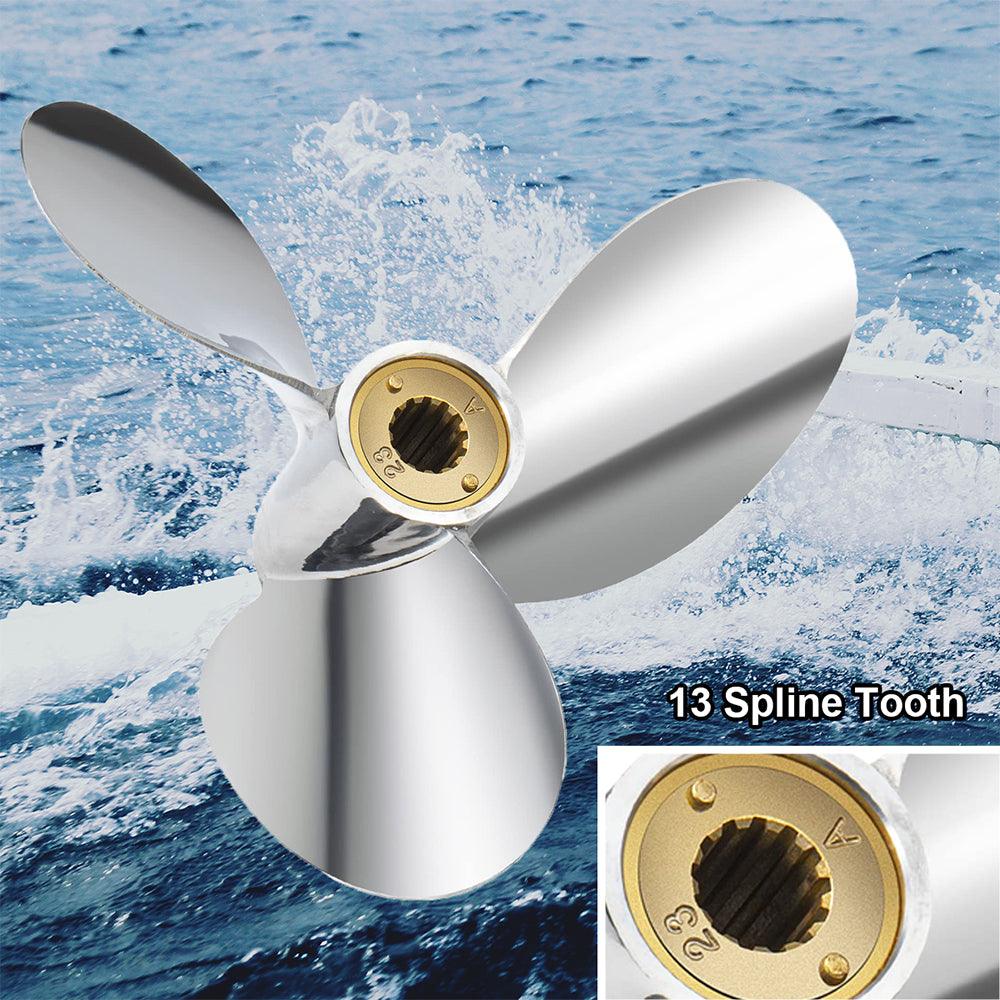
The Chopper prop does one thing: it puts bow lift into light, fast boats — no trim adjustment needed.
It’s a production outboard propeller built for pad V-bottom hulls — jon boats, fast tiller rigs, small runabouts pushing hard on flat water. The blade geometry is what separates it from the rest. The trailing edge extends aft with a large chord line at each radius. That’s not a styling choice. That shape is what makes the performance work.
The Three Design Elements That Define It
1. High Rake on the Trailing Edge
The aggressive rake angle makes the blade behave like a high angle-of-attack foil. At speed and high engine height, the blade pushes the bow up — no motor trim needed. On lightweight hulls, that bow lift kills porpoising and smooths out the ride.
2. Tip Cup at Maximum Diameter
The cup sits at the blade tip — the outermost edge. At high RPM, it boosts the lift at that point and keeps the blade biting into the water where other props lose grip. More grip at the tip means more bow lift, more thrust, and less ventilation.
3. No Barrel Hub
Most people miss this detail. The Chopper II runs no barrel hub — exhaust flows around the blades with nothing in the way. That cuts backpressure and keeps high-RPM thrust clean. It also holds corner grip better than barreled props, which often lose traction there.
Mercury Racing applies a lab finish to the blade surfaces. This trims drag at top-end speed, where even small surface flaws cost you RPM.
Put all three together — high rake, tip cup, no barrel hub — and you get a prop built to lift the bow on small, fast hulls running at their limit.
What Is a Cleaver Prop? (Design, Structure & How It Works)
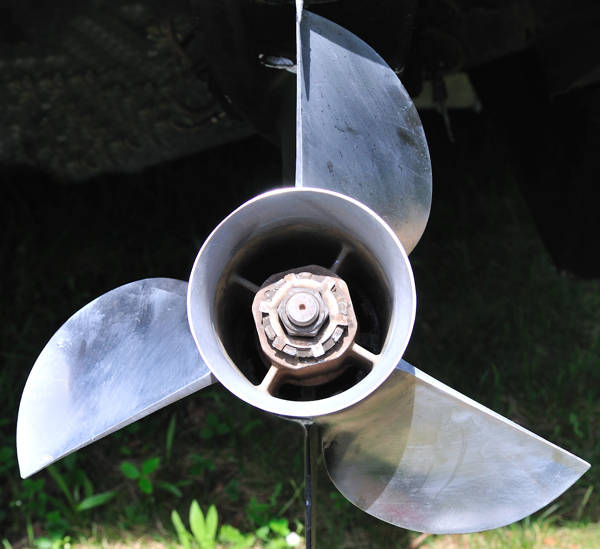
The Cleaver prop was built for one place: the point where the propeller meets the water’s surface at extreme speed.
The Chopper lifts the bow. The Cleaver handles the stern. Its job is to cut hard into the water — not sweep through it. That starts with the blade shape.
The Blade Geometry That Makes It Work
Pick up a Cleaver blade and the first thing you’ll notice is the trailing edge. It’s not tapered. It’s squared off — a straight, blunt cut running clean across the back of the blade. The leading edge comes in thin and sharp. The trailing edge is the thickest point. That wedge profile is what gives the Cleaver its name and its function.
This design is no accident. At elevated engine positions, the prop enters surface-piercing territory. That squared trailing edge bites in hard. It shears through the water’s surface instead of riding over it. The result is strong, controlled water engagement — the kind that high-speed performance hulls need.
How Mercury Racing CNC Cleavers Are Built
Most production props are cast and hand-finished. CNC Cleavers are machined from start to finish — no casting, no hand correction. Every dimension is cut straight into the metal. That precision makes a real difference. You get:
-
Consistent blade geometry across all three blades — this boosts efficiency
-
Custom horsepower thickness curves matched to specific engine outputs
-
True diameter and pitch — not approximate, but machined exact
The specs reflect the full range these props cover:
|
Spec |
Range |
|---|---|
|
Diameter |
14.5″ – 18″ |
|
Pitch |
23 – 41 inches |
|
Rake options |
12°, 15°, 18°, 21° |
|
Horsepower range |
300 – 1,800 HP |
The solid hub design keeps stern lift controlled at speed. Other props produce unpredictable lift at the rear. The Cleaver’s hub damps that lift. So the driver gets a stable, confident platform through the top end.
Engine compatibility covers Mercury Racing’s 300R, 400R, and 450R Verado outboards on the performance side. On the sterndrive side, it runs through 600 FCI to 1750 QC4 competition race engines. Each version uses its own horsepower thickness curve, matched to a target engine. This isn’t a one-size-fits-all blade. It’s a precision tool built for a specific power band.
Blade Design Compared: The Core Structural Differences
The blade geometry tells the whole story. Once you know what to look for, the differences between a Chopper and a Cleaver are hard to miss.
Trailing Edge: The Single Biggest Visual Difference
Start at the back of the blade. That’s where these two props go separate ways.
The Chopper’s trailing edge extends aft with a large chord line at each radius. The blade sweeps back with a sharp, deliberate angle. That backward extension, paired with the high rake angle, pushes bow lift into lightweight hulls at speed. It works like a high angle-of-attack foil — not a paddle, not a screw. A foil.
The Cleaver’s trailing edge is squared off. Blunt. Cut straight across. Where the Chopper sweeps back, the Cleaver stops flat. That blunt face is the thickest point on the blade. The leading edge comes in thin and sharp. The trailing edge is where the mass sits. That wedge profile shears through the water’s surface at elevated engine heights. It cuts through rather than riding over.
Same category of prop. Two opposite blade approaches.
Rake Angle: How Each Blade Sits in the Water
Rake is the angle the blade leans away from the hub. Each prop handles this angle in its own way.
-
Chopper II: High rake on the trailing edge. That’s the direct driver of bow lift. More rake means more angle-of-attack and more upward force at the bow on small, light hulls.
-
T.E. Cleaver: Flat rake, with a small barrel hub. The flatter rake puts stern lift control and corner grip first, not bow elevation.
-
CNC Cleaver: Available in 15° or 18° rake — you pick based on hull design and target horsepower range (300–500 HP for the outboard versions).
Hub Design: Barrel vs. No Barrel
This detail splits the two props apart on a structural level. Most buyers never notice it.
The Chopper II runs no barrel hub. Exhaust exits around the blades with no restriction. That cuts backpressure and keeps high-RPM thrust clean. You also get corner traction that barreled hubs tend to drop under load.
The Cleaver uses a solid hub. That hub controls the stern lift the blade builds at speed. It gives the driver a stable, predictable feel through the top end. On a race hull, uncontrolled rear lift turns into a handling problem fast. The solid hub keeps that in check.
|
Feature |
Chopper Prop |
Cleaver Prop |
|---|---|---|
|
Trailing edge shape |
Swept aft, large chord |
Squared off, blunt cut |
|
Rake style |
High rake (trailing edge) |
Flat rake (15°–18° on CNC) |
|
Hub design |
No barrel |
Solid barrel |
|
Primary lift |
Bow lift |
Stern lift |
|
Blade tip feature |
Tip cup at max diameter |
Precision-machined profile |
Two blades. Two distinct structural strategies. The Chopper is built to lift the bow. The Cleaver is built to hold the stern down. Neither is the wrong choice — they each solve different problems on different hulls at different power levels.
Performance Face-Off: Speed, Lift, Holeshot & Handling
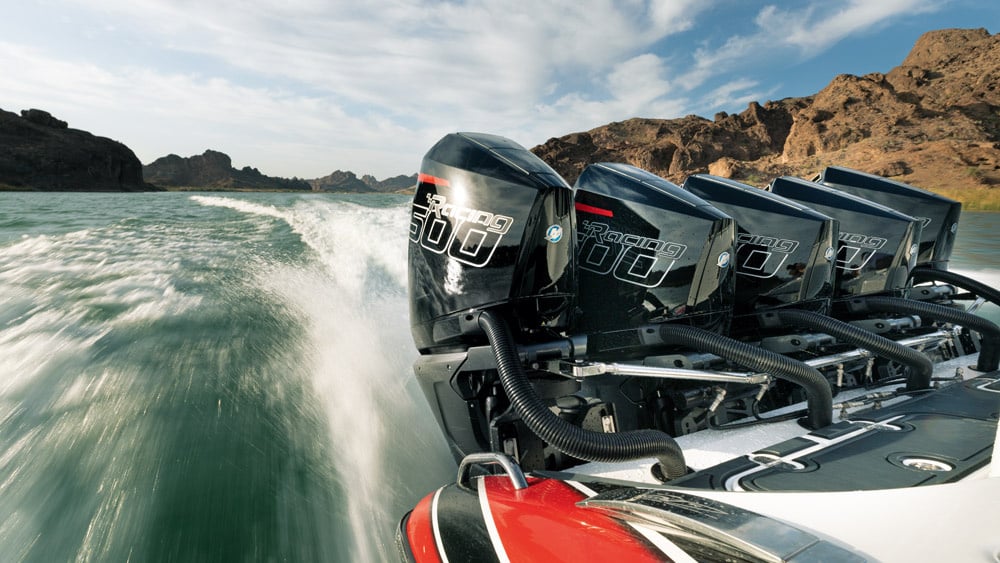
The blade design section tells you what these props are built to do. This section covers what happens when you drop them in the water.
Holeshot: Off the Line, Which One Wins?
The Cleaver takes the holeshot. Full stop.
The squared trailing edge, solid barrel hub, and flat rake all work together. They deliver strong, controlled water engagement from a dead stop. The Cleaver bites in hard and fast. That stern lift — the defining mechanical trait of the blade — pushes rear traction straight off the line. On Formula 4 tunnel hulls and wider performance hulls, that launch advantage is real and measurable. You feel it in the first two boat lengths.
The Chopper’s holeshot is its weak point, especially on surface-piercing setups. The high-rake blade is Built for Speed, not standing starts. You give up the launch to gain the flight. Your race starts at idle and ends at top speed — the Chopper costs you time early. You earn it back later.
Top-End Speed: Where the Chopper Takes Over
Push both props to their ceiling and the picture flips.
The Chopper’s tip cup at maximum diameter holds blade grip at high RPM where other props start to slip. The no-barrel hub cuts backpressure. The lab-finished blade surfaces reduce drag. Every part of this design targets one thing: maximum speed on small, light hulls running at their limit.
On pad V-bottom hulls and lightweight jon boat setups, the Chopper’s bow lift takes trim adjustment off the table. The bow stays elevated. The hull planes clean. The prop keeps biting. That’s top-end speed — not from raw pitch alone, but from sustained blade engagement through the entire run.
The CNC Cleaver holds its own at the top end too. Pitch options run 26 to 40 inches, with rake configurations matched to 300–500 HP outboards. It holds speed through corners far better than the Chopper. The Chopper can drift wide under load. The Cleaver holds the line with grip and control.
Handling: Stability vs. Agility
Hull type is the deciding factor here.
|
Condition |
Chopper Prop |
Cleaver Prop |
|---|---|---|
|
Straight-line top speed |
✅ Dominant on light hulls |
Competitive at high pitch |
|
Holeshot / launch |
Weaker on surface-piercing |
✅ Stronger, consistent |
|
Corner grip |
Loses traction under load |
✅ Solid barrel holds the line |
|
Stern stability at speed |
Less controlled |
✅ Hub damps rear lift |
|
Bow lift / porpoise control |
✅ Built-in, no trim needed |
Not its function |
The Chopper is agile on a light, fast hull — responsive, free-spinning, bow-up at speed. It suits the driver who wants the boat light and flying. The Cleaver is built for stability under power. You get predictable stern behavior, reliable corner tracking, and launch-to-finish consistency. It suits the driver who needs to hold a line at 100+ mph without fighting the boat through every corner.
Different boats. Different demands. Different props.
Chopper Prop vs Cleaver Prop: Which Boat Applications Suit Each?
Your boat decides which prop goes on your transom — not the other way around.
Chopper props belong on small, light, fast hulls. Think jon boats, fast tiller rigs, and runabouts in the 13–20 foot range running 40–60 HP outboards. These boats need bow lift built into the prop itself — not dialed in through motor trim, not patched with hull geometry. The Chopper delivers that lift on its own. It keeps the bow elevated at speed and holds blade grip where lighter hulls tend to lose it. Your primary goals are strong planing ability and flat-water performance on a smaller setup? This is your prop.
Cleaver props are built for race applications. Formula 4 tunnel hulls. Alaskan Flats endurance racers. Larger, wider performance hulls that produce natural lift at speed need a prop that matches that energy — not one that fights it. The Cleaver’s flat rake, squared trailing edge, and small barrel all work together. You get maximum top-end speed and solid corner grip on hulls that are already doing the hard work.
Your Boat Falls Between the Two
Not every hull fits neatly into either camp. Boats right at the 20-foot mark are moving toward Cleaver-style props even when standard thinking points to a Chopper. In that gray zone, run through these steps before you commit:
-
Start with a middle-ground pitch — test it before going to either extreme
-
Adjust engine height — motor position changes how both props load and perform
-
Define your primary use — racing pulls you toward the Cleaver; torque, holeshot, and recreational towing pull you back toward the Chopper
|
Chopper |
Cleaver |
|
|---|---|---|
|
Lift direction |
Bow |
Stern |
|
Ideal hull size |
13–20 ft |
Larger / race-specific |
|
Engine range |
40–60 HP |
300+ HP (racing) |
|
Speed focus |
Torque / holeshot |
Top-end speed |
|
Best use case |
Jon boats, tiller, recreational |
Tunnel boats, endurance racing |
Same finish. Different jobs. Know your hull, and the choice becomes clear.
How to Choose Between a Chopper Prop and a Cleaver Prop
The wrong prop doesn’t just slow you down. It fights you — through the launch, through the corners, through every mile you push the throttle.
Four questions cut through the noise fast.
What hull are you running? Small boat — jon, tiller, runabout under 20 feet — the Chopper is your prop. Wide race hull, tunnel boat, flats racer? That’s Cleaver territory. Hull type isn’t one factor among many. It’s the filter everything else runs through.
What does your setup demand? Torque, grip, bow lift, lake performance — Chopper handles that. High-speed racing, strong holeshot, corner retention at race pace — Cleaver is built for that load. It handles those demands well.
What’s your engine putting out? Both props run in the 40–60 HP band. But they use that power in different ways. The Chopper builds bow lift. The Cleaver converts horsepower into stern lift and top-end speed.
What happens if you get it wrong? A Cleaver on a small lake boat gives you a poor launch. You also face ventilation risk at low RPM and grip that falls apart in corners. A Chopper on a race hull gives you excess bow lift, unstable stern behavior, and 2–5 MPH of top speed left on the table.
One quick cross-check before you buy: match your pitch to WOT RPM.
– An 18-pitch Chopper targets 5,500–6,000 RPM on bow-lift setups.
– A 22-pitch T.E. Cleaver is tuned for 6,000+ RPM speed runs.
Slip under 10% means your prop and engine are working together. Above that, something’s off.
Know your hull. Know your use case. The choice makes itself.
Chopper Prop vs Cleaver Prop: Quick-Reference Comparison Table
Every spec that separates these two props — blade shape, rake, hub, lift direction — is in the table below. Scan it once. The choice becomes much clearer.
|
Feature |
Chopper Prop |
Cleaver Prop |
|---|---|---|
|
Blade Shape |
Rounded, sweeps aft |
Squared-off, blunt trailing edge |
|
Rake Angle |
Aggressive trailing-edge rake |
Flat rake (15°–18° on CNC) |
|
Hub Design |
No barrel hub |
Solid barrel hub |
|
Tip Feature |
Tip cup at max diameter |
Precision-machined profile |
|
Bow Lift |
Strong — built in |
Minimal |
|
Stern Lift |
Minimal |
Strong — lifts the transom |
|
Holeshot |
Strong mid-range acceleration |
Weakest of most prop styles |
|
Top-End Speed |
Dominant on light hulls |
Built for it |
|
Corner Grip |
Holds well |
Solid barrel locks the line |
|
Pitch Range |
18″ (Mercury Racing) |
22″+ (up to 41″ CNC) |
|
HP Range |
40–60 HP |
40–60 HP (T.E.) / 300–1,800 HP (CNC) |
|
Exhaust |
Over-prop |
Through-hub or over-hub |
|
Cavitation Risk |
Lower |
Higher when running deep |
|
Best Application |
Jon boats, tiller rigs, small runabouts |
Tunnel hulls, flats racers, formula boats |
The short version: Chopper props give you strong holeshot, solid bow lift, and mid-range grip. Cleaver props drop that grip entirely. You get pure top-end speed and tight stern control on race hulls instead.
Conclusion
The prop under your hull isn’t a minor detail — it’s the difference between a boat that performs and one that dominates.
Chopper props are built for the everyday high-performance boater. They push serious speed but still handle real-world conditions. Cleaver props are a different story. Flat-bladed, surface-running, built for one purpose: maximum velocity. Every fraction of a second counts at that level.
Know your boat. Know your engine. Know what you’re asking your propeller to do.
Running a bass boat, a performance center console, or a modified outboard setup? Still unsure which stainless steel Boat Prop geometry fits your build? That uncertainty is costing you speed right now.
Browse the VIF high-performance propeller lineup, or reach out to us. The right chopper propeller or cleaver is closer than you think.