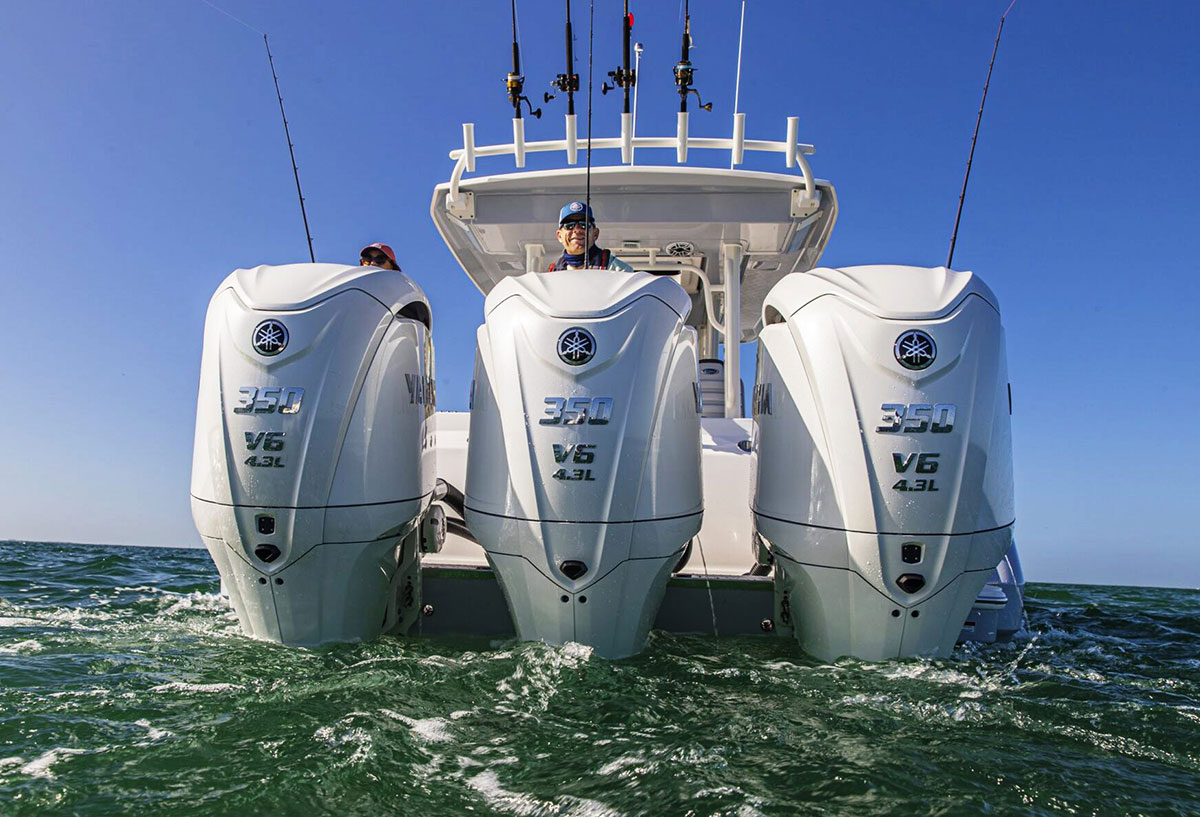
Wrong shaft length on your outboard motor is one of the most expensive mistakes a boat owner can make — and one of the most common. Get it right, and your engine runs cool. Your Propeller bites deep. Your boat performs the way it should.
Get it wrong, and you’re dealing with cavitation, overheating, sluggish acceleration — or worse, a blown powerhead. Nobody wants that bill.

Shopping for your first motor? Troubleshooting a performance problem? Trying to figure out why 15-inch, 20-inch, and 25-inch shaft outboards even exist? The answer comes down to one measurement: your outboard motor transom height.
This guide covers everything you need to match the right shaft to your boat. No guesswork. No dealer upsell. Just the straight answer.
What This Guide Covers
Three shaft lengths. One transom. One measurement decides whether your engine runs clean — or burns itself out.
This guide covers everything. Start with 15-inch, 20-inch, and 25-inch shaft outboards — what they are and where each one fits. Then move into diagnosing mismatches, measuring your transom, and picking the right motor for your hull. Running a dinghy in flat water? Pushing a deep-V through chop? Each section gives you a clear, specific answer for your boat.
Here’s what’s inside:
-
Shaft length definitions — what short, long, and extra long mean in real numbers
-
Performance comparison — how shaft length affects cavitation, thrust, fuel burn, and handling
-
Step-by-step transom measurement — get the number right before you buy
-
Decision guide by boat type — small fishing boats, inflatables, deep-hull vessels
-
Common mistakes and their consequences — the problems a wrong shaft length causes, and how to spot them
-
FAQ — fast answers to the questions most buyers search for
What Is Outboard Motor Shaft Length? (And Why It Makes or Breaks Your Setup)
Pull the engine off the transom and look at it straight. See the distance from the bottom of the mounting bracket down to the top of the anti-cavitation plate? That’s your shaft length. One number. Measured in inches. It controls everything about how your Propeller sits in the water.
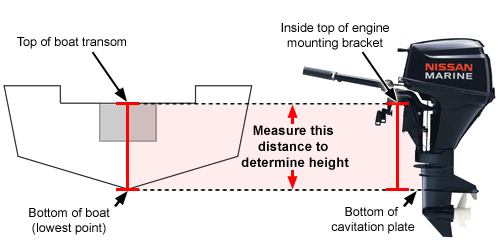
The industry runs on three standard sizes:
-
Short shaft — 15 inches (38 cm)
-
Long shaft — 20 inches (51 cm)
-
Extra long shaft — 25 inches (64 cm)
-
Ultra long shaft — 30 inches (76 cm), for deep-hull vessels
The target is simple: your anti-cavitation plate should sit 0 to 1 inch below the hull keel. That keeps the propeller submerged. The blades bite clean water at full depth. Thrust runs at 100%.
Drift outside that window — even by two inches — and performance drops 15 to 25%. Go too shallow, and air enters the blade path. That triggers outboard motor cavitation: thrust collapses, speed falls, and the engine strains against nothing. Go too deep, and drag cuts fuel efficiency by up to 30%. Handling gets loose and unpredictable.
Shaft length isn’t a preference. It’s a spec. And your transom height sets it.
Short Shaft Outboard Motors: Specs, Strengths, and Where They Shine
The 15-inch shaft is the smallest standard in the outboard world. For a specific category of boat, it’s the right fit.
Short shaft motors are built for low transoms between 15 and 17 inches. Jon boats. Small inflatables. Flat-bottom dinghies and tenders. These hulls sit close to the water. A longer shaft pushes the propeller too deep. That drags against resistance and kills speed. The short shaft puts the blades at the right depth — no more, no less.
The numbers look like this:
-
Shaft length: 15 inches (381 mm)
-
Transom compatibility: 15–17 inches
-
Weight range: 29–87 lbs depending on horsepower
-
Fuel consumption: as low as 1.1 L/hour at full throttle (2.6 HP models)
Take the Yamaha F9.9SMHB as a solid example — 87 lbs, CDI ignition, clean performance up to 5,500 RPM. The Suzuki DF2.5A comes in at just 29 lbs. Light enough to lift out single-handed. The Mud-Skipper F2.6BMS runs a 72 cc displacement with a 1.2-liter tank and tops out at 1.1 L/h fuel burn. These are not heavy-water engines. Think of them as purpose-built tools for calm, shallow water.
Where short shaft motors truly shine:
-
Inland fishing on jon boats — shallow weedy water, slow trolling speeds, easy one-person mounting
-
River runs in dinghies — modest tank sizes stretch further on flat, calm stretches
-
Nearshore inflatable use — low weight means faster rigging, faster departure, less strain on lightweight transoms
There’s one hard limit: rough water. Chop kicks up. Waves start pulling the hull around. A 15-inch shaft runs out of depth margin fast. The propeller breaks the surface. Outboard motor cavitation sets in — thrust collapses, RPMs spike, and the engine pulls against air instead of water. Short shaft motors belong in protected water. Push them into open swells, and performance falls off quickly.
For flat lakes, slow rivers, and calm coastal bays? The short shaft runs clean, efficient, and right in its element.
Long Shaft Outboard Motors: Specs, Strengths, and Where They Dominate
Move up to a 20-inch shaft, and everything shifts. This is the workhorse of the outboard world — the standard most mid-size boats are built around, and the spec that handles real water.
The 20-inch long shaft is built for transoms at 20 inches. That puts the anti-cavitation plate right where it needs to be: below the hull. The propeller stays in clean, unbroken water. It holds steady even as swells build and chop gets rough.
The core numbers:
-
Shaft length: 20 inches (51 cm)
-
Transom compatibility: ~20 inches
-
Weight range: 61 lbs (Yamaha F6) up to 525 lbs (Yamaha 200HP I-4)
-
Displacement range: modest single-cylinders up to 2.8L four-cylinder powerplants
The Yamaha F60 sits at 247 lbs with a 996 cc displacement. It spins between 5,000 and 6,000 RPM at 9.5:1 compression. The Suzuki 140HP comes in at 410 lbs on a 2.0L block. These engines push real loads through real conditions.
Where the long shaft earns its place:
-
Offshore and nearshore fishing — the propeller stays submerged through wave troughs, and thrust holds steady
-
RIBs and rigid inflatables — 20-inch shafts are the industry standard for open-water wave handling
-
Medium aluminum fishing boats — consistent Prop depth means consistent fuel burn
-
Daysailers and cruising sailboats — ePropulsion electric long-shaft variants (up to 29.5 inches) handle auxiliary propulsion well in both fresh and salt water
One limitation worth knowing: shallow water is hard on the long shaft. The extra depth that protects you in chop becomes a problem when the bottom rises fast. Grounding risk goes up. Drag increases. In those conditions, the short shaft has the edge. But in open water — where most 20-inch boats run — the long shaft holds its depth, holds its thrust, and holds its line.
Short Shaft vs Long Shaft: Head-to-Head Comparison Across 6 Key Dimensions
Six dimensions. Two shaft lengths. One clear winner — but only for your specific boat.
Here’s the direct comparison most buyers never find before they pull the trigger.

1. Performance: Calm Water vs. Chop
In flat, protected water, a matched 15-inch shaft outboard runs at peak efficiency. The propeller sits right where it needs to be. Thrust is clean. Nothing’s wasted.
Put that same short shaft into real chop, and things change fast. Wave troughs expose the blades. Air enters the blade path. Outboard motor cavitation kicks in. Top speed drops 10–20%. RPMs swing. The engine sounds like it’s working twice as hard — because it is.
The 20-inch long shaft earns its reputation in rough water. Deeper Prop placement keeps the blades buried through wave cycles. In open chop, that depth advantage gives you a real-world speed gain of 2–5 mph. RPM stays far steadier across the throttle range.
The tradeoff is real. Mount a long shaft on a 15-inch transom, and that efficiency flips negative. Prop depth misalignment wipes out 15–25% of propulsion output before you leave the dock.
2. Fuel Efficiency: Matched Shaft vs. Mismatch Penalty
Shaft-to-transom match is where fuel economy is won or lost — not at the fuel dock.
A well-matched short shaft in calm water returns 10–15% better fuel economy than the same engine running mismatched. On a 30HP motor, that’s a real 2–3 MPG difference on a full day’s run.
The mismatch numbers are brutal:
-
Short shaft on a 20-inch transom: propeller runs too high, cavitation spikes fuel consumption by 25–50%
-
Long shaft on a 15-inch transom: added drag pushes fuel use up 15–30%
A well-matched long shaft in rough, open water delivers 5–10% efficiency gains over a mismatched setup. It also cuts out the 20–40% fuel spike that sustained cavitation causes in wave conditions.
The engine isn’t burning more fuel because it’s working harder. It’s burning more fuel because it’s getting less done.
3. Handling and Safety: Shallow Flexibility vs. Deep Stability
Short shaft motors give you room to breathe in shallow water. Draft stays under 15 inches. You get 20–30% better maneuverability in tight, skinny water. Work a flat or run a river channel without worrying every time the bottom rises.
The risk shows up at the other end of the range. In open water with any real swell, outboard propeller depth becomes a safety issue — not just a performance one. A short shaft’s reduced depth raises prop-ventilation risk. In moderate chop, that means a 15–25% higher chance of dangerous handling instability.
Long shaft motors flip the equation. Deep-water stability goes up 20–30%. Roll dampens out. Prop ventilation in swells drops — handling runs about 5–10% safer in the same conditions.
One calibration point worth knowing: no matter the shaft length, your anti-cavitation plate should sit 0 to 1 inch below the hull keel at the right outboard motor mounting height. That single measurement is your safety baseline.
4. Installation and Maintenance: Weight, Fit, and Long-Term Upkeep
The weight gap between shaft lengths is real but manageable. At the 30HP class, a short shaft motor runs around 95 lbs. The long shaft version comes in at 105–110 lbs — a 10–14 lb difference that matters when you’re rigging solo.
Installation complexity jumps more than the weight gap suggests. A short shaft bolts onto a matching 15–17-inch transom in 10–15 minutes. Force a long shaft onto a sub-20-inch transom and you need shims, adjusters, and close attention — that adds 20–30 minutes and real room for error.
Maintenance patterns differ too:
-
Short shaft: propeller blades wear faster from ventilation cycling — plan for more frequent prop inspections
-
Long shaft: more submerged gear in saltwater means heavier corrosion exposure, more gear lube, and about 20% more service time per season
Neither type is high-maintenance on its own. Both become high-maintenance on the wrong transom.
5. Boat Type Fit: What Belongs on What Hull
Match rate by hull type:
|
Boat Type |
Transom Height |
Recommended Shaft |
Match Rate |
|---|---|---|---|
|
Inflatable / flat-bottom |
15–17 inches |
15-inch shaft outboard |
~90% |
|
Aluminum fishing / jon boat |
15–17 inches |
15-inch shaft outboard |
~85% |
|
V-hull fishing / center console |
18–20 inches |
20-inch shaft outboard |
~80% |
|
RIB / open-water rigid inflatable |
20 inches |
20-inch shaft outboard |
~85% |
|
Sailboat / deep-keel auxiliary |
20+ inches |
20-inch or 25-inch shaft outboard |
~90% |
The sailboat case needs a specific note. Deep keel geometry creates real prop-strike risk with undersized shafts. A 20-inch shaft — or longer — isn’t just a performance choice on a sailboat. It’s a structural safety call.
6. Price: What the Premium Actually Buys You
At the 30HP class, here’s where the market sits:
-
Short shaft (15-inch): $1,800–$2,500 new
-
Long shaft (20-inch): $2,000–$2,900 new — about a 10–15% premium
The long shaft costs more upfront. It also costs more to install on marginal transoms — add another $100–200 for shims or brackets in borderline setups.
The value question isn’t which shaft is cheaper. It’s which shaft costs less over time in your specific water.
Short shaft in shallow, calm water: 15–20% lower lifecycle cost. The engine runs where it’s built to run. Wear is predictable. Repairs are rare.
Long shaft in open, rough water: the 10–15% durability edge over a mismatched setup pays back the price premium — most owners see that return within two to three seasons of regular use.
Buy the wrong shaft length and save $200 upfront. Spend $800 on a blown water pump and a replacement prop by summer’s end. That’s the real cost comparison nobody puts on the spec sheet.
The Transom Height Decision Tree: Which Shaft Length Is Right for Your Boat?
Your transom height is the one number that matters here. Brand preference, horsepower ratings, dealer recommendations — all of that comes second. Get this number right, and the rest of the decision falls into place.
Here’s how the matching works:
|
Transom Height |
Correct Shaft Length |
Typical Boat Type |
|---|---|---|
|
15–17″ |
15″ short shaft |
Jon boats, inflatables, small dinghies |
|
17–18″ |
Measure with care — borderline zone |
Consider long shaft + jack plate |
|
20″ |
20″ long shaft |
Center consoles, V-hulls, RIBs |
|
20–25″ |
25″ extra long shaft outboard |
Deep-V hulls, bracket mounts |
|
30″+ |
Ultra-long (30″) |
Catamarans, commercial hulls, staggered multi-engine setups |
Boat type shifts the equation too. A 20-inch transom on a flat-water jon boat is a different situation from a 20-inch transom on a deep-V offshore hull. Factor in what the boat does, not just what it measures:
-
Rough water or heavy loads → go with the longer shaft. Wave troughs expose the prop fast. Extra depth keeps the blades buried.
-
Shallow rivers or protected bays → short shaft wins. Less drag, less grounding risk, better control in skinny water.
-
Electric outboards → long shaft is the standard choice for transoms over 19.7 inches. Electric motor specs can differ from gas motor specs — check before you buy.
-
Running a jack plate or setback bracket → your effective transom height changes. A 5-inch raise on a bracket moves you from a 25-inch spec into 30-inch territory. Recalculate from the adjusted mounting position, not the raw transom measurement.
One rule holds no matter which setup you run: the anti-cavitation plate should sit 0 to 1 inch below the full-load waterline. On a planing hull, flush to a half-inch above the hull bottom is the target. That position keeps the propeller in clean, pressurized water across the full throttle range. Nothing else does the job.
Go too high and you’re spinning in air. Go too low and you’re dragging against resistance. Either way, it costs you.
Quick Self-Diagnosis: Is Your Shaft Length Wrong Right Now?
Already on the water and something feels off? Run through this:
Signs your shaft is too short:
– RPM climbs hard but boat speed barely moves
– Engine bogs or surges in light chop
– Cavitation noise under acceleration
– Telltale stream is weak or cuts out at idle
Signs your shaft is too long:
– Acceleration feels sluggish despite enough power
– Fuel runs out faster than it used to
– Bow sits high and handling feels loose or unstable
– Prop clips bottom in water that should be deep enough
The fix starts with one measurement: transom top center to hull keel bottom. Match that number to the correct outboard motor transom height spec. The right shaft length follows from there. No guesswork. No expensive trial and error.
Frequently Asked Questions: Outboard Shaft Length
Buyers ask the same questions. Here are the straight answers.
What shaft length fits a 17–18 inch transom?
Go with the 20-inch long shaft. Here’s the full breakdown:
-
15–17.5 inches → short shaft
-
17.5–22.5 inches → long shaft
-
Above 22.5 inches → extra long shaft
That 17–18 inch range sits right in the long shaft zone. The 20-inch is your answer.
Does shaft length affect fuel consumption?
Yes, and it’s a direct hit either way. A shaft that’s too long creates drag — fuel burn goes up. Too short, and cavitation kicks in — efficiency drops fast. The right shaft length is what keeps your fuel economy where it should be.
Can a short shaft outboard handle ocean conditions?
No. The 15-inch shaft outboard is built for calm, shallow water. Open-water swells push the propeller blades above the surface. You need a 20-inch or 25-inch extra long shaft outboard to keep the prop submerged through wave troughs. Don’t take a short shaft into open water.
Do electric and gas outboards share the same shaft standards?
They don’t.
|
Type |
Short |
Long |
Extra Long |
|---|---|---|---|
|
Gas |
15″ |
20″ |
25″ |
|
Electric |
25″ |
30″ |
— |
Electric motors run 5–10 inches longer across every category. Check the specs before you buy.
Can you adjust mounting height instead of swapping shaft lengths?
This works for small corrections — ±2 inches maximum. Past that, you need the correct shaft. Mounting tweaks can’t fix a shaft that’s wrong for your transom. Cavitation and drag don’t go away on their own. Get the right shaft from the start.
Pro Tips for Getting the Most Out of Your Outboard Shaft Length
Shaft length is half the equation. How you use that spec determines whether your motor reaches its potential — or underperforms all season without you noticing.
A few things worth keeping in mind once the motor is mounted:
-
Verify your anti-cavitation plate position after every remount. Brackets shift. Clamps loosen. One inch of unintended creep changes everything about how your propeller behaves on the water.
-
Check your owner’s manual before assuming standard sizing applies. Manufacturer specs can override general guidelines. This is true on purpose-built hulls with unusual shapes and angles.
-
Recheck transom height after you change your load. A fully geared fishing setup sits lower in the water than the same boat running light. Your effective shaft depth shifts with it.
-
Inspect prop blades on a set schedule if you run shallow water. Ventilation cycles leave marks. Surface pitting caught early is fixable. A destroyed blade costs real money.
Right shaft. Right position. Right maintenance schedule. That’s the whole system.
Conclusion
Choosing between a short shaft and long shaft outboard isn’t a guessing game — it’s a measurement. Get your transom height right and match it to the correct shaft length. The rest follows: cleaner propeller depth, stronger thrust, better fuel economy, and a motor that lasts.
Get it wrong, and you’ll face cavitation, overheating, and performance that never feels right — no matter how much you tinker.
Here’s the bottom line: measure twice, buy once. Pull out a tape measure before you pull out your wallet. Transom at 15 inches? Run a short shaft. Closer to 20? Go long. Above 25 inches, an extra long shaft outboard is built for your setup.
The right shaft length protects your motor. It also changes how your whole boat handles on the water — smoother runs, less strain, and better control from start to finish.
Now go measure that transom.
Need Help Finding the Right Prop?
So, you’ve got your transom measured and shaft length sorted. That’s a huge step! But honestly, even the perfect shaft setup won’t save your boat’s performance if you’re spinning the wrong propeller. If you’re looking for a reliable prop that actually bites the water right, we at VIF Propellers have got you covered.
We know firsthand how confusing pitch numbers, diameters, and cup sizes can get. That’s exactly why we don’t just sell props—we offer a dedicated, professional outboard propeller selection service. You really shouldn’t have to guess what works for your hull. Our team is here to guide you through the entire process, from matching your specific outboard specs to putting the perfect prop on your engine. Whenever you’re ready to dial in your boat’s performance, we’re with you every step of the way.