
Don’t Panic: Spun Hubs Are an Alpha One Rite of Passage
Let’s get one thing straight right away: if you’ve spun the hub on your Alpha One, don’t stress. It happens to almost everyone eventually. As a manufacturer who has spent years designing and building propellers, let me tell you a secret—it’s actually supposed to happen. The rubber hub inside your Prop acts as a mechanical fuse. When you hit a log or push way too much torque out of the hole, that rubber gives up so your expensive drive shaft and gears don’t have to.
But when it does finally fail, it leaves you going nowhere fast.
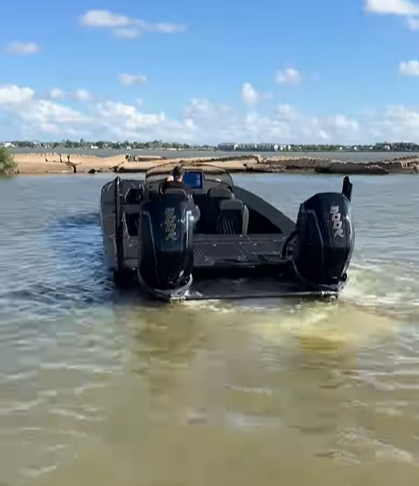
What It Actually Feels Like (And How to Be Sure)
The failure is sneaky. You’ll be idling out of the marina, and everything feels totally normal. You shift into forward with a solid clunk, steer into the open channel, and hit the throttle to get up on plane. Then… nothing.
Well, not nothing. The engine screams, the RPMs spike by 1,000 or more, but the Boat just plows along at 5 knots. Think of it exactly like a slipping clutch in an old manual transmission car. When you put a heavy load on it—like trying to pull a wakeboarder or pushing a heavy boat over a wave—the engine turns, but that power just isn’t making it to the Propeller blades. If you back off the throttle, it might “catch” again and let you idle slowly back to the dock.
Spun Hub vs. Other Annoying Boat Problems
Sometimes folks misdiagnose a spun hub. Here is how to tell it apart from other headaches:
-
Ventilation/Cavitation: This feels really similar because your RPMs will spike. But ventilation usually happens in tight turns or if your drive is trimmed way too high. If you trim the drive all the way down, drive straight, and it still slips during a hard hole shot? That’s the hub slipping.
-
A Bent propeller: A bent blade vibrates. Hard. You’ll feel a rhythmic, bone-rattling shake in the deck that gets worse as you speed up. A spun hub usually runs smooth; it just stops pushing the boat.
-
Failing Engine Coupler: This is a rough one. If the engine-to-drive coupler strips out, it feels just like a spun hub. However, you’ll often smell burning rubber coming from inside the engine bay near the transom, not outside the boat.
Your Fix Options: A Hub Kit or an Upgrade?
So, you pull the Prop off (usually just takes a 1-1/16″ socket, a piece of wood to block the blades, and some elbow grease). Now what?
If your propeller blades look absolutely perfect and it uses an interchangeable hub system, you’re in luck. You can just buy a replacement hub insert, tap it in, and get back on the water.
But let’s be realistic here. If you spun your hub because you smashed a rock, or if your old aluminum prop is looking like a chewed-up dog toy with bent tips and stripped paint, putting a new hub inside a dying prop makes zero sense. You need a new propeller. And that’s where things get interesting.
Enter VIF Marine: Why Our Propellers Are Built Different
After years of manufacturing props, we got tired of seeing the same weak points over and over. So we built our production lines from the ground up to eliminate them. If you’re replacing your Alpha One prop, here is what you’re actually getting when you choose VIF:
Aluminum Props That Don’t Act Like Cheap Castings
Most standard aluminum boat props are made using traditional die-casting, which traps tiny unseen air pockets inside the metal. We use squeeze casting. By applying massive pressure while our high-density aluminum alloy cools, we force those microscopic pores right out of existence. The result? A blade that is nearly pore-free, significantly tougher, and has much higher tensile strength than the old-school stuff.
Serious Stainless Steel Specs
If you run hard and want to step up to our stainless steel line, we don’t compromise. We cast these using Duplex stainless steel that undergoes a strict solution heat treatment. We bump up the chromium content to make it highly resistant to corrosion and add copper to fight off environmental acids.
We completely dialed in the blade geometry, too. With trailing edge and tip cupping, our stainless blades bite the water aggressively. We also designed a spiral exhausting tunnel into the hub barrel, which drastically improves your hole shot by keeping exhaust gases out of the thrust stream.

Robots, Lasers, and Obsessive Quality Control
We don’t just pour melted metal and cross our fingers. Our automated factory floor looks like a sci-fi movie. We rely on 5-axis mold machining and an automatic vacuum casting system handled by advanced 6-axis linkage robotic arms. Even our surface finish is applied perfectly using robotic powder coating.
Before any propeller goes into a box, it runs a gauntlet. We use 3D laser scanning and automatic pitch detection to guarantee the blades match the exact design curve. We run the metal through a Spectrum Metal Analyzer and conduct intense mechanical properties testing (checking everything from yield strength and elongation to shear fatigue). Finally, we put them through brutal torque and salt spray tests.
(A quick warranty heads-up on stainless props: Because they require trace iron alloys to maintain their incredible flexibility and strength, minor surface discoloration or light rust spotting can sometimes happen in high-salt environments. This is a normal characteristic of marine steel, not a defect—just hit it with some polish occasionally to keep it shining!)
FAQ: Alpha One Spun Hub Quick Answers
Q: How can I 100% prove my hub is spun without guessing?
Do the marker test. Take a permanent marker and draw a straight line connecting the end of the prop shaft/inner spline directly across the rubber to the outer propeller barrel. Put the prop back on, go out, and give it a hard burst of throttle until it “slips.” Pull the boat out and look at that line. If the two halves of the line no longer match up, your hub is undeniably spun.
Q: Can I limp home if I spin my prop hub on the lake?
Usually, yes. Keep the throttle extremely low—just barely above idle speed. If you get impatient and try to push it, the friction will completely melt whatever rubber is left, and you’ll lose all forward thrust completely.
Q: Should I upgrade to VIF stainless or stick with VIF aluminum?
If you run in shallow, stumpy, or rocky rivers, stick to our squeeze-cast aluminum. It’s incredibly tough, but it will still bend/break before destroying your Alpha One’s internal gears if you hit a boulder. If you run deep water, want better top-end speed, zero blade flex, and maximum durability, grab our Duplex stainless steel model.
Q: Why do Alpha One hubs wear out even if I haven’t hit a rock?
Age, heat, and exhaust gases. The rubber naturally hardens and degrades after 10–15 years. Plus, if you have a habit of doing fully-loaded, full-throttle hole shots to pull skiers every weekend, you are slowly fatiguing that rubber bond. Eventually, it just gives up.

Ready to Get Back on the Water?
Look, dealing with a spun hub is a headache, we get it. But honestly? It’s also the perfect excuse to finally upgrade your boat’s performance. Instead of slapping a temporary hub fix into a beat-up, inefficient old propeller, treat your Alpha One drive to something that is actually built to last.
Whether you need the rock-solid durability of our squeeze-cast aluminum for shallow rivers, or the raw top-end speed of our Duplex stainless steel, we have exactly what you need to make your boat run better than the day you bought it.
Don’t let a busted hub ruin your weekend. Let’s get it fixed the right way.
-
👉 Shop Our Alpha One Propeller Collection to find your exact match and upgrade today.
-
💬 Not entirely sure which pitch or material is best for your specific boat weight and engine? Drop our tech team a message. We talk props all day, every day, and we’d love to help you get dialed in perfectly.