
Most boat owners never think twice about their Propeller — until something feels off. The throttle response is sluggish. Fuel consumption creeps up without explanation. Top speed plateaus no matter what you do. Nine times out of ten, the answer isn’t the engine. It’s the blades spinning beneath the hull.
Every design choice built into a Boat Propeller matters. pitch, diameter, blade count, rake angle, cup depth — each one triggers a chain of real physical effects on how your boat moves through water. Get it right, and your engine runs at full power. Get it wrong, and you’re leaving speed and fuel efficiency on the table.
This guide breaks down how each design variable works. You’ll see how they affect each other, and what that means for choosing the right propeller for your specific boat and engine.
Content Framework: The Impact Of Boat Propeller Blade Design On Performance
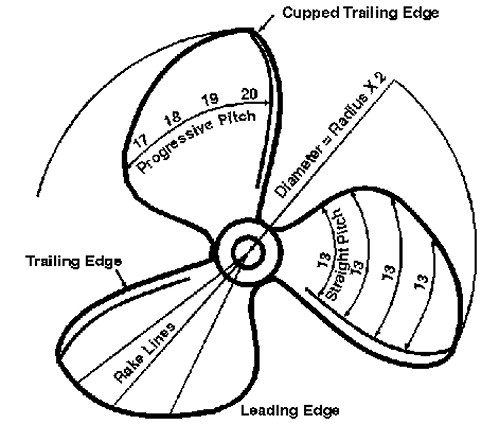
Six design variables. One spinning assembly. Endless performance consequences.
This guide covers all six: propeller pitch, diameter, blade count, rake angle, cup design, and blade area.
For each one, you’ll see how it works, what tradeoffs come with it, and where most people go wrong. So you can pick the right blade geometry for your boat, engine, and how you actually use it.
What Is Boat Propeller Blade Design — And Why It Determines Everything Downstream
Blade design is engineering at its hardest. Every geometric choice you make gets amplified the moment those blades hit water.
Here’s the mechanical reality: each blade works like a rotating airfoil. The hub spins. The blades push water backward using two forces at once — lift (low pressure on the suction face, based on Bernoulli’s principle) and momentum change (thrust = mass flow × velocity change). That produces axial thrust. Rotational energy turns into forward motion.
Blade design carries serious weight because of the multiplier effect. Swap one propeller for another on the same engine, and the numbers shift fast:
-
Boat speed changes by 20–30%
-
Fuel efficiency shifts by 15–25%
-
Acceleration differs by 10–40%
Same horsepower. A different boat entirely.
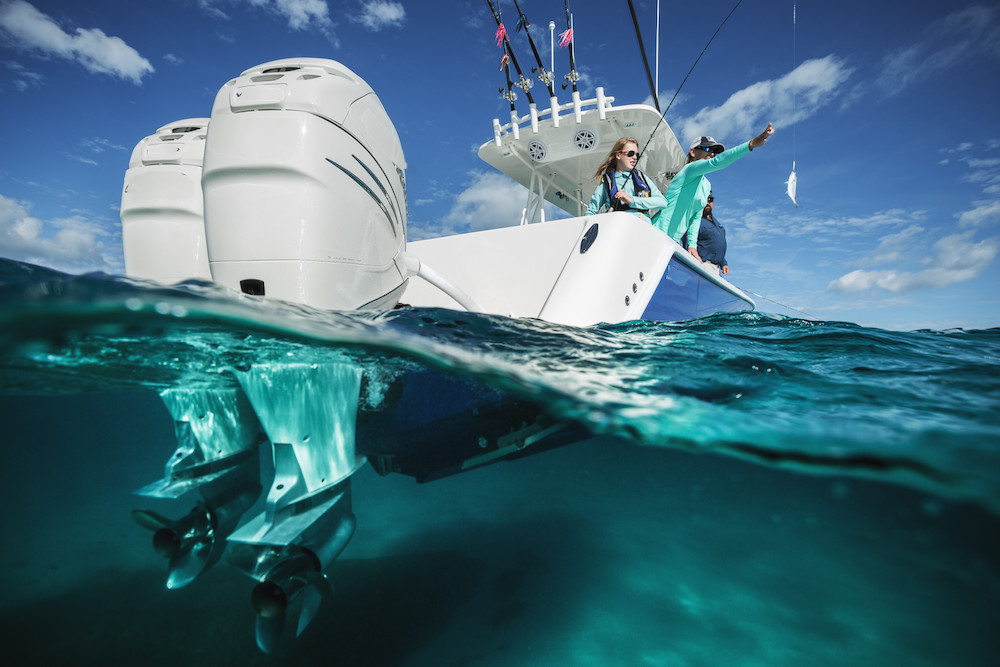
That’s not a minor tuning variable. That’s the gap between a boat that performs and one that falls flat.
Blade Count: How Many Blades Delivers the Best Performance
More blades feel like progress. They look more serious. They sound more capable. But the water doesn’t care how many blades are spinning — it only responds to how well they move through it.
This is the part where most boat owners get the math wrong.
Blade count and performance follow an inverted curve. Add blades up to a point, and your propeller gains efficiency. Push past that point, and you start losing it. Turbulence builds. Blades interfere with each other. Instead of working together, they fight the flow.
Here’s how each configuration behaves on the water:
-
2-blade propellers — Maximum speed, minimum drag. Great for lightweight, high-RPM setups where top-end speed is the priority. Struggles in rough water or under heavy loads.
-
3-Blade propellers — The workhorse. Solid balance between acceleration, top speed, and fuel use. Most recreational powerboats run this configuration for a reason.
-
4-blade propellers — Better grip, cleaner hole-shot, less vibration. You give up a small amount of top speed. In return, you get stronger low-RPM thrust and more stable handling. A solid pick for heavier hulls and boats carrying aggressive loads.
-
5-blade propellers — Very smooth, with less cavitation at speed. Works well in specific situations. Not a universal upgrade — past this point, turbulent energy builds fast and efficiency drops off.
The real takeaway isn’t which number wins. The best blade count is never the highest blade count. Performance peaks at the setup matched to your hull weight, engine RPM range, and how you use the boat. Each blade added beyond that peak brings less return. You get more interference between water streams, more disorder in the flow, and more propeller slip — not less.
A well-built 3-blade propeller beats a mismatched 5-blade setup. Every time. The geometry has to fit the job. That’s what the blade count is telling you.
Propeller Pitch: The One Parameter That Controls Speed vs. Acceleration
Pitch is where the physics gets personal.
In theory, propeller pitch is simple. A 21-inch pitch propeller moves 21 inches forward per full revolution — assuming water acts like a solid. In practice, water slips. It always slips. Actual forward progress lands at 80–90% of theoretical pitch, with 10–20% propeller slip eating the rest. That gap matters more than most boat owners expect.
Pitch is the most important design variable because its tradeoffs are direct and clear. No ambiguity. Raise pitch, and you gain top-end speed. Lower it, and acceleration sharpens. Every inch of adjustment is measurable, predictable, and fixed — until you swap the propeller again.
Here’s what one inch of pitch adjustment does at wide-open throttle (WOT):
-
RPM shifts by 150–200 RPM in the opposite direction
-
Drop from 23″ to 21″ pitch → +300–400 RPM, sharper hole-shot, faster time-to-plane
-
Add 1.5″ of pitch → +2 knots at 4,000 RPM cruise speed
That last number comes from a real boat. On a 30’6″ Marvel 930 RIB with a 300-hp Suzuki outboard:
|
Pitch Setting |
Cruise Speed at 4,000 RPM |
|---|---|
|
18.5 inches |
26 knots |
|
20 inches |
28 knots |
|
21.5 inches |
30 knots |
Four extra knots. Same engine. Nothing changed except the pitch.
The Two Failure Modes — And How to Spot Them
Get the pitch wrong in either direction, and your engine signals it fast.
Too high: The engine can’t hit its rated WOT RPM range. It labors. You hear it strain under load. Power drops. Mechanical stress builds. Component wear speeds up over time. A common example: a loaded Pontoon Boat that won’t plane until the owner drops pitch by two inches. The engine wasn’t weak. The pitch was choking it.
Too low: The engine blows past its RPM ceiling before the hull hits top speed. It screams at WOT. You’re spinning hard and gaining nothing — burning fuel, building heat, losing speed.
The fix is the same in both cases: match pitch to your engine’s WOT RPM operating window. That’s the target. Everything else falls into place from there.
Progressive Pitch: One Blade, Two Jobs
Some propellers handle the pitch tradeoff in a different way. Rather than holding a fixed angle from hub to tip, progressive pitch blades increase their pitch from the leading edge to the trailing edge of each blade.
The blade’s entry angle is set for low-speed grip — better hole-shot, cleaner bite off the line. The exit angle is tuned for cruise efficiency. That’s not magic. It’s geometry doing two jobs at once. Slip variation drops across the RPM range. You get the benefits of both low and high fixed-pitch setups — built into a single propeller.
Propeller Diameter: Thrust, Tip Speed, and the Size-Efficiency Tradeoff
Diameter is where physics gets brutal and unforgiving.
Diameter and thrust follow a fourth-power curve. Double the diameter, and thrust potential multiplies by sixteen — not two, not four. Sixteen. That single dimension carries more weight than anything else on your propeller.
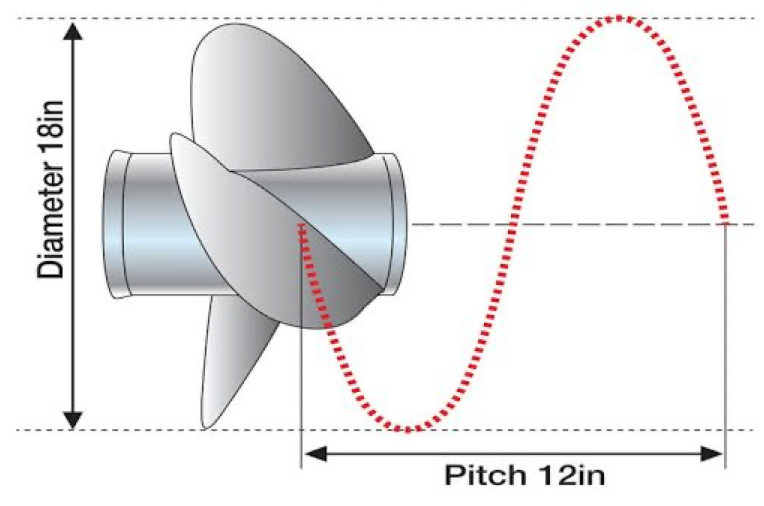
Larger diameter moves more water per revolution. More water pushed backward means stronger thrust at low speeds and under heavy loads. For displacement hulls and loaded working boats, maxing out your diameter is almost always the right call.
But size turns against you past 35 knots.
As diameter grows, blade tip speed climbs with it. Helical tip velocity adds rotational speed and forward speed together. Push that number past Mach 0.85, and compressibility effects kick in. Shock waves form. Friction drag spikes. Cavitation risk jumps. All the efficiency gains that made a larger diameter attractive at low speeds disappear.
The Clearance Constraint Most Owners Ignore
Your transom position sets a hard ceiling on diameter — before any of this even matters. Tip-to-hull clearance must stay at 15–20% of diameter under normal running conditions. The absolute minimum is 10%. Drop below that threshold and vibration becomes your constant companion. This hits hard on high-RPM setups and flat-bottomed hulls.
Diameter, Pitch, and the Advance Ratio
Diameter never works alone. Pair it with pitch, and together they set your advance ratio (J) — forward speed divided by rotational tip speed. Peak propeller efficiency sits between J = 0.4 and 1.0. Stray outside that range in either direction, and losses mount fast.
Here’s the practical rule:
– Fix your maximum diameter based on engine specs and hull clearance first
– Then dial in pitch to keep RPM inside the engine’s rated WOT range
Diameter first, pitch second. That sequence puts you at the efficient center of the tradeoff.
Blade Rake and Skew: How Blade Angle Shapes Bow Lift, Handling, and Efficiency
Rake and skew are the two blade geometry variables most people skip — and that choice has real consequences.
Rake measures how far the blades angle backward from the hub. Standard outboard propellers run 5 to 15 degrees of positive rake. High-performance props push that to 30 degrees.
More rake holds water on the blade longer. As the engine trims up, those angled blades generate thrust that lifts the bow. That lift reduces wetted hull area, cuts drag, and pushes speed up. The drag penalty from higher rake stops mattering once hull drag drops below it.
But go too steep, and the propeller slips. Thrust falls. RPM drops. You’ve crossed the line where rake works against you.
Skew — blades angled off the rotational axis — solves a different problem: propeller cavitation and shaft vibration. High-skew designs grip water better during turns and off-axis travel. The tradeoff is real, though. Low-speed drag goes up, and overall propulsive efficiency takes a small hit.
|
Condition |
Recommended Rake |
Primary Benefit |
|---|---|---|
|
High-mounted engine |
15–30° |
Bow lift at high trim |
|
Heavy load / rough water |
5–10° |
Stability, level attitude |
|
Speed-focused setup |
15–30° |
Reduced wetted hull area |
Match rake to your load. Match skew to your handling demands.
Cup Design on the Trailing Edge: Small Detail, Measurable Performance Gains
The trailing edge of a propeller blade is easy to overlook. It’s the last quarter-inch of metal before water breaks free. Bend that edge — curve it toward the pressure face — and something measurable happens.
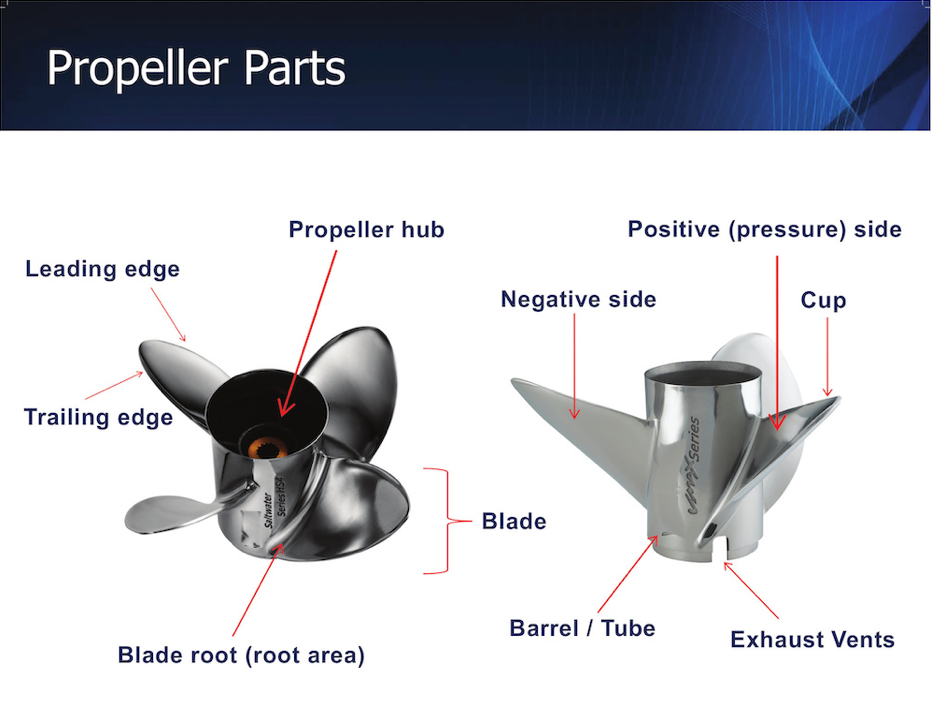
That bend is called blade cup design. The geometry is minimal. The results aren’t.
Cupping adds camber along the blade chord. That camber does three things:
-
Reduces propeller cavitation — it holds pressure across the blade surface and stops vapor from forming at high speeds
-
Increases water grip at elevated trim angles and high motor heights
-
Generates additional bow lift when cup runs along the rake line
The tradeoff is real: cup raises pitch. A standard cup application drops RPM by 200–400. So you’ll need a 1–2 inch pitch reduction when switching from an uncupped propeller.
Boats running past 30 knots need cupped propellers — it’s not optional at that speed, it’s the right spec. Most outboard and sterndrive designs include trailing edge cup as standard. Inboard propellers offer it as a selectable option.
One hard limit: over-cupping cracks thin trailing edges. Every cup profile has a ceiling. Stay under it.
The retrofit process is simple. Cup can be added, removed, or adjusted at any propeller repair facility. No new propeller required. Dollar for dollar, few modifications deliver this kind of performance gain.
Propeller Cavitation: The Hidden Performance Killer in Blade Design
Cavitation doesn’t announce itself. It strips performance away — RPM by RPM, knot by knot — until your boat feels completely broken.
Here’s the physics. Blade pressure drops below water’s vapor pressure. The water stops flowing and vaporizes. Bubbles form on the blade surface. Then they collapse. Each collapse sends out a localized shock wave strong enough to pit the metal. That erosion isn’t cosmetic. It increases drag, disrupts flow, and wears down the Prop, shaft, and strut faster than normal.
The performance numbers are clear:
-
15–30% of engine power lost to thrust disruption
-
100–200 RPM drop at wide-open throttle
-
1–3 mph reduction in top speed
-
8–12% worse fuel economy
The warning signs — vibration, throttle lag, cavitation noise, RPM climbing while speed drops — look a lot like engine problems. They’re not. Check the blades first.
Blade geometry drives the risk. A leading edge cut too sharp triggers cavitation at speeds lower than needed. Too blunt, and drag kills power before cavitation even shows up. Overpitched props push the engine into a flat power curve. You go from 90% to 100% throttle and gain less than 3 mph. That’s wasted power at every run.
Cavitation isn’t a fixed outcome. It’s a design mismatch. The right blade geometry solves it.
Blade Area Ratio and Section Profile: The Efficiency Equation Behind the Shape
Shape isn’t decoration. Each blade’s geometry — how much surface area it exposes to water, and how that surface curves — decides whether your propeller moves power forward or wastes energy fighting itself.
Blade Area Ratio (BAR) measures the blade’s working surface against the full swept disk area. Higher BAR puts more blade in the water per revolution. You get more thrust, faster acceleration, and stronger performance through chop. Lower BAR shrinks the wetted surface and cuts friction drag. That makes it the right call for high-speed hulls where resistance kills performance.
The tradeoff is direct:
|
Vessel Type |
Optimal BAR |
Why |
|---|---|---|
|
Heavy-load / displacement |
Higher |
More grip, cavitation control |
|
High-speed performance |
Lower |
Less friction, more efficiency |
Section profile matters just as much. A well-cambered, twisted airfoil blade beats a flat blade for one clear reason: it holds a steady angle of attack — 5–10 degrees — from hub to tip. The hub section runs steeper. The tip runs shallower. Each zone works at its lift-to-drag peak. Thicker profiles risk trailing-edge separation. Overbuilt sections build drag before they build thrust.
Modified blade section designs have pushed peak propeller efficiency from J = 0.8 to J = 0.9. That’s not a small step — it’s the gap between a propeller that works and one that works well.
3-Blade vs 4-Blade vs 5-Blade Propeller: Which Design Wins for Your Boat
The number printed on your propeller box isn’t a ranking. It’s a tradeoff statement.
Each blade you add changes how your boat moves through water. More blade area grips water harder and smooths out vibration. It also adds drag, and drag costs you speed. Neither outcome is free. Know what you’re trading — and what you need — and you’ve got the whole game figured out.
Here’s how each configuration stacks up in the real world:
|
Attribute |
3-Blade |
4-Blade |
5-Blade |
|---|---|---|---|
|
Top Speed |
Highest |
1–3 mph lower |
1–4 mph lower |
|
Hole Shot |
Slowest |
Superior |
Best |
|
Heavy Load Handling |
Struggles |
Excellent |
Excellent |
|
Vibration |
Higher |
Reduced |
Minimized |
|
Fuel Efficiency (cruise) |
Best |
Slightly worse |
Worse |
|
Low-RPM Thrust |
Moderate |
Better |
Best |
What Real-World Testing Shows
On a tested 19-foot Chaparral, the 3-blade hit the fastest top speed. The 4-blade dropped 1–2 mph. The 5-blade gave up close to 4 mph off the top — but it pulled the cleanest hole-shot of the three.
One thing worth knowing: the expected speed loss moving from a 3-blade to a 4-blade is 2–3 mph. The real-world loss lands at 1–3 mph. The 4-blade runs cleaner and pulls back some of that gap on its own.
Which Blade Count Fits Your Boat
3-blade suits bass boats, light daycruisers, and solo runs with minimal gear. You get the lowest drag, best cruise economy, and highest top speed.
4-blade is the workhorse. It fits family boats, pontoons, fishing rigs, and anything towing skiers or tubes. You give up a small slice of top speed. In return, you get faster planing, stronger low-RPM thrust, and much smoother handling in chop.
5-blade belongs in heavy-duty setups. Maximum grip, near-zero vibration, and hard acceleration are its strengths. Outright speed is not.
The question isn’t which blade count is best. It’s which tradeoff fits your boat, your load, and how you run it.
Fixed Pitch vs Controllable Pitch Propeller Design: Flexibility vs Optimization
Two propeller philosophies. One core tradeoff.
A fixed pitch propeller (FPP) locks its blade angle at the factory. Simple, light, and reliable — built for one operating condition. Hit that design speed, and it runs well. Stray from it, and efficiency drops fast.
A controllable pitch propeller (CPP) rotates its blades in real-time through hydraulic spindles. You can change speed without touching engine RPM. Thrust reversal takes 15–40 seconds. An FPP needs full engine direction reversal — that takes several minutes.
In tight harbors and emergency stops, that difference is critical.
The core tradeoff in plain numbers:
|
What You’re Comparing |
CPP |
FPP |
|---|---|---|
|
Astern Efficiency |
High |
Low |
|
Thrust Reversal Time |
15–40 sec |
Several minutes |
|
Mechanical Complexity |
High |
Low |
|
Initial Cost |
Much higher |
Lower |
FPP wins on simplicity, weight, and upfront cost. No pitch-change mechanisms. No hydraulic seals to check. Fewer parts means fewer failure points.
CPP wins where operational flexibility counts. Think variable speeds, maneuvering in tight waters, and fuel efficiency across shifting loads. You get more control — and you pay for it.
Neither design is the clear winner. Fixed pitch works best for steady, constant-speed runs. Controllable pitch earns its higher price on missions that shift faster than the engine can react.
How to Choose the Right Blade Design for Your Specific Boat and Engine
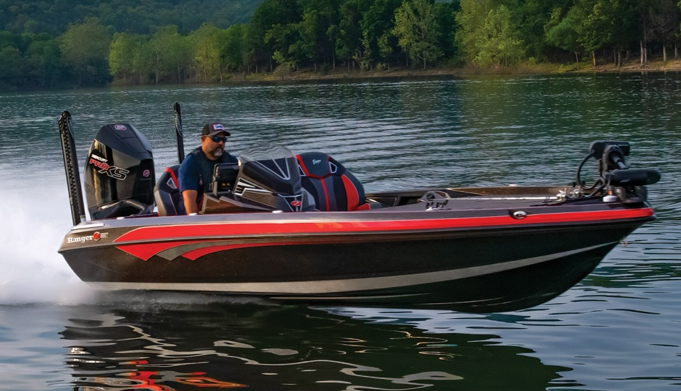
Four variables. That’s what separates a propeller that fits your boat from one that fights it.
Grab your engine manual. Find the WOT RPM range — 5,000–6,000 RPM for most outboards. Run your current Prop at wide-open throttle under full load. Log the RPM. That number tells you everything.
If RPM runs too high (over-revving past 6,000), your prop is under-loaded. Add a blade — go from 3 to 4 — or increase pitch. Every inch of pitch drops RPM by 200–400.
If RPM runs too low (lugging below 5,000), your prop is over-loaded. Drop a blade or reduce pitch by the same amount.
Start with that diagnostic. Everything else builds from there.
Match the Blade Count to Your Actual Use Case
-
Lightweight performance boats — bass boats, center consoles — run 3-blade. Lower drag, higher RPM, best top speed.
-
Family boats, pontoons, offshore cruisers — run 4-blade. You give up 1–3 mph of top speed. In return, you get 20% better hole-shot and a smoother ride through chop.
-
Towboats and watersports rigs — run 4 or 5-blade. Maximum grip off the line. Outright speed isn’t the goal here.
Upgrade in the Right Order
Budget is finite. Spend it in order:
|
Upgrade |
Impact |
ROI |
|---|---|---|
|
Pitch adjustment |
Matches RPM; unlocks 10–20% more efficiency |
Highest |
|
Blade count (3→4) |
+20% hole-shot; smoother handling |
High |
|
Material (aluminum→stainless) |
+5–10% speed and durability |
Lowest |
Fix pitch first. Then blade count. Material comes last — unless you’re racing.
Propeller Blade Material: How Aluminum vs Stainless Steel Design Affects Real-World Performance
Material isn’t a finishing detail. It’s the core constraint. It decides how well every other design variable — pitch, cup, rake — can be built and held under load.
Stainless steel allows thinner blade sections than aluminum. Thinner sections produce more accurate cup geometry and rake angles. Less flex under load means the blade holds its designed pitch at speed. It won’t bend away from it. That mechanical discipline shows up in real numbers: +5 mph at top speed, +2–3 mph at cruise.
|
Parameter |
Aluminum |
Stainless Steel |
|---|---|---|
|
Top Speed |
Baseline |
+5 mph |
|
Cruise Speed |
Baseline |
+2–3 mph |
|
Efficiency |
Baseline |
+1–3% (MSS alloy) |
Advanced MSS maraging stainless steel takes this even further. It runs 70% lighter than nickel-aluminum bronze at equal strength. You also get better corrosion-fatigue resistance and a clear drop in vibration.
Match Material to Your Water Conditions
-
Sandy or silty water: Stainless wins. Aluminum erodes fast. Sand works like a grinding wheel against soft alloy.
-
Frequent hard-object strikes: Aluminum absorbs the impact and takes the damage itself. Stainless sends that force straight into the lower unit.
-
Saltwater: Stainless (MCF or MSS grades) beats copper-based alloys on corrosion-fatigue strength across multi-year service.
On cost: aluminum runs half the price of stainless upfront. But you’ll likely buy two or three aluminum props over the life of one stainless unit. Those replacement costs add up fast — and often push past the stainless price anyway.
Conclusion
Every knot of speed, every gallon of fuel saved, every clean hole-shot off the dock — it all comes down to blade design choices made before you leave the marina.
Propeller pitch sets your speed ceiling. Diameter controls how well you push water. Blade count, rake angle, cup depth, and skew angle fine-tune everything in between. None of these work alone — they interact, compete, and build on each other. Get one wrong and it doesn’t just hurt performance. It pulls down everything else that’s working in your favor.
The good news? You now have the technical knowledge to stop guessing. Start choosing with confidence.
Your boat feeling sluggish off the line? Burning too much fuel? Handling unpredictably at speed? The blade design is where to look. Start there.
Browse VIF Propellers’ full lineup and find the blade setup built for the way you run.